Table of Contents >> Show >> Hide
- Quick Jump
- Step 0: Know Your Dorm Rules (Before You Buy Stuff)
- Small Space, Big Wins: How to Set Up a Dorm Kitchen Corner
- The 19 Dorm Kitchen Essentials
- 1) Mini Fridge (Or Micro-Fridge Combo)
- 2) Microwave Access + Microwave-Safe Bowl Set
- 3) Electric Kettle With Auto Shutoff
- 4) Rice Cooker or Mini Multi-Cooker (If Allowed)
- 5) Electric Skillet or Nonstick Pan (Only If Permitted)
- 6) Heat-Resistant Spoon/Spatula + Tongs
- 7) One Good Knife (With a Blade Cover)
- 8) Cutting Board (Preferably Dishwasher-Safe)
- 9) Can Opener (The Unsung Hero)
- 10) Measuring Cup + Spoon Set (Small, Cheap, Helpful)
- 11) Colander or Strainer (Collapsible = Best)
- 12) Reusable Plate, Bowl, Mug, and Utensil Set
- 13) Food Storage Containers (A Mix of Sizes)
- 14) Zip-Top Bags + Foil/Parchment
- 15) A Tiny “Pantry Starter Kit”
- 16) Shelf-Stable Protein You’ll Actually Eat
- 17) Smart Convenience Foods (Not Just Snacks)
- 18) Dish Soap, Sponge, and a Collapsible Drying Rack
- 19) Trash Bags + Disinfecting Wipes (Or All-Purpose Cleaner)
- Fast Dorm Meals That Aren’t Cereal
- Clean-Up & Food Safety (AKA: How Not to Become a Science Experiment)
- Bonus: of Real Dorm Kitchen Experience
You came to college to learn, grow, and become an independent adultso naturally, you’ve been surviving on Cinnamon Crunch and vibes. Respect. But there comes a day (usually around Week 3) when your body starts requesting something with a vegetable in the general ZIP code. That’s where a dorm kitchen setup comes in: not a full Food Network studio, just a tiny, rule-friendly toolkit that helps you eat real meals without setting off the fire alarm or angering your roommate’s emotional-support houseplant.
This dorm kitchen survival guide breaks down the 19 dorm kitchen essentials that actually matterplus the habits that keep your food safe, your space clean, and your bank account mostly intact. Expect practical picks, dorm cooking tips, and a sense of humor, because if we can’t laugh at microwave pasta, what are we even doing here?
Step 0: Know Your Dorm Rules (Before You Buy Stuff)
Dorm cooking is less “Top Chef” and more “escape room with policies.” Some residence halls allow certain appliances (like electric kettles or a rice cooker), while others ban anything that gets hot unless it’s a specific approved model. Some schools even limit microwave wattage or require a combined microwave-fridge unit. Translation: the fastest way to waste money is to buy a shiny appliance that your RA makes you “re-home” on move-in day.
Rule-of-thumb checks
- Ask what’s provided: Some dorms supply a microwave and/or fridge, and may prohibit personal ones.
- Look for “open coil” language: Appliances with exposed heating elements are often prohibited.
- Check watt limits: Many dorms care about power draw, not your dreams of homemade ramen.
- Knife rules vary: A basic kitchen knife is normal in many places, but certain campuses restrict bladesso verify before packing a whole chef set.
Once you know what’s allowed, you can build a dorm kitchen that’s small, safe, and surprisingly capable. Which is a fancy way of saying: you’ll be able to make food that doesn’t come with a toy prize.
Small Space, Big Wins: How to Set Up a Dorm Kitchen Corner
Your goal isn’t “a kitchen.” Your goal is a system: one shelf or drawer where everything lives, so you’re not digging through socks to find a can opener. A good dorm kitchen setup keeps three things under control: space, smells, and sharing.
Three setup tips that save your sanity
- Contain it: Use one bin for food tools and one bin for pantry items. If it doesn’t fit, it doesn’t come to college.
- Go collapsible: Collapsible colanders, folding drying racks, nesting bowlstiny room, big brain.
- Label your stuff: Not because your roommate is a villain, but because hungry people make suspicious choices.
The 19 Dorm Kitchen Essentials
These are the dorm cooking essentials that give you the most meal options per square inch. Think: maximum versatility, minimum chaos. (Also: nothing here requires you to become a “meal prep person” who owns matching containers and wakes up smiling.)
1) Mini Fridge (Or Micro-Fridge Combo)
This is the backbone of edible independence. Even a small fridge turns “I guess I’ll eat crackers” into “I can store yogurt, veggies, leftovers, and ingredients for actual meals.” If your dorm requires a combo unit, embrace it. If you can choose, prioritize one with a small freezer section so you can keep frozen fruit, dumplings, or veggie steam-bags on standby.
2) Microwave Access + Microwave-Safe Bowl Set
Whether your dorm provides a microwave or you have access to a shared one, dorm cooking often starts here. A microwave-safe bowl set with lids lets you make oatmeal, rice, steamed veggies, scrambled eggs (yes, really), and “leftovers that don’t taste like regret.”
3) Electric Kettle With Auto Shutoff
Hot water is dorm-kitchen currency. With a kettle, you can do instant oats, couscous, ramen upgrades, tea, pour-over coffee, and “I’m sick and need soup now” moments. Auto shutoff matters because you have classes, friends, and the attention span of a golden retriever in a tennis-ball factory.
4) Rice Cooker or Mini Multi-Cooker (If Allowed)
If your housing rules allow it, a small rice cooker (or mini multi-cooker) is the cheat code. You can make rice, quinoa, lentils, and one-pot meals like “lazy burrito bowls” with beans, salsa, and cheese. It’s also the easiest way to feel like a functional adult without purchasing truffle oil.
5) Electric Skillet or Nonstick Pan (Only If Permitted)
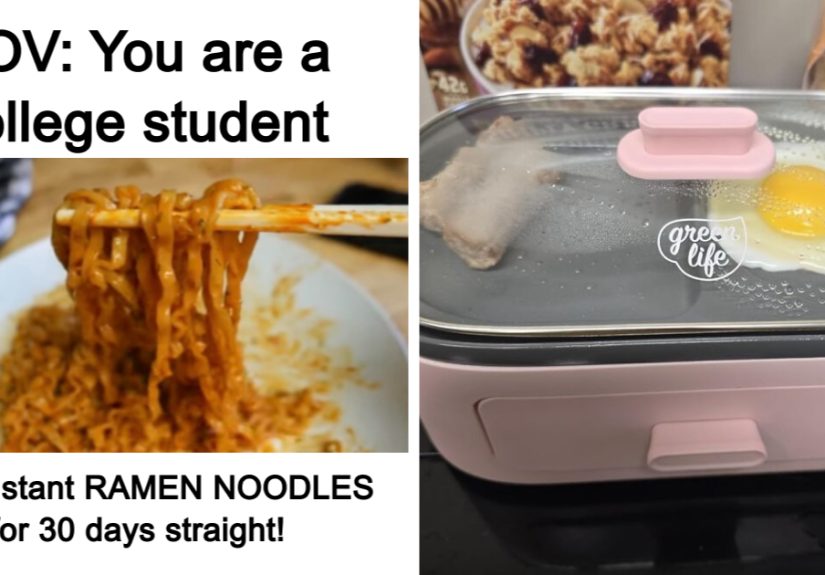
Some dorms prohibit most cooking appliances in bedrooms, but if you’re in an apartment-style setup (or your policy allows it), an electric skillet can cover eggs, quesadillas, stir-fry, and grilled sandwiches. If it’s not allowed, don’t force ityour culinary era is not worth a policy violation fine.
6) Heat-Resistant Spoon/Spatula + Tongs
This trio is small but mighty. A silicone spatula helps you scramble, stir, and scrape without destroying your cookware. Tongs turn you into a person who flips food like they know what they’re doing (confidence is 60% of cooking).
7) One Good Knife (With a Blade Cover)
You do not need a 12-piece knife set. You need one comfortable, sharp knife that can handle fruit, veggies, and sandwich duty plus a blade cover for safe storage. If your dorm has restrictions, swap to a small paring knife or a safety-focused option and rely more on pre-cut produce.
8) Cutting Board (Preferably Dishwasher-Safe)
A thin cutting board protects your desk, your hands, and your roommate’s patience. Bonus points if it’s non-slip. Extra bonus points if you clean it like a responsible human and not a raccoon with a sponge.
9) Can Opener (The Unsung Hero)
Beans. Tuna. Soup. Tomatoes. Fruit cups that pretend to be “healthy.” Cans are dorm-friendly, budget-friendly, and absolutely useless if you can’t open them. Get a sturdy manual can opener and feel the power.
10) Measuring Cup + Spoon Set (Small, Cheap, Helpful)
Measuring tools matter even if you’re not baking. They help with rice-to-water ratios, microwave mug recipes, and not accidentally turning your protein shake into cement because you “eyeballed” the powder.
11) Colander or Strainer (Collapsible = Best)
You’ll want to drain pasta, rinse fruit, and wash greens without balancing everything over a trash can like a circus act. A collapsible strainer is perfect for tiny dorm kitchen storage.
12) Reusable Plate, Bowl, Mug, and Utensil Set
Real dishes make real meals feel real. One sturdy plate, one bowl, one mug, and a set of utensils is enough to start. If you’re eco-minded, reusable gear also saves you from the “paper plate mountain” that forms during midterms.
13) Food Storage Containers (A Mix of Sizes)
Containers are how you keep leftovers, prep snacks, and protect your food from the dorm fridge ecosystem (where someone’s uncovered onion somehow dominates the airspace). Choose stackable containers with tight lids. A couple of leakproof ones are great for soups and sauces.
14) Zip-Top Bags + Foil/Parchment
Zip-top bags handle snacks, sandwiches, and freezer organization. Foil or parchment helps with quick microwave steaming and keeps cleanup manageable. It’s not glamorous, but neither is scrubbing dried cheese off a bowl at 1:00 a.m.
15) A Tiny “Pantry Starter Kit”
This is the difference between “I have ingredients” and “I have random objects.” Keep a compact stash: olive oil or cooking spray, salt, pepper, garlic powder, and one “fun” seasoning (taco blend, everything bagel seasoning, or chili flakes). Tiny kit, huge flavor payoff.
16) Shelf-Stable Protein You’ll Actually Eat
Stock dorm-friendly proteins: nut butter, tuna/salmon packets, beans, chickpeas, lentils, or shelf-stable tofu if you’re into it. These make quick meals possible when dining hall hours betray you.
17) Smart Convenience Foods (Not Just Snacks)
Convenience doesn’t have to mean junk. Think microwave rice cups, instant oats, whole-grain wraps, jarred salsa, hummus, applesauce cups, and frozen veggies if you have freezer space. These are “assemble-and-eat” building blocks for dorm meals.
18) Dish Soap, Sponge, and a Collapsible Drying Rack
If you skip this, you’ll either (a) stop cooking or (b) become the person with a sink full of bowls “soaking” for three days. A small drying rack and quick daily wash routine keep your dorm kitchen from turning into a biology documentary.
19) Trash Bags + Disinfecting Wipes (Or All-Purpose Cleaner)
Dorm kitchens fail for one reason: crumb politics. Keep trash bags and a simple cleaner on hand. Wipe surfaces after cooking, especially if you’re using shared areas. Your future self will thank you. Your roommate will also thank you, but probably in silence, because college.
Fast Dorm Meals That Aren’t Cereal
You now have the tools. Here’s how to turn them into foodquickly, cheaply, and with minimal dish fallout. These ideas work well for dorm room cooking because they rely on a microwave, kettle, and simple assembly.
Microwave “Real Meal” Ideas
- Loaded oatmeal: Oats + hot water + peanut butter + banana + cinnamon.
- Protein rice bowl: Microwave rice + beans + salsa + cheese; add spinach and let it wilt.
- Egg mug scramble: Eggs + a splash of milk + cheese + frozen veggies; microwave in short bursts, stirring between.
- Soup upgrade: Canned soup + extra frozen veggies + leftover chicken or beans.
Kettle-Only Wins
- Couscous bowl: Couscous + hot water + olive oil + chickpeas + feta + lemon pepper.
- Ramen glow-up: Instant noodles + add a soft-boiled egg (if you have access) or tofu + frozen veggies + chili flakes.
- Instant miso moment: Miso paste + hot water + tofu cubes + scallions (or dried seaweed).
When You’re Feeling Fancy (But Still Dorm Fancy)
“Fancy” can mean: you put something green on the plate and used a real bowl. Try a wrap with hummus, turkey, spinach, and sliced cucumbers; or yogurt with granola and frozen berries; or a microwave baked potato topped with beans and salsa.
Clean-Up & Food Safety (AKA: How Not to Become a Science Experiment)
In a dorm, food safety isn’t about fearit’s about avoiding the very specific misery of stomach problems during finals week. Use these habits to keep your mini fridge and your meals on the safe side.
Mini fridge rules that matter
- Don’t overstuff it: Cold air needs room to circulate, or your “cold” fridge becomes a lukewarm pantry.
- Store leftovers sealed: Lidded containers reduce smells and help keep food fresh longer.
- Cool promptly: Don’t leave perishables sitting out “until later.” Later is how dorm legends are born.
- Consider a fridge thermometer: Mini fridges can be unpredictable, and a tiny thermometer removes the guesswork.
Cleaning routine that takes 3 minutes
- Wash your bowl/utensils right after eating (or at least rinse immediately).
- Wipe the surface where you cooked.
- Take out trash before it becomes a roommate negotiation.
The secret to consistent dorm cooking isn’t motivationit’s friction. When your setup is clean and your tools are easy to grab, making a quick meal becomes the default instead of an event requiring emotional preparation.
Bonus: of Real Dorm Kitchen Experience
My first dorm “kitchen” was a mini fridge wedged under a lofted bed, a microwave down the hall, and a cutting board that lived on top of a stack of textbooks like it was auditioning for a minimalist design magazine. I thought I’d cook all the time. I also thought I’d go to the gym at 6 a.m. So: optimism was high.
The real learning curve wasn’t recipesit was logistics. The first time I tried to “meal prep,” I bought a heroic amount of produce and exactly zero containers. By Day 4, I had a sad, unwrapped half-onion in my fridge that made everything taste like onion, including the yogurt. That’s when I discovered the most important dorm kitchen principle: if it can’t be sealed, it will become a smell. Containers aren’t optional; they’re diplomacy.
Then there was the Great Sponge Crisis. I used one sponge for everything: dishes, counters, andbecause college is a wild placespills I would rather not describe. Eventually my dorm room started smelling like “wet cafeteria.” The fix was embarrassingly simple: replace the sponge, keep dish soap nearby, and wipe down surfaces immediately. It turns out “clean as you go” is less of a lifestyle and more of a survival tactic when your entire living space is the size of a generous walk-in closet.
My biggest win was learning to cook in modules. Instead of “making dinner,” I’d keep building blocks: microwave rice, canned beans, salsa, bagged salad, yogurt, frozen veggies, and a couple seasonings. That way, dinner could be assembled in five minutes even when I was exhausted. On good days, I’d add extrasavocado, a fried egg (when allowed), or leftover chicken. On rough days, I’d still eat something balanced because the system did the thinking for me.
I also learned the social side of dorm cooking. One person’s “quick popcorn” is another person’s “why is there smoke.” If you share space, communicate. Label your food. Don’t borrow someone’s butter like it’s a public utility. And if you’re the person with the kettle, congratulations: you are now the unofficial hot beverage provider during late-night study sessions. Guard that power wisely.
Finally, don’t underestimate the confidence boost of feeding yourself. The first time you make a decent rice bowl at 11:30 p.m. instead of ordering delivery, you’ll feel weirdly unstoppablelike you could also do your laundry on time and maybe file your taxes early. (Let’s not get carried away. But still.) A dorm kitchen won’t make you a chef. It will make you a person who can take care of themselvesone microwave-safe bowl at a time.