Table of Contents >> Show >> Hide
- What Is HackRF?
- How Restaurant Pagers Work, Without The Mischief Manual
- Why This Story Became Popular In The Hacker Community
- HackRF And The Ethics Of RF Experimentation
- Why Simple Wireless Systems Often Skip Strong Security
- What HackRF Teaches Beginners About Wireless Reality
- Security Takeaways For Restaurants And Small Businesses
- Why HackRF Is Not The Villain
- How To Explore SDR Responsibly
- The Bigger Picture: Wireless Security Is Everywhere
- Conclusion: The Pager Buzzed, But The Lesson Is Louder
- Field Notes: Real-World Experiences Around HackRF, Pagers, And Wireless Curiosity
There are two kinds of restaurant waiting rooms. The first is calm, civilized, and smells faintly of fresh bread. The second is a tiny human aquarium where hungry people clutch plastic buzzing discs as if they are sacred tablets from the mountain of appetizers. Somewhere between those two scenes sits the oddly fascinating story behind HackRF, software-defined radio, and the humble restaurant pager.
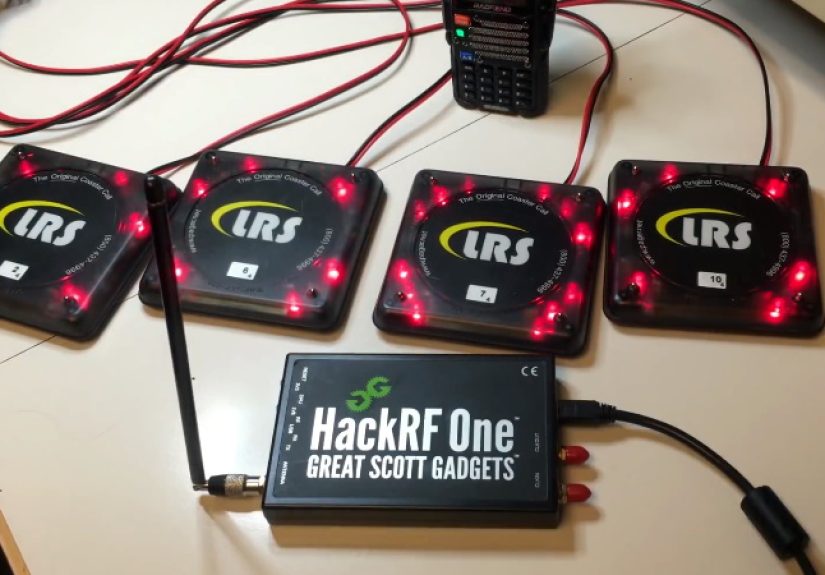
The title “Your Table Is Ready, Courtesy Of HackRF” sounds like the beginning of a hacker comedy sketch: one person, one wireless gadget, and one deeply confused host stand. But behind the joke is a serious and useful lesson about modern radio systems. Many devices we treat as magicrestaurant pagers, garage remotes, weather sensors, key fobs, wireless thermometers, and countless Internet of Things gadgetscommunicate through radio signals. HackRF helps researchers study those signals, understand how they work, and discover where security design falls asleep face-first in the bread basket.
This article takes a practical, ethical, and non-mischievous look at the topic. No shady “press this button and annoy a restaurant” instructions here. We are here for the big picture: what HackRF is, why restaurant pagers are an interesting case study, what software-defined radio teaches us about wireless security, and how curious learners can explore radio technology responsibly.
What Is HackRF?
HackRF One is a popular open-source software-defined radio, often shortened to SDR. In simple terms, an SDR moves much of the work traditionally done by radio hardware into software. Instead of needing a separate physical radio for every type of signal, an SDR can be tuned and configured by a computer. That makes it a powerful learning tool for radio hobbyists, wireless engineers, cybersecurity researchers, students, and people who believe “just one more antenna” is a normal sentence.
HackRF is known for covering a wide frequency range and for being able to receive and transmit signals in supported use cases. That transmit capability is exactly why responsible use matters. Listening to lawful, permitted signals in a learning environment is one thing. Transmitting on frequencies without authorization, interfering with real systems, or playing “radio wizard” in public is another thing entirelyand not the fun kind of wizardry.
Why Software-Defined Radio Feels Like X-Ray Vision For Signals
A normal person looks at a restaurant pager and sees a plastic coaster that vibrates. An SDR enthusiast looks at the same pager and wonders what signal wakes it up, how the message is structured, whether the system authenticates the sender, and whether the design assumes everyone nearby is polite. That last assumption is where many low-cost wireless systems get into trouble.
SDR tools can show radio activity visually through spectrum displays and signal “waterfalls.” These displays make invisible wireless traffic feel almost physical. You can see bursts, patterns, timing, and modulation shapes. For education, that is wonderful. For security, it is revealing. For people waiting forty-five minutes for pancakes, it should remain purely theoretical.
How Restaurant Pagers Work, Without The Mischief Manual
Restaurant pagers are usually simple on-site radio devices. A host or staff member presses a button at a base station, the system sends a short radio message, and the matching pager vibrates, flashes, beeps, or performs its tiny tabletop light show. The customer returns, hopefully before the nachos achieve room temperature.
In many systems, each pager listens for an identifying code. When it recognizes a message meant for it, it alerts the customer. This design is efficient and inexpensive. It does not need Wi-Fi passwords, mobile apps, Bluetooth pairing, or a cloud dashboard named something dramatic like TablePulse 360. It just needs a local transmitter and receivers that understand the expected signal format.
The drawback is that older or simpler radio systems were often built for convenience rather than strong security. If a system trusts that only the official base station will send commands, it may not verify the sender cryptographically. That does not automatically mean every pager is vulnerable, and it certainly does not mean anyone should test devices they do not own. It means the restaurant pager is a perfect teaching example: simple wireless convenience can become fragile when authenticity is not part of the design.
Why This Story Became Popular In The Hacker Community
The restaurant pager example became memorable because it turns abstract radio security into something people instantly understand. Nobody needs a PhD to grasp the concept: a plastic disc buzzes when a radio message tells it to buzz. If another device can imitate the right kind of message, the pager may react. That is wireless reverse engineering in a nutshell, minus the math headache and the suspicious number of cables.
For HackRF users, the example demonstrates how SDR can help analyze real-world radio systems. Researchers can observe a signal, study its timing and structure, compare repeated messages, and learn whether the system includes safeguards. But the ethical boundary is bright and blinking like the pager itself: study only your own equipment, work in controlled environments, and never interfere with businesses, customers, emergency services, licensed communications, or public networks.
The Lesson Is Bigger Than Burgers
Restaurant pagers are funny because the stakes seem low. No one imagines a Hollywood villain whispering, “At last, the appetizers are mine.” But the same security principles apply to more important systems. Wireless sensors, access controls, industrial devices, alarm systems, and consumer gadgets may also rely on short radio messages. If they lack authentication, encryption, replay protection, or interference resistance, they can become weak links.
That is why HackRF matters beyond the hobby bench. It helps defenders think like signals. It helps engineers see whether wireless products are merely working or actually secure. It helps students understand that “it communicates wirelessly” is not the same as “it communicates safely.”
HackRF And The Ethics Of RF Experimentation
The best SDR researchers are not reckless button-pushers. They are patient observers, careful testers, and extremely committed label-makers. They document antennas, frequencies, equipment, test conditions, legal constraints, and whether the cat walked across the keyboard during the experiment.
Responsible RF experimentation follows a few common-sense principles. First, receive-only learning is generally safer than transmitting. Second, transmitting should happen only where it is legal, permitted, and controlled. Third, researchers should use equipment they own or have explicit permission to test. Fourth, experiments should be isolated enough that they do not affect other people’s devices. Fifth, public places are not laboratories, no matter how inspirational the mozzarella sticks may be.
In the United States, radio transmission is regulated. Many devices operate under specific FCC rules, and unauthorized transmissions can create harmful interference. This is not legal trivia for people with too many antennas; it is the foundation that keeps wireless systems from becoming a noisy soup of chaos. When everyone follows the rules, aircraft radios, emergency systems, mobile networks, broadcast services, amateur radio, and consumer devices have a better chance of coexisting.
Why Simple Wireless Systems Often Skip Strong Security
If wireless security is so important, why do some devices skip it? Usually, the answer is not evil. It is cost, battery life, legacy design, simplicity, speed, and assumptions. A restaurant pager system may need to be cheap, durable, easy to replace, and simple for staff to use. Adding strong cryptographic authentication, secure key management, and upgrade mechanisms can raise complexity.
For a restaurant, the threat model may seem tiny. If a prankster triggers a pager, the host can shrug and fix the seating list. But the broader engineering habit is worth questioning. When industries treat wireless signals as private simply because they are invisible, they create designs that age poorly. Radio is not a secret handshake. It is more like yelling across a parking lot in a language some people happen to understand.
Security By Obscurity Is A Wobbly Table
Many older wireless products rely on obscurity: unusual message formats, proprietary protocols, or the belief that nobody nearby owns the right tools. That approach was more believable when radio analysis required expensive equipment. SDR changed the economics. Today, students and hobbyists can learn signal analysis with affordable hardware and open-source software. The curtain is thinner now.
Security by obscurity is not always useless, but it should not be the main course. Stronger designs use authentication, rolling codes, encryption where appropriate, rate limiting, tamper resistance, monitoring, and update paths. The goal is not to make every restaurant pager as secure as a banking network. The goal is to match protections to risks instead of assuming invisible equals safe.
What HackRF Teaches Beginners About Wireless Reality
For beginners, HackRF is exciting because it makes radio understandable. You can explore broadcast signals, learn about modulation, observe spectrum activity, and build intuition for bandwidth, noise, filters, antennas, gain, and sampling. Suddenly, wireless technology stops being a black box and starts looking like a crowded highway where every vehicle has a different shape, speed, and turn signal.
It also teaches humility. Radio is messy. Signals bounce, fade, overlap, distort, and vanish when you move an antenna three inches to the left. A setup that works on Monday may sulk on Tuesday. The air is full of interference, reflections, and mysteries that make you question whether your cable is broken or the universe is personally testing you.
That messiness is part of the value. SDR gives learners a realistic view of wireless engineering. It shows why professionals care about filtering, shielding, calibration, power levels, legal limits, and environmental conditions. It also shows why copying a signal is not the same as understanding a system, and why understanding a system does not automatically grant permission to interact with it.
Security Takeaways For Restaurants And Small Businesses
Restaurant owners do not need to panic because someone on the internet owns a HackRF. Most diners are more focused on fries than frequency analysis. Still, wireless systems deserve basic security awareness. If a pager system behaves strangely, staff should record what happened, check whether multiple pagers were affected, inspect the base station, and contact the vendor. Odd wireless behavior may be accidental interference, equipment failure, or environmental noisenot necessarily a hoodie-wearing genius in booth seven.
When buying or replacing a restaurant pager system, businesses can ask vendors smarter questions. Does the system authenticate messages? Does it support unique site configuration? Can devices be updated? How does it handle interference? Is the system certified for its market? What happens if nearby businesses use similar equipment? These questions are not paranoid. They are the wireless equivalent of asking whether a door has a lock.
Better Design Helps Everyone
Manufacturers can also learn from the HackRF conversation. Good documentation, clear compliance information, secure defaults, and practical anti-interference features help customers. Even when a system is low-risk, careless design can create support headaches. A secure and reliable pager system means fewer false alerts, fewer confused guests, and fewer staff members trying to explain why table twelve’s pager is celebrating for no reason.
Why HackRF Is Not The Villain
Whenever a tool can be misused, people are tempted to blame the tool. But HackRF is not a villain. It is a radio research platform. Like a kitchen knife, soldering iron, or spreadsheet with too many formulas, its value depends on how it is used. In responsible hands, HackRF supports education, testing, prototyping, spectrum awareness, and security research.
The restaurant pager story is funny because it exposes a mismatch between everyday assumptions and technical reality. People assume the pager buzzes only because the restaurant said so. Radio researchers know the pager buzzes because it received a message it accepted. That difference matters. It is the difference between trusting a person and trusting a protocol.
How To Explore SDR Responsibly
New SDR learners should start with legal receive-only projects and public educational resources. Broadcast FM, weather satellite reception where permitted, amateur radio listening rules, ADS-B aircraft reception where legal, and classroom signal demonstrations can all build knowledge without poking real-world systems. The healthiest learning path is curiosity plus restraint. Think “scientist with a notebook,” not “chaos gremlin with an antenna.”
A good beginner mindset is to ask three questions before every experiment: Do I have permission? Could this interfere with anyone? Do I understand the legal limits? If the answer is fuzzy, stop and research before proceeding. In radio, “oops” can travel farther than expected.
For cybersecurity learners, the best environment is a lab built from owned devices, dummy loads, shielded setups, low-power testing where legal, and clear documentation. The point is to understand wireless design, not to surprise strangers. A responsible researcher can learn a great deal without ever turning a restaurant waiting area into a science fair.
The Bigger Picture: Wireless Security Is Everywhere
The modern world runs on small wireless assumptions. We assume key fobs open only our cars. We assume sensors report only to their owners. We assume remotes control only the devices they came with. We assume pagers respond only to the host stand. Sometimes those assumptions are backed by solid engineering. Sometimes they are backed by hope, plastic, and a sticker that says “QC Passed.”
HackRF and other SDR platforms help reveal the difference. They let researchers inspect the invisible layer of technology that surrounds us. That does not make the world scarier; it makes it more understandable. The same knowledge that exposes weak designs can also improve products, guide better purchasing decisions, and inspire safer engineering.
Conclusion: The Pager Buzzed, But The Lesson Is Louder
“Your Table Is Ready, Courtesy Of HackRF” is more than a clever title. It is a compact lesson in wireless trust. A restaurant pager seems simple because its job is simple: alert a hungry person without requiring them to hover awkwardly near the host stand. But even simple devices rely on design choices. When those choices ignore authentication or assume nobody will examine the signal, SDR tools can reveal the gap.
HackRF is valuable because it helps people understand radio systems at a deeper level. It turns invisible communication into something visible, measurable, and debatable. Used ethically, it is a bridge between curiosity and competence. Used irresponsibly, it is a fast way to become the least popular person in a restaurantand possibly much worse if interference is involved.
The real takeaway is not “hack the pager.” The takeaway is “design better wireless systems, test them responsibly, and respect the airwaves.” Your table may or may not be ready, but the future of wireless security definitely needs a reservation.
Field Notes: Real-World Experiences Around HackRF, Pagers, And Wireless Curiosity
The most memorable experience related to HackRF is not the first time someone sees a signal. It is the first time they realize the signal was always there. The room did not change. The laptop did not summon radio waves from another dimension. The SDR simply gave the user a window into activity that had been passing through the walls, tables, pockets, cars, and ceiling tiles all along. It is a little like putting on glasses and discovering the air has been writing in cursive.
In a safe learning environment, a beginner might start by observing familiar signals and watching how they appear on a spectrum display. At first, the screen looks like electronic spaghetti. Then patterns emerge. A wide broadcast signal looks different from a short digital burst. Noise looks different from structure. Strong nearby transmissions behave differently from distant weak ones. The learner starts to understand that wireless communication is not abstract at all; it has shapes, rhythms, habits, and flaws.
The restaurant pager topic adds humor because everyone has held one of those buzzing discs. They are part coaster, part tiny UFO, part social contract. You hold it, you wait, it vibrates, and suddenly you are promoted from “lobby furniture” to “valued guest.” Studying that kind of device in a private lab with owned equipment can be an eye-opening way to learn about embedded systems and radio design. Studying someone else’s device in public is not research; it is bad manners wearing a technical hat.
One common beginner surprise is how much patience radio work requires. People imagine dramatic moments: instant decoding, glowing screens, triumphant music. The reality is usually quieter. You adjust gain. You check cables. You move the antenna. You wonder why yesterday’s clean signal now looks like a nervous caterpillar. You read documentation. You learn that antennas are not decorative sticks but critical parts of the system. You also learn that “wireless” does not mean “simple.” It means the wires have been replaced by physics, and physics has opinions.
Another useful experience is discovering the difference between curiosity and permission. HackRF makes exploration feel easy, and that is exactly why ethics must come first. The responsible researcher builds a boundary around the project: owned devices, legal operation, controlled conditions, and no impact on others. That boundary does not make the work boring. It makes the work credible. Anyone can cause confusion. It takes discipline to produce knowledge.
The best HackRF experiences often end with better questions. Why did this product use that protocol? What assumptions did the designer make? Would authentication improve reliability? Could interference cause false alerts? How would a business notice abnormal behavior? These questions turn a funny restaurant-pager story into a serious design conversation. They also show why SDR education is valuable: it trains people to see wireless systems not as magic, but as engineering choices floating through the air.
So yes, the phrase “Your Table Is Ready, Courtesy Of HackRF” gets a laugh. It should. Technology is easier to learn when it comes with a wink. But the lasting experience is not about skipping a line at dinner. It is about realizing that the invisible world of radio is full of lessons, and that responsible curiosity can make everyday technology safer, smarter, and a little less mysterious.