Table of Contents >> Show >> Hide
- 1) Shackleton’s Endurance rises from the deepwithout actually rising
- 2) Saqqara delivers a color explosion: hundreds of sarcophagi and bronze gods
- 3) Beneath Notre-Dame: a hidden cemetery and two elite lead sarcophagi
- 4) The Trojan War… in mosaic form: a 1,600-year-old masterpiece in Syria
- 5) A Tuscan spa that preserved gods: the San Casciano bronze statues
- 6) The Burton Agnes Drum: chalk carving with big “why is this so modern?” energy
- 7) Turkey’s underground city: the “just one more tunnel” problem
- 8) A very early Buddhist temple in Pakistan adds depth to the timeline
- 9) A 9,000-year-old shrine in Jordan proves humans have always been “event people”
- 10) Thousands of pits around Stonehenge hint at a much older landscape story
- Wrapping it up: 2022 made the past feel close
- of Archaeology Experiences: How to Feel These 2022 Discoveries in Real Life
If you ever needed proof that history is not “finished,” 2022 delivered it in spadessometimes literally. While most of us were
digging through emails, archaeologists were digging through mud, sand, cathedral floors, and even Antarctic seawater to pull up
stories that change what we thought we knew about ancient life. The best part? These weren’t tiny footnotes. Many of the biggest
archaeology finds of 2022 were the kind that make you blurt, “Wait… that was under there the whole time?”
This roundup highlights ten amazing archaeological discoveries revealed in 2022, from shipwrecks preserved like time capsules to
art so vivid it feels freshly painted (even when it’s 1,600 years old). It’s written for curious humansno trowel requiredwhile
staying grounded in real reporting from major U.S.-based outlets (think Smithsonian Magazine, National Geographic, PBS NewsHour,
CNN, CBS News, and more).
1) Shackleton’s Endurance rises from the deepwithout actually rising
Let’s start with a discovery that feels like a movie trailer voiced by a dramatic British narrator. In early March 2022, the wreck
of the EnduranceSir Ernest Shackleton’s legendary expedition shipwas located in the Weddell Sea near Antarctica, more than a
century after it sank. And it wasn’t a sad pile of splinters. Cold, low-oxygen water helped keep the wooden ship stunningly intact,
down to the ship’s name still visible on the stern. (If you’ve ever lost your phone in couch cushions, just know the ocean has better
“find my device” skills than you do.)
Why this matters to archaeology: shipwrecks are floating time capsules. The Endurance isn’t just a famous vesselit’s a snapshot
of early 20th-century polar exploration technology, logistics, and human endurance (pun fully intended). It also shows how modern
marine archaeology blends historical records, robotics, sonar mapping, and careful site protection. The team didn’t “treasure hunt”
they documented the site, captured imagery, and treated it as a protected historic location.
2) Saqqara delivers a color explosion: hundreds of sarcophagi and bronze gods
Ancient Egypt never really stops giving, but 2022 was extra generous. At Saqqaraan enormous necropolis south of Cairoarchaeologists
revealed a massive trove that included hundreds of sarcophagi and a crowd of bronze statues depicting deities. The numbers alone are
blockbuster-level: more than 250 sarcophagi and around 150 bronze statues were announced in one reveal, along with other objects like
mummies, ritual items, and a long papyrus that may relate to the Book of the Dead.
Why it matters: Saqqara isn’t just “a burial site.” It’s a long-running archive of religious practice, status symbols, art, and evolving
burial traditions. The Late Period coffins and statues can help scholars study how beliefs and craftsmanship shifted over time, and how
certain gods (and sacred animals) became central to the spiritual economy of the day. Also, the surviving pigments and gilding remind us
that the ancient world wasn’t beigeit was loud, bright, and unapologetically decorated.
3) Beneath Notre-Dame: a hidden cemetery and two elite lead sarcophagi
Few “discoveries revealed in 2022” felt as cinematic as this: during restoration work at Notre-Dame Cathedral in Paris, archaeologists
uncovered burials beneath the floorbecause apparently one of the world’s most visited buildings had been keeping secrets under its feet.
Among the most remarkable finds were two lead sarcophagi, a burial practice reserved for elites. One coffin identified a high-ranking
priest (Antoine de la Porte, who died in 1710). The other contained an unknown man nicknamed “the Horseman” because skeletal clues suggested
a life spent riding.
Why it matters: this is archaeology in a living city, under a monument that people emotionally identify with. It’s also a reminder that
historic sites don’t just hold one erathey’re layered like a lasagna made by time. The cathedral’s rebuild opened a narrow window for
research, and the work combined careful excavation with medical imaging, forensic analysis, and historical records to reconstruct identities
and daily life from centuries ago.
4) The Trojan War… in mosaic form: a 1,600-year-old masterpiece in Syria
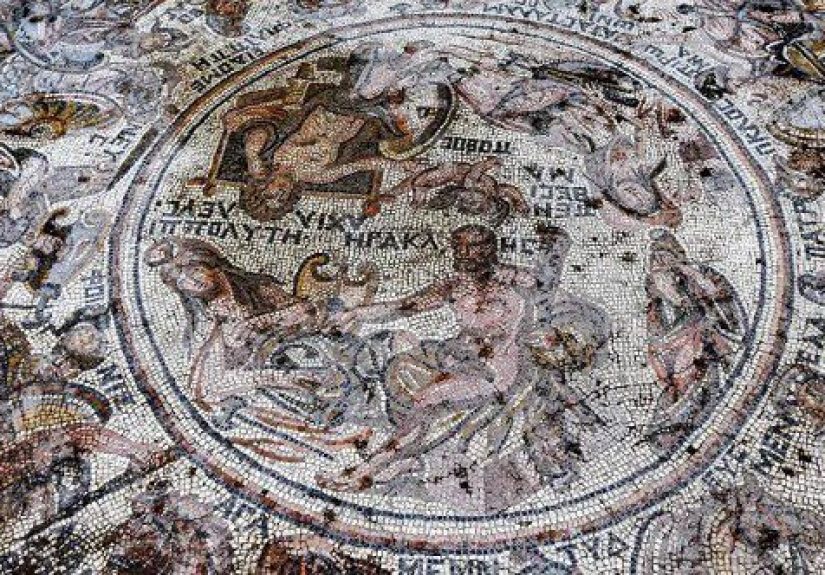
If you think ancient art is always faint and fragmentary, meet the Rastan mosaic. Revealed in 2022 beneath a building in Rastan (near Homs),
the artwork is a Roman-era mosaic dating back roughly 1,600 yearsand it’s dramatic. Scenes include soldiers, named Greek leaders from the
Trojan War, Amazon warriors (yes, the mythical kind), and the Roman god Neptune. Reported measurements put the excavated portion around 65 feet
long, with expectations of more to be uncovered.
Why it matters: mosaics are more than decorationthey’re messaging. This one suggests a community wealthy enough to commission large-scale
narrative art, and culturally plugged into Greco-Roman myth. It’s also evidence of how heritage can surface even after conflict and upheaval.
Discoveries like this are a reminder that archaeology isn’t only about “ancient times”it’s also about what survives modern history long enough
to be seen again.
5) A Tuscan spa that preserved gods: the San Casciano bronze statues
In 2022, archaeologists in Tuscany announced an extraordinary cache from an ancient thermal bath sanctuary at San Casciano dei Bagni: dozens of
remarkably preserved bronze statues and thousands of coins. The mud and mineral-rich waters acted like a protective vault, keeping inscriptions
and fine details unusually intact. Even better for historians: inscriptions appear in both Etruscan and Latin, capturing a moment when cultures
overlapped instead of staying neatly separated in textbooks.
Why it matters: these bronzes aren’t only beautifulthey’re a social record. Offerings in healing sanctuaries reveal what people feared
(illness, injury), what they hoped for (recovery, divine favor), and how religion mixed with medicine long before “wellness culture” became a
marketing strategy. The find also helps researchers understand the transition from Etruscan influence to Roman dominance in central Italythrough
real objects left behind by real worshippers.
6) The Burton Agnes Drum: chalk carving with big “why is this so modern?” energy
Some discoveries are loud; others are quietly weird in the best way. In 2022, archaeologists highlighted a prehistoric chalk object known as the
Burton Agnes Drumcarved with geometric patterns and stylized facial features. It’s part sculpture, part symbol, and part mystery. Finds like this
often come from burials, which means they may have been meaningfulmaybe ceremonial, maybe status-related, maybe a community’s way of marking identity
when writing wasn’t in the toolbox yet.
Why it matters: chalk carvings like the Burton Agnes Drum can connect distant communities through shared aesthetics and possible shared measurement or
design systems. Similar “drum” objects (like the earlier Folkton examples) have fueled debate: were these ritual items, teaching tools, measuring devices,
or something that made perfect sense to its maker and zero sense to us because we weren’t invited to the Neolithic group chat?
7) Turkey’s underground city: the “just one more tunnel” problem
In 2022, reports out of southeastern Turkey described an underground complex in the Midyat area (sometimes linked to the ancient name “Matiate”).
What began as local work and exploration turned into something much larger: rooms, passages, and infrastructure like wells and storage areas,
suggesting a long-used subterranean refuge. Some estimates proposed the complex could have sheltered thousandspossibly tens of thousandsover time.
Why it matters: underground cities and cave complexes aren’t just “cool”they’re survival architecture. They can reflect periods of instability,
religious persecution, raids, or warfare, when going below ground was safer than staying above it. They also show how communities engineered ventilation,
water access, storage, and movementessentially building a functioning environment without sunlight, which is impressive and slightly vampire-adjacent
(but for practical reasons, not fashion).
8) A very early Buddhist temple in Pakistan adds depth to the timeline
Not all major archaeology finds are about gold or statues. Sometimes the real treasure is a timeline that shifts. In 2022, archaeologists working at
Barikot in Pakistan’s Swat Valley described what they consider one of the earliest known Buddhist temples, with evidence suggesting it dates back to
the early centuries of Buddhism’s expansion. Discoveries included architectural remains and sacred features that help clarify how early Buddhist
communities built, worshipped, and organized space.
Why it matters: early Buddhist sites help historians track how ideas travel. Temples and monasteries aren’t only religious spaces; they’re hubs for art,
education, and community support. Finding early structures strengthens the archaeological footprint of Buddhism’s spread through South and Central Asia and
helps scholars compare textual history with on-the-ground evidence.
9) A 9,000-year-old shrine in Jordan proves humans have always been “event people”
One of the most fascinating 2022 revelations came from Jordan’s eastern desert: researchers described a roughly 9,000-year-old Neolithic shrinean early
ritual site that suggests organized gathering and belief systems long before cities and formal temples became common. These kinds of discoveries often
include special architectural arrangements, carefully placed objects, and animal remains that point to ceremonies rather than everyday living.
Why it matters: Neolithic ritual sites challenge the idea that early humans only built complex traditions after agriculture and cities. Shrines show that
shared meaningsymbol, story, ceremonyhelped communities stick together. In other words, humans weren’t “just surviving.” They were already creating
culture, identity, and “this place matters to us” long before anyone was arguing about parking spaces in town centers.
10) Thousands of pits around Stonehenge hint at a much older landscape story
Stonehenge is the celebrity of ancient monuments, but 2022 reminded us that the surrounding landscape can be just as important as the stones themselves.
Researchers reported discovering thousands of pits in the wider Stonehenge area, with evidence suggesting some of the activity could go back thousands of
yearspossibly even to Mesolithic hunter-gatherers. Instead of focusing only on the monument, this kind of work asks a bigger question: who lived here,
moved through here, and returned herelong before the famous stone circles took shape?
Why it matters: archaeology is increasingly landscape-based. Rather than treating monuments as isolated wonders, researchers map how people used entire
regionswhere they camped, hunted, built, gathered, and marked memory. The pits add texture to a place often reduced to a single postcard image, suggesting
continuity: the area mattered to humans for a very long time, for many reasons, across multiple eras.
Wrapping it up: 2022 made the past feel close
The biggest takeaway from these amazing archaeological discoveries revealed in 2022 is that the past is not a quiet museum roomit’s more like a house
with a thousand locked closets. Every year, archaeology finds a new key. Sometimes that key is cutting-edge sonar, sometimes it’s a construction project,
sometimes it’s pure patience (and a lot of mud).
And if this list leaves you feeling delightfully small in the timeline of human history… good. That’s one of archaeology’s secret superpowers: it makes
you humble, curious, and just a little suspicious of any floor that looks “too normal.”
of Archaeology Experiences: How to Feel These 2022 Discoveries in Real Life
You don’t need to join an expedition to get a real “archaeology experience.” The easiest way to start is to practice what I call the two-layer
mindset: every place has what you see, and what happened there before you arrived. Try it on a normal day. Walk through your neighborhood and
ask: What was here 50 years ago? 500? 5,000? Even if you don’t know the answer, the question changes how you notice the worldsuddenly the ground isn’t
just ground; it’s a storage device.
Next, build a “2022 discoveries night” at home. Pick one find (like the Endurance shipwreck or the Notre-Dame sarcophagi) and do a short,
focused deep-dive: watch a documentary segment, read an article summary, then look up a map so you can visualize the location. The fun trick is to
narrate it like a sports replay: “And here, in the Weddell Sea, the sonar comes inOH! That’s wood! That’s a ship!” It sounds silly, but it makes the
information stick because your brain loves story more than bullet points.
If you want something hands-on, go local. Many cities have historical societies, university lectures, public museum talks, or community archaeology days.
Even when the topic isn’t glamorouslike pottery fragments, building foundations, or old trash pitsyou learn the real skill archaeologists rely on:
interpreting patterns from incomplete evidence. That’s the same mental muscle used to understand a Roman mosaic’s iconography or why a
Neolithic shrine was placed where it was.
Museums can be even better when you treat them like detectives, not tourists. Pick one object and spend five full minutes with it (yes, fivetime it).
Ask three questions: Who made this? What problem did it solve? What did it mean to the person who touched it last? This method works whether you’re
staring at Egyptian coffins, bronze votive offerings, or a small carved object like the Burton Agnes Drum. Your goal isn’t to memorize facts; it’s to
imagine the human decision behind the artifact.
Finally, keep a tiny “future archaeology” journal for a week. Write down what you threw away, what you used daily, what you repaired, and what you
treasured. Archaeology is often built from leftoverswhat survives is rarely what people thought was most important. That perspective makes the 2022 finds
even more powerful: the past didn’t survive because it was trying to impress us. It survived because humans lived, built, worshipped, traveled, and left
traces. And in 2022, a few of those traces finally said, “Hello.”