Table of Contents >> Show >> Hide
- 1. The Failed Art Student Who Almost Became a Postcard Painter
- 2. The Gas-Mask Moustache That Killed a Fashion Trend
- 3. The “Health Nut” Dictator on Pills, Powders, and Injections
- 4. Hitler’s Vegetarian Meals and the Terrified Food Tasters
- 5. Blondi, the Dog Used to Test Cyanide
- 6. The One-Testicle Myth and the Playground Song
- 7. Operation Valkyrie and the Table Leg That Saved Him
- 8. The British Soldier Who (Probably Didn’t) Spare His Life
- 9. Hitler, the Occult, and the Battle Over His “Mystical” Image
- 10. The Security-Obsessed Dictator Terrified of His Own Barber
- What These Bizarre Tales Really Tell Us
- Experiences and Reflections Around “Bizarre Hitler Tales”
- Conclusion
- SEO Summary
Adolf Hitler is rightly remembered first and foremost as the dictator who unleashed World War II
and ordered the mass murder of millions of people, including six million Jews in the Holocaust.
Any “bizarre tales” about him sit in the shadow of those crimes and never excuse or soften what he did.
That said, history is full of strange details, myths, and almost unbelievable anecdotes about Hitler’s
life and personality. Looking at those odd storiescriticallycan actually make him seem less like a
dark legend and more like what he really was: a deeply flawed, very human fanatic whose choices had
catastrophic consequences.
In classic Listverse fashion, here are ten of the weirdest, most-discussed tales about Adolf Hitler.
Some are true, some are half-true, and some are almost certainly legends that grew over time.
We will walk through what people say, what historians actually think, and why these strange details
still fascinate people today.
1. The Failed Art Student Who Almost Became a Postcard Painter
The boy who wanted to be an artist
Long before he was a dictator, Hitler was an awkward teenager in Austria clutching a sketchbook.
He appliedtwiceto the prestigious Academy of Fine Arts Vienna and was rejected both times.
In another timeline he might have ended up painting sentimental cityscapes for tourists, complaining
about low postcard sales instead of commanding armies.
How much of his future hinged on those rejections?
People often tell the story as a “butterfly effect” moment: if one admissions committee had said yes,
there would have been no Hitler as we know him. Historians are more cautious. The rejections certainly
deepened his resentment and sense of grievance, but they did not magically create his antisemitism,
German nationalism, or lust for power. The strange part is not that a frustrated young man failed an
art examthat happens every year. The strange part is how that particular failed applicant eventually
dragged much of the world into war.
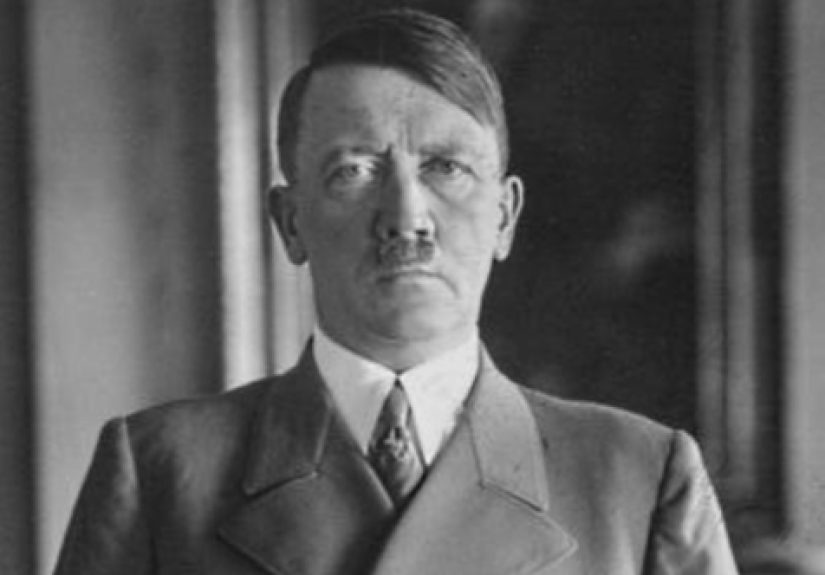
2. The Gas-Mask Moustache That Killed a Fashion Trend
From proud Kaiser moustache to toothbrush strip
If you have ever wondered why no one wears a narrow “toothbrush” moustache anymore, you can thank Hitler.
Early photographs show him with a fuller “Kaiser” moustache, the big sweeping style popular in the
German army. According to one widely repeated story, he was told in World War I to trim it down so his
gas mask would actually seal to his face. The result was that infamous little black rectangle under his nose.
A bizarre branding decision that stuck
The toothbrush moustache was briefly fashionable in the early 20th century (Charlie Chaplin had one, too),
but Hitler wore it long after it became unfashionable. Some accounts say advisers begged him to shave it,
and he refused because the odd look had become part of his “brand.” Whether or not the gas-mask origin
story is perfectly accurate, the effect is undeniable: one man’s stubborn grooming choice permanently
ruined a facial-hair style for everyone else.
3. The “Health Nut” Dictator on Pills, Powders, and Injections
Vegetarian image, non-smoker, teetotaler… and very medicated
Hitler carefully cultivated an image as an ascetic, “clean living” leader: he did not smoke, rarely drank
alcohol, and later in life followed a mostly vegetarian diet. Nazi propaganda leaned hard on this, portraying
him as a disciplined man of iron will with no vices at all.
Behind the scenes, that image was falling apart. Historians and medical records show that his personal
physician, Theodor Morell, gave him a pharmacy’s worth of injections and pillsstimulants, sedatives,
hormones, and opiate-based painkillers. Some researchers argue that by the last years of the war,
the “healthy” Führer was heavily dependent on drugs, a bizarre contrast to his public persona as a model
of Nazi fitness.
The lesson beneath the weirdness
The strange part is not that a powerful man took too many pillsunfortunately, that is not unique.
The bizarre part is how carefully the regime sold him as the pure, self-controlled father of the nation
while his veins told a very different story.
4. Hitler’s Vegetarian Meals and the Terrified Food Tasters
“Delicious vegetables, constant fear”
In the 2010s, a woman named Margot Wölk became famous late in life when she revealed a chilling story:
during the war, she said, she was one of about 15 young women forced to taste Hitler’s food at the
Wolf’s Lair headquarters. Every day they were served elaborate vegetarian mealsbowls of vegetables,
rice, pasta, and fruitand then had to wait to see whether they would drop dead from poison before
the dishes were deemed safe enough for Hitler.
Wölk described the food as “very good” but impossible to enjoy because every bite might be her last.
Her account inspired novels, plays, and a recent film about Hitler’s food tasters, turning a grim duty
into a haunting cultural story.
A bizarre story historians still argue about
The twist: some researchers have expressed doubts about parts of Wölk’s tale because they have not
found independent archival proof of that exact tasting unit at the Wolf’s Lair. Others think her story
is plausible even if some details blurred after decades. Either way, the image is unforgettable:
a dictator so terrified of being poisoned that he turned lunch into Russian roulette for a room
full of young women.
5. Blondi, the Dog Used to Test Cyanide
The propaganda pet who became a victim
Hitler adored his German Shepherd, Blondi. Photographs and newsreels used the dog to soften his image:
here was the “great leader” playing fetch, scratching her ears, and posing as a gentle animal lover.
Blondi slept near him and accompanied him when he retreated to the bunker in the final months of the war.
From beloved dog to lethal experiment
In April 1945, as Soviet troops closed in on Berlin, Hitler planned his suicide and began to worry that
the cyanide capsules he had been given might be fake. To test them, he ordered a capsule crushed in
Blondi’s mouth. The dog died quickly. Later, her puppies were reportedly shot as well.
Few stories capture the coldness of Hitler’s thinking better than this one. Even in the bunker, surrounded
by the ruins of the regime he built, he was willing to sacrifice the animal he supposedly loved in order
to guarantee his own exit would go according to plan.
6. The One-Testicle Myth and the Playground Song
“Hitler has only got one…”
One of the strangest pieces of Hitler lore is very specific and very anatomical: the idea that
he had only one testicle. During World War II, British soldiers sang a famously rude marching song
about Nazi leaders’ supposed genital problems. Over time, people began to wonder whether there was
any truth to the Hitler verse.
What the medical records actually suggest
Decades later, a prison medical record from 1923 surfaced, apparently written after Hitler’s arrest
for the failed Beer Hall Putsch. It noted “right-sided cryptorchidism”an undescended right testicle.
More recently, DNA analysis related to Hitler’s health has been interpreted by some researchers as
consistent with a hormonal condition that can cause undescended testes and other developmental issues.
Historians still argue about exactly what was physically true and what was wartime propaganda, but the
consensus is that there may have been at least a kernel of fact behind the crude marching song.
It is a bizarre example of how even a dictator’s medical chart can mutate into a taunt shouted by
schoolchildren generations later.
7. Operation Valkyrie and the Table Leg That Saved Him
The bomb in the briefing room
On July 20, 1944, German officer Claus von Stauffenberg placed a briefcase bomb under a table during
a military conference at Hitler’s East Prussian headquartersthe Wolf’s Lair. The goal was simple
and desperately serious: kill Hitler, then use a pre-written emergency plan called Operation Valkyrie
to seize control of the government and negotiate peace.
Saved by furniture
The bomb exploded, shredding the wooden conference hut, killing several people, and injuring many more.
Hitler, incredibly, survived. One of the strangest details: someone had moved the briefcase behind
a solid table leg, which shielded him from the full blast. He suffered burst eardrums, burns, and shock,
but walked away alive.
Of all the assassination attempts against Hitler, this is the most famous because it came closest
to successand because such an enormous amount of history hinged, absurdly, on the placement of a
single piece of furniture.
8. The British Soldier Who (Probably Didn’t) Spare His Life
The story: a moment of mercy that changed the world
Another legend claims that, near the end of World War I, a British private named Henry Tandey had
a wounded German soldier in his sights and chose not to fire. Later, so the story goes, that soldier
turned out to be Adolf Hitler. Hitler supposedly recalled the incident, pointed out a painting of Tandey
to British prime minister Neville Chamberlain, and asked him to send his “greetings” to the man who
had spared him.
The reality: a powerful myth, not solid history
Modern research has shown serious problems with the tale. Military records indicate Hitler was likely
on leave when the encounter supposedly happened, and there is no concrete evidence he was ever in
Tandey’s line of fire. Biographers now tend to treat the whole story as an urban legenda weird mixture
of vanity, wishful thinking, and postwar storytelling.
Still, the myth refuses to die, because it taps into a tempting fantasy: the idea that one split-second
choice by an ordinary soldier could have prevented everything that came later.
9. Hitler, the Occult, and the Battle Over His “Mystical” Image
Werewolves, astrologers, and a lot of exaggeration
If you have spent any time in the stranger corners of the history section, you have seen the book covers:
swastikas next to crystal balls, Nazi officers as “occult knights,” Hitler with glowing eyes.
After the war, a whole mini-industry grew up around the idea that Nazism was driven by black magic,
astrology, or some supernatural destiny.
Serious historians are more skeptical. There were definitely Nazis who were obsessed with the occult
and pseudo-scientific “border sciences”Heinrich Himmler is the star examplebut there is little evidence
that Hitler himself ran the Third Reich by tarot card. Many of the wildest stories were written long
after his death, often by authors who did not bother with primary sources.
Why the “occult Hitler” myth is itself bizarre
The fascination says as much about us as about him. Turning Hitler into a sort of demonic sorcerer
makes his crimes feel less human and therefore less frightening. It is easier to tell ourselves
that genocide required literal dark magic than to face the reality: it “only” required fanatical
ideology, bureaucracy, and ordinary people willing to follow orders.
10. The Security-Obsessed Dictator Terrified of His Own Barber
Living in constant fear of assassination
By the later years of his rule, Hitler was surrounded by layers upon layers of security:
food tasters, bodyguards, sealed trains, armored convoys, and strict rules about who could approach him.
He was convinced that enemiesboth Allied and domesticwere constantly trying to kill him,
and given how many assassination plots actually existed, that paranoia was not entirely unfounded.
How even routine tasks became potential threats
Accounts from people around him describe an atmosphere where everyday tasks looked dangerously intimate.
A barber wielding a razor blade; a doctor with a syringe; a servant pouring wineany one of them,
in Hitler’s mind, might be a would-be assassin. That fear shows up in detailed security routines,
background checks, and restrictions on physical contact. The result was a strangely claustrophobic court:
a man whose decisions affected millions, yet who was terrified of the person trimming his hair
or shaving his neck.
It is one of the more ironic bizarre tales: a ruler who tried to dominate an entire continent
but felt unsafe sitting in a barber’s chair.
What These Bizarre Tales Really Tell Us
Taken together, these stories paint a picture that is simultaneously absurd and chilling.
We see Hitler as a bitter failed art student, a man with a ridiculous moustache, a hypochondriac
with a medicine cabinet full of injections, a paranoid eater behind rings of food tasters,
and a superstitious figure wrapped in myths about destiny and near misses.
None of those details make him less dangerous. If anything, they underline a grim truth:
the people who commit history’s worst crimes usually are not supernatural monsters.
They are warped human beings, full of petty fears and strange habits. That might be the most
unsettling bizarre tale of all.
Experiences and Reflections Around “Bizarre Hitler Tales”
For many people who dive into World War II history, these odd stories act as a first doorway.
A curious teenager might stumble across a documentary about Operation Valkyrie or a podcast episode
about the Henry Tandey legend. Someone else might read a magazine piece about Hitler’s drug use
or see a headline about new research into his medical records. The tone is often attention-grabbing:
“You won’t believe this weird fact…”and suddenly the reader is pulled into a darker chapter of history.
Museum educators sometimes talk about how visitors linger over artifacts that connect to these tales:
a photograph of Blondi, a model of the Wolf’s Lair conference room, or a reproduction of the simple
oak table whose leg helped shield Hitler from the 20 July bomb. Those objects feel tangible and
strangely ordinary; they make the events less abstract. Guides then have to steer the conversation
from “Wow, that’s wild” to “Here’s why this matters when we think about power, responsibility,
and the people who resisted.”
In classrooms, teachers often notice a similar pattern. Students perk up when they hear about
food tasters, occult myths, or the one-testicle rumor. That interest can be a useful hook, but
it comes with a responsibility. Good teachers use that curiosity to talk about propaganda,
rumor, and historical method: Which stories can we prove? Which are legends? Why did certain myths
spread so widely? And how do jokes, songs, and gossip become part of how societies cope with
traumatic events?
Survivors’ families sometimes have a more complicated relationship with these tales. For people
whose relatives were murdered in the Holocaust or who lived through the war, hearing Hitler
talked about as a bundle of quirks can feel trivializing. That tension is important to acknowledge.
A responsible approach keeps the human details in view but always returns to the scale of the crimes,
the victims, and the choices made by individuals and institutions that enabled them.
On the internet, especially in comment sections and social media, bizarre Hitler facts can be
misused in another way: they can slide into edgy jokes, ironic memes, or worse, into spaces where
neo-Nazi groups try to recycle old myths and create new ones. That is why historians emphasize
sourcing and context so strongly. When someone posts a dramatic claimsay, about occult rituals
in Nazi Germany or a single bullet that “could have saved 70 million lives”critical readers now
ask: Where does this story come from? Who benefits from telling it this way? What is being left out?
The healthiest way to engage with these bizarre tales is to treat them as starting points,
not endpoints. They can grab our attention, help us see that even the most infamous figures
had strange personal habits, and remind us how myths form around powerful people. But they are
only useful when they lead us deeper: into the study of archives and testimonies, into the stories
of victims and resisters, and into the hard questions about how ordinary societies slide into
extraordinary violence. If the weird details make us more curious, more critical, and more determined
to recognize early signs of fanaticism in our own time, then they have served a purpose.
Conclusion
“10 Bizarre Tales About Adolf Hitler” may sound like the title of a late-night trivia list,
but each entry opens a window onto something bigger: propaganda and image-making, the power of rumor,
the thin line between real history and urban legend, and the unsettling mixture of banality and horror
that defined the Nazi regime. The toothbrush moustache story, the food tasters, the occult rumors,
the bomb shielded by a table legnone of these anecdotes excuse what Hitler did. Instead, they remind us
that even the strangest details of his life sit alongside very real, very human choices that cost
millions of lives.
In the end, the most important “fact” about Hitler is not how he trimmed his moustache or what he ate
for dinner. It is how a society followed him, how institutions enabled him, and how quickly rights
and lives can be destroyed once hateful ideas are put into practice. If these bizarre tales push us
to look harder at that realityand to recognize similar dynamics in the world todaythen they are
worth telling, carefully, one strange story at a time.
SEO Summary
sapo:
Adolf Hitler’s name is usually linked with war and genocide, not toothbrush moustaches, vegetarian
menus, or paranoid rituals in a forest bunker. Yet history is full of bizarre tales about Hitler:
a failed art career, a moustache allegedly trimmed for a gas mask, drug-filled “health” injections,
terrified food tasters sampling his meat-free feasts, and a bomb foiled by a single table leg.
Some of these stories are backed by documents and eyewitnesses; others are myths that grew louder
with every retelling. This in-depth Listverse-style article unpacks ten of the strangest tales,
explains what historians actually know, and shows how these weird details fit into the much larger
and darker story of Nazi Germany. It also explores how readers, teachers, and museums use such
anecdotes todayto hook curiosity, to debunk legend, and to keep the focus where it belongs:
on the real human cost behind the headlines.