Table of Contents >> Show >> Hide
- Fact #1: He didn’t set out to be “the guy”he became him the hard way
- Fact #2: The expedition was a five-ship gamble… and only one ship made it home
- Fact #3: Magellan’s name is on the journey… but Elcano’s hands were on the wheel at the finish
- Fact #4: Elcano’s most important decision was also the most dangerous one
- Fact #5: The Pacific crossing rewired Europe’s understanding of the planet
- Fact #6: The crew numbers read like a survival storybecause it was
- Fact #7: They “lost” a dayand accidentally proved a calendar problem the world would later solve
- Fact #8: The “spice math” was so good it basically paid for the trip
- Fact #9: Elcano was rewarded with one of history’s best flexes: a globe and a Latin mic-drop
- Fact #10: He didn’t get a peaceful retirementhe went back out and never made it home
- Why Elcano Became the “Forgotten” First Circumnavigator
- Extra: of Experiences That Bring Elcano’s Voyage to Life
- Conclusion: The Real “First” Is the One Who Made It Back
Ask someone who “sailed around the world first,” and you’ll often hear Magellansaid with the confidence of a trivia champion,
a history textbook, and that one documentary narrator who pronounces every name like it owes him money.
Here’s the twist: Ferdinand Magellan started the expedition, but he didn’t finish the lap. The man who actually brought the last surviving ship
back to Spaincompleting the first recorded circumnavigationwas a Basque mariner named
Juan Sebastián Elcano. If Magellan is the blockbuster, Elcano is the credits scene that contains the whole plot.
Elcano’s story is messy, brave, strategic, and weirdly modern: leadership changes, supply-chain drama, international competition, and one of the most
famous “Wait… what day is it?” moments in history. Let’s give the guy his long-overdue victory lappreferably without scurvy.
Fact #1: He didn’t set out to be “the guy”he became him the hard way
Elcano wasn’t the expedition’s celebrity captain at the launch. In 1519, five ships left Spain aiming to reach the Spice Islands by sailing west.
Magellan was in charge. Elcano was one skilled mariner among hundredsexperienced, useful, and very much not the headline.
How does a supporting character become the main character?
By surviving. By adapting. And by being the person still standing when the original leadershipthrough death, desertion, and internal chaoswas gone.
History sometimes crowns the best planner. Other times it crowns the person who can still steer when everything is on fire.
Fact #2: The expedition was a five-ship gamble… and only one ship made it home
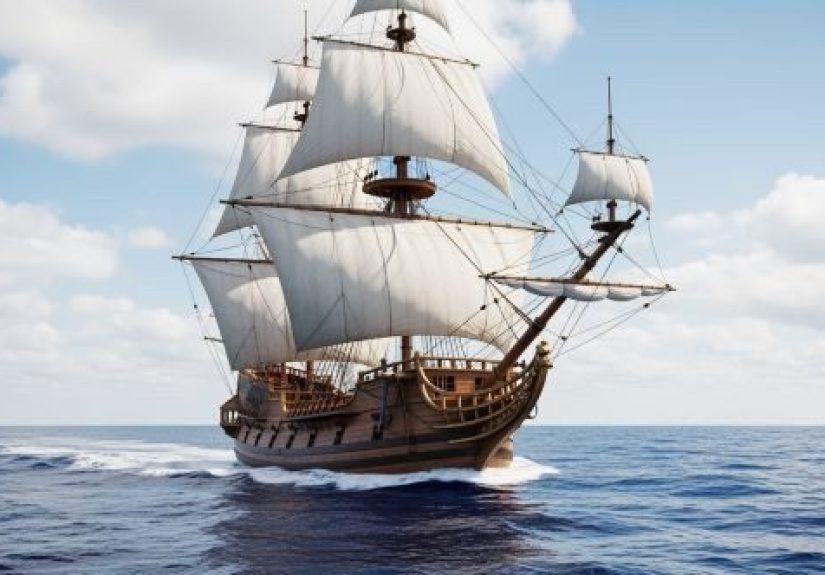
The fleet that departed Spain included Trinidad, San Antonio, Concepción, Victoria, and Santiago.
The mission wasn’t “tourism”it was trade power: reach the Spice Islands and bring back cargo worth a kingdom’s budget.
The ocean was not impressed
Ships were wrecked, lost, or turned back. By the time the voyage became a true circumnavigation, only the
Victoria remained capable of making the full loopand Elcano would be the one to bring it home.
Fact #3: Magellan’s name is on the journey… but Elcano’s hands were on the wheel at the finish
Magellan famously navigated a passage at the southern tip of South America (now the Strait of Magellan) and led the expedition into the Pacific.
But he was killed in the Philippines in April 1521well before the fleet could return to Europe.
So who actually completed the circle?
Elcano. He took command of the Victoria and completed the voyage back to Spain, arriving in September 1522.
That arrival is the moment the first recorded circumnavigation becomes a finished fact, not just a bold plan.
Fact #4: Elcano’s most important decision was also the most dangerous one
After reaching the Spice Islands, the expedition faced a brutal choice: how to get home. One ship, the Trinidad, was in rough shape.
The Victorialoaded with spicesstill had a fighting chance.
Two routes, one problem: Portugal
The “safe” option would have been retracing their path back across the Pacific and through the strait. But “safe” is doing a lot of work in that sentence.
Elcano chose something bolder: head west across the Indian Ocean, round Africa’s southern tip, and sneak back to Spain through waters dominated by the Portuguese.
It was a strategic gambleless predictable, more dangerous, and ultimately historic.
Fact #5: The Pacific crossing rewired Europe’s understanding of the planet
Europeans already suspected the Earth was round, but suspicion and proof are not the same thing. This voyage put the theory on a ship and dared the ocean
to argue.
The “big reveal” was the Pacific’s size
The expedition’s Pacific crossing showed just how enormous that ocean really is. That changed maps, planning, trade expectations, and the very idea of
“how far away” Asia was when approached from the west. You can draw a circle on a globe in five seconds; living it took years.
Fact #6: The crew numbers read like a survival storybecause it was
Hundreds left. A tiny fraction returned on the Victoria. Depending on the accounting used in historical records, the starting crew is often
cited around the mid-200s, and only 18 Europeans arrived back with Elcano in 1522 (with additional survivors associated with the expedition
returning later under different circumstances).
What happened to everyone?
A little bit of everything you don’t want on a voyage: starvation and illness, mutiny, shipwrecks, battles, desertions, arrests, storms, and political pursuit.
If you’ve ever had a travel day where everything goes wrong, this is thatscaled up to “history-changing.”
Fact #7: They “lost” a dayand accidentally proved a calendar problem the world would later solve
One of the strangest moments of the return journey came near Cape Verde, when the crew realized their recorded date didn’t match the local date.
They were, effectively, a day off.
The weird math of going around the world
Traveling westward across time zones causes you to experience fewer sunrises than someone staying put. The expedition didn’t have an International Date Line
to make it neat and official. They had confusion, hard-earned humility, and a very strong desire to not be arrested while doing timekeeping math.
Fact #8: The “spice math” was so good it basically paid for the trip
The Victoria returned not just with exhausted sailors, but with a cargo of high-value spicesespecially clovesprecisely the kind of product
European powers were willing to bankroll risky voyages to obtain.
Why cloves were basically the microchips of the 1500s
Spices were compact, durable, and wildly profitable. In an era without refrigeration and with limited medicine, spices mattered culturally and economically.
That cargo helped justify the expedition’s horrific losses and made the voyage “worth it” to the investors who weren’t the ones eating hardtack for breakfast.
Fact #9: Elcano was rewarded with one of history’s best flexes: a globe and a Latin mic-drop
When Elcano and the surviving crew met the Spanish crown, the recognition wasn’t subtle. He received an augmentation to his coat of arms featuring a globe and
the motto: “Primus circumdedisti me”often translated as “You were the first to encircle me.”
It’s not bragging if it’s literally on your shield
The motto is basically the 16th-century version of “Achievement Unlocked.” And yet, outside of specialist history circles, Elcano’s name still doesn’t get
the same pop-culture spotlight as Magellan’s.
Fact #10: He didn’t get a peaceful retirementhe went back out and never made it home
If Hollywood wrote this, Elcano would retire after the circumnavigation and open a charming seaside tavern called The Globe.
Real life did what it does: it kept going.
The ocean took its favorite payment: “one more voyage”
Elcano joined a later expedition toward the Spice Islands (the Loaísa expedition). He died at sea in 1526.
So the man who finished the world’s first recorded circumnavigation didn’t get to enjoy the fame for long.
Why Elcano Became the “Forgotten” First Circumnavigator
So why do so many people still say “Magellan”?
- Names stick to landmarks. Magellan has a strait and celestial objects tied to his legacy. Elcano doesn’t get as many “map shout-outs.”
- Beginnings get romanticized. The person who starts the epic often becomes the hero in simplified retellingseven if someone else finishes it.
- The ending is complicated. A return journey involving Portuguese-controlled waters, captured sailors, and a half-dead crew is harder to package into a neat legend.
But history isn’t just about who had the bold idea. It’s also about who had the stamina, judgment, and nerve to bring the ship home when the plan collapsed.
That’s Elcano’s laneand it’s a long one. Literally: around the world.
Extra: of Experiences That Bring Elcano’s Voyage to Life
You don’t have to sail a creaking carrack across the Indian Ocean to feel how unreal Elcano’s accomplishment was. There are modern ways to “touch” the story
intellectually, emotionally, and even through your senseswithout risking your entire friend group to scurvy and bad navigation.
Start with the most underrated experience: reading a primary account. Antonio Pigafetta’s journal of the voyage (kept by a crew member)
turns the expedition from a line on a map into lived daysrationing, fear, awe, and the constant argument between hope and reality. Even small details
(what people ate, how they described storms, what surprised them culturally) make you realize this wasn’t “destiny.” It was people improvising under pressure.
Next, try a map-tracing experiment. Pull up a world map and trace the route with your finger, but add pauses where the crew would have suffered
delays: wintering on the South American coast, threading the strait, the long Pacific crossing, the stopovers in island chains, and the tense decision to return
west through Portuguese-influenced waters. You’ll notice something modern brains hate: the “empty” spaces. The Pacific looks like a blank sheet because,
for Europeans at the time, it basically was. That blankness is part of the terror.
If you want a sensory connection, do the simplestand funniestthing possible: cook with cloves. Make mulled cider, spice cookies,
or a savory stew and set the cloves beside you before you use them. The point isn’t “historical accuracy.” It’s realizing that a tiny bud of dried plant matter
could motivate nations to bankroll voyages that broke ships and lives. When you smell cloves, you’re smelling the economic engine behind the expedition.
Another surprisingly powerful experience is visiting a maritime museum or watching a serious historical documentary that focuses on the voyage’s
logisticsship design, navigation tools, supply planning, and the human cost. When you learn how limited their instruments wereand how massive their uncertainty was
Elcano’s final choices feel less like “luck” and more like decision-making under extreme ambiguity.
Finally, try a time-zone empathy moment: pick one day and track what time it is in Spain, South America, the Philippines, and Indonesia.
You’ll quickly feel the mental load of living in a world where clocks don’t agree and nobody has invented the cheat codes yet. Elcano’s crew didn’t just sail
around the worldthey sailed into a new way of understanding it. And the best modern experience is realizing that the globe you take for granted was, for them,
a terrifying question mark they answered with wood, wind, and stubbornness.
Conclusion: The Real “First” Is the One Who Made It Back
Juan Sebastián Elcano doesn’t need a strait named after him to matter. He completed the first recorded circumnavigation by bringing the
Victoria home to Spain in 1522, proving (in the most expensive way possible) that the oceans connect and the world can be encircled by sea.
Magellan launched the expedition, but Elcano finished the sentence. And in historyjust like in group projectsfinishing counts.