Table of Contents >> Show >> Hide
- 1. John Montagu, 4th Earl of Sandwich – The Sandwich
- 2. Ignacio “Nacho” Anaya – Nachos
- 3. Caesar Cardini – Caesar Salad
- 4. Alfredo di Lelio – Fettuccine Alfredo
- 5. Zuo Zongtang (General Tso) – General Tso’s Chicken
- 6. Dame Nellie Melba – Peach Melba & Melba Toast
- 7. Anna Pavlova – Pavlova
- 8. Queen Margherita of Savoy – Pizza Margherita
- 9. Maria Ann “Granny” Smith – Granny Smith Apples
- 10. Dr. James H. Salisbury – Salisbury Steak
- What It’s Like to Eat History: Experiences with Foods Named After People
- Conclusion
Most of us dream of leaving a legacy: a book, a building, maybe a foundation with our name on it.
But a very special, very delicious handful of humans were immortalized in a far tastier way on the menu.
From a gambler who didn’t want to leave the card table to a prima ballerina who inspired a cloud of meringue,
these people didn’t just make history. They became dinner.
In this Listverse-style tour through culinary trivia, we’ll meet ten real people whose names now live
forever in sandwiches, salads, pastas, pizzas, and desserts. Along the way you’ll see how necessity,
marketing, ego, and pure fan-girling all helped turn ordinary dishes into edible monuments.
1. John Montagu, 4th Earl of Sandwich – The Sandwich
From aristocrat to lunchtime legend
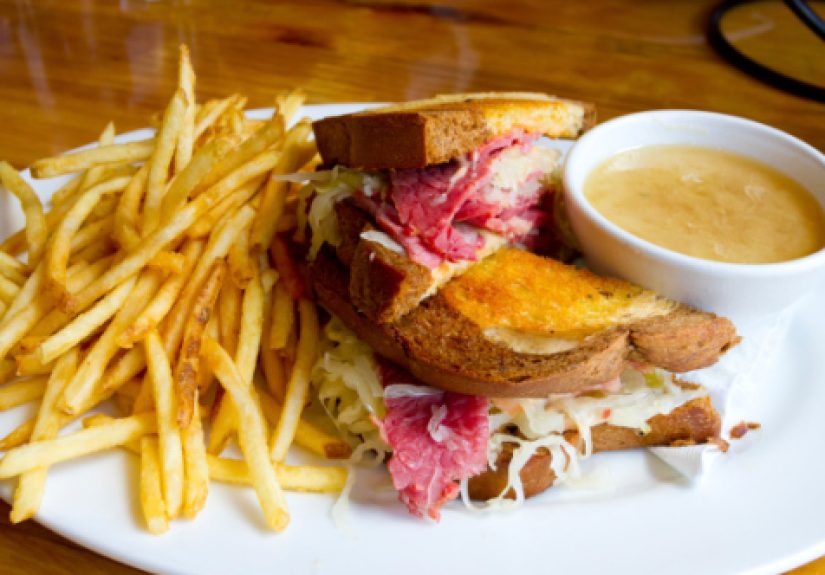
John Montagu, the 4th Earl of Sandwich, was an 18th-century British politician with a serious
gambling habit. According to popular legend, he was so devoted to the card table that he refused
to stop playing even for a proper meal. Instead, he ordered meat tucked between slices of bread
so he could eat with one hand and keep his cards clean with the other. Other gamblers began asking
for “the same as Sandwich,” and an everyday food icon was born.
Did he really invent it?
To be fair, people were putting fillings inside or on top of bread long before the Earl showed up,
but he definitely gave the concept a catchy brand name. Over time, the “sandwich” evolved from a
gambler’s snack to a global category that includes everything from PB&J to banh mi. The Earl might
not have invented the idea, but he absolutely scored the naming rights the ultimate lifetime
sponsorship deal, paid in cold cuts.
2. Ignacio “Nacho” Anaya – Nachos
The maître d’ with a midnight problem
In 1943, Ignacio Anaya García was working as a maître d’ at the Victory Club in Piedras Negras,
Mexico, just across the border from Texas. One night, a group of hungry U.S. military wives arrived
after the kitchen had technically closed. Rather than turn them away, Anaya raided whatever he
could find: tortilla chips, cheese, and jalapeños.
“Nacho’s especiales” go worldwide
He melted the cheese over the chips, scattered sliced jalapeños on top, and served the improvised
snack as “Nacho’s especiales” “Nacho’s specials,” using his own nickname, “Nacho,” the standard
diminutive for Ignacio in Spanish. Customers loved it, the dish spread across the border, and the
name was shortened to “nachos.” Today, stadiums, bars, and movie theaters around the world serve
what is essentially Ignacio’s emergency pantry hack. If you’ve ever demolished a platter of cheesy
nachos during a game, you’ve been snacking in honor of Señor Anaya.
3. Caesar Cardini – Caesar Salad
A prohibition-era improvisation
Contrary to the loudest myth on the internet, Caesar salad is not named after Julius Caesar.
The real Caesar was Caesar Cardini, an Italian immigrant restaurateur who ran a popular spot
called Caesar’s in Tijuana, Mexico, in the 1920s. On a chaotic Fourth of July in 1924, the kitchen
ran low on ingredients. Cardini supposedly tossed together romaine, croutons, Parmesan, olive oil,
egg, lemon, Worcestershire sauce, and a few other pantry heroes, then finished it tableside for drama.
From border-town special to global menu must-have
That improvised salad crunchy, garlicky, umami-rich became his signature. Guests loved the
tableside show almost as much as the flavor, and word-of-mouth carried the Caesar salad north into
the United States and then around the world. Today it’s one of the most common restaurant salads,
endlessly remixed with grilled chicken, shrimp, or kale. Cardini may not have conquered Europe,
but he did conquer every “Soups and Salads” section in America.
4. Alfredo di Lelio – Fettuccine Alfredo
The pasta born out of love (and nausea)
Alfredo di Lelio was a Roman restaurateur who, according to family lore, first created his famous
fettuccine in the early 20th century for his wife, who had lost her appetite after giving birth.
He made fresh pasta and tossed it with an indulgent amount of butter and young Parmesan cheese,
creating a silky, rich sauce without cream. It worked. She ate. A legend was simmering.
Hollywood discovers Alfredo
The dish really took off when Hollywood stars Mary Pickford and Douglas Fairbanks visited his
restaurant in Rome in the 1920s and fell in love with it. They allegedly gifted him a golden fork
and spoon, and when they went back to the United States, the story and the pasta came with them.
American restaurants started serving “Fettuccine Alfredo,” often adding cream, chicken, and other
extras. Purists in Italy may roll their eyes, but Alfredo’s name lives forever in creamy pasta form.
5. Zuo Zongtang (General Tso) – General Tso’s Chicken
The general who never tasted his own dish
General Zuo Zongtang (often called Tso Tsung-t’ang in older romanizations) was a 19th-century
Chinese statesman and military leader from Hunan. He helped suppress several major rebellions and
became a national military hero. What he did not do, as far as we can tell, is invent a sweet, sticky,
deep-fried chicken dish for American takeout menus.
A Chinese-American tribute
General Tso’s chicken as we know it appears to have been created by Hunanese chefs working in
Taiwan and later adapted in the United States for American tastes less chili heat, more sugar,
lots of deep-fried crunch. The dish was named in honor of the famed general, either as a nod to
Hunan pride or because his name simply sounded strong and memorable. Today, you can’t think
“Chinese takeout” without picturing General Tso’s glossy, sesame-sprinkled chicken, making him
perhaps the most widely eaten military figure in history.
6. Dame Nellie Melba – Peach Melba & Melba Toast
The opera star with a dessert (and a diet food)
Nellie Melba, born Helen Porter Mitchell, was an Australian opera superstar at the turn of the
20th century. She was such a big deal that when she performed in London, legendary chef Auguste
Escoffier created a dessert in her honor: Peach Melba. The dish combined poached peaches, vanilla
ice cream, and raspberry sauce, originally presented over a swan-shaped ice sculpture inspired by
Wagner’s Lohengrin.
One name, two very different snacks
Escoffier later also created Melba toast ultra-thin, twice-baked slices of bread reportedly
as a lighter food for the singer when she was ill or watching her weight. So Melba managed to land
both a lush, elegant dessert and a crunchy, diet-friendly cracker named after her. That’s range.
Very few celebrities can say they’ve been immortalized in both dessert and carb-restricted form.
7. Anna Pavlova – Pavlova
A ballerina turned into a cloud of sugar
Anna Pavlova was a Russian prima ballerina who toured the world in the early 20th century,
dazzling audiences with her ethereal dancing. In Australia and New Zealand, chefs were so captivated
that they created a dessert in her honor: the pavlova, a meringue-based confection with a crisp
shell and marshmallow-soft center, topped with whipped cream and fruit.
The dessert that started a food war
Both Australia and New Zealand claim to have invented the pavlova during or after her 1920s tours,
and the rivalry over who made it first has become part of national culinary folklore. Whatever its
exact origin, the dessert is designed to echo Pavlova’s lightness and grace airy, delicate, and
dramatic on the plate. Not many performers get their own work of edible fan art, but Pavlova did,
and it’s still a staple at celebrations across both countries.
8. Queen Margherita of Savoy – Pizza Margherita
A royal visit, a patriotic pie
One of the most famous pizzas on Earth, the Margherita, is traditionally said to be named after
Queen Margherita of Savoy, the queen consort of Italy in the late 19th century. In 1889, during a
visit to Naples, a pizzaiolo named Raffaele Esposito allegedly created a pizza in her honor, topped
with tomatoes, mozzarella, and basil to represent the red, white, and green of the Italian flag.
Legend, marketing, and a timeless classic
Later research has raised questions about how much of that story is myth and how much is marketing,
but the name stuck. Whether or not the queen personally swooned over that specific pie, “pizza
Margherita” became shorthand for the quintessential Neapolitan pizza: simple dough, bright tomato,
creamy cheese, and fragrant basil. It’s proof that sometimes the best branding is also the simplest:
three colors, one queen, infinite takeout orders.
9. Maria Ann “Granny” Smith – Granny Smith Apples
The grandmother with the sharp green legacy
Maria Ann Smith was an English-born farmer who emigrated to New South Wales, Australia, in the 1800s.
In 1868, she reportedly discovered a vibrant green apple seedling growing from discarded apple scraps
(likely French crab apples) in her orchard. She cultivated the tree, and the resulting fruit was tart,
firm, and excellent for cooking.
From backyard seedling to global supermarket staple
The new variety was eventually named “Granny Smith” in her honor, both acknowledging her age and her
role in developing the apple. Today, Granny Smith apples are among the most recognizable varieties
in the world. They’re beloved for pies, salads, and snacking especially if you like your fruit
with a bit of attitude. Maria Ann Smith didn’t get a statue, but every produce aisle is basically
a Granny Smith memorial garden.
10. Dr. James H. Salisbury – Salisbury Steak
When meat was medicine
James Henry Salisbury was a 19th-century American physician and an early proponent of what we’d now
call “nutrition science” though his ideas would make modern dietitians wince. During and after the
American Civil War, he became obsessed with the connection between digestive health and diet. One of
his prescriptions: a plate of minced beef formed into a patty, cooked thoroughly, and served with
minimal seasoning. This was the original “Salisbury steak.”
From health cure to TV dinner stereotype
Salisbury believed that a diet rich in lean beef and coffee could cure many ailments. His steak was
initially a kind of medically recommended food, but in the 20th century it morphed into a comfort dish
served with brown gravy and mashed potatoes, then into a staple of frozen TV dinners. Today, the
name “Salisbury steak” might conjure cafeteria trays and microwave meals more than medical advice,
but it still carries his name proof that the line between “health food” and “guilty pleasure” is
sometimes just a puddle of gravy.
What It’s Like to Eat History: Experiences with Foods Named After People
Reading about these foods is fun, but actually eating them feels a bit like time travel with a fork.
Each dish carries a story, and once you know it, you can’t un-know it suddenly your lunch is also
a history lesson.
Take a simple sandwich. Before you learned about the 4th Earl of Sandwich, it was just bread and
fillings. Afterward, every BLT or grilled cheese comes with the mental image of an 18th-century
aristocrat hunched over a gambling table, refusing to get greasy fingers on his cards. It adds a
slightly ridiculous glamour to your lunch break: “I’m not eating at my desk; I’m honoring a noble
tradition of irresponsible time management.”
The same thing happens with nachos. At a movie theater or bar, they used to be just a convenient way
to get molten cheese into your face without using utensils. Once you know Ignacio “Nacho” Anaya
whipped them up at the last minute to avoid disappointing late-arriving customers, the dish feels
a bit more generous and human. You’re not just mindlessly snacking; you’re participating in a story
about hospitality and quick thinking. Every jalapeño ring is like a tiny exclamation point on his
improvisation.
Caesar salad hits differently once you understand it was born in a Tijuana restaurant during a
chaotic holiday rush. When you see a server crack a raw egg into a dressing, add anchovies, and toss
it all with romaine, you can imagine a stressed chef in 1924 making the best of what he had. That
backstory might even make you more tolerant when a modern kitchen is “out of” something after all,
a shortage is literally how Caesar salad became a thing in the first place.
Desserts have their own emotional flavor. Knowing that Peach Melba was created to celebrate Nellie
Melba turns a scoop of ice cream and poached peaches into edible fan mail. It’s hard not to feel a
little extra dramatic when you eat it like you should be in an evening gown, applauding between
bites. Pavlova works the same way: once someone tells you it’s named for a ballerina and meant to
echo her lightness, that crisp shell and marshmallow-soft center suddenly feel like choreography on
a plate.
Pizza Margherita and Granny Smith apples offer another kind of experience: everyday foods hiding royal
and pioneer stories in plain sight. Most people who order a Margherita pizza are just thinking,
“I like cheese and basil.” Once you know it’s tied at least in legend to Queen Margherita of Savoy,
you realize that your basic “cheese pizza” has a royal origin myth. Similarly, that tart green apple
in your lunch box is a reminder that a grandmother in Australia once spotted a promising seedling and
decided to nurture it instead of pulling it up. You’re eating the result of her curiosity and patience.
Even the slightly less glamorous entries, like Salisbury steak, change once you have the context.
The cafeteria classic suddenly traces back to a doctor trying to cure digestive disease among soldiers.
It might still arrive in a puddle of suspicious gravy, but you can at least appreciate that the idea
started as an earnest attempt at science-based eating long before “high-protein diets” were a
marketing slogan.
The bigger takeaway from experiencing these foods is how human the stories are. None of these people
set out thinking, “My name will be remembered because someone will one day deep-fry chicken in my
honor.” Most of the dishes came from accidents, constraints, fan worship, or clever branding.
You feel that when you eat them. It’s a reminder that the small choices people make in kitchens
a shortcut here, a tribute there, a new combination born out of necessity can stick around for
generations.
So the next time you grab a sandwich, split nachos with friends, or twirl a forkful of fettuccine
Alfredo, pause for half a second. You’re not just eating. You’re participating in a weird, wonderful
tradition of immortalizing people by turning them into dinner. And honestly, as legacies go, being
remembered every time someone gets hungry is not a bad deal.
Conclusion
From kings and queens to gamblers, grandmothers, doctors, and divas, a surprising number of people
have had their names baked, grilled, and whipped into culinary history. Some, like the Earl of
Sandwich and Ignacio Anaya, became food icons by accident. Others, like Nellie Melba and Anna Pavlova,
were honored by chefs who turned admiration into dessert. A few, like General Tso and Dr. Salisbury,
became symbolic figures whose reputations were later borrowed (or hijacked) for the sake of a catchy
menu name.
Together, these stories show that food is more than fuel. It’s memory, marketing, mythmaking, and
sometimes pure chaos and our menus are as full of human history as our libraries. You might forget
the dates and the dynasties, but you’ll definitely remember the taste of a Margherita pizza or a
Granny Smith apple. In the end, being immortalized as a food might be one of the most delicious ways
to live forever.
meta_title: 10 People Immortalized as Foods
meta_description: Discover 10 real people whose names live on in iconic foods,
from sandwiches and nachos to Peach Melba and Pavlova.
sapo: Some people get statues; others get scholarships, streets, or dusty portraits
in history books. But a special handful are immortalized in a far more delicious way: on the menu.
This in-depth, list-style guide explores 10 real people whose names became everyday foods, from the
4th Earl of Sandwich and Ignacio “Nacho” Anaya to Queen Margherita, Nellie Melba, and Anna Pavlova.
You’ll learn the true stories (and the myths) behind classics like Caesar salad, Fettuccine Alfredo,
Pizza Margherita, Granny Smith apples, and more plus how accidents, ego, marketing, and fan
obsession turned ordinary dishes into edible monuments. Read this before your next snack, and
you’ll never look at your lunch the same way again.
keywords: people immortalized as foods, foods named after people, famous dishes
named after people, food history trivia, Listverse style list, culinary legends, pop culture food names