Table of Contents >> Show >> Hide
- First, a quick sanity check: vintage vs. antique vs. retro
- 1) Choose one “hero” vintage piece and build around it
- 2) Mix vintage and modern like a DJ, not like a blender
- 3) Use color to make mismatched pieces look like they belong together
- 4) Layer in vintage textiles for instant warmth
- 5) Upgrade your lighting with vintage charm
- 6) Create a vintage gallery wall (without making it look like a dentist office)
- 7) Swap hardware and small details for a “vintage wink”
- 8) Bring in architectural salvage for real character
- 9) Style shelves with vintage objects and a little editing
- 10) Shop vintage like a pro (so you don’t bring home regrets)
- Bonus: Keep vintage decor looking intentional, not accidental
- Wrap-up: Vintage style is a vibeand a skill you build
- Real-Life Experiences: What It’s Actually Like Decorating With Vintage
Vintage decor is the design world’s way of saying, “I have taste and I can spot a deal from three aisles away.”
The best vintage rooms don’t look like a themed set or your grandma’s attic exploded (with love, Grandma).
They feel collectedlayered with stories, textures, and a little patina that makes newer spaces feel instantly warmer.
In this guide, you’ll get ten practical, designer-approved ways to add vintage decor to your interior stylewithout turning your home into a museum
or a thrift store “before” photo. Expect specific examples, a few gentle rules to keep things cohesive, and permission to break those rules once you
know why they exist.
First, a quick sanity check: vintage vs. antique vs. retro
People use these interchangeably, but they’re not quite the same:
- Vintage: older pieces (often from previous decades) that feel of-their-era and are now desirable again.
- Antique: typically older items with historical value and craftsmanshipoften treated more carefully.
- Retro: new items made to look old (think: brand-new diner stool pretending it’s 1957).
Your goal isn’t to label every object like a curator. Your goal is to build a home that feels personal, balanced, and a little more interesting than
“all beige, all the time.”
1) Choose one “hero” vintage piece and build around it
If you’re new to vintage home decor, start with a single statement itemthe piece that makes you grin like you just found money in an old coat pocket.
A hero piece anchors the room and prevents “random thrift chaos.”
Good hero pieces (high impact, easy to style)
- A mid-century credenza (bonus: doubles as a TV console)
- An ornate vintage mirror (instant light + drama)
- A vintage rug with rich pattern
- A classic wingback chair or bentwood chair
Keep the rest of the room calmerclean-lined sofa, simple curtains, neutral wallsso the vintage piece looks intentional, not accidental.
2) Mix vintage and modern like a DJ, not like a blender
The most livable interiors usually combine old and new. The trick is balance: let modern pieces handle the “background work” (comfort, scale, function),
and let vintage pieces handle the personality.
A simple mixing formula
- Modern base: sofa, bed, main storage, rugs if you need easy upkeep
- Vintage accents: lighting, art, side tables, ceramics, frames, mirrors
This approach avoids the “everything matches” look while also dodging the “yard sale showroom” vibe.
3) Use color to make mismatched pieces look like they belong together
When you’re working across decades, color is your secret handshake. A shared palette can make wildly different styles feel cohesive.
You don’t need a rigid schemejust a few repeat notes.
Quick ways to unify with color
- Repeat one metal finish twice (brass lamp + brass frame)
- Echo a rug color in pillows or art
- Keep large pieces neutral, then go bolder with vintage accessories
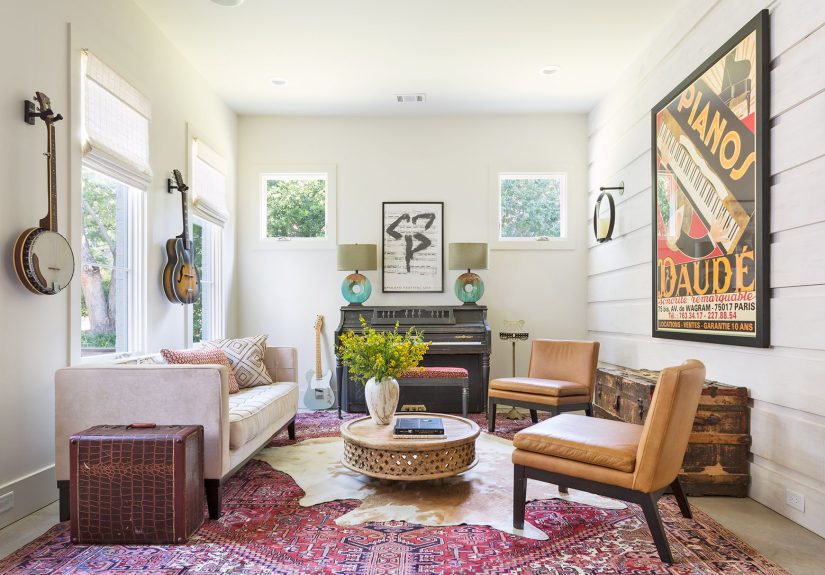
Example: A modern cream sofa + a vintage Persian-style rug + two framed prints that pull out the rug’s deep reds or blues = cohesive, not chaotic.
4) Layer in vintage textiles for instant warmth
If your room feels a little “new apartment sterile,” textiles are the fastest fix. Vintage textiles add softness, pattern, and a lived-in feelwithout
you needing to replace the big-ticket furniture.
Try these textile upgrades
- Rugs: vintage or vintage-style rugs soften modern layouts and hide life’s little crumbs
- Throws: quilts, wool blankets, or embroidered textiles add texture
- Pillows: mix sizes and patterns; use one “wild card” print to keep it fun
- Window treatments: linen-look panels or patterned curtains can nod to an era without screaming it
Pro move: use a vintage textile as wall art (a small tapestry, a framed scarf, or a beautifully patterned piece that deserves a better life than a closet).
5) Upgrade your lighting with vintage charm
Lighting is where vintage decor punches above its weight. A single vintage lamp can make a room feel curated, even if the rest of the space is still
getting its life together.
Easy lighting swaps
- A vintage table lamp on a modern console
- Vintage-inspired sconces in a hallway or reading nook
- A statement pendant over the dining table (especially if your current light is “builder basic”)
Tip: If you’re nervous, start with lamps first. They’re lower commitment than hardwired fixtures and still deliver major atmosphere.
6) Create a vintage gallery wall (without making it look like a dentist office)
Vintage frames and art add instant character. The goal is “collected over time,” not “stock photo wall from aisle 7.”
What to hang
- Vintage prints, maps, botanical sketches, or portraits
- Black-and-white family photos (or thrifted photos if you like a little mystery)
- Small oil landscapes or sketches found secondhand
How to make it cohesive
- Pick one unifying element: frame color, mat color, or a repeating tone in the art
- Mix sizes: one larger anchor piece + smaller companions
- Leave breathing roomnegative space keeps it elevated
7) Swap hardware and small details for a “vintage wink”
Want vintage style without buying a single piece of furniture? Start with the little stuff. Hardware is the design equivalent of a great accessory:
small change, big effect.
Low-effort, high-impact swaps
- Cabinet knobs and drawer pulls (brass, glass, ceramic)
- Switch plates (seriouslytiny details matter)
- Faucet styles or towel bars that match your era vibe
These upgrades help modern spaces feel less “just moved in yesterday” and more “thoughtfully finished.”
8) Bring in architectural salvage for real character
Architectural salvage is vintage decor with backbone. Think: old-house charm you can add even if you live in a brand-new build.
Salvage pieces tend to be richly textured and slightly imperfectaka, exactly what makes a room feel human.
Beginner-friendly salvage ideas
- An antique door as a headboard backdrop (or decorative panel)
- Vintage corbels used as shelf brackets
- Old windows or shutters as wall decor
- Wooden crates or trunks as storage
The key is moderation. One salvage moment per room can feel architectural and intentional; five can feel like you’re opening a set-design warehouse.
9) Style shelves with vintage objects and a little editing
Vintage decor shines on shelves because small pieces are easy to rotate seasonally (or when you get bored, which is a perfectly valid design reason).
But styling only works if you edit. The goal is “curated,” not “cluttered.”
A shelf styling cheat code
- Vary heights: stack books, add a taller vase, then a small sculptural object
- Use odd numbers: groups of 3 or 5 often look more natural than pairs
- Mix materials: ceramic + brass + wood + glass = richer than all one material
Great vintage shelf staples: milk glass, small oil paintings, brass candlesticks, stoneware, framed mini prints, and a quirky object that makes people ask,
“Where did you find that?”
10) Shop vintage like a pro (so you don’t bring home regrets)
Vintage shopping is part strategy, part luck, part “why is this chair following me home?” The best results come from being prepared without being rigid.
Smart shopping habits
- Measure first: keep a note on your phone with key dimensions (doorways included)
- Inspect structure: wobbly legs and cracked joints can be fixable, but know what you’re signing up for
- Look for craftsmanship: solid wood, dovetail drawers, quality joinery
- Be flexible: the best finds are often not the exact thing you “planned” to buy
Where to hunt
- Thrift stores (go ofteninventory changes constantly)
- Estate sales and antique malls
- Consignment shops
- Online marketplaces (use keywords like “mid-century,” “campaign,” “Hollywood Regency,” “bentwood,” “brass”)
Bonus: Keep vintage decor looking intentional, not accidental
A few quick “guardrails” can keep your vintage interior style polished:
- Mind scale: a petite vintage side table can look lost next to a giant sectionalbalance matters.
- Repeat materials: if you have brass once, echo it again somewhere else.
- Mix eras on purpose: all one decade can feel staged; blending decades feels more natural.
- Let patina be the point: minor wear is part of the charmdon’t erase the story unless you truly need to.
Wrap-up: Vintage style is a vibeand a skill you build
The best way to add vintage decor to your interior style is to start small, stay consistent with color and scale, and choose pieces you genuinely love.
Don’t chase a perfect “look.” Chase a home that feels like you, with a few objects that have already lived an interesting life.
Real-Life Experiences: What It’s Actually Like Decorating With Vintage
Let’s talk about the part the glossy photos don’t show: the real-life experience of living with vintage decor. It’s fun, yes. It’s also a little like
datingexciting at first sight, then you learn their quirks, and eventually you decide if you’re in it for the long haul.
The first lesson is that vintage pieces have opinions. A mid-century credenza might be gorgeous, but it may also have drawers that stick until the room’s
humidity decides to behave. A vintage lamp might be perfect, but you’ll quickly discover that old wiring is not a personality trait you want in your
daily life. The fix is usually simple: treat “function” as non-negotiable. If something will be used every day (a reading lamp, a dining chair,
a dresser), either buy it in great working condition or budget time for repairs. Vintage is charming; a wobbly chair at Thanksgiving is less charming.
The second lesson is that measurements are your best friend, and your worst enemy when ignored. Many people learn this after they fall in love with a
gorgeous cabinet that “totally looks like it’ll fit” and then discover it blocks the hallway like a polite wooden bouncer. Keeping a note on your phone
with room dimensions, doorway widths, and ideal furniture sizes turns you into the calm, prepared version of yourselfthe one who doesn’t have to
re-list a “beautiful, barely used” piece online two days later.
The third lesson is about cleaning and care. Vintage objects often come with a bit of historysometimes that history is a delightful patina, and sometimes
it’s an “eau de attic.” A gentle clean (and patience) goes a long way. For soft goods, you learn to be picky: you’ll probably pass on certain vintage
upholstery unless it’s from a trusted source or you’re ready to reupholster. For wood pieces, you get comfortable with basic maintenance:
dusting, polishing sparingly, and keeping special items out of harsh sun so finishes don’t fade. It’s not complicatedit just asks you to be a little
more intentional than you’d be with a flat-pack nightstand.
The fourth lesson is that vintage decor changes the way you shop. You stop thinking in “I need a thing” and start thinking in “I need a function.”
A trunk can be a coffee table. A stack of vintage books can be a side-table base. A set of old framed prints can become a gallery wall that looks
like it took years (even if you found it on a lucky Saturday). This mindset is where your home starts to feel truly collectedbecause you’re not buying
matching sets; you’re building a layered space that reflects your tastes and your creativity.
The final lesson is the best one: vintage makes your home feel more personal, faster. Even one or two well-chosen pieces can shift a room from “nice”
to “tell me where you found that.” If you take one takeaway from the whole vintage-decor adventure, let it be this:
choose fewer pieces, choose better, and let them breathe. When every object has room to shine, your space looks intentional
and you get to enjoy the stories without living inside the entire thrift store at once.