Table of Contents >> Show >> Hide
- Table of Contents
- 1) Use Today’s Deals + Lightning Deals like a pro
- 2) Clip Amazon Coupons (yes, there’s a hub)
- 3) Work Subscribe & Save for bigger discounts (without getting trapped)
- 4) Hunt overstock in Amazon Outlet
- 5) Buy open-box/returns via Amazon Resale (formerly Warehouse)
- 6) Go refurbished with Amazon Renewed
- 7) Trade in old tech for gift cards + promotional discounts
- 8) Use registry completion discounts strategically
- 9) Take No-Rush Shipping rewards (when you can)
- 10) Get a discounted Prime membership
- 11) Share Prime benefits through Amazon Household/Family
- 12) Track prices with alerts before you buy
- 13) Do the “other seller” + bundle promo check (the unsexy money-saver)
- Conclusion
- Extra: of Real-World Amazon Discount Experience
- Experience #1: The coupon I didn’t clip (and still think about)
- Experience #2: Subscribe & Save is amazing… until it isn’t
- Experience #3: Open-box is the MVP category (if you pick wisely)
- Experience #4: Price trackers saved me from “deal theater”
- Experience #5: The best Amazon discount is buying fewer “almost” purchases
Shopping on Amazon is a little like going to a buffet: there’s always “a deal,” but sometimes you leave wondering why you just paid full price for something that will be 23% off the moment you blink. The good news: getting real discounts on Amazon isn’t luckit’s a repeatable system.
Below are 13 practical, legit ways to save money on Amazon without turning your life into a spreadsheet (unless you like spreadsheetsno judgment). You’ll learn where Amazon hides the best discounts, how to stack savings the safe way, and when waiting 24 hours can save you more than any “limited-time” banner ever will.
1) Use Today’s Deals + Lightning Deals like a pro
Amazon’s “Today’s Deals” page is where discounts go to do cardio. It’s constantly updating with limited-time promotions, including Lightning Deals (fast, limited quantity, usually one per customer). Translation: if you see a deal you truly want, don’t add it to your cart and go make a sandwich unless you enjoy disappointment.
How to squeeze more value from deal pages
- Filter first (category, price range, rating) so you’re not doom-scrolling air fryers until retirement.
- Watch the timer and the claimed bar on Lightning Deals; “almost gone” is Amazon’s version of a closing argument.
- Build a shortlist (Wish List or Saved for Later) so you’re ready when the price drops.
Example: If you buy household basics (trash bags, detergent, pet food), checking Today’s Deals once or twice a week can shave meaningful dollars off recurring purchaseswithout changing brands every time like a coupon gremlin.
2) Clip Amazon Coupons (yes, there’s a hub)
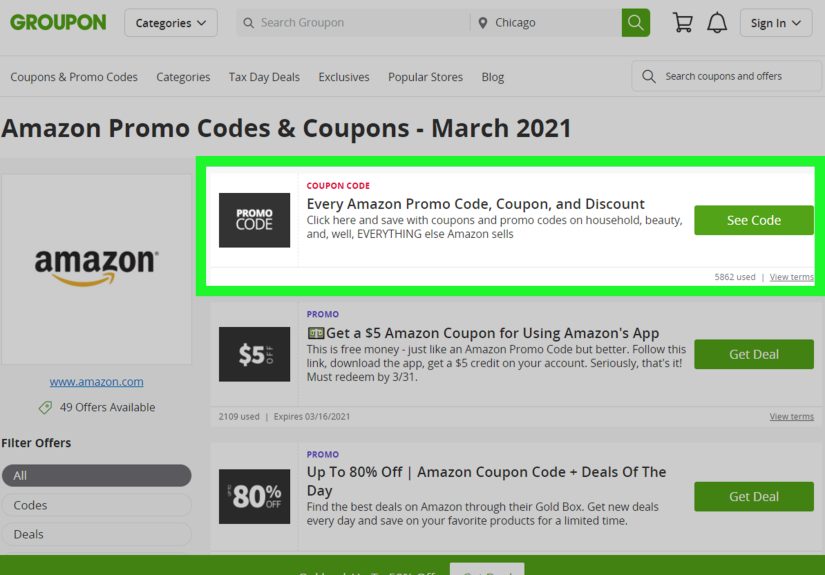
Amazon coupons are one of the most overlooked discounts because they’re not dramatic. No confetti. No marching band. Just a small coupon badge you click to “clip,” and the discount applies at checkout. Many shoppers miss them because the coupon is basically whispering.
Where to find coupons fast
- On product pages: look near the price for the coupon badge and clip it before adding to cart.
- In the Coupons hub: browse categories (beauty, home, grocery, electronics) and clip multiple offers in minutes.
- Read the fine print: some coupons require specific sizes, quantities, or Subscribe & Save selection.
Pro tip: Treat coupon-clipping like brushing your teethquick, slightly annoying, and you’ll regret skipping it later.
3) Work Subscribe & Save for bigger discounts (without getting trapped)
Subscribe & Save is Amazon’s “set it and forget it” option for repeat purchasespaper goods, vitamins, coffee, diapers, dog food, you name it. The hook: you can get a discount for scheduling deliveries, and you can usually cancel anytime after ordering (so you’re not signing a blood oath).
How to maximize Subscribe & Save discounts
- Start with true repeats: items you already buy monthly/quarterly.
- Group deliveries: Amazon can offer higher savings when you receive multiple subscription items in one delivery.
- Use “subscribe, then adjust” responsibly: after the first delivery, change frequency if you’re building a pantry mountain.
Example: If you subscribe to five household staples in the same delivery window, the combined discount can beat most single-item couponsespecially on things you’d buy anyway. The key is staying honest: if you “subscribe” to novelty gummy bears, you’re not saving money. You’re funding a gummy bear lifestyle.
4) Hunt overstock in Amazon Outlet
Amazon Outlet is where overstock and clearance items hang out. These are typically new products with reduced prices because Amazon (or sellers) want to move inventory. If you’re flexible on colors, older packaging, or last season’s style, Outlet can be a quiet goldmine.
Best categories to check
- Home & kitchen: small appliances, cookware, storage
- Clothing: basics, seasonal items, brand-name markdowns
- Electronics accessories: cables, cases, chargers
Quick sanity check: If an Outlet deal looks amazing, compare it to similar items and recent pricing (see Way #12). Sometimes “clearance” is real; sometimes it’s just a fun font choice.
5) Buy open-box/returns via Amazon Resale (formerly Warehouse)
Amazon Resale is the rebranded home for quality used, pre-owned, or open-box itemsoften customer returns. If you’ve ever received something “Used – Like New” and thought, “This box looks like it fought a raccoon,” congratulations: you understand the value proposition.
How to shop Amazon Resale with confidence
- Read the condition notes: “Like New,” “Very Good,” etc. matterespecially for electronics and small parts.
- Prioritize low-risk products: routers, monitors, small appliances, tools (items where packaging damage doesn’t bother you).
- Move quickly: Resale inventory is limited because it’s based on returns and open-box stock.
Example: A “Used – Like New” coffee grinder can be an easy win because the product is simple, easy to inspect, and often returned for non-dramatic reasons (like “it was bigger than I imagined,” which is also what people say about adult responsibilities).
6) Go refurbished with Amazon Renewed
Amazon Renewed focuses on refurbished products (phones, laptops, tablets, consoles, tools) that are tested and certified to work like new, backed by a Renewed Guarantee. If the price gap between new and Renewed is significant, this can be one of the highest-impact discounts on the site.
Smart rules for Renewed shopping
- Know your risk tolerance: Renewed is great when the savings are meaningful, not when it’s $7 off a $900 device.
- Check the guarantee window: return options are your safety net if something’s off.
- Confirm what’s included: accessories can vary; read the listing details.
Example: Buying a Renewed iPad for casual browsing and streaming often makes more sense than buying newespecially if you don’t need the latest chip to scroll memes at 120Hz.
7) Trade in old tech for gift cards + promotional discounts
Amazon’s Trade-In program lets you exchange eligible items (think devices, electronics, games, etc.) for Amazon gift cardsand sometimes you can get an additional promotional discount toward a qualifying purchase. This is the rare case where clearing clutter can literally pay you.
How to make Trade-In work harder
- Trade in before you buy: apply any instant discount toward the upgrade you already planned.
- Be accurate about condition: “minor scratches” is fine; “it was run over by a scooter” is… less fine.
- Prefer high-resale categories: Amazon-branded devices (like Kindle/Fire) and popular electronics tend to be straightforward.
Example: Trading in an older streaming device and using the credit toward a newer model can reduce your out-of-pocket cost without waiting for a holiday sale.
8) Use registry completion discounts strategically
If you have a baby registry or wedding registry, Amazon can offer a completion discountmeaning you can buy leftover registry items at a reduced price during an eligible window. This is one of those “grown-up cheat codes” that feels like it shouldn’t be allowed, yet here we are.
Two common completion discount scenarios
- Baby Registry: often structured as a percentage discount with a maximum total order value and a defined redemption window.
- Wedding Registry: can offer a one-time completion discount if you meet qualification requirements.
Example: Use the completion discount for big-ticket basics you planned to buy anywaydiapers, a stroller accessory, a bottle warmer, sheet setsrather than “motivational wall art” that says LIVE LAUGH LOVE (which your sleep schedule will not allow).
9) Take No-Rush Shipping rewards (when you can)
If you don’t need an item tomorrow, choosing No-Rush Shipping can sometimes trigger a rewardeither an immediate discount or a digital credit automatically applied to your account. It’s Amazon’s way of saying, “Thank you for not making our logistics team sprint.”
When No-Rush makes the most sense
- Non-urgent basics: refill items, office supplies, household goods
- Bundled orders: when you’re already ordering multiple things
- Digital spenders: if you buy/rent digital content or ebooks, credits can be genuinely useful
Tip: Pay attention at checkoutNo-Rush offers can vary by order, timing, and location. If the option isn’t there, it’s not you. It’s the algorithm.
10) Get a discounted Prime membership
Sometimes the biggest “Amazon discount” is paying less for the membership that unlocks other savings. Depending on eligibility, Amazon offers discounted Prime options such as Prime Student/Young Adult programs and Prime Access for qualifying assistance recipients. If you qualify, that reduced monthly rate can effectively lower the “cost of entry” for Prime shipping and Prime-exclusive deals.
How to decide if discounted Prime is worth it
- Estimate your shipping savings: if you place frequent small orders, Prime can matter.
- Consider the full bundle: streaming, reading, photo storage, etc. may add value.
- Re-check eligibility annually: some discounted programs require re-verification.
Example: A student ordering dorm essentials (cleaning supplies, desk lamp, notebooks, pantry snacks) can easily recoup a discounted membership cost during back-to-school season alone.
11) Share Prime benefits through Amazon Household/Family
If you live with another adult, Amazon’s Household/Family sharing can let you share certain Prime benefits in one householdso you’re not both paying for the same shipping perks like it’s a competitive sport. This doesn’t “discount” items directly, but it can halve the membership cost across a home, which is functionally a discount on the whole Amazon lifestyle.
Best practices for benefit sharing
- Keep it household-only: the sharing rules are tied to living together.
- Divide and conquer: one person tracks household staples; the other tracks tech/home upgrades.
- Use profiles wisely: teen/child profiles can help families manage shopping without chaos.
The goal is simple: stop paying twice for the same “free shipping” badge. Spend that money on something important. Like more storage bins. (Why do we all own 47 storage bins? Don’t answer.)
12) Track prices with alerts before you buy
Amazon prices change oftensometimes multiple times a week. The easiest way to avoid “fake deals” and timing regrets is to use price trackers that show price history and let you set drop alerts. Popular options include CamelCamelCamel and Keepa.
A simple price-tracking workflow
- Pick your target price: decide what you’re willing to pay (not what the banner tells you).
- Set an alert: get notified when the price hits your number.
- Check history before big events: Prime Day, Black Friday, Cyber Mondayverify it’s a real drop.
Example: If a $199 air purifier is “30% off” but it’s been $199 for half the month, that’s not a deal. That’s theater. Price history turns theater back into math.
Bonus: Use Amazon’s own notifications
Amazon’s app and Alexa notifications can also help you catch deals on items you’ve saved or wishlisteduseful when Lightning Deals move fast and you don’t want to refresh pages like it’s 2007.
13) Do the “other seller” + bundle promo check (the unsexy money-saver)
Here’s the move that saves money more often than any flashy sale: before checkout, scan the listing for Other Sellers on Amazon and any multi-buy promotions (like “buy 2, save 10%”). The default seller isn’t always the cheapestand sometimes the better deal is simply a different condition (new vs. like-new) or a different seller with the same fulfillment options.
Quick checklist before you click “Place your order”
- Compare New vs. Used (Resale): especially for durable goods and electronics accessories.
- Check shipping costs: a “cheaper” item can lose if shipping is higher.
- Look for bundle promos: pantry items and personal care products often run multi-item discounts.
- Watch for coupon stacking: sometimes a coupon applies only to certain variations (size, scent, color).
Example: You’re buying batteries. Seller A is $18.99. Seller B is $17.49 but with $3.99 shipping. Seller C is $18.49 with a clipped coupon for $2 off. Winner: Seller C. Shopping: 1. Impulse: 0.
Conclusion
Getting discounts on Amazon isn’t about chasing every “deal” bannerit’s about building a few reliable habits: clip coupons, use Subscribe & Save for repeats, browse Outlet/Resale for high-value categories, and verify prices with tracking tools.
If you do just three things this week, make them these: (1) check for coupons before checkout, (2) compare Resale/Used for any item over $50, and (3) set one price-drop alert for something you actually want. That alone will put you ahead of most shoppers.
Extra: of Real-World Amazon Discount Experience
After years of shopping on Amazon (for boring essentials and the occasional “this will change my life” gadget that absolutely does not), I’ve learned that the best discounts come from repeatable behavior, not heroic deal-hunting. Here are the experiences that made me better at saving money on Amazonmostly through mild embarrassment and improved checkout discipline.
Experience #1: The coupon I didn’t clip (and still think about)
I once bought a big pack of coffee pods at full price, then immediately noticed the tiny coupon badge under the price. The discount wasn’t hugemaybe a few bucksbut the emotional damage was priceless. Since then, I treat coupon-checking like checking your pockets before leaving a hotel: fast, easy, and it prevents regret.
Experience #2: Subscribe & Save is amazing… until it isn’t
Subscribe & Save is where I’ve saved the most money overalldetergent, toothbrush heads, and pet supplies add up. But there’s a trap: overconfidence. I once forgot to adjust a delivery schedule and accidentally started building a small retail store in my laundry room. The fix is simple: once a month, I review upcoming Subscribe & Save shipments and ask, “Do I need this, or do I just enjoy the feeling of being a highly organized adult?” Canceling or delaying a shipment is easier than living with 96 rolls of paper towels.
Experience #3: Open-box is the MVP category (if you pick wisely)
Amazon Resale (open-box/returns) has been a hidden gem for items that are easy to inspect. I’ve scored great deals on small appliances and home gadgets where “Used – Like New” basically meant “the box had a rough day.” My rule: I avoid open-box products when missing accessories would ruin the deal (like specialized mounts or proprietary chargers). But for sturdy, straightforward items? Open-box can be the best price-to-happiness ratio on the whole site.
Experience #4: Price trackers saved me from “deal theater”
The first time I used a price tracker, it exposed how often I was tempted by discounts that weren’t actually discounts. Once you see the price history, you stop reacting to the little red percentage like it’s a fire alarm. Now I set alerts for a handful of items (a router upgrade, a standing desk, replacement headphones) and wait. If the alert hits, I buy. If it doesn’t, I keep my money and my dignity.
Experience #5: The best Amazon discount is buying fewer “almost” purchases
This one hurts because it’s true: the biggest savings often comes from avoiding the stuff you kind of want. I use Wish Lists as a cooling-off zone. If I still want the item in two weeksand the price history says it’s a decent timeI buy. If not, it quietly fades away like my motivation to meal prep. The result: fewer impulse buys, more intentional purchases, and a shopping history that doesn’t read like a conspiracy board.
Bottom line: the most consistent Amazon deal-hunters aren’t constantly shoppingthey’re strategically waiting, clipping, tracking, and choosing the right deal types for the right products. Do that, and you’ll save money without turning your entire personality into “Prime Day.”