Table of Contents >> Show >> Hide
If you still think Dungeons & Dragons is only played in dim basements by people arguing about spell slots and pizza toppings, allow me to lovingly roll a natural 20 against that stereotype. D&D has gone gloriously mainstream, and not in a fake “I wore elf ears once for Comic-Con” kind of way. We’re talking about celebrities who have openly talked about playing, Dungeon Mastering, obsessing over campaigns, or crediting the game with shaping their creative lives.
That matters because D&D is not just a hobby. It is improv, collaboration, character study, strategy, worldbuilding, and occasionally a 45-minute debate over whether a goblin can be reasoned with. For actors, directors, musicians, comedians, athletes, and even journalists, that mix is catnip. It builds stories from the inside out. It rewards imagination. It turns “What if?” into a lifestyle.
Below are 15 celebrities who have been publicly and proudly associated with the game. Some are hardcore veterans. Some are public evangelists. Some sound like they’d absolutely corner you at a party to explain why their paladin’s backstory is “actually very moving.” All of them help prove that rolling dice has become one of the coolest nerd flexes in pop culture.
Why Celebrity D&D Fandom Actually Means Something
The coolest thing about famous D&D players is not that they are famous. It is that the game clearly gives them something useful. For some, it is a creative training ground. For others, it is friendship, stress relief, or a weirdly effective form of emotional processing disguised as fighting skeletons. D&D asks players to build a world together, listen carefully, react in character, and think on their feet. That is actor fuel. Director fuel. Comedian fuel. Human fuel, honestly.
And because these celebrities have been open about playing, they have also helped sand away the old stigma around tabletop role-playing. The message is simple: loving fantasy, storytelling, and a handful of suspiciously lucky dice is not embarrassing. It is, in fact, pretty awesome.
15 Celebrities Who Publicly Love Dungeons & Dragons
1. Joe Manganiello
If there is a patron saint of celebrity D&D fandom, Joe Manganiello may already have the mini painted. The actor has done more than casually praise the game; he has built an entire public identity around loving it. Manganiello’s Hollywood campaign became famous for bringing together major names for sprawling adventures, and he has spoken openly about running games, collecting gear, and treating the whole thing with the kind of reverence most people reserve for vintage guitars or championship rings.
What makes him such a great example is that his fandom never feels performative. It feels lived in. He is not borrowing nerd culture for a headline. He is one of the people who helped move D&D deeper into pop culture by treating it like what it really is: a thrilling, social, deeply creative pastime that deserves to be taken seriously.
2. Deborah Ann Woll
Deborah Ann Woll has become one of the most beloved public faces of D&D because she combines genuine expertise with the enthusiasm of someone who still finds the game magical. She has explained the game beautifully in interviews and videos, and she has a rare talent for making D&D sound inviting instead of intimidating. That is a superpower.
Woll also talks about how the game connects to acting, which makes perfect sense. Good D&D requires empathy, improvisation, and the ability to inhabit a character without blinking. In other words, it is acting with dice. Her public embrace of the hobby has helped sell D&D to people who may have assumed it was too complicated, too niche, or too nerdy. Turns out “too nerdy” was the selling point.
3. Stephen Colbert
Stephen Colbert’s geek credibility was never exactly fragile, but his relationship with D&D is the real deal. He has spoken openly about being a longtime fan, and he is one of those celebrity players who never sounds like he is trying to sound cool. He sounds like someone who remembers what it meant to love fantasy before that love was fashionable.
That gives his fandom a little extra charm. Colbert represents the generation that played the game before mainstream culture was ready to stop smirking at it. So when he talks about D&D now, there is history there. Not trend-chasing. Not marketing. Just an actual nerd who survived the age of mockery and got the last laugh.
4. Vin Diesel
Vin Diesel being a D&D guy remains one of the great gifts of modern celebrity culture. The gravel-voiced action star has talked about his RPG roots for years, and the contrast between his tough-guy image and tabletop devotion somehow makes total sense. Of course the guy who plays larger-than-life heroes loves role-playing games. He was basically born to dramatically describe battle scenes.
What makes Diesel stand out is how long he has been publicly tied to the hobby. This is not a recent “nerd culture is hot now” pivot. He has been associated with D&D for ages, and others around him have confirmed that the obsession is very real. In other words, the man does not just talk about family. He also talks about fantasy campaigns, and frankly that tracks.
5. Jon Favreau
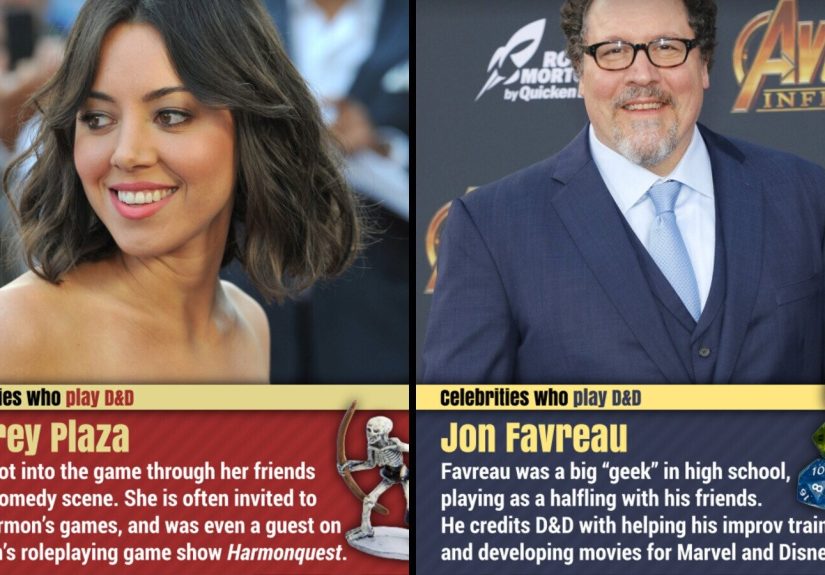
Jon Favreau has said outright that D&D helped give him a strong background in imagination, storytelling, tone, and balance. That quote alone should be embroidered onto a pillow and handed to every parent who thinks tabletop games are a waste of time. Favreau is one of Hollywood’s most successful builders of cinematic worlds, and he has openly connected that skill to childhood role-playing.
His example is especially important because it shows how the game trains creative muscles that transfer elsewhere. D&D teaches pacing. It teaches stakes. It teaches character motivation and ensemble chemistry. That does not mean every kid with a set of dice becomes the next major director, but it certainly suggests the hobby is more than harmless fun. Though it is also very fun. Especially if your bard is causing problems.
6. Tom Morello
Tom Morello is living proof that you can write riffs capable of leveling a stadium and still spend hours dreaming up fantasy campaigns. Better yet, he has openly talked about having been a Dungeon Master. That is not a small detail. Being a DM means you are not just playing; you are designing stories, managing chaos, improvising consequences, and trying to sound cool while your friends derail everything within three minutes.
Morello has even described how his campaign instincts connected to the themes he later pursued creatively. That is very on-brand. Of course Tom Morello’s fantasy worlds had political edge. Of course the king was suspicious. Of course rebellion sounded good. Honestly, I would expect nothing less.
7. Anderson Cooper
Yes, that Anderson Cooper. The silver-haired news anchor has publicly reflected on playing D&D as a kid, including memories of his elven thief named Fletcher. That is such a wonderfully specific detail that it instantly moves the story from rumor to reality. Nobody invents a character named Fletcher unless they were emotionally invested.
Cooper’s place on this list matters because it broadens the image of who a D&D player can be. Not just actors and musicians. Not just obvious “geek culture” celebrities. A major journalist can fondly remember his early adventures too. The game has always been bigger, weirder, and more widespread than the stereotype suggested.
8. Patton Oswalt
Patton Oswalt has the kind of nerd honesty that feels almost medicinal. When he joked about returning to D&D as a benign midlife crisis, it was funny because it was believable. Of course he came back to rolling dice. Of course he would rather debate spell duration than buy a sports car. That is elite comedy-geek alignment.
Oswalt’s public embrace of the hobby fits neatly with the broader appeal of D&D: it is social, imaginative, and just structured enough to channel a delightfully obsessive brain. His openness also helped normalize something a lot of adults quietly rediscover: pretending to be a wizard with friends is not childish. It is efficient emotional maintenance.
9. Wil Wheaton
Wil Wheaton has long been one of the most visible public champions of tabletop gaming, so his place here feels inevitable. He has discussed his own D&D background and spoken about returning to the game after a long break. That return is a familiar story for many players: childhood interest, years away, then one day the dice start calling again like tiny plastic ghosts.
Wheaton’s D&D identity also helps bridge generations. He speaks to older players who remember the hobby before it was trendy, and to newer fans who know tabletop culture through streams, conventions, and online communities. He makes the hobby feel continuous rather than niche, like a tradition that keeps evolving without losing its heart.
10. Tim Duncan
Tim Duncan is one of the greatest basketball players ever, and he has also been publicly linked to D&D fandom in a way that feels gloriously nerdy. The image is almost too perfect: one of the calmest, smartest, most fundamentally sound players in NBA history also being into fantasy games and wizard-coded aesthetics. Of course he is. Have you seen Tim Duncan’s vibe?
Duncan’s presence on this list is a reminder that D&D is not the opposite of discipline or competitive focus. It can live right next to them. Strategy, patience, teamwork, and long-term thinking are useful on a basketball court and around a gaming table. Also, let’s be honest, “Merlin energy” was always a better brand than most athlete nicknames anyway.
11. Matthew Lillard
Matthew Lillard has been open about leading a D&D group, and in a wonderfully Hollywood twist, that group even connected with his professional life. That is either the nerdiest networking story ever told or the greatest argument for always showing up to game night. Possibly both.
Lillard’s public enthusiasm works because he never seems embarrassed by it. He sounds like someone who genuinely enjoys the craft of running a game. That is the recurring pattern with many celebrity players: once they stop hiding the hobby, it becomes obvious how much joy it gives them. D&D is one of the rare adult pastimes that lets people be silly, strategic, and sincere all at once.
12. Michelle Rodriguez
Michelle Rodriguez does not merely orbit D&D because of the movie adaptation. She has been identified as someone who had already been playing for years. That is a meaningful distinction. Plenty of actors promote a fantasy film; fewer arrive already carrying actual player credibility.
Rodriguez’s public connection to the game also helps bust another old cliché: that tabletop fantasy is somehow gendered in one narrow direction. It is not. Her presence reinforces what longtime players have known forever. D&D belongs to anyone with imagination, curiosity, and enough patience to survive a rules explanation from the most enthusiastic person at the table.
13. Sophia Lillis
Sophia Lillis has likewise been described as someone who had been playing D&D for years, and she has openly shown affection for actual-play culture too. That makes her part of an important newer wave of public fans: younger performers who did not inherit the older stigma and can talk about the hobby with zero apology.
That generational shift matters. For younger celebrities, D&D is not always a secret origin story or a guilty pleasure. Sometimes it is just a cool thing they genuinely enjoy. And that casual confidence may be one of the biggest reasons the hobby keeps expanding. Shame is out. Dice goblin energy is in.
14. Vince Vaughn
Vince Vaughn being pulled into celebrity D&D by Tom Morello is one of those stories that sounds made up by an especially ambitious screenwriter. But that is part of the charm. Vaughn has publicly described the experience as a blast and embraced the fact that it is gloriously nerdy.
There is something especially delightful about hearing someone known for rapid-fire comedy and swagger casually admit that weekly fantasy adventure is a good time. It illustrates the real social draw of the game. Once people sit down and try it, the appeal becomes embarrassingly obvious. Suddenly everyone is naming sorcerers and asking where the snacks are.
15. Paul Wight (The Big Show)
Paul Wight, better known to many fans as The Big Show, rounds out the list with the kind of earnest player energy D&D people instantly recognize. By public accounts, he was not shy about wanting in. He heard about the game, wanted a seat, and brought his dice. That is not celebrity dabbling. That is commitment.
Even better, Wight has described how the game sticks with him during the week, right down to thinking about spell slots and hit points between sessions. That may be the most universally relatable D&D sentence ever spoken. Every committed player knows the feeling. You are technically doing other things, but some part of your brain is still trying to solve next Friday’s dungeon.
What These Famous D&D Players Have in Common
Look across this list and the pattern is hard to miss. The celebrities who love D&D are not all alike, but they tend to value the same things: imagination, ensemble dynamics, strategic thinking, and the freedom to create something weird with other people. D&D gives creative people a sandbox with consequences. It lets them test personalities, improvise under pressure, and build mythology in real time.
It is also one of the few hobbies where success can look ridiculous from the outside and profound from the inside. One moment you are pretending to haggle with a goblin merchant. The next moment you are revealing your character’s deepest fear in front of close friends and somehow learning something about yourself. It is theater, therapy, teamwork, and nonsense. No wonder famous people keep falling for it.
The Experience of Being Openly Proud to Play D&D
There is something unexpectedly moving about seeing public figures embrace D&D without flinching. Older generations of players often grew up with the feeling that the hobby had to be hidden, downplayed, or translated into more “acceptable” language. You did not say you spent the weekend role-playing an anxious cleric with abandonment issues. You said you were “hanging out with friends.” Technically true. Emotionally incomplete.
That is why the phrase “out and proud” lands so well here. These celebrities are not confessing to some embarrassing secret. They are reclaiming a joyful one. They are saying, yes, I like fantasy. Yes, I like character sheets. Yes, I have probably gotten too emotionally attached to an imaginary person with a questionable armor class. And no, I am not sorry.
The experience of being publicly enthusiastic about D&D often mirrors what regular players go through on a smaller scale. First comes the hesitation: will people think this is childish, weird, or hopelessly niche? Then comes the discovery that once you explain the game properly, many people are intrigued. Tell them it is collaborative storytelling and improv with rules, and suddenly the same person who laughed at “elves and dice” is asking whether they can be a chaotic-neutral pirate.
There is also a special pleasure in realizing how broad the player base really is. Maybe your favorite action star plays. Maybe a journalist you respect remembers his thief character from childhood. Maybe a basketball legend wanted to be called Merlin. Those details do not just make good trivia. They make the hobby feel bigger and more welcoming. They tell new players, “You are not weird for loving this. You are in very entertaining company.”
And then there is the emotional side. D&D creates a weirdly safe place for people to be brave, funny, vulnerable, impulsive, noble, or absolutely terrible at doors. It lets players experiment with identity and courage behind the comforting mask of fiction. That is part of why so many people stay with it for years. The adventures are fun, but the real magic is the shared memory. The absurd joke from session nine. The devastating sacrifice in session twenty-three. The time the whole table screamed because the dice did something unholy.
Celebrity players help validate that experience, but they do not own it. They simply reflect it back at us. Their openness confirms what fans already know: D&D is not a phase, a punchline, or a relic of geek history. It is a living creative culture. It is a friendship engine. It is a place where people who make worlds for a living still find room to play inside someone else’s.
So yes, it is fun to know that famous people play D&D. But the deeper thrill is this: every time one of them says so publicly, it becomes a little easier for everyone else to stop hiding their dice bag like it is contraband. And that, dear adventurer, is a very fine quest reward.
Conclusion
D&D’s celebrity fan club is not just a fun list of names. It is evidence of the game’s lasting creative power. Whether it is Joe Manganiello running epic campaigns, Stephen Colbert defending fantasy fandom, Jon Favreau crediting the game for storytelling instincts, or Michelle Rodriguez and Sophia Lillis bringing real player experience to a movie set, the message is the same: D&D has become a respected part of mainstream culture without losing its weird little soul.
And honestly, good. The game deserves it. Any pastime that can inspire better acting, sharper storytelling, deeper friendships, and an alarming number of passionate arguments about imaginary dragons is doing something right.