Table of Contents >> Show >> Hide
- 1. The Show Was Created by Tim Robinson and Zach Kanin
- 2. It Premiered on Netflix in 2019
- 3. There Are Three Seasons and 18 Episodes
- 4. The Lonely Island Helped Produce It
- 5. Tim Robinson’s Characters Often Refuse the Simplest Escape
- 6. Sam Richardson Is One of the Show’s Secret Weapons
- 7. The Guest-Star List Is Ridiculously Strong
- 8. The Sketch Titles Are a Treasure Map for Fans
- 9. “Coffin Flop” Became One of the Show’s Defining Sketches
- 10. The Show Won Multiple Emmys
- 11. It Also Won Writers Guild Recognition
- 12. The Show Turns Social Anxiety Into Physical Comedy
- 13. Critics Recognized Its Cult Power Early
- 14. Its Meme Power Is Enormous for Such Short Episodes
- 15. The Show’s Weirdness Works Because It Has Real Emotional Logic
- Why ‘I Think You Should Leave’ Became a Modern Sketch-Comedy Classic
- Experience Notes: Watching ‘I Think You Should Leave’ Like a Fan, Not a Homework Assignment
- Conclusion
Note: This article is written in original language for web publication and is based on verified public information about I Think You Should Leave with Tim Robinson, its creators, awards, episodes, reception, and cultural impact.
Few comedy shows have turned awkward silence, bad decisions, office weirdness, and one man’s total refusal to admit defeat into a full-blown cultural vocabulary quite like I Think You Should Leave with Tim Robinson. The Netflix sketch series is short, loud, bizarre, and somehow more emotionally accurate than half the serious dramas on television. It understands a deeply American truth: sometimes the funniest person in the room is also the person who absolutely should have stopped talking 45 seconds ago.
Created by Tim Robinson and Zach Kanin, I Think You Should Leave has become a cult sketch-comedy phenomenon because it treats tiny social mistakes like disaster movies. A job interview becomes a crisis. A shopping trip becomes a moral test. A dinner party becomes psychological warfare with appetizers. The show does not simply ask, “What if someone made things weird?” It asks, “What if someone made things weird, doubled down, yelled, panicked, invented a fake rule, and somehow made everyone else feel responsible?”
Below are 15 trivia tidbits about I Think You Should Leavefrom its creative roots and Emmy success to its guest stars, meme power, and oddly precise understanding of human embarrassment.
1. The Show Was Created by Tim Robinson and Zach Kanin
The central creative engine behind I Think You Should Leave is the partnership between Tim Robinson and Zach Kanin. Robinson stars in most sketches, often playing men who are trapped in a panic loop of their own making, while Kanin helps shape the strange logic that makes each sketch feel both impossible and painfully familiar.
Both creators worked in the orbit of Saturday Night Live, which helps explain the show’s sketch-comedy DNA. But I Think You Should Leave does not feel like a traditional sketch show. It is less about setup-punchline structure and more about escalation. A character begins with one bad choice, then builds an entire emotional skyscraper on top of it. Naturally, the elevator is broken.
2. It Premiered on Netflix in 2019
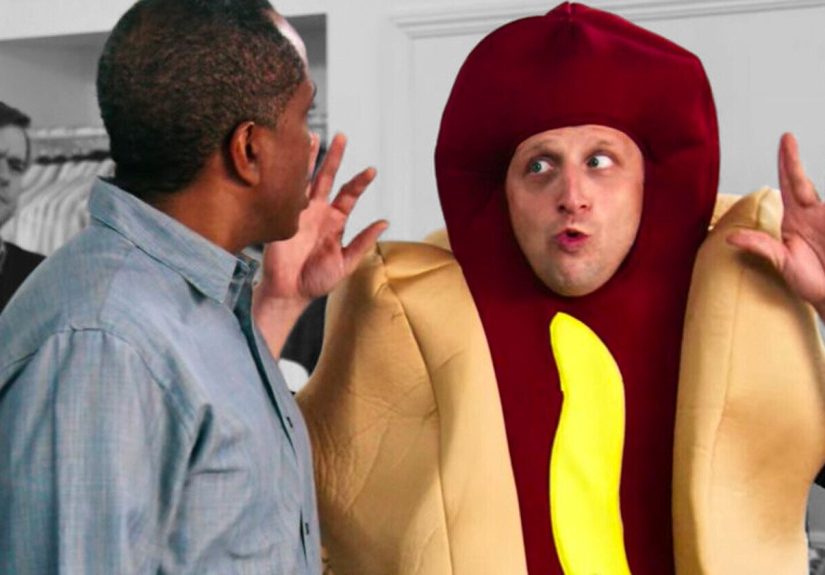
The series premiered on Netflix on April 23, 2019, introducing viewers to a fast, compact, wildly uncomfortable form of sketch comedy. Each episode runs roughly the length of a lunch break, which is convenient because the show often makes lunch feel dangerous. You may enter thinking, “I will watch one episode,” and leave wondering why you now distrust office printers, baby contests, and men in hot dog costumes.
Netflix’s binge-friendly format helped the show build a devoted following. The episodes are short enough to rewatch casually, but dense enough that fans keep finding new facial expressions, background reactions, and tiny line deliveries that make the sketches funnier on repeat viewing.
3. There Are Three Seasons and 18 Episodes
As of now, I Think You Should Leave has three seasons and 18 episodes. Season 1 arrived in 2019, Season 2 followed in 2021, and Season 3 premiered in 2023. That may not sound like a mountain of television, but the show’s cultural footprint is much larger than its runtime.
Part of the magic is efficiency. The series does not waste time. Sketches often begin at the exact moment social reality starts melting. There is rarely a long runway. A character enters, says something suspicious, and suddenly everyone in the scene is emotionally trapped in a room with no exit sign.
4. The Lonely Island Helped Produce It
The Lonely IslandAndy Samberg, Akiva Schaffer, and Jorma Tacconehelped produce the series. Their involvement makes sense: The Lonely Island built a reputation on comedy that is musical, surreal, internet-friendly, and deeply committed to ridiculous premises. I Think You Should Leave shares that same confidence in absurdity, though its flavor is more panic sweat than pop parody.
Akiva Schaffer also directed episodes, helping give the show its sharp visual rhythm. Sketches are often shot with the seriousness of prestige television, which makes the nonsense even funnier. A man’s meltdown over a minor misunderstanding is filmed like the emotional climax of a courtroom drama, and somehow, that is exactly correct.
5. Tim Robinson’s Characters Often Refuse the Simplest Escape
The show’s title is practically a mission statement. Many sketches revolve around a person who should leaveor apologize, or stop talking, or admit the obviousbut simply cannot. Robinson’s characters are not always villains. Often they are embarrassed, cornered, insecure, or desperate to protect a tiny lie that has somehow become load-bearing.
This is why the comedy hits so hard. Everyone has experienced a moment when pride says, “Keep going,” while common sense is already packing a suitcase. I Think You Should Leave turns that inner conflict into sketch comedy. The result is hilarious because it is absurd, but also because it is uncomfortably recognizable.
6. Sam Richardson Is One of the Show’s Secret Weapons
Sam Richardson, Robinson’s longtime collaborator and co-star from Detroiters, appears throughout the series and brings a different comic temperature. Where Robinson often plays panic as a controlled explosion, Richardson can make cheerful authority feel beautifully unhinged.
His game-show-host energy is especially memorable. In the world of I Think You Should Leave, a game show is never just a game show. It is a social pressure cooker with buzzers. Richardson’s presence gives the series a strange warmth, even when everything onscreen is sliding into madness like a shopping cart with one cursed wheel.
7. The Guest-Star List Is Ridiculously Strong
One of the best trivia facts about I Think You Should Leave is how many recognizable performers appear in its strange little universe. Across the series, guest stars include Andy Samberg, Sam Richardson, Vanessa Bayer, Will Forte, Fred Armisen, Bob Odenkirk, Tim Heidecker, Patti Harrison, Ayo Edebiri, Jason Schwartzman, Tim Meadows, Beck Bennett, Conner O’Malley, and more.
The guest casting works because the show does not simply use famous faces as decorations. It drops them into situations where their normal screen presence becomes part of the joke. Bob Odenkirk can make a bizarre lie feel elegant. Patti Harrison can turn one line into a full weather system. Will Forte can bring frightening commitment to a premise that no sensible adult would approve in writing.
8. The Sketch Titles Are a Treasure Map for Fans
Netflix’s official guide to the sketches reads almost like a secret menu of chaos. Sketches are known by names such as “Baby of the Year,” “Brooks Brothers,” “Choking,” and “Coffin Flop.” These titles help fans find favorite bits quickly, but they also reveal how strange the show’s comic world is. Even the titles sound like someone describing a dream after eating gas-station nachos.
The sketch names matter for SEO and fan culture, too. People search for the show through memorable phrases, character situations, and hyper-specific sketch concepts. That is part of why I Think You Should Leave trivia remains such a fun topic: the series is built from moments that feel instantly searchable, quotable, and rewatchable.
9. “Coffin Flop” Became One of the Show’s Defining Sketches
Season 2’s “Coffin Flop” sketch is one of the clearest examples of the show’s formula working at full power. The premise sounds impossible to explain politely at dinner: a fictional TV program shows bodies falling out of coffins, and a network controversy follows. The sketch is absurd, but it is also a pitch-perfect parody of media defensiveness, corporate panic, and the kind of person who insists that obviously alarming footage is simply being misunderstood.
Like many I Think You Should Leave sketches, it is funny because the character’s argument gets less convincing the more aggressively he makes it. The show understands that denial has a rhythm. First comes confidence, then volume, then a suspiciously detailed explanation nobody requested.
10. The Show Won Multiple Emmys
I Think You Should Leave is not just a cult favorite; it is also an award-winning series. The Television Academy lists the show with three Emmy wins, including awards connected to Tim Robinson’s short-form acting work and the series itself. That recognition helped confirm what fans already knew: beneath the screaming, weird shirts, and deeply alarming party behavior, the craft is serious.
Comedy this strange is difficult to execute. The timing has to be exact. The performances have to stay grounded even when the premise is orbiting Jupiter. If an actor winks too much, the sketch collapses. If the editing lingers too long or cuts too early, the tension leaks out. The Emmy attention recognized the precision underneath the apparent chaos.
11. It Also Won Writers Guild Recognition
The show’s writing has also been honored by the Writers Guild of America. In 2024, I Think You Should Leave with Tim Robinson won in the Comedy/Variety Sketch Series category, with writers including Tim Robinson, Zach Kanin, John Solomon, Gary Richardson, Reggie Henke, Brendan Jennings, and Patti Harrison recognized.
That award makes sense because the writing is sneakier than it looks. The dialogue often feels messy, panicked, and impulsive, but the structure is tight. Sketches escalate with mathematical weirdness. A small misunderstanding becomes a personality test. A harmless setting becomes a courtroom for social failure. The scripts are not random; they are engineered to feel random in the funniest possible way.
12. The Show Turns Social Anxiety Into Physical Comedy
Many comedies joke about embarrassment. I Think You Should Leave weaponizes it. The series often begins with a familiar social situation: a meeting, a party, a date, a restaurant, a workplace conversation. Then one person violates the invisible rules of normal behavior, and suddenly the entire room has to decide whether to correct the person, escape, or pretend this is fine.
That is where the physical comedy comes in. Robinson’s posture, eyes, voice, and sudden intensity make embarrassment feel like a full-body medical event. His characters do not merely lie; they visibly metabolize the lie in real time. Watching them try to survive their own choices is like watching a raccoon attempt customer service.
13. Critics Recognized Its Cult Power Early
Critics quickly noticed that I Think You Should Leave was not ordinary sketch comedy. Rotten Tomatoes highlighted the first season’s absurd energy, while Metacritic has listed the series with strong critical reception. Writers at outlets such as The New Yorker, Vulture, and Wired discussed the show as a cult comedy phenomenon, especially because fans began using its lines and scenarios as a shared language.
That “shared language” quality is important. Many comedy shows produce laughs, but fewer produce social shorthand. I Think You Should Leave gave fans a way to describe situations where someone is overcommitting, panicking, pretending, or acting like the rules of reality have personally betrayed them.
14. Its Meme Power Is Enormous for Such Short Episodes
The show’s meme density is unusually high. Because sketches are short and built around explosive emotional turns, they translate easily into GIFs, reaction images, and social-media references. A single facial expression can summarize an entire bad work meeting. A single sketch premise can become a way to describe internet arguments, office drama, or that one friend who turns ordering food into a legal deposition.
This is one reason I Think You Should Leave continues to rank highly in fan discussions of modern sketch comedy. It is not just watched; it is reused. Fans bring it into group chats, comment sections, workplace jokes, and casual conversations. The show’s comedy has escaped the screen, which is exactly the sort of behavior the show itself would probably deny doing.
15. The Show’s Weirdness Works Because It Has Real Emotional Logic
The strangest thing about I Think You Should Leave is that it often makes perfect emotional sense. The facts of a sketch may be ridiculous, but the feelings are familiar: embarrassment, stubbornness, status anxiety, fear of being exposed, and the desperate need to look normal while behaving like a haunted vending machine.
That emotional logic is why the show rewards rewatching. The first viewing delivers the shock of the premise. The second reveals the performance details. The third makes you notice how carefully the sketch traps everyone in the room. By the fourth viewing, you may start to wonder whether society is just one awkward comment away from total collapse. Congratulations: you are now watching the show correctly.
Why ‘I Think You Should Leave’ Became a Modern Sketch-Comedy Classic
The success of I Think You Should Leave with Tim Robinson comes from its rare combination of precision and recklessness. It feels spontaneous, but it is clearly crafted. It feels silly, but it is often about shame, ego, and the terrifying speed with which a person can ruin a normal moment. The show also understands internet culture without feeling like it was manufactured for memes. Its sketches become memes because they are specific, not because they are generic.
For viewers tired of polished sitcom banter, I Think You Should Leave offers something rougher, stranger, and more surprising. The comedy does not always move in a straight line. Sometimes it swerves into a wall, insists the wall was wrong, and demands that everyone watch a video proving it.
Experience Notes: Watching ‘I Think You Should Leave’ Like a Fan, Not a Homework Assignment
The best way to experience I Think You Should Leave is not to treat it like a normal sitcom. Do not sit down expecting cozy character arcs, gentle workplace lessons, or a comforting musical sting after someone learns the value of honesty. This is not that kind of show. This is the kind of show where honesty enters the room, sees what is happening, and quietly backs out before anyone asks it to judge a baby contest.
A first-time viewer may need a few sketches to adjust to the rhythm. The show often begins in ordinary territory, then jumps sideways into a universe where everyone is technically an adult but emotionally operating with the confidence of a raccoon in a bank lobby. That adjustment period is part of the fun. Once you understand the rhythm, the show becomes easier to appreciate: setup, discomfort, denial, escalation, social collapse, and one final detail that makes everything worse in the best way.
One useful viewing experience is to watch with friends who have different comedy tastes. Someone who loves awkward humor may laugh immediately. Someone who prefers traditional punchlines may stare at the screen like Netflix has personally wronged them. Then, three days later, that same person may repeat a sketch reference during dinner and realize the show has moved into their brain without signing a lease. That delayed reaction is common. I Think You Should Leave often becomes funnier after the fact because its scenarios behave like intrusive comedy thoughts.
The show is also great for short viewing sessions. Because episodes are brief, it works well as a quick comedy reset after a long day. However, binge-watching several episodes in a row can create a very specific side effect: ordinary life starts to look suspiciously like a sketch. A workplace meeting feels one strange comment away from disaster. A restaurant interaction becomes loaded with possibility. A person explaining a simple mistake suddenly seems capable of inventing an entire fake industry to avoid blame.
Another enjoyable way to watch is to pay attention to the silent reactions. The non-Robinson characters are essential because they create the social reality his characters are trying to bend. Their confused pauses, polite discomfort, and slowly draining patience are often as funny as the loudest lines. In many sketches, the funniest moment is not the outburst; it is the half-second where everyone else silently agrees that something has gone terribly wrong.
For fans of writing, the show is a miniature master class in escalation. Each sketch teaches a different lesson about comic pressure. Some sketches escalate through repetition. Others escalate through contradiction, status games, or one character’s refusal to accept a normal interpretation of events. The best sketches feel like watching a tiny machine destroy itself while insisting it is working perfectly.
Ultimately, the experience of watching I Think You Should Leave is weirdly freeing. The show laughs at the human instinct to save face at all costs. It reminds viewers that embarrassment is universal, denial is ridiculous, and sometimes the smartest thing a person can do is simply stop talking. Of course, no one in the show does that. That is why we keep watching.
Conclusion
I Think You Should Leave became a modern sketch-comedy favorite because it found a fresh way to make awkwardness explosive. Tim Robinson, Zach Kanin, and their collaborators built a world where small social errors become legendary disasters, guest stars fully commit to nonsense, and every sketch feels like a tiny pressure cooker with a broken lid. Whether you love it for the memes, the performances, the writing, or the pure joy of watching someone defend the indefensible, the show remains one of Netflix’s most distinctive comedy originals.