Table of Contents >> Show >> Hide
- How flower meanings work (and why they’re not one-size-fits-all)
- 21 flowers that symbolize strength, courage, and resilience
- How to choose the right strength flower for the moment
- Quick bouquet formulas (so you don’t overthink it in the flower aisle)
- Care tips that make the message last
- Experiences people share with “strength flowers” (500-word inspiration)
- Conclusion
Some people lift weights. Some people lift spirits. And some people do boththen celebrate with flowers like an overachiever.
If you’re looking for flowers that symbolize strength, courage, and resilience, you’re in the right garden bed.
This guide breaks down 21 meaningful blooms (plus how to use them without accidentally sending a message that translates to
“I declare war” in Victorian-era flower-speak… awkward).
Whether you’re cheering on a friend who’s rebuilding after a tough season, honoring someone’s bravery, or gifting a little
“you’ve got this” in bouquet form, these flowers help you say the big stuffwithout writing a 12-paragraph text.
How flower meanings work (and why they’re not one-size-fits-all)
1) Symbolism comes from stories, seasons, and culture
Flower meanings come from floriography (the “language of flowers”), mythology, cultural traditions, and good old-fashioned
human pattern-making. A bloom that represents courage in one context might represent devotion, remembrance, or hope in another.
Translation: symbolism is real, but it’s also flexiblekind of like a yoga class for your feelings.
2) Color can change the message
Many flowers carry a “base meaning,” then color adds a twist. For example, some traditions link red tones with boldness or courage,
while softer shades lean toward tenderness and support. If you want the bouquet to feel like a pep talk (not a proposal),
color choices matter.
3) Context is the secret ingredient
A hospital visit, a graduation, a memorial, or a fresh-start moment all call for different kinds of “strength.”
The same flower can say “stand tall,” “keep going,” or “I remember” depending on how you present itand the note you tuck in.
(Yes, the note matters. Flowers are powerful, but they don’t do mind-reading. Yet.)
21 flowers that symbolize strength, courage, and resilience
Below you’ll find a mix of classic “strength flowers,” blooms tied to bravery, and early-spring fighters that practically
scream resilience by showing up when winter is still being dramatic.
1) Gladiolus
Core message: Inner strength, integrity, perseverance.
With tall, sword-like spikes, gladiolus doesn’t whisper encouragementit gives a motivational speech. It’s often associated with
strength of character and the ability to keep standing when life tries to knock you into next week.
Best for: big milestones, recovery, “I’m proud of you” moments.
2) Protea
Core message: Courage, transformation, change.
Protea looks like it survived a fantasy battle and won. Symbolically, it’s linked to courage and transformationperfect when someone
is reinventing themselves after a hard chapter.
Best for: new beginnings, career pivots, bold personal growth.
3) Lotus
Core message: Resilience, overcoming adversity, rebirth.
Lotus is the poster flower for “beauty can rise from messy places.” It’s associated with rising above hardship and starting fresh
a strong choice when someone is rebuilding.
Best for: healing journeys, grief-to-growth seasons, fresh starts.
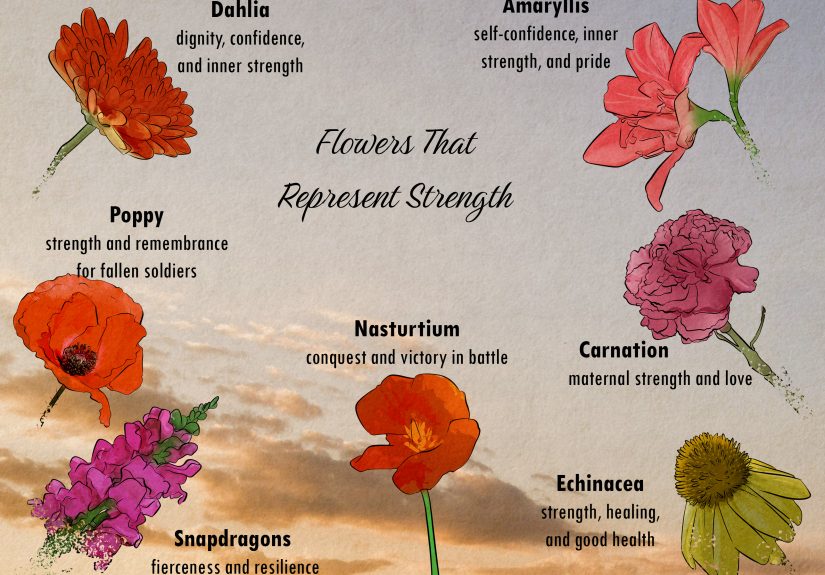
4) Dahlia
Core message: Inner strength, positive change, commitment.
Dahlias are bold, structured, and unapologetically presentlike the friend who hypes you up and also brings snacks. Symbolically,
they’re often connected to inner strength and positive change.
Best for: resilience celebrations, “you’ve come so far” gifts.
5) Iris
Core message: Courage, hope, wisdom, faith.
Irises have long been associated with courage and hopeideal when someone needs a steady reminder that the future still has light.
Best for: graduations, new ventures, encouragement after setbacks.
6) Sunflower
Core message: Strength, loyalty, warmth, longevity.
Sunflowers face the light (and make the whole room look brighter). They’re often tied to strength and loyal supportlike a best friend
who shows up early and insists you drink water.
Best for: cheering someone up, celebrating stamina, “I’m here for you.”
7) Snapdragon
Core message: Strength and grace; courage in bold colors.
Snapdragon is a beautiful contradiction: soft petals, strong symbolism. In many traditions it carries “strength and grace,” and some
color meanings lean into courage.
Best for: anyone being brave quietly (the toughest kind of brave).
8) Zinnia
Core message: Endurance, long-lived affection, steadfast friendship.
Zinnias are reliable bloomersgarden workhorses that keep going. Symbolically, they’re linked to endurance and strong bonds.
Best for: supportive friendship gifts and “we’ve got your back” bouquets.
9) Chrysanthemum
Core message: Endurance and vitality; resilience through long blooming.
Chrysanthemums are famous for blooming generously and lastingoften connected to endurance and vitality.
Best for: long-haul encouragement, “keep going” moments, honoring persistence.
10) Orchid
Core message: Strength, beauty, love, luxury (and serious main-character energy).
Orchids are often associated with strength and rare beauty. They also last a long time with decent caresymbolism you can water.
Best for: recognizing someone’s strength with something elegant and lasting.
11) Amaryllis
Core message: Determination, pride, radiant confidence.
Amaryllis feels like determination in bloomtall, bright, and impossible to ignore. It’s a great “you’re stronger than this moment”
gift.
Best for: winter pick-me-ups, comeback seasons, confidence boosts.
12) Daffodil
Core message: Rebirth and hope.
Daffodils show up early in the year like, “Winter? Never heard of her.” That’s resilience with petals. They’re strongly tied to hope
and new beginnings.
Best for: fresh starts, recovery milestones, encouragement after loss.
13) Nasturtium
Core message: Victory, patriotism, courage to stand up for beliefs.
Nasturtiums bring bright, bold color and an even bolder message. They’re often associated with victory and the courage to stand firm.
Best for: advocacy wins, tough decisions, “I’m proud of your backbone” moments.
14) Poppy
Core message: Remembrance; resilience in the face of loss.
Poppies are widely linked with remembranceoften used to honor sacrifice and the strength it takes to keep going.
Best for: memorials, anniversaries of loss, supportive gestures with tenderness.
15) Coneflower (Echinacea)
Core message: Strength and healing.
Coneflowers don’t just look sturdythey’re often associated with strength and healing. A great symbol for recovery and rebuilding.
Best for: “healing era” bouquets and resilience-themed gardens.
16) Columbine
Core message: Courage for a new endeavor.
Columbine is frequently connected to courageespecially the kind you need when starting something new and slightly terrifying.
Best for: graduations, first days, big auditions, new jobs.
17) Camellia
Core message: Bravery and resilience in adversity.
Camellias have been associated with bravery and resiliencean elegant bloom with a “steel spine” reputation.
Best for: honoring perseverance, supporting someone through a demanding season.
18) Cornflower (Bachelor’s Button)
Core message: Hope, protection, steadfast devotion.
Cornflowers carry hopeful symbolism, and some stories link them with protection. Their bright blue color also reads as calm confidence.
Best for: encouragement gifts and “I’m rooting for you” notes.
19) Crocus
Core message: Hope and rebirth after winter.
Crocuses are early bloomerstiny, determined, and basically the floral version of showing up anyway. Symbolically tied to hope and
rebirth.
Best for: post-hard-season gifts, “spring is coming” reminders.
20) Bird of Paradise
Core message: Freedom, joy, excellence, success.
Bird of paradise looks like confidence took a vacation and came back glowing. It represents freedom and successperfect for celebrating
bold moves and wins.
Best for: promotions, graduations, major “level up” moments.
21) Anemone
Core message: Protection and sacrifice (courage with depth).
Anemones are often associated with protection and sacrificepowerful symbolism when honoring courage that wasn’t easy or comfortable.
Best for: meaningful tributes, support after difficult choices, honoring service.
How to choose the right strength flower for the moment
- For “keep going” energy: gladiolus, chrysanthemum, zinnia, sunflower.
- For healing and rebuilding: lotus, coneflower, daffodil, orchid.
- For bravery and bold change: protea, camellia, nasturtium, bird of paradise.
- For new beginnings: crocus, daffodil, iris, columbine.
- For remembrance and honoring sacrifice: poppy, anemone, gladiolus.
Quick bouquet formulas (so you don’t overthink it in the flower aisle)
- The “You’re unstoppable” mix: gladiolus + sunflower + snapdragon (tall, bright, confident).
- The “Resilience, but make it serene” mix: lotus-inspired palette + iris + orchid (calm strength).
- The “New chapter” mix: crocus colors + daffodil + columbine (hope + courage + fresh start).
- The “I see your bravery” mix: protea + camellia + bird of paradise (bold, uncommon, unforgettable).
- The “Support in sorrow” mix: poppy-inspired reds + anemone + gladiolus (meaningful and steady).
Care tips that make the message last
Symbolism is lovely, but so is a bouquet that doesn’t wilt in 48 hours. Use these basics:
- Trim stems at an angle and refresh water every couple of days.
- Remove leaves below the waterline (nobody likes swamp bouquet).
- Keep arrangements away from direct heat, harsh sun, and fruit bowls (ripening fruit releases ethylene gas that can shorten bloom life).
- If gifting orchids, include a note like: “Bright, indirect light + patience = thriving.” It’s advice for the plant and the person.
Experiences people share with “strength flowers” (500-word inspiration)
When people talk about flowers and resilience, the stories are rarely about perfectly styled centerpieces. They’re about moments:
a friend who didn’t know what to say, so they showed up with sunflowers that looked like tiny spotlights; a coworker who quietly left
a single iris on a desk with a sticky note that read, “Hope is still a plan”; a family that planted crocuses in the fall, then watched
them push through late-winter soil like a reminder that progress happens under the surface long before anyone claps.
In recovery spacespost-surgery rooms, rehab visits, hard mental-health weekspeople often choose blooms that feel like forward motion.
Coneflowers and lotuses show up in cards and conversations because they carry that “healing is real” vibe. Even when the person receiving
them is tired of being “strong,” the right flower can shift the message: not “be tough,” but “you’re allowed to heal at your pace.”
That’s why orchids work so well here. They’re not loud. They’re steady. They last. They say, “I’m not rushing you.”
For courage, the stories get wonderfully specific. A student before a big exam might receive columbine because it’s linked to courage for
new endeavorslike a tiny floral pep squad. Someone leaving a job that drained them might get protea because it symbolizes transformation.
The subtext is deliciously clear: “You’re not starting over. You’re upgrading.” And if the bouquet includes nasturtiums, it often lands as
a salute to convictionstanding up for values, boundaries, or the scary-but-right choice.
Memorial and remembrance flowers carry a different weight. People choose poppies, anemones, and gladiolus when they want to honor love that
remains, even when someone is gone. In these moments, flowers aren’t “cheer up” tools; they’re meaning tools. The experience is less about
feeling better and more about feeling seen. A poppy can say, “I remember.” An anemone can say, “You protected what mattered.” Gladiolus can
say, “They lived with strength and integrity.” That’s not decorationthat’s language.
And then there are the resilience rituals people create for themselves. Some buy a bouquet every month during a hard year, choosing a different
“strength flower” as a theme: zinnias for endurance in July, chrysanthemums for long-haul stamina in October, amaryllis for determination in
winter. Others plant a small “bravery garden” with crocus, daffodils, and irisso every spring literally blooms proof that tough seasons end.
It’s not magic, exactly. But it’s close enough to keep you going, which is kind of the point.
Conclusion
Strength isn’t always loud. Courage isn’t always cinematic. Resilience often looks like showing up againone small step, one long breath,
one stubborn bloom at a time. The 21 flowers above give you a meaningful, beautiful way to honor those qualities in yourself or someone you love.
And if anyone asks why you picked that specific flower, you get to say, “Because it means you’re a warrior,” which is objectively a great line.