Table of Contents >> Show >> Hide
- Before You Rearrange: A Quick Bedroom-Office Game Plan
- 25 Bedroom Office Ideas to Maximize Your Space
- 1) Swap a nightstand for a slim desk
- 2) Create a “cloffice” (closet office) with a simple shelf desktop
- 3) Put your desk in front of a window for instant separation
- 4) Use a floating desk to free up floor space
- 5) Install a fold-down wall desk for “work disappears at night” magic
- 6) Claim a corner with a petite writing desk
- 7) Choose a secretary desk for built-in organization
- 8) Use a dresser as your desk base
- 9) Add a rolling cart as your “mobile office drawer”
- 10) Go vertical with pegboards and wall rails
- 11) Mount your monitor (or use a monitor arm) to reclaim desk depth
- 12) Use under-bed storage to “trade” closet space for office storage
- 13) Add a room divider for instant zoning
- 14) Hang a curtain to hide the office after hours
- 15) Turn a nook into a built-in desk moment
- 16) Try a daybed or sleeper sofa if your bedroom doubles as a guest room
- 17) Consider a Murphy bed for the ultimate “office first” setup
- 18) Use a loft bed to create a workstation underneath
- 19) Add a rug under the desk to define the office zone
- 20) Use layered lighting: task + ambient + “don’t fall asleep”
- 21) Control glare by placing screens thoughtfully
- 22) Hide cables with simple, inexpensive fixes
- 23) Choose closed storage for a calmer bedroom
- 24) Use mirrors and light paint to make the setup feel bigger
- 25) Prioritize ergonomicseven in a small bedroom office
- Small Upgrades That Make a Bedroom Office Feel Better (Fast)
- FAQ: Bedroom Office Setup Questions People Actually Ask
- Real-Life Bedroom Office Experiences: What Actually Works (and What People Wish They’d Done Sooner)
- Conclusion
Working from your bedroom can feel like living in a tiny studio apartment… inside your own house. One minute you’re answering emails,
the next minute you’re staring at your bed like it’s a marshmallow-shaped productivity trap. The good news: a bedroom office can be
functional, stylish, and surprisingly calmingif you design it with a little strategy (and a lot less cable spaghetti).
This guide walks you through smart, space-saving bedroom office ideas that designers and organizers keep coming back to: using vertical
storage, carving out “zones,” choosing double-duty furniture, and making ergonomic tweaks so your neck doesn’t file a formal complaint.
Whether you’ve got a generous primary suite or a “my bed is basically touching my dresser” situation, you’ll find a setup that works.
Before You Rearrange: A Quick Bedroom-Office Game Plan
1) Pick your “work zone” like you’re choosing a roommate
Look for the spot that gives you the best combo of light, outlet access, and minimal traffic. Corners, window walls, and closets are the
usual MVPs. Try to avoid placing your desk where you’ll stare directly at your bed all dayunless you enjoy negotiating with your pillows.
2) Measure first (your future self will thank you)
Measure the wall, the floor depth, and the clearance needed to pull out a chair. A slim desk that fits perfectly beats a gorgeous desk that
turns your bedroom into a sideways obstacle course.
3) Decide how “permanent” your office needs to be
If you work from home daily, invest in comfort and storage. If it’s occasional, focus on fold-away solutions (wall desks, rolling carts,
laptop stations) so your bedroom can still feel like a bedroom.
4) Build in boundaries (yes, even tiny ones)
A visual boundary helps your brain switch modes. This can be as simple as a small rug under the desk, a curtain you close at 5 p.m., or a
bookshelf acting like a “you shall not pass” sign for work stress.
25 Bedroom Office Ideas to Maximize Your Space
1) Swap a nightstand for a slim desk
If your bedside table is basically holding a phone charger and a half-finished water glass, it might be ready for a career change.
A narrow desk can replace a nightstand and create a compact workstation without demanding extra square footage. Add a small lamp that works
as both bedside lighting and task lighting.
2) Create a “cloffice” (closet office) with a simple shelf desktop
A closet can become a surprisingly effective office: add a sturdy shelf or butcher-block-style top as a desk, install shelves above for
supplies, and use a chair that tucks away. Bonus: closing the doors at the end of the day feels like turning off your brain’s “open tabs.”
3) Put your desk in front of a window for instant separation
Positioning a desk under or in front of a window can visually distinguish the work area from the sleep area and bring in natural light.
Add simple curtains or a shade to control glare during video calls (nobody wants to look like a mysterious silhouette).
4) Use a floating desk to free up floor space
A wall-mounted floating desk creates a clean, airy lookespecially helpful in small bedrooms. Pair it with a compact chair or stool that
slides underneath, and use wall shelves above to keep essentials within reach.
5) Install a fold-down wall desk for “work disappears at night” magic
Fold-down desks are perfect when you need your bedroom to feel restful after hours. Open it to work, close it to hide the mess. Add a
small pinboard or magnetic strip inside so your daily notes are ready when you flip it open.
6) Claim a corner with a petite writing desk
Corners are underrated. A compact writing desk (or even a narrow console table) can fit where bulky furniture won’t. Add a wall-mounted
sconce or plug-in swing-arm lamp so you don’t sacrifice desk surface to a lamp base.
7) Choose a secretary desk for built-in organization
Secretary desks are basically “bedroom office in a box.” They often include small drawers, cubbies, and a drop-front work surface. When
you’re done, you can close it up and pretend you’re a person who finishes tasks early.
8) Use a dresser as your desk base
If you already have a dresser, consider turning it into a workstation: place a desktop surface across it, or use the top as a writing
surface and add a comfortable chair. Store office supplies in labeled drawer sections so your stapler doesn’t start living with your socks.
9) Add a rolling cart as your “mobile office drawer”
A rolling cart can hold notebooks, chargers, headphones, and even a small printer. Roll it to your desk during work hours, then tuck it
into a closet or corner. This is a lifesaver if your desk has little to no storage.
10) Go vertical with pegboards and wall rails
When floor space is limited, your walls become prime real estate. Pegboards and wall rails can hold baskets, hooks, and small shelves for
supplies. Keep the desktop clear so it feels calmlike a workspace, not a junk drawer with a keyboard.
11) Mount your monitor (or use a monitor arm) to reclaim desk depth
Monitor arms lift screens off the desk and let you adjust height and distance more easily. This adds breathing room for notebooks or a
compact keyboard setup and can reduce neck strain with proper positioning.
12) Use under-bed storage to “trade” closet space for office storage
If your closet is about to host office supplies, move seasonal clothes under the bed in zip bins or drawers. This frees closet shelves
for paper goods, tech items, and work accessories while keeping everything tidy.
13) Add a room divider for instant zoning
Folding screens, open bookcases, or slatted dividers create a visual barrier between sleep and work. Even a partial divider helps the room
feel intentionallike two areas sharing nicely instead of fighting over territory.
14) Hang a curtain to hide the office after hours
Curtains are a soft, flexible divider. Mount a ceiling track or tension rod so you can pull a curtain around your desk area. At night,
closing it can reduce visual clutter and help your brain shift into “rest mode.”
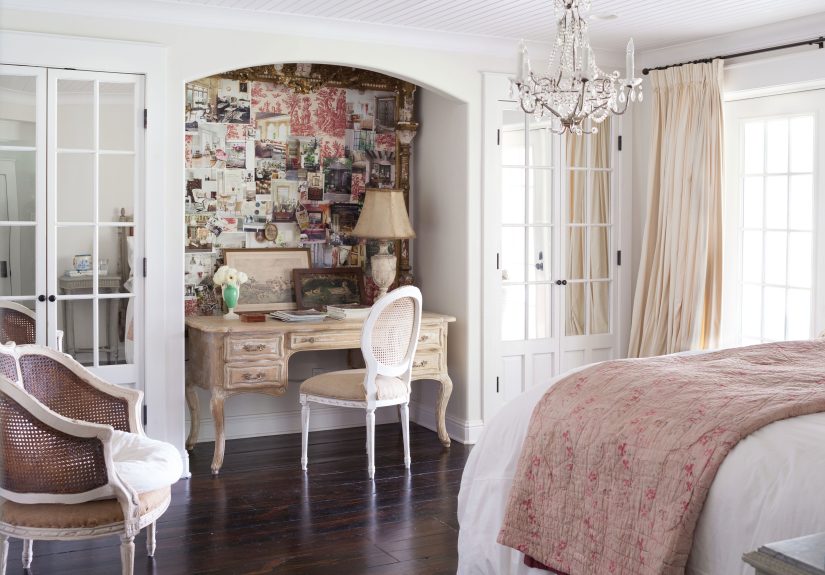
15) Turn a nook into a built-in desk moment
If your bedroom has an awkward alcove, that’s not a design flawit’s an office opportunity. Fit a desktop to the nook dimensions, add
shelves above, and you’ve got a workspace that looks custom (even if it’s secretly not).
16) Try a daybed or sleeper sofa if your bedroom doubles as a guest room
If the room must host guests, a daybed makes the space work harder without feeling cramped. Place the desk opposite the daybed and keep
guest essentials (extra linens, a charging cable, a small tray) stored in a lidded bin.
17) Consider a Murphy bed for the ultimate “office first” setup
A Murphy bed can transform the room: by day it’s a full office, by night it’s a bedroom. This option is more involved, but it’s one of the
best ways to maximize a tight space if the bedroom is primarily your work zone.
18) Use a loft bed to create a workstation underneath
Loft beds aren’t just for dorms. A raised bed frees the footprint below for a desk and storage. This is especially effective in smaller
rooms where you need the bed but want a dedicated work surface.
19) Add a rug under the desk to define the office zone
A small rug anchors the workspace visually and can dampen sound. It also gives your chair a “home base,” which makes the office feel like a
real area rather than a chair floating awkwardly near the bed.
20) Use layered lighting: task + ambient + “don’t fall asleep”
Bedroom offices need flexible lighting. Use a task lamp for focused work, a warmer ambient light for evenings, and consider a wall sconce
or plug-in pendant if your desk is short on space. Good lighting is also a video-call glow-up (no ring light required, but it’s allowed).
21) Control glare by placing screens thoughtfully
If you can, position your monitor so windows are off to the side rather than directly behind or in front of the screen. This helps reduce
glare and eye strain, and it makes you easier to see during calls.
22) Hide cables with simple, inexpensive fixes
Cable clips, cord sleeves, and adhesive cable channels keep cords from dangling like jungle vines. Mount a power strip under the desk so
plugs aren’t scattered across the floor. Your vacuum will also be less dramatic about it.
23) Choose closed storage for a calmer bedroom
Open shelves can look great, but they can also visually scream “work!” when you’re trying to sleep. Mix in baskets, lidded boxes, or a
cabinet so supplies disappear when you’re off the clock.
24) Use mirrors and light paint to make the setup feel bigger
Mirrors reflect light and can make a small bedroom office feel less cramped. If painting is an option, lighter tones often help the room
feel more openespecially when paired with streamlined furniture and clear surfaces.
25) Prioritize ergonomicseven in a small bedroom office
The goal is comfort that lasts longer than your morning coffee. Aim for a screen at about eye level, a monitor distance roughly an arm’s
length, and a chair height that lets your feet rest flat (or on a footrest). If you’re working on a laptop, consider a stand plus an
external keyboard and mouse so you’re not hunched like a shrimp at a keyboard convention.
Small Upgrades That Make a Bedroom Office Feel Better (Fast)
Make a “shutdown routine” so work doesn’t move into your dreams
Bedroom offices can blur boundaries, so build a daily close-out habit: tidy the surface, store paperwork, power down devices, and close the
laptop. If possible, hide work items in a drawer or behind doors. Even small rituals can make your sleep space feel restorative again.
Stop working from the bed (your back will throw a party)
It’s temptingyour bed is right there, looking supportive and soft. But long-term, it can encourage poor posture and make it harder to
mentally separate rest from work. If you must occasionally work there, keep it brief and try to use pillows for support.
Keep your “most-used” items within easy reach
Put your daily essentials in a small tray or top drawer: charger, notebook, pen, headphones, and a sticky-note pad. When your workspace is
tight, reducing repeated reach-and-search missions saves time and keeps you focused.
FAQ: Bedroom Office Setup Questions People Actually Ask
What’s the best desk size for a small bedroom office?
For many small bedrooms, a desk around 36–48 inches wide is a sweet spotlarge enough for a laptop and notes, small enough not to dominate.
If space is extremely tight, look for slim-depth desks (around 18–20 inches deep) or wall-mounted options.
How do I make a bedroom office look nice on video calls?
Place a lamp facing you (soft, not blinding), keep clutter off visible surfaces, and consider a simple backdrop like a curtain, bookshelf,
or framed art behind your chair. If your bed is in the shot, tidy bedding goes a long way.
How can I keep my bedroom feeling relaxing with an office inside it?
Hide what you can (closed storage), define zones (rug, divider, curtain), and use warmer lighting at night. The goal is to keep “work stuff”
from visually taking over the roombecause your brain notices even when you’re trying not to.
Real-Life Bedroom Office Experiences: What Actually Works (and What People Wish They’d Done Sooner)
The most common “aha” moment people report after setting up a bedroom office is that the desk isn’t the hardest partboundaries are. In the
first week, it feels efficient: roll out of bed, open laptop, conquer the world. By week two, you realize your brain now associates your
sleep space with unread emails, and you start thinking about your inbox at 11:47 p.m. like it’s a thriller novel. The fix is usually simple:
create an end-of-day ritual. People who consistently clear the desk, store the laptop, and physically close a closet door or pull a curtain
say it helps them “leave work” even when the commute is three steps.
Another real-world lesson: storage isn’t optional in a small bedroom officeit’s oxygen. When supplies don’t have a home, they migrate.
First it’s a charger on the nightstand. Then a stack of papers on the dresser. Then you’re brushing your teeth next to a rogue stapler.
The setups that stay functional tend to include one “catch-all” zone (like a rolling cart or drawer) and one “daily essentials” spot
(like a top drawer organizer or a small tray). The goal isn’t perfection; it’s preventing clutter from reproducing overnight.
Lighting is another surprise pain point. A bedroom office often relies on cozy lamps that are perfect for winding downbut not always great
for focused work. People who add a dedicated task lamp (or a wall-mounted sconce) say their eyes feel less tired and their workspace feels
more intentional. And for video calls, the biggest win is moving light in front of the face instead of behind it. Folks who work near a
window love the daylight, but many also learn to manage glare with a shade or by turning the desk slightly so the screen isn’t fighting the sun.
Ergonomics tends to become urgent the moment someone has a long day of meetings. Many people start with a dining chair or a cute stool
(because it matches the vibe), then discover that “cute” is not a lumbar support strategy. The most successful bedroom office setups usually
evolve into a few key upgrades: raising a laptop on a stand, adding an external keyboard and mouse, and making sure feet can rest flat
(or on a footrest). It’s not fancy; it’s practical. And it’s often the difference between “I can do this” and “why does my neck feel 90 years old?”
Finally, there’s the emotional side: people want their bedroom to feel calm. The office can feel like an intruder unless it’s visually
integrated. Real-life wins include choosing furniture that matches the bedroom style (instead of screaming “corporate cubicle”), using a rug
to define the workspace, and adding one small “joy object” to the desklike a plant, framed photo, or a favorite pen cup. The best bedroom
offices don’t try to pretend they’re not there; they simply behave politely, stay organized, and know when to clock out.
Conclusion
A bedroom office doesn’t need a dedicated room to feel dedicated. With the right layout, vertical storage, flexible furniture, and a few
comfort upgrades, you can build a space that supports productivity without stealing the cozy, restorative vibe your bedroom is supposed to
have. Start small: pick a zone, tidy cables, add lighting, and create a “shutdown” routine. The goal is a workspace that works hardthen
politely disappears when it’s time to sleep.