Table of Contents >> Show >> Hide
- Before You Start: How to “Read” Mexican Music in 20 Seconds
- Way #1: Dance Cumbia (The Smooth, Crowd-Friendly Shuffle)
- Way #2: Dance Norteño/Tejano with a Polka-Style Two-Step (The Bouncy Partner Favorite)
- Way #3: Try Zapateado-Inspired Footwork for Mariachi/Son (The “Percussive Feet” Option)
- How to Choose the Right Dance in Real Life
- Beginner FAQ: Dancing to Mexican Music Without Panicking
- Conclusion: Three Steps, One Big Win
- Experiences: What It Feels Like to Use These 3 Dances in Real Life (500+ Words)
Mexican music has a superpower: it can turn a room full of “I don’t dance” people into a moving, smiling, slightly sweaty crowd in about 30 seconds.
Whether it’s the bright punch of mariachi, the accordion-driven bounce of norteño, or the smooth sway of cumbia, Mexican rhythms are built to be felt in your feet.
The good news? You don’t need a fancy dance résumé. You need three things:
(1) a basic step you can repeat without thinking, (2) a way to match the beat, and (3) the confidence to look like you meant to do that.
Below are three beginner-friendly ways to dance to Mexican musiceach one tied to popular styles you’ll actually hear at parties, weddings, festivals, and family gatherings.
Before You Start: How to “Read” Mexican Music in 20 Seconds
If you’ve ever tried to dance and felt like your feet were arguing with the song, you weren’t “bad at dancing.”
You were probably stepping to the wrong part of the rhythm. Try this quick cheat sheet:
- Clap the beat first. Find the steady pulse. That’s your home base.
- Listen for the “oom-pah” bounce. That often signals polka-style rhythms common in norteño/tejano.
- Feel the “shuffle-walk” groove. That steady, smooth pulse is your cumbia invitation.
- Hear bright strums + sharp accents? You may be in mariachi/son territoryperfect for simple zapateado-inspired footwork.
Now let’s give your feet three reliable plansbecause nobody wants their feet improvising like a jazz saxophonist during a first date.
Way #1: Dance Cumbia (The Smooth, Crowd-Friendly Shuffle)
Cumbia is one of the most widely danced Latin styles, and Mexican cumbia is a staple at celebrations. The vibe is friendly and forgiving:
you can dance it in a small space, alone or with a partner, and it still looks like you know what you’re doing (which is the goal, frankly).
What cumbia feels like
Think “walking to the beat,” but smootherlike your feet are politely sliding into the rhythm instead of stomping it into submission.
The basic step is often described as a shuffle-walk, stepping on each beat with a relaxed hip sway.
The basic cumbia step (solo version)
- Stand tall and relaxed. Soft knees. Shoulders down. Face says: “I belong here.”
- Step on every beat. Small stepsdon’t travel like you’re late for a flight.
- Add a gentle “drag” on one foot. Many cumbia traditions use a subtle trailing/dragging feel in the step, creating that signature glide.
- Keep your upper body calm. Let the rhythm live in your hips and feet, not in frantic arm flailing.
The basic cumbia step (partner version)
Partner cumbia is basically: “We’re walking together, but make it romantic.”
- Choose a comfortable hold. One hand-to-hand connection is enough for beginners.
- Match step size. If one of you takes tiny steps and the other takes “cross-the-room” steps, it becomes a relationship metaphor.
- Rock gently forward and back (or side to side). Keep it subtle and consistent with the beat.
How to level up cumbia in 60 seconds
- Add a quarter turn every few countseasy style boost, minimal effort.
- Accent the beat with a hip sway (small, controlled). You’re dancing, not dodging bees.
- Smile. Cumbia is social. Your face is part of the dance.
Common cumbia mistakes (and the quick fix)
- Mistake: Taking huge steps. Fix: Shrink your step by 30%. Instantly smoother.
- Mistake: Bouncing up and down. Fix: Keep your head level; let movement stay low and grounded.
- Mistake: Trying spins too early. Fix: Master the basic walk first; style comes from control.
Best moment for cumbia: When the dance floor is filling up and you want a step that works for almost any crowd.
Cumbia is the “I can dance to this” optioneven when you’re not fully convinced.
Way #2: Dance Norteño/Tejano with a Polka-Style Two-Step (The Bouncy Partner Favorite)
Norteño and Tejano (Texas-Mexican) music are closely tied to dance traditions influenced by European forms like polka and waltzespecially in the
U.S.-Mexico borderlands and Texas.
Translation: you’ll often hear a lively, bouncing rhythm that practically begs for a traveling partner step.
What you’re listening for
If the song makes you want to bounce and move around the room (instead of staying in one spot), you’re probably in the right neighborhood.
Accordion lines, a steady “oom-pah” feel, and a quick, upbeat tempo are common signals.
The beginner polka-style step (easy version)
Don’t overthink this. Your goal is a repeating pattern that feels light and rhythmic.
- Start in place. Take a small step to the side with your right foot.
- Bring the left foot in. (A gentle “together” step.)
- Step again. Right foot steps again (small).
- Repeat to the other side. Mirror it: left, together, left.
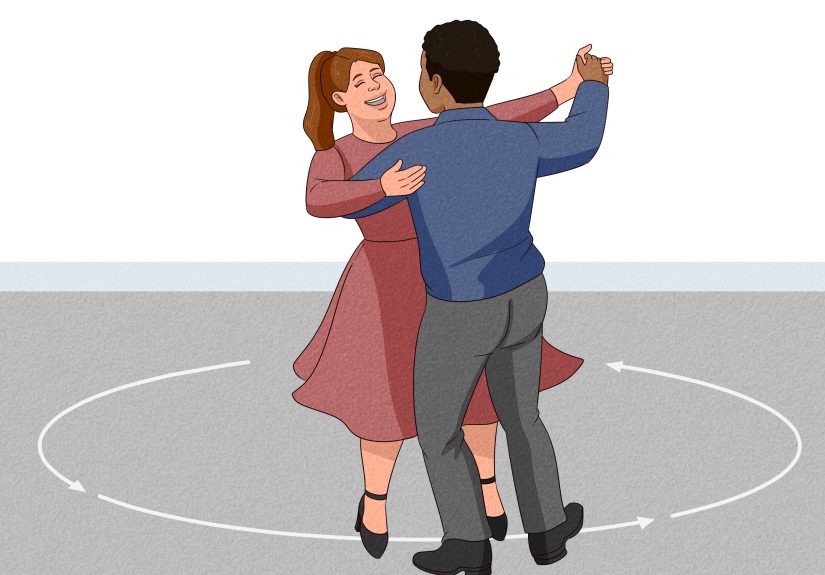
Turn it into a partner dance (simple “travel” version)
- Use a comfortable closed position or light handhold. Keep elbows relaxedno wrestling.
- Travel slowly around the floor. Imagine you’re tracing a gentle circle around the room.
- Keep steps short and springy. The bounce comes from the rhythm, not from jumping.
Optional upgrade: the waltz feel (when the song is “1-2-3”)
Some norteño/tejano sets slide into waltz rhythms. If you hear a clear “ONE-two-three,” switch to:
- Step (1)
- Step (2)
- Close/together (3)
Keep it smooth, not stompywaltz is like the music is wearing a suit.
How to not crash into Aunt Linda
- Look where you’re going. (Wild concept, I know.)
- Stay on the edge of the floor if you’re traveling.
- If it’s crowded, dance in place. The vibe matters more than the mileage.
Best moment for norteño/tejano two-step: When the song is upbeat, partner-friendly, and the dance floor has room to move.
It’s the perfect “let’s do one lap and feel cool about it” dance.
Way #3: Try Zapateado-Inspired Footwork for Mariachi/Son (The “Percussive Feet” Option)
If you’ve ever watched Mexican folk dance or caught a son jarocho performance, you’ve probably seen dancers creating rhythm with their feetoften on a wooden
platform (a tarima) that amplifies the sound.
This percussive footwork tradition is commonly called zapateado.
Now, a quick and important note: formal folklórico and zapateado can get wonderfully complex. But you don’t need the full professional version to dance socially
to mariachi-adjacent rhythms or son-inspired music. You can borrow the ideaclean, rhythmic foot accentswithout pretending you joined a ballet troupe overnight.
What zapateado-style dancing feels like
It’s rhythmic footwork where your feet act like percussionplant, tap, switchcreating a pattern that matches the music’s accents.
In community settings like fandangos, dancers and musicians interact, and the footwork adds to the overall rhythm.
Beginner zapateado-inspired pattern (no special shoes required)
This is a simplified pattern you can do on any sturdy floor. Keep it lightno need to summon your downstairs neighbor.
- Count “1-and-2-and.” Keep the count steady.
- On “1”, plant your right foot.
- On “and”, do a light heel tap with the same foot (or a toe tap if that feels easier).
- On “2”, plant your left foot.
- On “and”, light heel/toe tap with the left.
- Repeat. Start slow, then match the tempo.
Add the “son” flavor: tiny forward-and-back
Once the pattern feels stable, add a small travel:
- Two counts forward (small steps)
- Two counts back (small steps)
- Keep the taps light and precise
Make it look intentional (aka, the secret to all dancing)
- Posture: Lift your chest slightly, relax your shoulders.
- Arms: Keep them relaxed at your sides or gently bentno windmills.
- Foot volume: Crisp, not aggressive. Rhythm, not demolition.
- Listen for accents: When the music pops, your foot can pop with it.
When to use this style
Use zapateado-inspired footwork when the music has crisp accentsoften in mariachi, son-based pieces, and folklórico-adjacent momentsespecially when you want
something more rhythmic than a simple sway.
How to Choose the Right Dance in Real Life
If you only remember one thing, remember this: pick the dance that matches the room.
Social dancing is about connection and vibe, not perfection.
- Crowded floor? Choose cumbia and keep it compact.
- Plenty of space + upbeat bounce? Go with norteño/tejano two-step.
- Song has strong accents and you want rhythmic flair? Try zapateado-inspired footwork.
Beginner FAQ: Dancing to Mexican Music Without Panicking
Do I need a partner?
Nope. Cumbia works great solo. Norteño/tejano is often partner-based, but you can do the step in place alone.
Zapateado-inspired patterns can absolutely be solo.
What shoes should I wear?
Wear something stable. Avoid super-grippy soles if you plan to turn. If you’re trying rhythmic footwork, choose shoes that won’t hurt your feet after 10 minutes.
Your future self will thank you.
How do I look less awkward?
Smaller steps, relaxed shoulders, and a steady rhythm. Also: stop apologizing with your face.
A calm expression + consistent timing reads as “confident,” even if you learned the step five minutes ago near the snack table.
Is it okay to dance these styles if I’m not Mexican?
Enjoying the music and dancing respectfully is generally welcomed in social settings. The key is attitude:
appreciate the culture, don’t mock it, and don’t claim expertise you don’t have.
If you want to go deeper, consider taking a class from a folklórico or Latin dance instructor who can teach history and technique with proper context.
Conclusion: Three Steps, One Big Win
Dancing to Mexican music doesn’t require choreography, courage from the gods, or a dramatic backstory.
Start with cumbia when you want smooth and social, switch to norteño/tejano two-step when the rhythm bounces and the floor opens up,
and use zapateado-inspired footwork when the music’s accents make your feet want to join the band.
Most importantly: keep your steps small, your rhythm steady, and your vibe joyful.
Because Mexican music isn’t asking you to be perfectit’s asking you to participate.
Experiences: What It Feels Like to Use These 3 Dances in Real Life (500+ Words)
Let’s make this practicalbecause reading dance steps in a chair is a little like reading a recipe while refusing to touch a stove.
Here are three experience-style scenarios (the kind many people run into at parties, weddings, and community events) that show how these dances actually play out.
Consider them “mental rehearsal,” which is a fancy way of saying: you’re about to feel less weird the moment the music starts.
Experience #1: The Cumbia “I’m Just Testing the Floor” Moment
Picture a family party where the DJ (or uncle with a playlist and confidence) slides into a cumbia track. You’re near the edge of the dance floor,
holding a drink and pretending you’re deeply invested in the conversation about someone’s new air fryer. Then you hear that steady groove.
This is where cumbia shines: you can start smallliterally. You begin with the shuffle-walk in place. Nobody even knows you “started dancing” yet.
It looks like you’re simply… feeling the music. Your steps stay compact, your shoulders relax, and you realize the beat is doing half the work for you.
If someone makes eye contact and smiles, cumbia gives you a polite option: a simple handhold and the same step you were already doing.
The best part is the social ease. If you mess up, the music keeps going like, “That’s adorable. Try again.”
After a minute, you stop thinking about “steps” and start noticing something better: you’re actually enjoying yourself.
That’s when your dancing improvesnot because you learned a secret move, but because you stopped bracing for embarrassment.
Experience #2: The Norteño/Tejano Two-Step “We’re Going for a Lap” Experience
Now imagine the band kicks into a lively norteño or tejano number and the floor suddenly clears a littlelike the room collectively agreed,
“Okay, this one’s a mover.” Couples pair up. You can see the travel pattern around the edges, almost like a gentle dance traffic circle.
This is where the polka-style two-step feels like magic. The rhythm is bouncy, so your job is to keep your steps light and repeatable.
At first, it might feel fast. That’s normal. The trick is resisting the urge to sprint. Small steps are your best friend.
When you keep them short, you stay on time, you stay balanced, and you look smoothereven if you’re a beginner.
There’s also an emotional shift that happens in partner travel dances: you feel “in it” with the room. You’re moving with the crowd,
sharing the same rhythm, and it feels communal without being complicated. If you get slightly off-time, you can recover by returning to the basic
step in place for a moment, then joining the travel again. Nobody files a report. Everybody’s just dancing.
Experience #3: The Zapateado-Inspired “My Feet Are Part of the Music” Feeling
Finally, imagine a moment when the music has sharper accentsmaybe mariachi energy or a son-inspired grooveand you want something more expressive than swaying.
You try the simple plant-and-tap pattern. At first, you keep it quiet because you’re not trying to turn your living room into a drum solo.
Then something clicks: the accents in the music line up with your foot taps, and it feels like your feet are responding, not just moving.
Even with a beginner pattern, this style gives you a “rhythmic confidence.” You’re not guessing where the beat isyou’re placing it.
And that changes your whole presence. Your posture improves. Your arms relax. Your expression says, “Yes, I meant to do that.”
It becomes less about copying a formal folklórico performance and more about honoring the rhythmic spiritclean timing, clear accents, and respect for the music.
If you take anything from these experiences, take this: your first goal isn’t to impress anyone.
Your first goal is to stay with the beat long enough to relax. Once you relax, you’ll look better, feel better, and (surprise) dance better.
That’s not just good dance adviceit’s suspiciously good life advice.