Table of Contents >> Show >> Hide
- Why Oil Leaks Matter More Than Most Drivers Want to Admit
- Way 1: Confirm That the Leak Is Actually Engine Oil
- Way 2: Trace the Leak to Its Actual Source
- Way 3: Decide Whether It Is Safe to Drive or Time to Stop
- Common Mistakes That Make Oil Leak Troubleshooting Worse
- What Leaking Oil Looks Like in Real Life: Common Driver Experiences
- Conclusion
If your car is leaking oil, your vehicle is not being “dramatic.” It is being very clear, actually. Oil spots on the driveway, a burnt smell after a short trip, or a dashboard warning light are your engine’s version of waving both arms and yelling, “Please pay attention before this gets expensive.”
The good news is that troubleshooting a leaking oil problem does not have to start with panic. In many cases, you can narrow down the issue with a calm, methodical check. The trick is to stop guessing, stop blaming every puddle on “old car behavior,” and start working through the leak like a detective with a dipstick.
This guide breaks the process into three practical ways to troubleshoot leaking oil. You will learn how to identify whether the fluid is really engine oil, how to trace where it is coming from, and how to decide whether you are dealing with a small annoyance or a stop-driving-immediately emergency. Along the way, we will also cover common causes of engine oil leaks, signs of internal oil loss, and the mistakes that turn a tiny seep into a giant repair bill.
Why Oil Leaks Matter More Than Most Drivers Want to Admit
Engine oil lubricates moving parts, reduces friction, helps control heat, and keeps internal components from grinding themselves into a mechanical temper tantrum. When oil escapes, your engine loses the fluid it depends on. That can mean low oil pressure, overheating, noisy operation, smoking under the hood, or serious engine damage if the leak is ignored for too long.
And no, the driveway stain is not the real problem. The stain is merely the autograph. The actual problem is whatever failed seal, gasket, filter, plug, or internal component caused the oil to escape in the first place.
Way 1: Confirm That the Leak Is Actually Engine Oil
Before you troubleshoot leaking oil, make sure you are not chasing the wrong fluid. Cars can leak several things, and some of them look annoyingly similar at first glance. Starting here saves time, money, and the embarrassment of diagnosing an “oil leak” that turns out to be plain water from the air conditioner.
Check the Color, Texture, and Smell
Fresh or fairly clean engine oil is usually amber to dark brown. Older oil may look darker brown or nearly black. It tends to feel slick and thicker than water, and it often has a petroleum or slightly burnt smell. If the puddle is brown or black and feels oily between your fingers, engine oil is a strong possibility.
By contrast, coolant often appears green, orange, pink, or blue and feels more watery. Transmission fluid is often red or reddish-brown. Brake fluid can be light yellow to brown. Water from the A/C is clear and harmless unless it is carrying grime from the road.
Use the Cardboard Trick
Slide a clean piece of cardboard or light-colored paper under the car overnight. In the morning, check where the drip landed. If the stain shows up near the front of the vehicle under the engine area, that supports the engine oil theory. If it lands farther back, another fluid may be involved.
This trick also helps you track frequency. One or two small drops after a drive may suggest a slow seep. A fresh puddle the size of a dinner plate is your car’s way of saying this is no longer a hobby-grade problem.
Check the Dipstick and Oil Condition
Park on level ground, let the engine cool, and check the oil level with the dipstick. If the level is low, that supports the possibility of a real oil leak or oil consumption issue. Look at the condition of the oil too. If it appears milky, frothy, or cloudy, the problem may involve coolant contamination rather than a simple external leak. That raises the stakes fast.
If the dipstick shows the oil is overfilled, that matters too. Too much oil can increase pressure in the system and push oil past seals and gaskets. In other words, yes, even your helpful top-off can become a troublemaker.
Way 2: Trace the Leak to Its Actual Source
Once you are reasonably sure it is engine oil, the next step is to find where it is escaping. This is the most important part of oil leak diagnosis because oil loves to travel. It drips downward, blows backward while driving, and coats nearby parts until everything looks guilty.
The biggest troubleshooting rule is simple: do not assume the lowest wet spot is the source. Oil often starts higher up and then sneaks downhill like it pays no rent.
Start High and Work Down
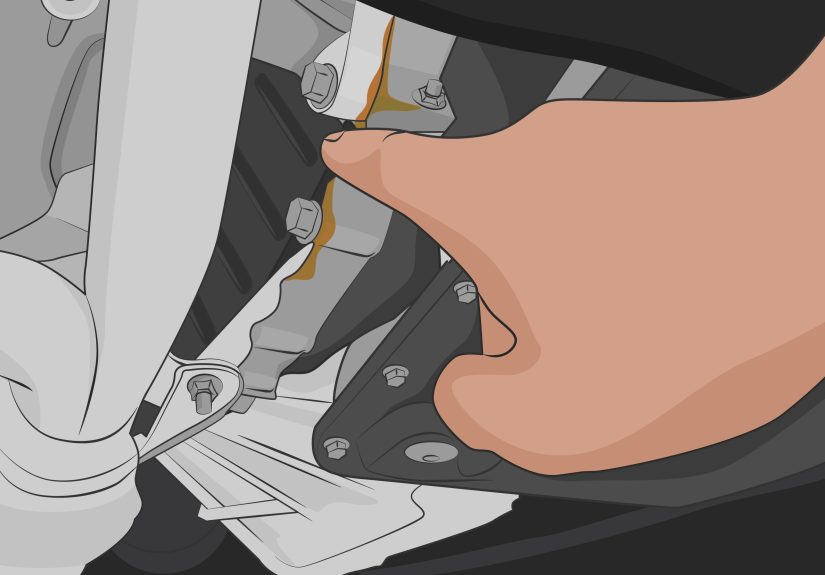
Open the hood and inspect the upper engine first. A valve cover gasket leak is a common culprit, especially on older vehicles. Oil from a leaking valve cover gasket may run down the side of the engine and even drip onto hot exhaust parts, creating that lovely burnt-oil smell nobody enjoys.
From there, move lower. Common leak points include:
- Valve cover gasket: Often causes oil residue on the side of the engine and a burning smell.
- Oil filter: A loose, damaged, double-gasketed, or overtightened filter can leak surprisingly fast.
- Drain plug or drain plug gasket: A common issue shortly after an oil change.
- Oil pan or oil pan gasket: Vulnerable to age, corrosion, road debris, and impact damage.
- Front or rear main seal: More serious and harder to access, often requiring professional repair.
- Oil cooler lines or fittings: More common on some vehicles and can create messy leaks.
Think About Timing
The timing of the leak matters. If the problem started right after an oil change, check the basics first. A loose oil filter, a damaged drain plug washer, the wrong gasket, or spilled oil that was never cleaned up can all make it seem like the engine suddenly developed a dramatic new personality.
If the leak shows up mostly while parked, gravity is helping you see it. If it happens only when the engine is running or after highway driving, pressure and heat may be opening up a weak seal that does not leak much when the engine is cold.
Clean, Recheck, Then Use Dye if Needed
If the entire underside of the engine looks like it lost a fight with a fryer basket, clean the area before trying to pinpoint the leak. Old oil residue hides the real source. Once clean, run the engine briefly and inspect again with a flashlight.
For tiny or stubborn leaks, many technicians use UV dye. The dye mixes with the oil and glows under a UV light, making small leaks much easier to trace. This is especially useful when the leak only appears at idle, after warming up, or after a short drive.
Do Not Ignore the No-Puddle Scenario
What if your oil level keeps dropping but you see no leak on the ground? Then you may not be dealing with an external leak at all. Oil can also be burned internally. Blue smoke from the exhaust, frequent topping off between oil changes, or a persistent burnt-oil smell without visible drips can point to worn valve seals, piston rings, or PCV-related problems.
That means your troubleshooting should expand beyond “Where is it dripping?” to “Is the engine consuming oil?” Same missing oil, different suspect.
Way 3: Decide Whether It Is Safe to Drive or Time to Stop
This is the part many drivers skip because nobody enjoys canceling plans in favor of calling a tow truck. Still, severity matters. Some oil leaks are slow enough to monitor briefly while arranging repair. Others mean the car should not be driven another mile.
Signs It May Be a Minor Leak
A very small drip, no warning lights, a stable oil level, and no smoke or burning smell may indicate a slow seep rather than a severe active leak. Even then, it should be repaired soon. Minor leaks almost never become less minor with time. They just get more confident.
If you choose to monitor a small leak temporarily, check the oil level often, park over clean cardboard, and document how much oil is lost over several days. That information helps a technician diagnose the issue more quickly.
Signs You Should Stop Driving
Do not keep driving if any of these red flags show up:
- The oil pressure warning light comes on
- You hear clunking, knocking, or tapping from the engine
- The engine starts overheating
- You smell strong burning oil or see smoke
- You find a large puddle under the car
- You have to add oil repeatedly in a short period
Those symptoms suggest the leak is affecting lubrication or safety. At that point, the smartest move is usually to shut the engine off and arrange for professional help. Continuing to drive can turn a gasket repair into a full engine replacement, which is not the kind of upgrade anyone wants.
Know When DIY Stops Being Smart
Some oil leaks are realistic DIY jobs for experienced owners. Replacing an easy-to-access oil filter or correcting a drain plug issue may be manageable. But rear main seals, timing cover leaks, internal oil burning, or anything involving mixed coolant and oil belongs in professional hands. There is a difference between saving money and auditioning for a future repair disaster.
Common Mistakes That Make Oil Leak Troubleshooting Worse
- Assuming every dark spot is engine oil: Misidentifying the fluid leads to bad decisions.
- Ignoring spilled oil after service: Residual oil can mimic an active leak.
- Overfilling the crankcase: Too much oil can create new leaks.
- Replacing parts before locating the source: Guessing is expensive.
- Driving with the oil light on: This is how small problems become catastrophic ones.
- Using stop-leak products as a long-term plan: They may mask symptoms, but they do not replace proper diagnosis.
What Leaking Oil Looks Like in Real Life: Common Driver Experiences
Many drivers first notice leaking oil in the least glamorous way possible: by spotting a dark stain where the car usually sleeps. At first, it is easy to rationalize. Maybe it is old. Maybe it is from another car. Maybe the driveway is just expressing itself artistically. But then the spot gets larger, and the story changes. A driver checks the dipstick and realizes the oil is lower than expected. That is the moment when “I should probably look at this” becomes “Okay, yes, this is absolutely my problem.”
Another common experience happens after an oil change. The car seems fine at first, then a burnt smell shows up during the commute home. The driver opens the hood and sees light smoke or fresh oil around the filter area. Sometimes the issue is simple, like spilled oil that was never cleaned off. Other times, the filter gasket is pinched, the filter is loose, or the drain plug washer is not sealing correctly. It feels dramatic because it starts suddenly, but the fix may still be straightforward if caught early.
Then there is the classic older-car scenario: no obvious puddle, no giant warning sign, just a vehicle that slowly asks for more oil between changes. The owner tops it off once, then again, then starts carrying a spare quart in the trunk like it is emergency water for a desert crossing. In these cases, the leak may be small and external, or the engine may actually be burning oil internally. Blue smoke on startup, especially after the car has been sitting, often nudges the diagnosis away from an external drip and toward worn valve seals or other internal wear.
Some drivers describe the problem as a smell before anything else. They do not see smoke. They do not notice drips right away. What they do notice is that sharp, hot, burnt-oil odor after parking. That often points to oil dripping onto hot engine parts or the exhaust. A valve cover gasket leak is a frequent suspect here. The leak may not look impressive from above, but the smell makes the experience feel urgent, and for good reason. Oil plus hot metal is not something to shrug off.
And finally, there is the genuinely urgent version: the oil light comes on, the engine sounds wrong, or a puddle appears fast enough to ruin your whole afternoon. Drivers in this situation often describe a sudden sinking feeling because they know this is beyond “watch and wait.” That instinct is correct. When leaking oil is paired with low oil pressure, overheating, or mechanical noise, the experience changes from inconvenience to risk. At that point, troubleshooting is less about curiosity and more about protecting the engine before the repair bill gets promoted to executive level.
Conclusion
The smartest way to troubleshoot leaking oil is to stay methodical. First, confirm the fluid is actually engine oil. Second, trace the leak from the highest likely source down rather than guessing from the mess below. Third, judge severity honestly and stop driving if the leak is paired with warning lights, smoke, overheating, or noise.
Most oil leaks start as manageable problems. A gasket, seal, filter, plug, or pan issue is annoying, but usually fixable. The real trouble begins when the leak is ignored, misdiagnosed, or covered up with wishful thinking and one extra quart every weekend. If your car is leaking oil, treat it like a maintenance problem today so it does not become an engine problem tomorrow.