Table of Contents >> Show >> Hide
- Quick Safety Note Before You Grab the Closest Bottle
- Way #1: Blot, Flush, and Extract (Get It Out, Don’t Spread It)
- Way #2: Use an Enzymatic Cleaner (Let Biology Fight Biology)
- Way #3: Oxidize the Odor with Hydrogen Peroxide (The “Reset Button”)
- Way #4: Absorb and Reset the Space (Baking Soda, Airflow, and Finding the Sneaky Spots)
- Frequently Asked Questions
- Final Takeaway
- Real-Life Lessons From the Urine-Smell Trenches (The Extra )
Urine smell is the kind of odor that doesn’t just “visit.” It moves in, puts its feet on the coffee table, and
somehow gets stronger the moment you have company. The good news: you can absolutely get rid of urine odoroften
permanentlyif you treat it the right way and stop the stink at the source (not just on the surface).
Here’s the science-y reason your nose feels personally attacked: urine contains compounds that can break down into
ammonia-like odors, and it also contains uric acid that can dry into crystals. Those crystals can “re-activate” with
humidity, steam, or the tiniest bit of moistureso the smell you thought was gone may come back like an unwanted
sequel. The fix is simple: remove as much urine as possible, then neutralize what’s left with the right chemistry.
Quick Safety Note Before You Grab the Closest Bottle
Cleaning urine is not the time for mad-scientist mixing. A few key rules keep you (and your lungs) safe:
- Never mix bleach with urine, ammonia-based cleaners, or acids (like vinegar). Use one product at a time, rinse between steps, and ventilate the area.
- Spot-test first on fabrics, carpet, upholstery, and finished woodespecially if you’re using peroxide or any stain remover.
- Blotdon’t scrub. Scrubbing drives urine deeper and spreads the problem.
- Skip steam. Heat can set stains and odors in some fibers, making removal harder.
- When in doubt, gloves + airflow. Your future self will thank you.
Way #1: Blot, Flush, and Extract (Get It Out, Don’t Spread It)
This is the “first aid” method for fresh accidents and it’s shockingly effective. Your goal is to remove as much
liquid as possible before you start neutralizing what remains. Think of it like getting mud off a shoe:
you wouldn’t paint over it and hope for the best.
Best for
- Fresh urine on carpet, rugs, mattresses, couches, and car upholstery
- Accidents you caught quickly (within minutes to an hour)
Step-by-step
-
Blot immediately. Use paper towels or clean cloths. Press firmlystand on a towel if you need to.
Keep blotting until you’re no longer pulling up moisture. -
Flush with cool water (optional but helpful). Lightly dampen the area with cool water to dilute.
Don’t soak it like you’re watering a plant. You’re not growing a smell garden. -
Extract again. Blot the diluted area. If you have a wet/dry vac or a carpet extractor, use it here.
Extraction beats endless towel use (though towels work if you’re persistent). -
Air-dry aggressively. Use a fan, open windows, and dehumidify if possible. The faster it dries,
the less time odor-causing compounds have to party.
Surface-specific tips
- Mattress: Extraction matters. If you can press a towel and it still feels damp, keep extracting before any cleaner.
- Hardwood or laminate: Use minimal water. Wipe, then dry immediately. If urine seeped between boards, you may need a deeper approach (see Way #4 “When to escalate”).
- Car upholstery: Blot thoroughly and use airflow (crack windows, run a fan). Cars trap odor like it’s their job.
If the odor is already set (you found it late, or it’s an “I swear it happened yesterday” mystery spot), don’t worry.
Way #1 still helps, but you’ll likely need Way #2 or Way #3 to break down what’s left behind.
Way #2: Use an Enzymatic Cleaner (Let Biology Fight Biology)
Enzymatic cleaners are the heavy hitters for urine odor because they’re designed to break down the organic stuff
that causes lingering smellsespecially the components that keep calling your nose back to the crime scene.
If you’re dealing with pet urine (cat, dog, the occasional “my rabbit is innocent” situation), enzymes are often the
best path to “gone for good.”
Best for
- Pet urine (especially cat urine)
- Carpet, rugs, upholstery, mattresses, pet beds
- Old spots where water alone didn’t solve it
How to use enzymatic cleaner on carpet and upholstery
- Do Way #1 first if the spot is fresh. Remove as much liquid as possible.
-
Saturate the affected area. This is where people under-do it. Enzymes need contact with the urine.
If urine reached the carpet pad, the cleaner has to reach it too. -
Give it dwell time. Follow label instructions. Many enzyme products work best if they stay damp for a while.
(A simple trick: cover with plastic wrap to slow evaporationjust keep pets and kids away.) - Blot/extract and let dry fully. Odor often improves dramatically once fully dry.
- Repeat if needed. If it’s an older stain or deep soak, a second round is normalnot a failure.
How to use enzymatic cleaner for laundry and bedding
- Rinse in cool water first if the item is heavily soiled.
- Wash as directed and consider adding an enzyme-based laundry booster or soaking pre-wash if the smell lingers.
- Air-dry and smell-check before using high heat. Heat can lock in odors on some fabrics.
Practical reality check: if urine has deeply soaked porous building materials (unfinished wood, subfloor, drywall),
enzymes might reduce odor but not fully eliminate it. That’s not you “doing it wrong”it’s physics. If that’s your
situation, skip ahead to Way #4 for escalation strategies.
Way #3: Oxidize the Odor with Hydrogen Peroxide (The “Reset Button”)
When enzyme cleaner is the specialist, hydrogen peroxide is the versatile problem-solver. Peroxide-based cleaners
can help reduce odor by oxidizing (breaking down) the smelly compounds. Many pet stain products use peroxide in a
form designed for household cleaning. This can be especially useful for mattresses, light-colored upholstery, and
“I cleaned it, but it still smells vaguely like regret” situations.
Best for
- Mattresses and upholstery (after blotting)
- Lingering odor after initial cleanup
- Areas where you want an “odor + stain” approach (with spot testing)
A mattress example you can actually follow
For a typical foam or pillow-top mattress accident, a commonly recommended approach uses 3% hydrogen peroxide
with baking soda and a tiny amount of dish soap. This combo is popular because it tackles odor and can lighten stains
on many mattresses (but it can discolor some fabricsspot test!).
- Blot/extract first. Do not skip this. Your goal is “damp,” not “mini swimming pool.”
-
Mix a fresh solution (don’t store it). In a spray bottle, combine:
- 1 cup of 3% hydrogen peroxide
- 3 tablespoons baking soda
- A few drops of dish soap (or mild laundry detergent)
- Lightly mist the stain. Dampendon’t soak. Let it sit briefly.
- Air-dry completely. As it dries, you may see a powdery residue from the baking soda.
- Vacuum the residue. Then sniff-test. If it’s improved but not perfect, repeat once more.
Important peroxide “don’ts”
- Don’t use on wool, silk, or “dry clean only” materials unless the label/product says it’s safe.
- Don’t combine peroxide with vinegar. Use one, rinse, then the other later if needed.
- Don’t drench foam. Over-wetting can trap moisture and create new odor issues (hello, mildew).
If peroxide makes you nervous, you can also choose a commercially formulated pet stain remover that lists peroxide
(or “oxygen-based” cleaning) on the labelthose products often build in fabric-safety features and clearer directions.
Way #4: Absorb and Reset the Space (Baking Soda, Airflow, and Finding the Sneaky Spots)
Sometimes the urine is gone… but your nose is still filing complaints. That’s when you use absorption and “reset”
strategies: remove airborne odor, pull out residual smell from fibers, and address hidden or deep-set contamination.
Think of this as the cleanup and the prevention plan.
Best for
- Rooms that still smell after cleaning
- Carpet/rugs after enzymatic or peroxide treatment
- Older homes, repeat accidents, “mystery odor” cases
Odor-absorbing checklist
-
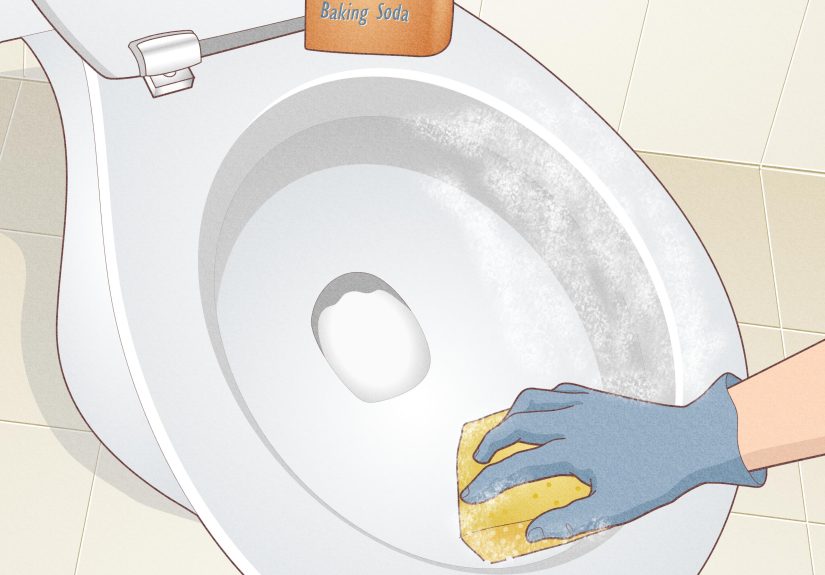
Baking soda (dry method): Once the area is fully dry, sprinkle a generous layer, let it sit
(30 minutes to overnight), then vacuum thoroughly. -
Activated charcoal: Place charcoal odor absorbers near the area (especially in small rooms, closets,
or cars). It’s a slow-and-steady helper for background odor. - Ventilation + dehumidification: Airflow removes odor and prevents moisture from “waking up” lingering uric acid.
- Wash nearby soft items: Throw blankets, pet beds, slipcovers, even curtains can hold odor.
-
Find hidden spots: A UV flashlight can help locate dried urine you didn’t know existed (especially near baseboards,
furniture legs, and along carpet edges).
When to escalate (the “this is in the walls, isn’t it?” moment)
If urine has soaked into carpet pad, subfloor, or unfinished wood, odor may persist no matter how many times you clean
the surface. In those cases, the most reliable fixes are:
- Replace the pad (and sometimes the carpet if it’s repeatedly saturated).
- Seal the subfloor with an odor-blocking primer/sealer after cleaning and drying.
- Replace affected drywall or trim if it has absorbed urine (especially in repeated pet-marking areas).
Not glamorous, but very effectiveand it beats living in a house that smells like a cautionary tale.
Frequently Asked Questions
Why does urine smell come back when it’s humid?
Because leftover uric acid residues can rehydrate and release odor again. If the smell returns on rainy days or after
you steam-cleaned, it’s a sign the source wasn’t fully neutralized. Enzymes (Way #2) or careful oxidation (Way #3)
usually solve the “odor boomerang.”
Is vinegar enough to remove urine odor?
Vinegar can help in some situations, especially as a mild deodorizing step on certain surfaces. But urine odor often
persists because of uric acid crystalsvinegar may not fully break those down the way enzyme cleaners can. If vinegar
works for you, great; if the smell keeps coming back, switch to enzymes or peroxide-based cleaners.
Can I use bleach to get rid of urine smell?
It’s not recommended for urine odor cleanup in the home. Beyond the safety risks of chemical fumes, bleach can
discolor materials and doesn’t reliably solve the “uric acid reactivation” problem. Safer, more targeted options
are enzyme cleaners and properly used peroxide-based cleaners.
How long do enzyme cleaners take to work?
Some improve odor quickly, but the best results often happen after full dryinganywhere from several hours to a day.
Deep or older spots may need repeat treatments. If your cleaner dries too fast, it may not get enough contact time.
What’s the fastest way to get rid of urine smell in a room?
First, treat the source (Way #1 + Way #2 or #3). Then reset the air: open windows, run fans, use a dehumidifier,
and place odor absorbers (Way #4). Air freshener alone is like putting a party hat on a problem.
Final Takeaway
To get rid of urine smell, you need a one-two punch: remove as much liquid as possible, then neutralize what’s left
with enzymes or oxidation. Finish with absorption, airflow, and a hunt for hidden spots. Do it in that order and the
odor usually disappears for goodno candle required, no “is that… pee?” paranoia at your next get-together.
Real-Life Lessons From the Urine-Smell Trenches (The Extra )
If you’ve ever owned a pet, had a toddler, cared for an older relative, or hosted a house party where someone laughed
too hard at a joke, you know urine smell can show up with zero warning and maximum confidence. Over time, people tend
to learn a few surprisingly consistent lessonsthe kind you don’t find on the bottle label because there isn’t enough
space for “emotional damage.”
Lesson one: speed matters, but technique matters more. Plenty of folks react quickly, grab a wet rag,
scrub like they’re trying to erase history, and accidentally push urine deeper into carpet fibers or mattress foam.
The smell calms down for a day, then returns with backup the moment humidity rises. The “aha” moment usually comes
when they stop scrubbing and start blottingpressing down with towels (sometimes literally standing on them) and
extracting as much as possible before using any cleaner. It’s not glamorous, but it’s the difference between “fixed”
and “temporarily distracted.”
Lesson two: the stain you can see is often not the full story. One common experience is the “I cleaned
it perfectly… why does the room still smell?” scenario. That’s when people discover urine traveled: into carpet pad,
under a rug, along a seam in upholstery, or down the side of a mattress. This is why enzyme cleaners feel like magic
to so many households: you can saturate the broader area (not just the visible spot), give it dwell time, and finally
neutralize what’s been hiding. The real win isn’t just odor removalit’s stopping repeat pet-marking because the scent
cue is gone.
Lesson three: heat is not your friend. A lot of well-meaning DIYers reach for a steam cleaner thinking,
“Hot water cleans everything.” But heat can set stains and lock odor into certain fibers. People often report that
after steaming, the smell becomes sharper or more permanentlike the urine got promoted from “incident” to “feature.”
The better pattern is cool-water dilution, extraction, then enzymes or peroxide-based cleaning (with spot testing).
Heat can come later, once you’ve actually removed the urine compounds.
Lesson four: airflow is the underrated hero. There’s a huge difference between “it’s clean” and “it’s
dry.” Many people notice that a spot seems fine until nighttime or after the heater runs, when the odor blooms again.
The fix is often boring but effective: fans, open windows, and dehumidifying. Drying fast reduces odor and prevents
new problems like mildew. It also helps you evaluate results honestlybecause a damp surface can mask or distort smell
until it’s fully dry.
Finally, there’s the “hard truth” lesson: sometimes you have to escalate. If accidents happened
repeatedly in the same placeespecially on carpet over woodno amount of surface cleaning may fully solve it.
People who finally replace the carpet pad, seal the subfloor, or swap out a urine-soaked piece of drywall often
describe it as the moment their home stopped smelling like a permanent apology. It’s not the cheapest route, but it’s
the route that ends the saga.
The big takeaway from these real-world experiences is encouraging: urine odor isn’t unbeatable. It’s just stubborn.
When you treat it like a chemistry problem (remove, neutralize, absorb, dry) instead of a perfume problem (spray and
pray), your nose gets its life back.