Table of Contents >> Show >> Hide
- A quick safety + reality check (before we roast your stairs)
- 1) Wall-to-wall carpeted stairs (especially the “builder beige” variety)
- 2) Ornate scrollwork railings and “Tuscan” iron balusters
- 3) High-gloss, red-toned wood finishes (a.k.a. “cherry shine”)
- 4) Floating/open-riser stairs done purely for the “wow” factor
- 5) Color-changing LED strip lighting under every tread
- Conclusion: timeless stairs are simple, safe, and intentionally styled
- Experience notes: what these upgrades look like in real homes (and what people learn the hard way)
- 1) The “We ripped out the carpet and found… chaos” moment
- 2) The “Our scroll railings suddenly look… loud” realization
- 3) The “We refinished the stairs and now every scratch is a headline” problem
- 4) The “Floating stairs looked amazing online… then we lived with them” pivot
- 5) The “LED strips felt fun… until they felt like a gadget” upgrade
Stairs are the most-used piece of furniture your house pretends it doesn’t have. Everyone touches them. Everyone hears them.
Everyone judges them (quietly, while taking their shoes off in your entryway). And yet, stair design is often stuck in a time capsule:
early-2000s “Tuscan,” late-’90s golden oak, or the “I saw it on Instagram at 2 a.m.” era.
The good news: you don’t need a full gut renovation to bring a dated staircase into the present. Designers typically focus on three things:
materials, lines, and lightingthen they make sure it still works for real life (kids, pets, groceries, socks, and gravity).
Below are five staircase design trends designers say have officially overstayed their welcomeand what to do instead.
A quick safety + reality check (before we roast your stairs)
A staircase is not the place to “wing it.” Even a small changelike swapping balusters, changing tread finishes, or opening riserscan affect
safety and code compliance. If your home has little kids, elderly relatives, or enthusiastic pets who treat stairs like parkour, prioritize:
grip, sturdy handrails, consistent riser heights, and guard/rail spacing.
Translation: pretty is great; pretty and safe is the goal.
1) Wall-to-wall carpeted stairs (especially the “builder beige” variety)
Once upon a time, fully carpeted stairs screamed “family-friendly.” Now they often scream “mystery stains” (even when they’re spotless).
Designers aren’t anti-comfortthey’re anti-blanket-of-carpet that dulls architectural detail and traps dust in a high-traffic zone.
Plus, wall-to-wall stair carpet can date a home fast when the color reads “rental tan” or the pile reads “1997.”
Why designers are over it
- It hides the staircase’s shapeand not in a cute way.
- Maintenance is relentless in the one spot everyone walks, turns, and drags laundry.
- It can look heavy, especially in smaller entryways where you want visual breathing room.
What to do instead
Keep the safety benefits, but upgrade the look. Designers often recommend:
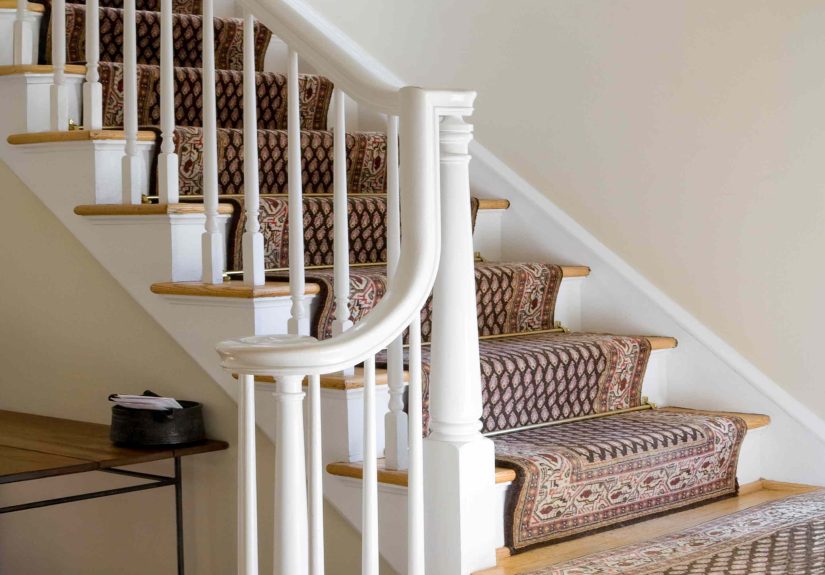
a tailored stair runner (with wood borders showing) or durable stair treads that add grip without swallowing the whole staircase.
Runners are also easier to swap laterbecause your taste will change, and stairs are too expensive to redecorate out of boredom.
If you love the softness of carpet, choose a runner with a tight weave (often wool or a high-quality blend), and pick patterns that hide everyday life:
stripes, subtle geometrics, textured neutrals, or a classic herringbone. Your future self will thank youprobably while vacuuming.
Budget-friendly move
If replacing carpet isn’t happening this year, refresh it like a designer: professional cleaning, re-stretching if it’s loose, and
then add a “distraction upgrade” on the wallsthink crisp trim, statement paint, or wallpaper in the stairwell to shift focus upward.
2) Ornate scrollwork railings and “Tuscan” iron balusters
You know the look: dark metal with twisty scrolls, leaf motifs, and enough visual drama to star in its own soap opera.
These railings were wildly popular in the early 2000s, especially paired with arched entryways and warm-toned stone.
In many homes today, that ornate detailing reads busy, dated, and oddly formallike your staircase is wearing a prom dress to a brunch.
Why designers are over it
- Visual clutter: The eye can’t rest, especially in open foyers.
- Style mismatch: Scrollwork can fight with modern, coastal, Scandinavian, or updated traditional interiors.
- Instant timestamp: It can shout “2004” louder than a ringtone.
What to do instead
Designers usually pivot toward cleaner geometry and lighter visual weight:
simple black metal balusters, square wood spindles, slim-profile rails, or even glass panels when the architecture supports it.
The goal is to let the staircase feel intentionalnot ornamental by default.
A smart compromise is a hybrid approach: keep a solid, classic handrail (wood adds warmth), then switch to simpler balusters and a modern newel post.
That one change can make the entire entry read newer without rebuilding the staircase.
Pro tip
If you’re updating railings, treat them like a “line drawing” in your home. Crisp, steady lines feel modern.
Extra curls and flourishes often feel like visual noise unless your house is historically traditional and proudly leaning into it.
3) High-gloss, red-toned wood finishes (a.k.a. “cherry shine”)
Glossy, red-leaning stains had a long run. The problem is they can make stairs look artificially formal and, in certain lighting,
slightly… plastic-y. Designers today lean into finishes that feel more natural: lighter woods, neutral stains, and matte or satin sheens
that look calm instead of glassy.
Why designers are over it
- Too reflective: High gloss highlights every scuff and scratch (and stairs get scuffed by existence).
- Red undertones fight with many current floor tones (think white oak, greige, neutral walnut).
- It reads “formal foyer” even if the rest of your house is relaxed and modern.
What to do instead
If you’re refinishing treads, choose a finish that looks like wood, not like a mirror.
Designers often recommend matte/satin sheens and stains that match your main flooring so the house feels cohesive.
If your goal is timeless, aim for warm neutrals: natural oak, soft walnut, or a balanced medium tone that won’t swing orange or red.
Want contrast without the “dated two-tone” effect? Try:
painted risers in a crisp neutral, paired with natural or lightly stained treads.
It’s classic, architectural, and doesn’t rely on shiny drama to look expensive.
Small change, big impact
Update the railing color/finish to coordinate with your hardware and lighting. Matching a stair rail to a modern metal finish (or a richer wood tone)
can make the staircase feel intentionally designed rather than “leftover from the previous decade.”
4) Floating/open-riser stairs done purely for the “wow” factor
Floating stairs can be stunningwhen they’re engineered correctly and fit the home’s architecture.
But designers are increasingly wary of ultra-open, ultra-minimal stairs installed mainly for a dramatic photo.
In everyday life, open risers can be noisy, drafty, harder to childproof, and unforgiving if you drop things (phones, toys, dignity).
Why designers are over it
- Safety concerns in family homes (kids, pets, guests who don’t live in your Pinterest board).
- Maintenance: dust, footprints, and scuffs show more on exposed edges and open structure.
- Sound + privacy: open stairs can carry noise and sightlines more than homeowners expect.
What to do instead
If you love a lighter look, consider a more practical “airy” staircase:
closed risers with thinner-profile balusters, a lighter stain, or a glass guard that keeps visual openness without the “gap” issues.
You can also use a partial approachlike opening only certain sections or choosing a design that meets safety requirements comfortably.
And if you already have open risers and you’re not loving them? Designers often recommend adding an infill solution (where appropriate),
improving lighting, and selecting finishes that reduce the “floating staircase showroom” vibe.
5) Color-changing LED strip lighting under every tread
Under-step lighting can be gorgeous when it’s subtle. But the trend of bright, color-shifting LED strips under each tread is fading fast
especially the kind that cycles through neon hues like your staircase is about to drop a DJ set.
Designers still like stair lighting; they just want it to feel integrated and calm.
Why designers are over it
- It can look gimmicky in most residential interiors.
- Color temperature chaos: bright, cool LEDs can clash with warm interior lighting.
- Glare: poorly placed strips can create harsh hotspots and visual discomfort.
What to do instead
Go for quiet, architectural light:
recessed wall step lights, small sconces along the stair wall, or integrated lighting that reads as a soft glow rather than a light show.
Pair with dimmers so your stairs can be practical at night without turning your hallway into an airport runway.
Designer-level detail
Choose lighting that matches your home’s overall vibe. Modern? Sleek recessed fixtures. Traditional? Thoughtful sconces.
Transitional? A mixjust keep the brightness controlled and the color temperature consistent with the rest of your house.
Conclusion: timeless stairs are simple, safe, and intentionally styled
The most current staircase design trend is… not looking like you chased a trend at all.
Designers keep coming back to a few evergreen moves: clean rail lines, durable materials, natural-looking finishes,
and lighting that’s helpful instead of theatrical. Say goodbye to heavy carpet blankets, ornate scroll overload,
glossy red stains, overly open “for the photo” construction, and nightclub LEDs.
Then say hello to a staircase that feels like it belongs in your hometoday, five years from now, and whenever you finally repaint that entryway
you’ve been side-eyeing since 2021.
Experience notes: what these upgrades look like in real homes (and what people learn the hard way)
Designers talk about stair updates the way chefs talk about knives: you notice them most when they’re bad, and you appreciate them daily when they’re right.
Here are a few “real life” scenarios designers often seeplus the lessons homeowners usually pick up along the way.
1) The “We ripped out the carpet and found… chaos” moment
One of the most common experiences: homeowners remove wall-to-wall stair carpet expecting beautiful hardwood underneathonly to discover patchy treads,
staple damage, and finish mismatches from past repairs. The lesson designers repeat is simple: plan for a finish strategy.
Sometimes the best outcome isn’t bare wood; it’s refinished treads with a runner, or painted risers that make imperfect wood look intentional.
Homeowners are usually happiest when they choose a solution that balances looks with tractionbecause slippery stairs stop being “aesthetic” the first time someone
tries to take them in socks.
2) The “Our scroll railings suddenly look… loud” realization
Another common story: the rest of the home gets updatedlighter paint, simpler furniture, modern lightingbut the staircase stays stuck in its ornate era.
Homeowners often don’t notice until they walk in with fresh eyes and think, “Why does my staircase look like it’s wearing jewelry?”
Designers frequently recommend a targeted refresh: keep what’s structurally sound (often the handrail), then swap the balusters and update the newel post profile.
It’s the staircase equivalent of changing your haircut and suddenly looking ten years younger.
3) The “We refinished the stairs and now every scratch is a headline” problem
High-gloss finishes can be gorgeous for about five minutesright up until daily life moves in.
Homeowners often learn that stairs behave like a highway: shoes, pet nails, luggage wheels, and kids sliding down in their pajamas.
Designers tend to steer people toward satin or matte sheens not because they’re boring, but because they’re forgiving.
A finish that hides micro-scratches keeps your staircase looking “new” longer, which is the most underrated luxury in home design.
4) The “Floating stairs looked amazing online… then we lived with them” pivot
The experience designers hear most: homeowners love the airy look, but they didn’t anticipate how open stairs affect comfort and routine.
Toys fall through. Dogs hesitate. Noise travels. Cleaning becomes a recurring chore. The takeaway isn’t “never do open risers”it’s
“design them for the people who actually live there.” Many homeowners end up adding subtle safety measures, improving lighting, and choosing finishes
that soften the starkness. The best modern staircases don’t just photograph well; they function well.
5) The “LED strips felt fun… until they felt like a gadget” upgrade
Accent lighting is useful, but many homeowners report that color-changing strips lose their charm quicklyespecially when the rest of the home is warm and timeless.
Designers often see people replace them with understated wall step lights or simple sconces on dimmers. The biggest lesson?
Make lighting support the space rather than starring in it. If the staircase lighting is the loudest personality in your entryway,
it might be time to let it calm down.
In the end, the best staircase updates tend to be the ones you stop noticingbecause everything feels easier, safer, and more cohesive.
And if you can make your stairs look current and keep them comfortable for real life, congratulations:
you’ve achieved the rare design miracle known as “pretty, practical, and not exhausting.”