Table of Contents >> Show >> Hide
Some tattoos make an entrance. Others float onto the skin like they were brushed there by a very talented painter who happened to trade canvas for collarbones. That is the magic of watercolor tattooing, and it is exactly why so many people stop scrolling when they see the work of Silo, the South Korean artist whose floral, animal, and cover-up pieces look less like conventional ink and more like miniature paintings that somehow wandered onto a human arm and decided to stay.
What makes these designs so memorable is not just the color. It is the softness. The restraint. The way petals seem to fade into skin instead of being boxed in by heavy black outlines. In Silo’s best-known work, flowers bloom with the airiness of watercolor washes, cats peek out from bouquets, foxes curl beside moons, and older tattoos are transformed into something fresh and elegant. In other words, this is tattooing for people who love art, nature, and the idea that their body art can whisper instead of yell.
This article breaks down the visual language behind that painterly style, highlights 50 design ideas inspired by it, and explains what anyone should know before booking a watercolor tattoo. Because yes, the tattoo may look like a dream, but your aftercare routine should still behave like an adult.
The Artist Behind the Painterly Buzz
Silo has become known for delicate floral tattoos that echo watercolor paintings, often using soft gradients, minimal dark outlining, and a graceful sense of movement. The visual effect is elegant rather than loud. Her work frequently draws from flowers, foliage, animals, and the kind of airy composition that lets skin breathe as part of the design. That last detail matters. In many of her tattoos, empty space is not an accident; it is part of the art.
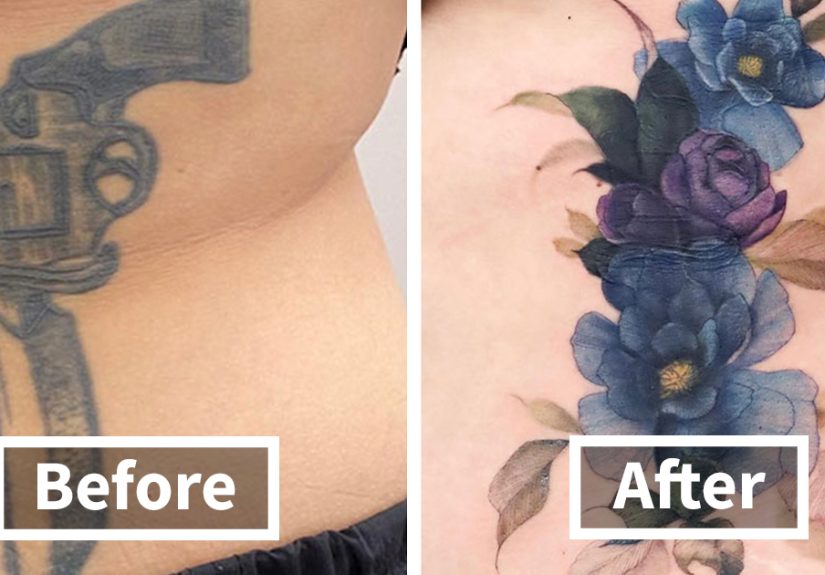
Another reason her portfolio stands out is versatility. Silo does not only create fresh tattoos on clean skin. She is also praised for cover-ups, using floral arrangements, layered color, and strategic composition to disguise older work. That challenge takes technical skill because cover-ups are not just about putting something pretty on top of something old. They require an understanding of how colors overlap, how healed ink changes appearance, and how to guide the eye toward the new design instead of the old regret. That is not wizardry exactly, but it is at least wizard-adjacent.
Nature appears to be at the center of the whole aesthetic. Flowers are not treated like generic decoration. They feel observed, almost studied, as if the artist spent real time looking at petals, stems, and how color shifts in daylight. The result is a style that feels feminine without being flimsy, romantic without getting syrupy, and refined without becoming boring. In a tattoo world crowded with trends, that is no small feat.
Why Watercolor Tattoos Feel So Different
Watercolor tattoos are designed to mimic the look of watercolor painting: soft gradients, color bleeds, airy transitions, and brushstroke-like movement. The effect can seem spontaneous, but it is anything but sloppy. Good watercolor tattooing is controlled softness. Artists still use standard tattoo equipment and proper depth, but the application focuses on blending and fading rather than relying on bold outlines and blocky fill.
That is why skill matters so much in this style. A beautiful watercolor tattoo is not just “lots of color.” It depends on contrast, placement, layering, and a clear sense of structure underneath the dreamy finish. Without that backbone, a tattoo can look blurry instead of painterly. The best pieces usually balance softness with at least some visual anchors, whether that comes from fine line work, smart negative space, or strong compositional flow.
This style also pairs naturally with botanical subjects. Flowers already have movement, translucence, and organic color shifts, so watercolor techniques give them room to feel alive. A rose can fade from raspberry to blush. A peony can carry misty edges. A leaf can look wind-touched instead of stamped on. It is body art with a painter’s eye, which explains why so many people who would normally skip a tattoo suddenly find themselves saying, “Well… maybe just one.”
50 Tattoo Designs That Capture the Same Watercolor Magic
- Fox with crescent moon and wildflowers A clever, storybook design that combines woodland charm with misty floral color.
- Peony forearm wrap Big blooms curling around the arm like silk wallpaper, only cooler and harder to misplace.
- Rose and white snake composition Equal parts beauty and danger, softened by watercolor petals and airy negative space.
- Fresh-start foot blossoms A floral piece on the foot that feels symbolic, light, and surprisingly poetic.
- Ankle wildflower sprig Tiny but expressive, with just enough color wash to feel painterly without overwhelming the placement.
- Black cat inside a floral halo Moody cat energy meets soft botanical romance, which is frankly a powerful combination.
- Gray cat with pastel petals A pet-inspired watercolor tattoo that feels sentimental without becoming overly sweet.
- Triangle-framed rose Geometric structure paired with soft bloom textures for a modern-art-meets-garden effect.
- Hip-side botanical cascade Flowing flowers placed to follow the natural curve of the body.
- Upper-back floral veil A broader composition that reads like fabric, paint, and petals all at once.
- Magnolia branch on the collarbone Elegant, feminine, and ideal for someone who wants a graceful statement.
- Iris with indigo wash A flower already famous for dramatic color, made even dreamier with blurred ink edges.
- Poppy in scarlet watercolor Bold, delicate, and impossible to ignore in the best possible way.
- Lotus with airy background strokes A spiritual design that feels calm instead of overly ceremonial.
- Camellia shoulder bouquet Rich color with soft transitions that make the petals look almost translucent.
- Wisteria drop tattoo Hanging blossoms and fading violet tones create beautiful downward movement.
- Plum blossom wrist arrangement Small enough to feel intimate, refined enough to feel museum-worthy.
- Wild rose with loose leaves Less polished than a formal bouquet, which is exactly why it works.
- Dandelion burst in color haze A watercolor classic, but done with restraint it can still feel fresh.
- Sunflower in dusk tones Warm golds and muted oranges make this cheerful flower feel more sophisticated.
- Koi with blue brushstrokes Motion-heavy and fluid, almost as if the fish is swimming through paint.
- Crane among soft petals Elegant and symbolic, with long lines that suit watercolor movement beautifully.
- Hummingbird and orchid pairing Fast, delicate, and packed with color transitions that show off the style.
- Butterfly in pigment cloud A transformation symbol that practically begs for watercolor treatment.
- Moon rabbit with florals Gentle fantasy with a distinctly artful, almost fairytale quality.
- Deer antlers wrapped in blooms Nature stacked on nature, but in a surprisingly soft and lyrical way.
- Goldfish in lavender wash A subtle shift from the usual orange palette makes it feel painterly and unusual.
- Swallow flying over peonies Great for a long forearm or shoulder placement with built-in motion.
- Tiny bee in pollen mist Small-scale watercolor can still work when the design has a strong focal point.
- Owl in plum smoke tones A moodier take on watercolor, proving the style is not only for bright florals.
- Pet portrait with watercolor bouquet Personal, emotional, and visually softened by surrounding blooms.
- Paw print hidden in petals A memorial tattoo idea that feels subtle and sophisticated.
- Birth flower bundle Perfect for adding personal meaning without giving up artistic flair.
- Memorial bouquet cover-up Flowers can hide older ink while creating something entirely new.
- Script disappearing under vines Ideal for reworking text tattoos that no longer spark joy.
- Old black ink softened by peonies A painterly cover-up strategy that redirects the eye through color.
- Geometric frame with soft rose center Structure and softness in one balanced design.
- Crescent moon with cosmos flowers Celestial, floral, and tailor-made for dreamy color transitions.
- Abstract brushstroke bouquet More art-school energy, less literal flower shop.
- Fine-line vine with color bleed A minimalist base enhanced by soft watercolor saturation.
- Shoulder-blade garden cluster Great for a medium-sized statement piece that still feels feminine.
- Ribcage floral mist The placement adds drama; the watercolor effect keeps it from feeling too harsh.
- Bracelet-style wrist bloom A wraparound floral that reads like wearable art.
- Spine-climbing irises Long vertical placement makes the design feel architectural and graceful.
- Elbow-opening sleeve Uses the joint creatively, letting the color move around the bend of the arm.
- Calf-side wild garden Perfect for a vertical cluster of stems, petals, and soft color puddles.
- Hand-side petal trail Small but high-impact, especially when done with restrained pink and coral tones.
- Lower-back botanical curtain A broad floral arrangement that feels elegant rather than dated.
- Behind-the-ear mini blossom Tiny placement, huge charm, zero need for overexplaining it at dinner.
- Sternum watercolor symmetry Delicate florals mirrored across the center for a striking fine-art finish.
What to Know Before You Get a Watercolor Tattoo
First, choose the artist before you choose the design. Watercolor tattoos are not beginner-friendly work. They rely on color theory, contrast, depth control, and composition. A skilled artist can create softness without muddiness. An inexperienced one can leave you with a bloom that ages like a faint bruise. Harsh, but fair.
Second, think about longevity. Lighter colors and pastel-heavy work can appear less bold over time than darker, higher-contrast tattoos. That does not mean watercolor tattoos are doomed. It means they benefit from smart planning. Better placement, a thoughtful design skeleton, and consistent aftercare all help the tattoo age more gracefully. White and very pale tones can be especially subtle depending on skin tone, which is another reason consultation matters.
Third, aftercare is not optional. Fresh tattoos need gentle cleansing, moisturization, and protection from direct sun. They should not be picked, scrubbed, or soaked. Swimming too soon is also a bad idea, because healing skin and pool water are not exactly best friends. If you notice unusual swelling, persistent redness, discharge, or signs of a skin reaction, do not shrug it off and call it “part of the aesthetic.” Get medical advice.
Finally, remember that tattoo safety starts before the needle touches skin. Reputable studios matter. Clean technique matters. Ink quality matters. The dreamy look of watercolor work should never distract from the very real basics of hygiene, licensing, and informed decision-making.
The Experience of Choosing and Living With a Watercolor Tattoo
Getting a watercolor tattoo is a different kind of emotional experience than choosing a heavy black piece. People are often drawn to it because it feels softer, more personal, and a little less intimidating. The design process tends to start with mood rather than mechanics. Instead of saying, “I want a skull right here,” many clients begin with a feeling: a fresh start, a memory of a pet, a favorite flower from childhood, a season they cannot forget, or the desire to make an old tattoo look like it finally belongs to them. That emotional softness often carries into the finished piece. These tattoos do not just decorate the body; they tend to tell quieter stories.
The consultation is usually where the magic becomes practical. A good artist will talk about placement, skin tone, contrast, and whether the design needs fine lines or darker anchors to keep it readable over time. This is the moment when fantasy meets reality, which is healthy. Watercolor tattoos are beautiful, but skin is not paper, and bodies move, stretch, heal, tan, and generally refuse to behave like a pristine art supply store. The best experiences happen when the client understands that and still loves the idea.
During the appointment itself, many people say watercolor tattoos feel surprisingly meditative. There is a lot of focus on color placement and gradual layering, and watching the piece build can feel like seeing a painting emerge in real time. It is less “bam, here is your tattoo” and more “oh wow, that petal suddenly came alive.” Even people who are nervous about tattoos often find this style less visually aggressive while it is being created, because the composition develops in waves instead of all at once.
Then comes healing, which is where the romance gets replaced by responsibility. The tattoo may look magical on day one, but it still needs the same boring grown-up care as any other fresh ink. You have to clean it gently, keep it from drying out, avoid picking at flakes, and protect it from the sun. There is nothing glamorous about resisting the urge to show off your new tattoo at the pool, but that restraint pays off. A healed watercolor tattoo can settle into the skin with remarkable softness if you give it the chance.
Long term, living with a watercolor tattoo can feel a bit like wearing a personal art print. The piece changes with the body, the light, and the season. It can look delicate one day and vivid the next. People notice it differently too. Traditional tattoos often get immediate recognition for boldness, while watercolor pieces tend to invite a closer look. Someone leans in. They ask if it is a painting. They stare for a second longer than expected. That reaction is part of the appeal.
For many collectors, the real joy is that the tattoo keeps its emotional tone. A flower can still feel tender years later. A cover-up can remain a reminder that reinvention is possible. A pet portrait can stay heartfelt without becoming visually heavy. That balance is what makes the style so memorable. Watercolor tattoos may be soft, but they are not weak. Done well, they carry color, memory, and personality with unusual grace.
Final Thoughts
Silo’s work reminds us that tattooing does not have to choose between technical skill and softness. A great watercolor-style tattoo can be polished, expressive, emotionally resonant, and visually daring all at once. Whether the design is a fox under a crescent moon, a peony wrapping around the forearm, or a floral cover-up that turns an old mistake into a new favorite, the appeal is the same: it looks like art first and ink second. That is a rare trick, and one worth admiring.
If you love tattoos that feel airy, painterly, and deeply personal, this style is hard to beat. Just bring good references, realistic expectations, and enough sunscreen to make your dermatologist nod in approval.