Table of Contents >> Show >> Hide
- Why Thanksgiving Table Mistakes Happen So Easily
- Faux Pas #1: Going Way Too Literal With the Thanksgiving Theme
- Faux Pas #2: Crowding the Table Until It Stops Working
- Faux Pas #3: Relying on Harsh Overhead Lighting
- Faux Pas #4: Over-Scenting the Room
- Faux Pas #5: Defaulting to Nothing But Orange and Yellow
- Faux Pas #6: Ignoring the Small Details That Make Guests Comfortable
- A Designer-Approved Formula for a Better Thanksgiving Table
- Real Thanksgiving Table Experiences That Prove These Faux Pas Matter
- Conclusion
Thanksgiving has a funny way of turning perfectly rational adults into amateur set designers. One minute you are looking for a linen napkin ring, and the next you are seriously considering a glitter pumpkin shaped like a turkey. It happens. The holiday carries a lot of pressure: the meal matters, the mood matters, and somehow the table is expected to whisper effortless elegance while also handling gravy boats, wine glasses, elbows, and one cousin who always gestures like he is directing air traffic.
That is exactly why the smartest Thanksgiving table ideas are not the flashiest ones. A great holiday table should feel warm, beautiful, and welcoming, but it also has to function in the real world. People need room to pass mashed potatoes without taking out a candlestick. They need to see one another across the table. They need to smell the food, not a cinnamon-blast candle that smells like a craft store exploded in October.
Designer-led advice this season keeps circling back to one core idea: a Thanksgiving tablescape should support the meal, not compete with it. In other words, your table is not the star of the show. It is the stage. The cast is the food, the conversation, the laughter, and the little family moments that make the day memorable.
Below are the six biggest Thanksgiving table faux pas one designer is practically begging hosts to avoid, plus smart, stylish ways to fix each one without draining your budget, your patience, or your will to live before pie.
Why Thanksgiving Table Mistakes Happen So Easily
Most Thanksgiving decorating mistakes start with good intentions. You want the room to feel festive. You want guests to walk in and say, “Wow, this looks amazing.” You want nice photos. You want the whole day to feel a little more special than a random Tuesday dinner with leftovers and mismatched forks.
But holiday table decor can go wrong when aesthetics outrun practicality. A table can be too decorated, too scented, too crowded, too matchy, or too committed to a fall color palette that looks more like a seasonal aisle than a home. When that happens, the setup may look good for ten minutes and feel annoying for the next three hours.
The best Thanksgiving table setting ideas strike a balance between beauty and breathing room. They use texture, tone, lighting, and thoughtful details to create atmosphere without making guests feel like they are dining inside a centerpiece.
Faux Pas #1: Going Way Too Literal With the Thanksgiving Theme
Why it misses the mark
A Thanksgiving table does not need to scream “TURKEY DAY!” to feel festive. In fact, overly thematic decor is usually the fastest route to making the table feel dated, cheesy, or crowded. Glitter pumpkins, cartoon turkeys, novelty signage, fake leaves scattered like confetti, and every possible harvest symbol jammed into one setup can make the table feel less designer-chic and more elementary-school fall festival.
The issue is not that seasonal references are bad. The issue is when the table relies on props instead of style. Thoughtful holiday decor tends to look elevated when it nods to the season through texture and color rather than spelling everything out with obvious symbols.
What to do instead
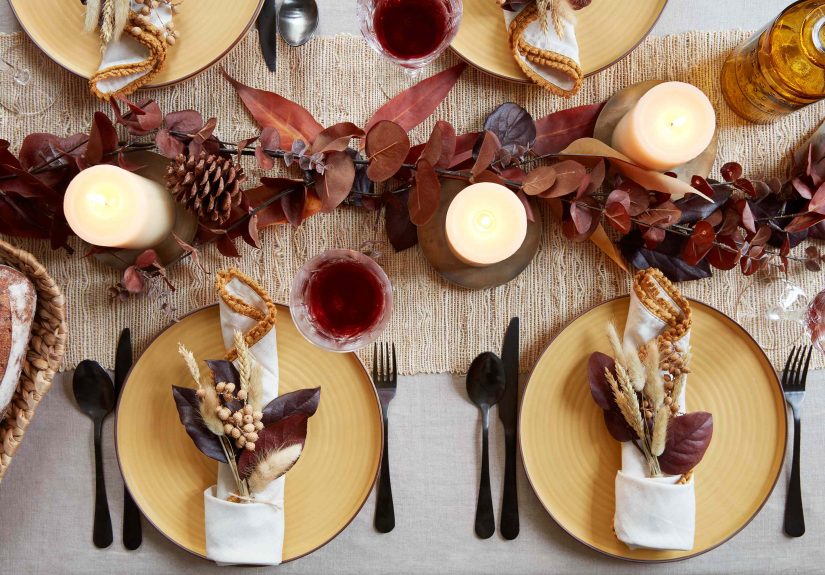
Think understated and layered. Natural linen napkins, ceramic plates, wood accents, aged metals, woven placemats, and a low arrangement made with branches, pears, or tiny pumpkins can feel deeply autumnal without looking like you panic-bought the entire seasonal shelf. A few organic touches often do more than a dozen themed accessories.
If you want a memorable Thanksgiving tablescape, aim for “collected and cozy,” not “theme park but make it cranberry.”
Faux Pas #2: Crowding the Table Until It Stops Working
The classic hosting mistake
This is the big one. A Thanksgiving table can be gorgeous and still fail miserably if there is no room for food, drinks, serving bowls, or human movement. Crowding happens when hosts forget that the table is not just for decoration. It has a job to do.
Tall floral arrangements, bulky centerpieces, oversized candleholders, layers of trinkets, extra chargers, decorative objects that do nothing, and too many glasses can make the table feel claustrophobic before the first dinner roll lands. Then the turkey arrives, the side dishes appear, and suddenly your guests are playing a holiday edition of tabletop Tetris.
Why it matters
Conversation is one of the best parts of Thanksgiving. If guests cannot see each other comfortably, the whole table loses energy. If dishes are hard to pass, people get tense. If every inch is occupied, serving the meal becomes awkward. It is hard to feel grateful while trying not to elbow a vase into the stuffing.
The fix
Keep centerpieces low, narrow, and simple. A line of bud vases, a few unscented tapers, or a small bowl of seasonal fruit works better than one giant arrangement blocking everyone’s view. Edit ruthlessly. If an item is not adding beauty and allowing the meal to function, it probably does not belong on the table.
Also, only set out the utensils, plates, and glasses you actually need. An elegant table is not measured by how much silverware it can hold. It is measured by how easy it feels to use.
Faux Pas #3: Relying on Harsh Overhead Lighting
Why lighting changes everything
Lighting is one of the most overlooked parts of holiday hosting, which is wild when you consider how dramatically it changes the room. Bright overhead lighting can flatten the entire table, wash out your carefully chosen colors, and make dinner feel more like a conference room potluck than a warm holiday gathering.
A Thanksgiving table should feel flattering, soft, and inviting. People are lingering, eating, pouring wine, taking photos, and settling into long conversations. The lighting needs to support that mood.
How to make it better
Instead of blasting the room with ceiling lights alone, layer the lighting. Use dimmed overheads if possible, then bring in candles, a nearby lamp, or wall lighting to create warmth. The result is softer, calmer, and far more elegant.
That said, soft lighting should still be practical. Guests should be able to see their plate, not guess where the cranberry sauce ends and the beet salad begins. Ambience is lovely. Accidental mystery cuisine is less lovely.
A smart safety note
If children are at the table, if the table is especially crowded, or if sleeves and greenery are getting a little too cozy, flameless candles are a perfectly stylish move. No one gets bonus points for setting the mood so aggressively that the napkins become a fire concern.
Faux Pas #4: Over-Scenting the Room
The pumpkin-spice trap
This is one of those Thanksgiving table mistakes that seems festive in theory and terrible in practice. Yes, a cinnamon, clove, vanilla, apple, or pumpkin-scented candle sounds like autumn in a jar. But at the dinner table, strong fragrance competes with the actual meal.
Thanksgiving is a sensory holiday. Roast turkey, browned butter, sage, pie spices, fresh rolls, wine, gravy, and herbs all build the atmosphere naturally. If your table smells like a synthetic cupcake orchard, guests lose part of the food experience.
Strong scents can also be irritating for some people. A candle that one guest finds cozy might give another a headache five minutes into the meal.
The better option
Choose unscented candles on the table, and keep stronger home fragrance out of the dining area. If you love a seasonal scent, place it in the entryway, powder room, or another room where it sets a mood without hijacking dinner. At the table itself, let the food do the talking. Trust me, stuffing has excellent communication skills.
Faux Pas #5: Defaulting to Nothing But Orange and Yellow
Why the standard palette can feel flat
Classic fall colors are not the enemy, but leaning too hard on bright orange and yellow can make a Thanksgiving table feel predictable. When every element is the same warm tone, the setup starts to lose depth. It reads less like a beautifully designed table and more like someone challenged the room to wear a pumpkin costume.
A richer color story usually feels more elevated. The prettiest holiday tables often mix warm tones with moody or grounding shades. That contrast creates dimension and makes the entire setup feel intentional rather than obvious.
What works better
Try auburn, burgundy, rust, cream, moss, charcoal, olive, brown, navy, or muted teal. These colors still feel seasonal, but they add sophistication. A cream tablecloth with burgundy napkins, smoked glassware, and touches of brass can feel more memorable than a full blast of orange everything.
You can still include pumpkins or fall foliage. Just use them like punctuation, not like they are trying to win an election.
Faux Pas #6: Ignoring the Small Details That Make Guests Comfortable
What guests actually notice
Many hosts think the magic of a beautiful Thanksgiving table comes from the centerpiece. In reality, guests often respond more strongly to the quiet details: cloth napkins that feel nice in the hand, glassware that is easy to hold, enough room between place settings, a tablecloth that drapes well, and a setup that does not make people nervous about touching anything.
Small details also include the practical side of hospitality. Are there seats that make sense for the group? Did you think about dietary restrictions before the meal? Is there water at the table? Can guests reach the salt without performing a shoulder stretch? These are not glamorous questions, but they are the ones that turn a pretty table into a good hosting experience.
How to get this right
Focus on layers and intention. Mix textures. Add one personalized touch, like a handwritten place card or a sprig of rosemary tied to a napkin. Set the table the night before so you can spot problems early. Sit in a chair and test the view. Reach for a glass. Imagine serving all the dishes. A table that works well usually looks better, too, because comfort reads as confidence.
A Designer-Approved Formula for a Better Thanksgiving Table
If you want a simple formula that avoids all six faux pas, here it is:
- Start with a calm base: a tablecloth, runner, or placemats in a neutral or rich muted tone.
- Add warmth through texture: linen, ceramic, wood, brass, woven details, or smoked glass.
- Keep the centerpiece low: think bud vases, fruit, greenery, or a few candles.
- Use a layered palette: mix warm fall tones with one grounding cool or dark shade.
- Choose unscented or flameless candles: ambience without aroma warfare.
- Edit the place setting: only the plates, flatware, and glasses guests will actually use.
- Prioritize comfort: enough elbow room, easy serving flow, visible sightlines, and thoughtful guest needs.
That formula works whether your style is modern, traditional, rustic, minimal, or somewhere between “collected heirloom charm” and “I found this plate at three different vintage stores and now it is my personality.”
Real Thanksgiving Table Experiences That Prove These Faux Pas Matter
Anyone who has hosted Thanksgiving more than once learns the same humbling truth: the table always tells on you. It reveals whether you planned for real people or for an imaginary magazine shoot where nobody actually eats. And some of the most useful hosting lessons come from the little things that went wrong.
One common experience is the oversized centerpiece disaster. It looks dramatic while the house is quiet. Then guests sit down, and suddenly half the table is peeking around branches like they are playing hide-and-seek with the sweet potatoes. The arrangement that seemed elegant at 2 p.m. becomes the object everyone silently resents by 5. That is usually the year a host learns the beauty of low arrangements, small vessels, and leaving some blessed empty space in the middle of the table.
Another classic experience involves scent. A host lights the perfect fall candle before guests arrive, thinking it adds cozy atmosphere. Then dinner is served, and the room smells less like roast turkey and more like vanilla bark wearing a sweater. Nobody says anything because they are polite, but the meal loses some of its magic. After that, most hosts become firm believers in unscented candles near the food and saving fragranced ones for the entry or living room.
Then there is the issue of overstyling. Plenty of tables start with great intentions and end up looking like every decorative object in the house got drafted into service. Tiny pumpkins, bead garlands, name tags, mini wreaths, decorative acorns, extra bowls, extra glasses, extra everything. It can feel festive for a second and exhausting for the next four hours. Hosts usually discover that guests respond far better to one or two strong design ideas than to a full seasonal inventory dump.
Color mistakes show up in real life, too. A table made entirely of loud oranges and bright yellows can photograph fine in daylight, but in the evening it may feel visually flat. By contrast, tables with deeper tones, softer neutrals, and layered materials often feel more expensive, more relaxed, and more personal. That is the difference between a table that says “fall display” and one that says “please sit, stay awhile, and have another roll.”
And perhaps the biggest lesson comes from guest comfort. People remember how a table felt more than how it looked. They remember whether conversation flowed, whether they had enough room, whether the lighting was flattering, whether the chair placement made sense, and whether the host seemed calm. A beautiful table that makes everyone feel slightly trapped is not a success. A simpler table that helps people connect usually is.
That is why the best Thanksgiving hosts get a little wiser every year. They stop chasing perfection and start designing for ease. They edit more. They light less harshly. They choose pieces that can survive being used. They ask better questions before guests arrive. And they realize that a successful holiday table is not the one with the most decor. It is the one people linger around long after the plates are cleared.
Conclusion
The best Thanksgiving table decor is not about proving how creative, trendy, or theme-committed you are. It is about creating a space where people can eat well, talk easily, and feel genuinely welcome. That means skipping the overly literal props, editing the clutter, choosing better lighting, avoiding heavy scent, expanding your color palette, and paying attention to the details that quietly shape comfort.
If your table can do all that, it does not need to be perfect. It just needs to feel intentional. And honestly, that is the sweet spot for Thanksgiving itself: warm, generous, a little imperfect, and full of things worth gathering around.