Table of Contents >> Show >> Hide
- Why forearm muscles get tight in the first place
- 1. Stop the “death grip” and let your arm go quiet for a minute
- 2. Do the two simplest stretches: wrist flexor and wrist extensor stretches
- 3. Use tendon glides and finger mobility drills
- 4. Massage the forearm instead of fighting it
- 5. Use heat for tightness and ice for post-activity soreness
- 6. Take microbreaks before your forearms stage a protest
- 7. Fix your wrist position and lighten your grip
- 8. Add gentle strengthening once the forearm starts to calm down
- When forearm tightness might be more than just muscle tension
- Conclusion
- Real-Life Experiences With Tight Forearms: What It Often Feels Like
- SEO Tags
If your forearms feel like they have been cast in concrete after typing, gaming, lifting, gardening, scrolling, carrying groceries, or trying to open one stubborn jar that apparently trained for this moment, you are not alone. Tight forearm muscles are incredibly common. They show up in office workers, athletes, hair stylists, musicians, parents carrying toddlers, and pretty much anyone whose hands are doing a little too much while the rest of the body files a complaint.
The good news is that mild forearm tightness often improves with a handful of simple habits. The less-fun news is that many people wait until their arm feels like a twisted phone charger before doing anything about it. If you want to relax your forearm muscles, reduce tension, and keep small aches from turning into a larger problem, these eight strategies can help.
This guide covers practical ways to loosen the forearm, calm muscle tension, and support recovery when your wrists and hands have been working overtime. You will also find examples of what forearm strain feels like in real life, plus a short list of signs that mean it is time to stop self-treating and talk to a healthcare professional.
Why forearm muscles get tight in the first place
Your forearms contain the muscles that help your wrists, hands, and fingers move. Some flex your wrist and fingers, while others extend them. That means your forearms are busy during everything from typing and texting to tennis, pickleball, strength training, knitting, and chopping vegetables. The problem is not that these muscles work. The problem is that they often work too long, with too much gripping, in the same position, without enough breaks.
That combination can leave the muscles feeling sore, tight, twitchy, or weak. Sometimes the discomfort stays in the forearm. Sometimes it creeps toward the elbow or wrist. Sometimes people describe it as a dull ache, and other times it feels like burning, cramping, or a deep “please stop making me hold this phone” annoyance.
Before you start, one rule matters: gentle relief is the goal. Sharp pain is not. If a stretch or massage makes your symptoms worse instead of better, back off.
1. Stop the “death grip” and let your arm go quiet for a minute
The fastest way to relax a tight forearm muscle is wonderfully unglamorous: stop doing the thing that irritated it. Put down the mouse, dumbbell, tennis racket, crochet hook, or steering wheel. Uncurl your fingers. Let your hand hang at your side. Shake your arm out lightly.
Many people hold tension in their hands without noticing it. They grip the mouse like it is trying to escape. They clutch a phone with two fingers and a prayer. They squeeze a barbell harder than necessary. That constant gripping keeps the forearm muscles switched on.
Try this quick reset
Open your hand wide for five seconds, then relax it. Repeat five times. Next, gently rotate your forearm so your palm faces up, then down, for 20 to 30 seconds. This small reset can interrupt muscle guarding and remind your arm that it no longer has to act like it is hanging from a cliff.
2. Do the two simplest stretches: wrist flexor and wrist extensor stretches
If you learn only two forearm stretches, make them these. They target the muscles on both sides of the forearm and are easy to do at home, at work, or while pretending you are definitely paying attention during a long video call.
Wrist extensor stretch
Hold one arm straight out in front of you with your palm facing down. Gently bend the wrist so your fingers point toward the floor. Use your other hand to apply light pressure until you feel a stretch along the top of your forearm. Hold for 15 to 30 seconds. Repeat two to four times per side.
Wrist flexor stretch
Hold one arm out with the palm facing up. Gently bend the wrist so your fingers point toward the floor. Use your other hand to deepen the stretch slightly until you feel it along the inside of the forearm. Hold for 15 to 30 seconds. Repeat two to four times per side.
The key word is gently. You are not trying to yank the muscle into obedience. A mild pulling sensation is enough. If your forearm is already irritated, aggressive stretching can make it angrier.
3. Use tendon glides and finger mobility drills
Forearm tension does not always come from the forearm alone. The fingers and wrist are part of the same working chain. When the hand is stiff, the forearm often follows. That is where tendon glides and finger mobility work can help.
These exercises are especially useful if your hand feels stiff after typing, gaming, sewing, or using tools for a long time. They are low effort, low drama, and surprisingly effective.
A simple tendon glide sequence
Start with your fingers straight. Then slowly make a hook fist, followed by a full fist, then straighten again. Move through each position slowly for five to 10 repetitions. You can also spread your fingers apart and bring them back together several times.
These movements encourage circulation, improve range of motion, and reduce that sticky, cramped feeling that can make the whole lower arm feel locked up.
4. Massage the forearm instead of fighting it
Sometimes a tight forearm needs less stretching and more softening. A short self-massage can help relax tender muscles and make later stretching feel easier.
How to self-massage your forearm
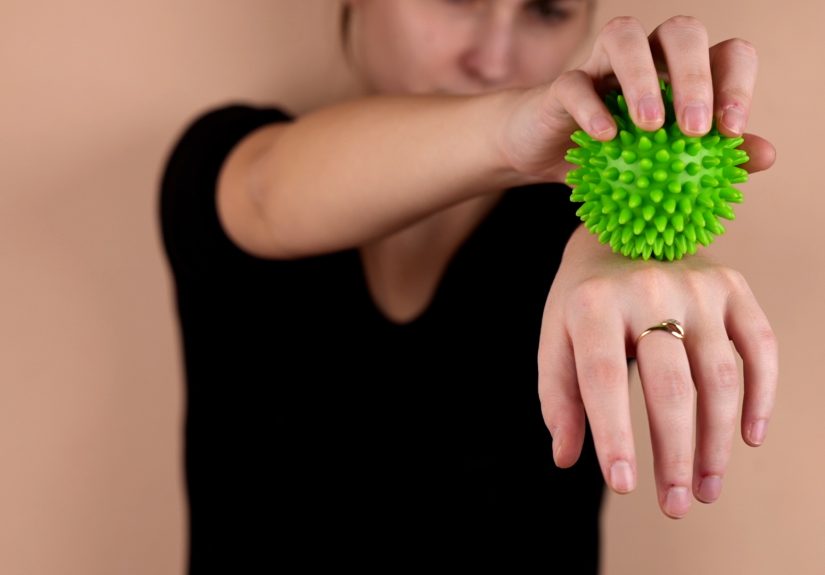
Place your forearm on a table with the palm facing up. Use your thumb or the knuckles of your other hand to make slow, gentle passes from the wrist toward the elbow. Then repeat with the palm facing down. Spend extra time on areas that feel ropy or tender, but avoid pressing so hard that you tense up in response.
You can also use a massage ball or a soft foam roller against a table. Roll slowly. Forearm massage should feel relieving, not like revenge.
If the muscles feel inflamed or freshly irritated, keep the pressure light. This is one of those moments where more is not more. More is just more annoying.
5. Use heat for tightness and ice for post-activity soreness
When people ask whether heat or ice is better for forearm pain, the honest answer is: it depends on what your arm is doing.
If your forearm feels stiff, tense, or cramped, heat can be a great first move. A warm towel, heating pad, or warm shower for 10 to 15 minutes may help the muscle relax and make stretching easier.
If the forearm feels sore after a workout, repetitive task, or flare-up, cold can help calm things down. Wrap an ice pack in a cloth and apply it for about 10 to 15 minutes.
Think of it this way: heat is the “loosen up” option, while cold is the “settle down” option. Some people benefit from both at different times of day. Just do not put either directly on bare skin, and do not turn your arm into a science experiment with nonstop icing for an hour.
6. Take microbreaks before your forearms stage a protest
One of the most effective ways to relax forearm muscles is to stop waiting until they are already furious. Short, regular breaks matter, especially during repetitive work.
If you type, game, draw, edit video, do nails, cut hair, lift weights, or use hand tools, your forearms benefit from tiny interruptions in the routine. These breaks do not need to be long. In many cases, 30 to 60 seconds is enough to reduce muscle tension.
Try a simple microbreak routine
Every 20 to 30 minutes, pause and do one or two of the following:
- Drop your arms to your sides and shake them out
- Open and close your hands 10 times
- Roll your shoulders backward five times
- Do one wrist flexor stretch and one extensor stretch
- Stand up and stop folding yourself over the desk like a lawn chair
Microbreaks are not laziness. They are maintenance. Your forearms are small muscles doing big jobs all day. Give them a breather.
7. Fix your wrist position and lighten your grip
You can stretch and massage all you want, but if you go right back to bent wrists, elevated shoulders, and a superhero grip on everything you touch, the forearm tension will keep returning like a bad sequel.
Forearm muscles often work harder when your wrists are held in awkward positions for long periods. Neutral is usually friendlier than bent up, bent down, or twisted. That matters at a keyboard, on a bike, during lifting, while using tools, and even while holding your phone in bed like you are hiding from civilization.
Forearm-friendly fixes
- Keep wrists as straight as possible while typing
- Lower your shoulders and keep elbows close to your sides
- Use a lighter grip on weights, tools, and sports equipment when safe
- Switch hands or positions when possible
- Avoid resting your wrist on a hard edge for long periods
- Move your whole arm instead of flicking only from the wrist
A small ergonomic adjustment can do more for forearm strain than an expensive gadget with a futuristic name.
8. Add gentle strengthening once the forearm starts to calm down
This may sound backward in an article about relaxing muscles, but a forearm that is always tight is sometimes a forearm that is overworked and underprepared. Once the acute soreness eases, a little strengthening can help the area tolerate daily demands better.
The trick is timing. Do not jump into heavy gripping drills when your arm still hurts at rest. Start small.
Good beginner options
- Light wrist curls with a very small weight
- Reverse wrist curls for the top of the forearm
- Gentle pronation and supination with a light hammer or soup can
- Easy grip work with a soft ball, if squeezing is not painful
Use slow reps and stop well before fatigue changes your form. The goal is not to crush your forearm into submission. The goal is to build tolerance so everyday tasks stop feeling like a workout you did not sign up for.
When forearm tightness might be more than just muscle tension
Sometimes “tight forearm muscles” is really shorthand for something else, such as tendon irritation, a nerve issue, or an overuse injury around the wrist or elbow. That is why symptoms matter.
It is smart to get checked if you have:
- Numbness or tingling in the hand or fingers
- Noticeable weakness or dropping objects
- Swelling, redness, or warmth
- Pain that keeps getting worse instead of better
- Pain that wakes you up regularly at night
- Symptoms after a fall, direct injury, or sudden pop
In other words, if your forearm feels tight and strange, not just tired, do not keep poking at it and hoping for the best.
Conclusion
If you want to relax your forearm muscles, start with the simple stuff that actually works: stop the repetitive task for a moment, stretch both sides of the forearm, move the fingers and wrist, try a little massage, use heat or ice appropriately, take microbreaks, fix your grip and wrist position, and gradually rebuild strength when the area settles down. None of these steps are flashy, but together they can make a real difference.
The bigger lesson is this: forearm tension is often a workload problem, not just a muscle problem. Your body usually gives you hints before it starts yelling. Listen when your hands feel stiff, your grip gets tired, or your wrist position gets weird. A two-minute reset today can save you from a two-week flare tomorrow.
Real-Life Experiences With Tight Forearms: What It Often Feels Like
A lot of people imagine forearm tension as a sports-only issue, but everyday life is full of sneaky triggers. One common example is the office worker who spends six hours clicking, typing, and scrolling, then wonders why their forearms feel cooked by late afternoon. It usually starts as mild tightness near the wrist, then turns into a dull ache that creeps toward the elbow. By the end of the day, even unscrewing a water bottle feels oddly dramatic.
Then there is the weekend athlete experience. Someone plays a long pickleball match, a few tennis sets, or a heroic round of golf after a week of mostly sitting still. At first, everything feels fine. The next morning, the forearm is stiff, gripping a coffee mug feels weirdly intense, and lifting a skillet suddenly becomes an upper-body event. The muscle is not necessarily injured in a serious way. It is often just irritated, overworked, and begging for recovery.
Gamers know this feeling too. Hours of gripping a controller or using a mouse can create a low-grade forearm burn that is easy to ignore until it is not. The tension builds slowly. You do not notice it during the fun part. You notice it later, when your fingers feel sluggish and your forearm seems to have borrowed the texture of dry rope.
People who work with their hands often describe forearm tightness in an even more practical way: “My arm feels tired before the day is over.” Hair stylists, cooks, baristas, mechanics, artists, and massage therapists may not call it muscle overload, but they know the pattern. Their grip gets less comfortable, fine motor control feels off, and the forearm starts sending tiny warning signals. Those signals matter. They are often the first hint that the muscles need a break, better mechanics, or both.
Parents get a version of this too. Carrying a child on one hip while also holding a phone, diaper bag, snack cup, and possibly your last thread of patience is a genuine forearm workout. The same is true for people who crochet, knit, garden, do DIY projects, or spend all evening cooking and chopping. The task may not look intense, but repetition adds up fast.
What most people notice, once they start paying attention, is that the forearm rarely gets tight in isolation. Tight shoulders, shrugged posture, bent wrists, and excessive gripping tend to show up together. When they fix one part of the chain, such as taking breaks or keeping the wrist straighter, the forearm often feels better surprisingly quickly.
That is why the best relief usually comes from a mix of small changes rather than one miracle trick. A warm shower, a pair of gentle stretches, a lighter grip, and more frequent breaks may sound almost too basic. But in real life, those basics are often exactly what turns a grumpy forearm back into a cooperative one.