Table of Contents >> Show >> Hide
- Who Is Harriet Parry (and Why Her Bouquets Feel Like Tiny Exhibitions)
- Why Painting-Inspired Floral Arrangements Work So Well
- Harriet Parry’s “Translation” Trick: From Canvas (or Photo) to Stems
- Highlights From the “83” Universe: What These Interpretations Look Like
- Want to Try a Painting-Inspired Bouquet at Home? Here’s the Practical Playbook
- Common Mistakes (and How Harriet Parry’s Work Helps You Avoid Them)
- Why This Series Matters Beyond the Wow Factor
- Extended Experience: What It Feels Like to Make Your Own “Flower Interpretation” (About )
- Conclusion
Imagine your favorite museum gift shop, a flower market at peak season, and an Instagram feed with impeccable taste all got locked in a room togetherand
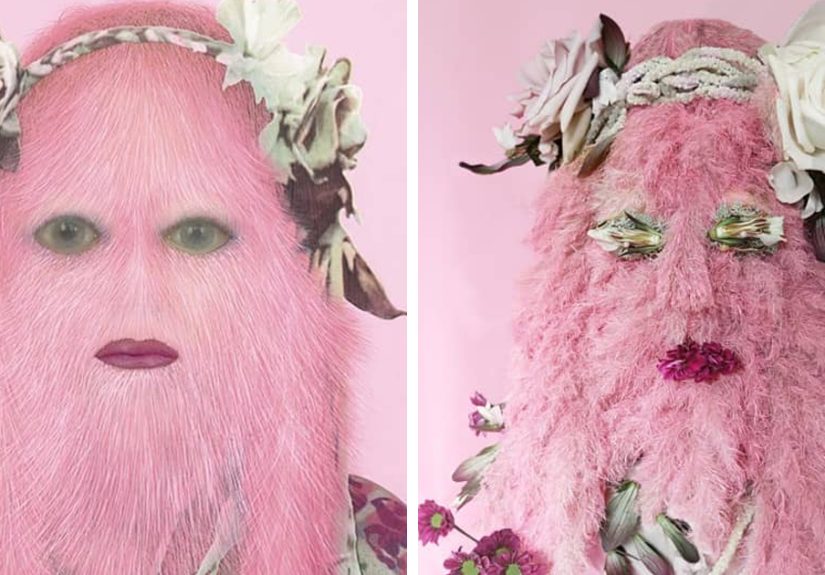
instead of fighting, they collaborated. That’s the vibe of Harriet Parry’s floral arrangements inspired by famous paintings and photos:
a boldly imaginative series often known as Flower Interpretations, where iconic art, film stills, and fashion photography are “translated” into petals,
stems, and a suspiciously perfect sense of composition.
The headline number83 arrangementsisn’t just a flex. It’s proof of a creative method: take a source image, identify its visual DNA (color palette,
gesture, texture, negative space), then rebuild that feeling using living materials. The result is part floristry, part art history, and part “wait…how did she do
that with baby’s breath?”
Who Is Harriet Parry (and Why Her Bouquets Feel Like Tiny Exhibitions)
Harriet Parry is a London-based floral stylist and artist whose work spans weddings, editorial projects, and brand collaborationsalways with a slightly
off-kilter, theatrical edge. Her Flower Interpretations series became a recognizable signature: art, film, and fashion reinvented as floral compositions.
Instead of treating flowers as “pretty table decor,” she treats them as a mediumlike paint, collage, or sculpture.
What makes her approach so addictive is that she doesn’t chase a bland, one-size-fits-all “Pinterest bouquet.” She chases character. The arrangements
are playful, textural, and often a little strange in the best waybecause the originals can be strange, too. And that’s kind of the point: if the source material
is a dramatic portrait, the flowers shouldn’t whisper politely. They should perform.
Why Painting-Inspired Floral Arrangements Work So Well
1) Flowers already speak the language of art
A good painting is basically a controlled chaos of color, contrast, movement, and focal points. A good bouquet is…also that. The overlap is huge: both depend on
balance, proportion, and where the viewer’s eye lands first. When you build a bouquet with intentionchoosing focal blooms, supporting textures, and airy fillersyou’re
building a visual composition, not just “some flowers in a vase.”
2) Texture is the secret superpower
Paint can imply velvet, skin, smoke, or stone with brushwork. Flowers can do it for real. Ruffled petals mimic soft fabric. Spiky forms create tension. Dried elements
add grain and grit. And greenery becomes your shading, your background wash, your negative space controlyour “brush strokes,” just with chlorophyll.
3) The emotional tone carries over (even if the exact details don’t)
The most convincing flower interpretations don’t copy every inch. They capture the mood: a portrait’s calm, an expressionist scream, a surreal overload, a film still’s
saturated nostalgia. Parry’s pieces often shift the composition slightly, but the spirit stays intactlike a cover song that changes the tempo yet still breaks your heart.
Harriet Parry’s “Translation” Trick: From Canvas (or Photo) to Stems
Step 1: Pull the palette (then simplify it)
Start by identifying the dominant colors and the “supporting” colors. Many beginners try to include every shade and end up with a bouquet that looks like a paint spill
in a craft store aisle. Instead, choose 2–4 main hues, then add neutrals (white, green, brown, deep burgundy) to give the eye a place to rest.
Step 2: Rebuild the composition with floral roles
Think in cast members: focal flowers are your lead actors; secondary blooms are supporting characters; filler is the chorus;
and greenery is your set design. A lot of pro advice boils down to this idealayering elements so the arrangement has depth, not just volume.
Step 3: Find a “gesture line”
Many famous paintings have an obvious flow: an S-curve in hair, a diagonal in a pose, a horizon line, an arch. In flowers, that becomes your structurecreated with branches,
long stems, or directional greens. Once that “movement” is set, everything else can orbit it.
Step 4: Use objects like a frame (but don’t let props steal the show)
Parry’s interpretations sometimes use vessels and small accessories to echo shapes and atmosphere. The trick is restraint: props should clarify the reference, not overwhelm the
flowers. The bouquet is the painting. The vase is the gallery wall.
Highlights From the “83” Universe: What These Interpretations Look Like
Since the full set is a feast of references (paintings, photos, film stills, fashion imagery), it helps to tour it by type. Here are a few “lanes” that show how
art-inspired flower arrangements can shift styles without losing the concept.
Lane A: High-drama classics (where flowers do the emotional heavy lifting)
-
“The Scream” energy: the idea isn’t to literally build a face. It’s to recreate the tensionthink jagged lines, hot-and-cold contrast, and a background that
feels like it’s vibrating. - Portraits with attitude: structured shapes, controlled negative space, and a clear focal pointlike you’re building a person’s presence, not just their outfit.
- Pre-Raphaelite softness: lush textures, romantic curves, and hair-like movement created with trailing elements. It’s “beautiful,” but never boring-beautiful.
Lane B: Surreal and maximal (where “too much” is the assignment)
-
Garden-of-everything vibes: layered blooms, unexpected shapes, and busy detail that still feels composedlike controlled chaos rather than “I panicked and bought
every stem at the market.” - Odd color pairings: combinations that shouldn’t workuntil they do. Surreal sources reward contrast: chartreuse against deep wine, pale blush against muddy rust.
- Textural tension: mixing smooth petals with spiky pods, crisp foliage, dried bits, and airy fillers so the arrangement feels alive in multiple dimensions.
Lane C: Film stills and pop culture (where floristry becomes storytelling)
- Wes Anderson-style scenes: symmetrical composition, candy-like color blocks, and a “designed” feeling that still reads as organic.
- Fashion moments: graphic silhouettes translated with bold shapeslike building an outfit out of petals, then giving it a personality.
- Editorial photography: high contrast, sculptural structure, and a sense that the bouquet is posing for the camera (because… it is).
Lane D: Modern and graphic (where minimalism still has punch)
- Line-driven arrangements: fewer stems, stronger direction. These are great for interpreting modern art and bold portraiture.
- Monochrome studies: one color, many texturesproof that “simple” can still be interesting if you vary shapes and surfaces.
- Negative space as design: leaving gaps on purpose so the silhouette reads clearlylike a well-edited paragraph that refuses to ramble.
Want to Try a Painting-Inspired Bouquet at Home? Here’s the Practical Playbook
You don’t need a studio budget or a museum sponsorship to make an art-inspired floral arrangement. You need a plan, a few mechanics, and permission to be slightly weird.
(The weird is where the fun lives.)
Pick one reference image and choose your “goal”
- Goal options: match the palette, match the mood, match the silhouette, or match one signature detail (like hair, a dress shape, or a background swirl).
- Beginner-friendly move: focus on palette + silhouette. Detail can come later, when you’re not wrestling stems like they owe you money.
Use a simple stem formula so you don’t overbuy
A common home-friendly approach is to build around a small number of focal blooms, then support them with texture and filler. This keeps the arrangement coherentespecially when
you’re trying to echo a specific artwork rather than making a “generic pretty bouquet.”
Choose a mechanic that holds your composition in place
- Tape grid: an easy way to control stem placement and keep the silhouette stable.
- Flower frog: reusable, sturdy, and great for intentional, airy designs.
- Chicken wire / eco mechanics: useful if you want structure without relying on single-use foam.
Build in layers (and don’t skip the greenery)
- Greenery first to sketch the outline and movement.
- Focal flowers next to establish where the eye should land.
- Secondary flowers to create depth, transitions, and color nuance.
- Filler + accents to finish edges and “paint in” small details.
Make it last long enough to enjoy the masterpiece
- Use a clean vase, remove leaves below the waterline, and refresh water regularly.
- Keep arrangements away from heat blasts and direct sunflowers are not solar panels.
- Re-trim stems when refreshing water so hydration stays strong.
Common Mistakes (and How Harriet Parry’s Work Helps You Avoid Them)
Mistake #1: Copying details instead of the composition
If you chase every tiny element of the original image, you’ll lose the overall read. Start with the big shapes and the palette. Once the silhouette feels right, then add
small accents like you’re seasoning food. You can always add more. You cannot un-add chaos without emotional damage.
Mistake #2: Using the same flower shape everywhere
Texture is what makes these interpretations convincing. Mix round blooms with spiky accents, airy fillers with dense focal flowers, and smooth petals with interesting greens.
Think “brush variety,” not “copy-paste.”
Mistake #3: Forgetting negative space
Some of the most “artful” bouquets aren’t the biggestthey’re the most intentional. Leave breathing room so the shape reads. If the arrangement looks like it’s trying to
win a staring contest, step back and remove a few stems.
Why This Series Matters Beyond the Wow Factor
Parry’s 83 floral interpretations land at a sweet spot between fine art appreciation and hands-on craft. They make art history feel playful and accessible. They make floristry
feel concept-driven rather than purely decorative. And they quietly teach visual literacy: after you’ve seen a few interpretations, you start noticing how paintings are built
the rhythm of lines, the tension of contrast, the power of a single focal point.
In other words: you come for the flowers, you stay for the accidental education. Which is the best kind of education, because nobody had to say “pop quiz” at any point.
Extended Experience: What It Feels Like to Make Your Own “Flower Interpretation” (About )
The first thing you notice when you try a painting-inspired floral arrangement is that your brain switches modes. A normal bouquet starts with questions like “What’s in season?”
and “What fits in this vase?” An interpretation starts with “Where does the eye land?” and “What is this image doing?” It’s less shopping list, more detective work.
At the planning stage, the most surprising challenge is restraint. You’ll spot ten colors in the reference image and want to buy ten colors of flowers. But once you start grouping
the palettetwo dominant hues, a couple supporting notes, and one neutralyou realize you’re not copying a screenshot. You’re building a readable composition. That shift alone makes
the process feel calmer, like you’re following a map instead of wandering around with a basket and hope.
Then comes the “structure moment,” when you place the first greenery stems. This is where the experience gets oddly satisfying: the arrangement suddenly has an outline, like a sketch.
Even if the flowers aren’t in yet, the shape starts to echo the source image’s movementan arc, a diagonal, a loose S-curve. It’s also where you learn a humbling truth: stems have
opinions. Some bend gracefully. Others stand stiffly like they’re waiting for a performance review. You start selecting foliage not just by color, but by attitude.
When you add focal blooms, you feel the “lead actor effect.” The bouquet becomes a scene, not a pile. If the reference is moody, you’ll naturally choose darker centers or deeper tones.
If it’s bright and graphic, you’ll place bold blooms with clear edges. And as you layer secondary flowers, you get a real-time lesson in color mixing: a small shiftadding dusty pink
near burgundy, or creamy white near pale yellowcan make the whole composition feel more like the original image, even if none of the flowers are a perfect match.
The final stretch is where the experience becomes half art class, half puzzle. You rotate the vase. You step back. You squint like you’re a curator deciding whether to approve
an installation. You add a filler stem and suddenly it’s too busy. You remove it and suddenly it’s elegant again. That push-pull is the point: you’re learning to edit.
And when it clicks, the bouquet stops looking like “flowers arranged nicely” and starts looking like a tiny, living homagerecognizable in mood and structure, even if it’s not a
one-to-one replica.
The best part is the after-effect. Once you’ve made one interpretation, you can’t unsee the technique. You’ll walk past a poster, a movie still, or a painting on your feed and
automatically think: “That would be ranunculus for the highlights, spiky pods for the tension, and something trailing for the movement.” It turns everyday looking into a creative
habitlike you’ve trained your eyes to translate images into materials. Which is exactly why Parry’s series feels so inspiring: it doesn’t just show you 83 finished pieces; it
hands you a new way to see.