Table of Contents >> Show >> Hide
- Why Fitted Sheets Are So Annoying in the First Place
- Before You Start: Set Yourself Up for Success
- How to Fold a Fitted Sheet Step by Step
- The Fast Version for Busy Laundry Days
- Common Mistakes That Make Fitted Sheets Harder to Fold
- How to Keep a Folded Fitted Sheet Neat in Storage
- What to Do If You Still Hate Folding Fitted Sheets
- How Often Should You Refold or Refresh Stored Sheets?
- Final Thoughts: Yes, You Can Absolutely Master This
- Real-Life Experiences With Folding a Fitted Sheet and Keeping It Neat
- SEO Tags
Let’s be honest: the fitted sheet has been winning the fight for years. Flat sheets fold like polite little rectangles. Pillowcases behave. Towels practically volunteer for shelf duty. But fitted sheets? They show up with elastic, attitude, and the energy of a parachute that just discovered free will.
The good news is that learning how to fold a fitted sheet so it actually stays neat is not some mystical life skill reserved for hotel housekeepers and suspiciously organized relatives. It is a real, repeatable method. Once you understand how the corners tuck into each other and when to move the sheet onto a flat surface, the whole thing becomes a lot less dramatic.
In this guide, you’ll learn the easiest fitted-sheet folding method, why it works, what mistakes make the process harder, and how to store your sheets so they do not unravel into a linen-closet tragedy by Thursday. If your current folding style is “wad it up and hope the door closes,” welcome. You are among friends.
Why Fitted Sheets Are So Annoying in the First Place
A fitted sheet is designed to hug a mattress, not sit politely on a shelf. That elastic edge is helpful on the bed, but when you pull the sheet off and try to fold it, the curved corners and gathered seams create bulk in all the wrong places. In other words, the sheet is doing exactly what it was made to do. It was just never designed to look elegant in your hallway closet.
That is why the goal is not to force it into the behavior of a flat sheet. The goal is to control the elastic, tuck the corners into one another, and turn the chaos into a tidy rectangle. Once you think of it that way, the process makes a lot more sense.
Before You Start: Set Yourself Up for Success
If you want the easiest possible experience, do not wait until the sheet has been sitting in a warm laundry mountain for six hours, slowly becoming a wrinkled fabric croissant. Fold it soon after drying, while it is still warm and relaxed. That one habit alone makes the sheet easier to smooth and much more likely to stay crisp.
You also want a flat surface nearby. You can start the fold standing up, but the magic happens when the sheet moves to a bed, table, countertop, or even a clean floor. Trying to complete the entire fold in midair is how people end up muttering at laundry like it personally offended them.
What you need
Not much. Just your clean fitted sheet and a flat surface. No gadgets, no clips, no weird hacks involving binder rings and spiritual growth.
How to Fold a Fitted Sheet Step by Step
Step 1: Hold the sheet with the inside facing out
Pick up the fitted sheet and locate two adjacent corners along one long side. Slide one hand into each corner pocket so the sheet is inside out at those corners. The elastic edge should be facing you.
This is the step where everything looks slightly ridiculous, and that is normal. You are not failing. You are simply entering the fitted-sheet arena.
Step 2: Tuck one corner into the other
Bring your hands together and fold one corner over the other so one corner nests neatly inside the other. You now have both corners gathered on one hand. Already, the sheet is starting to behave a little better.
Step 3: Grab the other two corners and repeat
Now find the remaining two corners at the opposite end of the sheet. Tuck one into the other the same way. Then bring those paired corners together with the first pair so all four corners are stacked and tucked into each other.
At this point, the fitted sheet usually starts looking less like a wrestling match and more like something that might one day live on a shelf.
Step 4: Lay the sheet on a flat surface
Place the sheet on your bed or table with the elastic edges gathered inward. Smooth out the fabric with your hands. Tuck in any loose, rounded, or bunched edges so the shape becomes more rectangular.
This step matters more than people think. If you skip the smoothing and go straight to folding, you trap the bulk inside. Then the final packet looks lumpy, unfolds easily, and seems weirdly smug about it.
Step 5: Fold the long sides inward
Take one long side and fold it toward the middle. Then fold the other long side over it. Your goal is a long, neat rectangle with the elastic hidden inside as much as possible.
If your sheet is especially deep or has extra-deep mattress pockets, you may need to adjust a little more as you go. That is not cheating. That is just geometry refusing to be casual.
Step 6: Fold into thirds or smaller rectangles
Now fold the rectangle into thirds, or into halves and then again, depending on the size of your shelf or drawer. The best final size is the one that fits your storage space without toppling over or sliding apart every time you grab a pillowcase.
When you are done, you should have a compact, flat bundle that actually stacks. Cue mild but satisfying domestic triumph.
The Fast Version for Busy Laundry Days
If you do not need perfection and just want a neat result fast, use this shortcut:
- Tuck the four corners into each other.
- Lay the sheet flat.
- Fold the elastic edges inward to make a rectangle.
- Fold into thirds lengthwise.
- Fold again until it fits your shelf.
That is it. The fitted sheet does not have to look like it is entering a state fair. It just needs to look tidy, stay folded, and stop ambushing you when you open the closet.
Common Mistakes That Make Fitted Sheets Harder to Fold
Trying to fold the whole thing while standing
Standing is great for getting the corners aligned. It is not great for the entire process. Once the corners are nested, move to a flat surface. Your arms will thank you.
Ignoring the elastic edges
The elastic is the chaos engine. If you leave it exposed and bunched on the outside, the folded sheet looks messy and springs open more easily. Tuck those edges inward whenever possible.
Folding after the sheet has cooled in a pile
Warm sheets are easier to smooth. Cold, crumpled sheets are more stubborn. Fold sooner, not later.
Making the final bundle too thick
A bulky final fold is harder to stack and more likely to topple. Aim for a flatter rectangle rather than a chunky square brick.
Expecting absolute perfection
This is the big one. You are folding bedding, not preparing an exhibit for a textile museum. Neat and functional beats flawless and frustrating every time.
How to Keep a Folded Fitted Sheet Neat in Storage
Folding is only half the story. Storage is what determines whether your hard work lasts longer than three business minutes.
Store the entire sheet set together
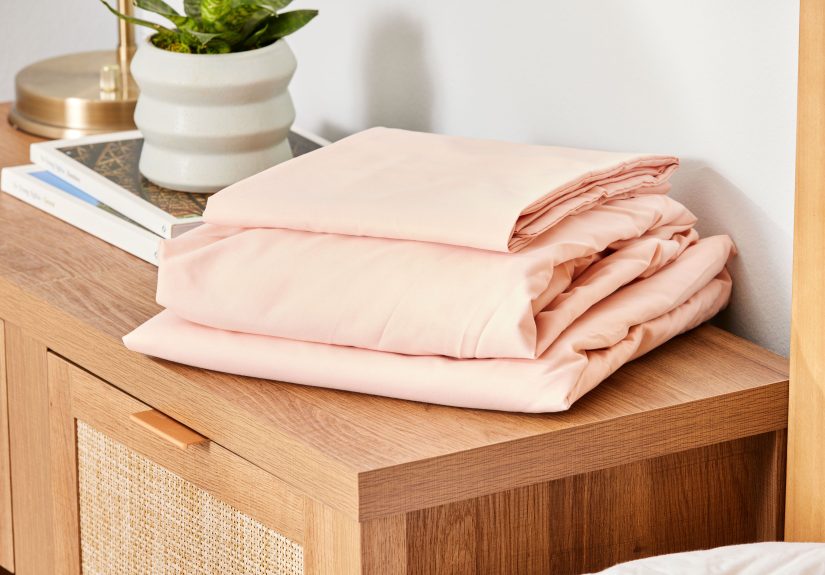
One of the smartest tricks is to fold the fitted sheet, flat sheet, and one pillowcase, then slide the whole stack into the remaining pillowcase. This keeps the set together, prevents pieces from wandering off, and makes your linen shelf look dramatically more organized.
It is also wonderfully practical. When it is time to change the bed, you are not hunting for a matching fitted sheet behind mystery blankets and a rogue duvet cover from 2019.
Organize by bed size or room
Sort sets by twin, full, queen, and king, or by room name if that makes more sense for your household. This is especially helpful in homes with guest rooms, kids’ rooms, or beds that all seem determined to use slightly different dimensions just to test your patience.
Use bins or shelf dividers if your stacks slide
If your linen closet shelves are deep or slippery, bins and dividers can keep stacks from slumping over. A neatly folded sheet is still vulnerable if it is wedged between beach towels, a heating pad, and a decorative throw blanket with big main-character energy.
Keep frequently used sheets easy to grab
Put everyday sets at eye level and guest or seasonal bedding higher up. Your future self, halfway through changing the bed after a long day, will appreciate not having to excavate the entire closet.
What to Do If You Still Hate Folding Fitted Sheets
Here is the truth nobody says loudly enough: you do not have to become a fitted-sheet artist to be organized. If you genuinely dislike folding them, you still have options.
You can fold the sheet roughly into a rectangle and store it in a labeled bin. You can keep sheet sets bundled in pillowcases. You can even create a “good enough” system where the end result is neat, accessible, and not likely to collapse onto your head. Organization should make life easier, not turn laundry into a personality test.
The best method is the one you will actually repeat. If your version is a little less elegant but keeps the closet under control, that still counts as a win.
How Often Should You Refold or Refresh Stored Sheets?
If your shelves are tidy and your sets stay bundled, you probably do not need to refold often. But if you notice stacks leaning, edges peeking out, or pillowcases escaping their assigned duties, it is worth taking ten minutes to reset the shelf.
Think of it as a mini maintenance routine. The more regularly you put sheets back neatly, the less likely your closet is to become one of those spaces you open with caution, like it may contain both linens and unresolved feelings.
Final Thoughts: Yes, You Can Absolutely Master This
Learning how to fold a fitted sheet so it actually stays neat is one of those oddly satisfying skills that pays off every single week. Your linen closet looks cleaner, your sheet sets are easier to grab, and laundry day feels a little less like a grudge match.
More importantly, once you understand the logic behind the fold, the fitted sheet stops feeling impossible. It is just corners, elastic, and a few deliberate folds. That is all. No sorcery. No secret handshake. No need to dramatically surrender and shove it behind the towels.
So next time the dryer buzzes, grab that fitted sheet while it is still warm, tuck those corners together, smooth it out, and fold with confidence. You have officially entered your neat-sheet era.
Real-Life Experiences With Folding a Fitted Sheet and Keeping It Neat
If you want the most honest part of this entire topic, here it is: the first few times you try to fold a fitted sheet neatly, it can feel hilariously awkward. Even people who are otherwise organized, efficient, and fully capable of managing adult life can suddenly look baffled by four corners and one elastic edge. That is part of why this skill has become such a household legend. It is not hard because it is advanced. It is hard because most of us were never shown a simple method that actually makes sense.
A very common experience is this: laundry is finished, the flat sheet is folded in ten seconds, the pillowcases are stacked, and then the fitted sheet comes out of the basket like a giant fabric jellyfish. You try one fold, then another, then briefly consider whether closets are really that important anyway. Once people learn the corner-tucking method, the biggest reaction is usually not pride. It is relief. The process finally feels logical.
Another real-life pattern is that folding gets easier once people stop aiming for perfection. The sheet does not need razor-sharp edges. It needs structure. It needs the corners tucked, the elastic hidden, and the final shape compact enough to stack. That shift in mindset helps a lot. Suddenly, the task stops feeling like a performance and starts feeling like a useful routine.
Storage also changes the experience dramatically. Many people find that even after they learn to fold a fitted sheet, their closet still looks messy because the sets get separated. The pillowcase-bundle trick solves that problem in a very practical way. When the fitted sheet, flat sheet, and pillowcases all live together, making the bed gets easier, shelves look calmer, and there is less visual clutter overall.
People with small apartments or shallow linen closets often notice another benefit: neatly folded fitted sheets take up less space than the usual crumpled stack. That means fewer avalanches when pulling out one set and fewer moments where a shelf seems to release all its contents in protest. Even a modest improvement in folding can make a tight storage area feel more manageable.
There is also something unexpectedly satisfying about repeating the method enough times that your hands remember it. At first, you have to think through every step. Later, you just do it. Corners together, lay it flat, fold inward, fold again, done. The task becomes less annoying and more automatic. It is one of those small domestic skills that quietly improves the rhythm of everyday life.
And yes, there are still days when the sheet fights back. Maybe the fabric is slippery. Maybe it has extra-deep pockets. Maybe you are folding laundry at the end of a long day and your patience has left the building. That does not mean you forgot how. It just means household tasks are still household tasks. The point is not to become a fitted-sheet champion. The point is to have a reliable method that works most of the time and keeps your home a little calmer.
In real homes, that is what success looks like: fewer wrinkles, neater shelves, less frustration, and one less tiny chore that used to feel way more dramatic than it needed to be.