Table of Contents >> Show >> Hide
- Why Outdoor Sconces Are the Back-Porch Upgrade That Pays Off
- Plan First: The 10-Minute Checklist That Saves a Weekend
- Choosing the Right Outdoor Sconce (Without Overthinking It)
- Location rating: Damp vs. Wet (this is non-negotiable)
- Size and scale: make it look intentional
- Brightness: lumens, not watts (and yes, you can have “too bright”)
- Color temperature: the mood dial
- Bulb-based vs. integrated LED
- Materials and finishes: the “will this look terrible in two winters?” test
- Placement That Looks Good and Works Better
- Tools and Materials You’ll Probably Need
- Installation Overview: The Safe, Sane Way to Do It
- Step 1: Turn off power (and prove it’s off)
- Step 2: Remove the old fixture (if you’re replacing)
- Step 3: Inspect the box and the wall surface
- Step 4: Install the mounting bracket and gasket
- Step 5: Make your wire connections
- Step 6: Attach the fixture and check alignment
- Step 7: Seal it like you mean it (but let it drain)
- Step 8: Restore power and test
- Common Problems (and the Fixes That Don’t Involve Panic)
- Design Upgrades That Make Sconces Feel “Finished”
- Maintenance: Keep Them Looking New-ish
- Conclusion (Plus of Real-World Porch-Light Feelings)
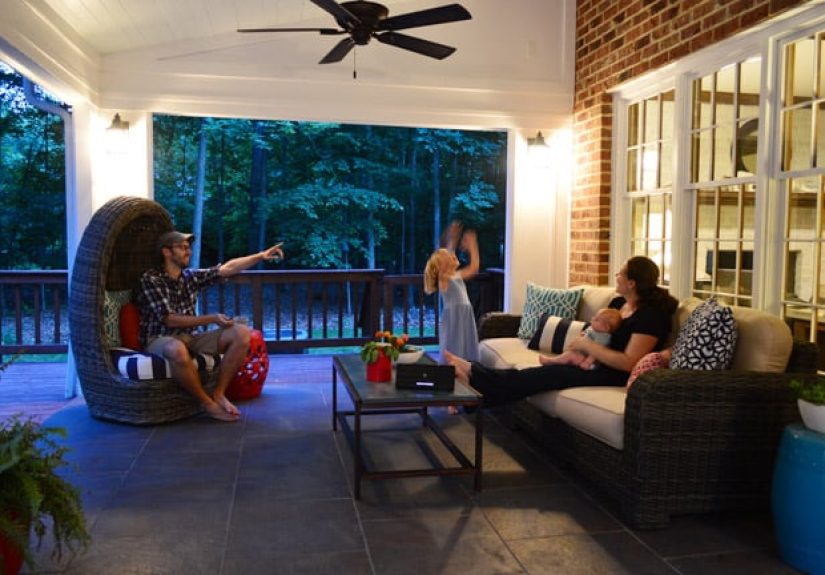
Our back porch had a personality. Unfortunately, that personality was “mysterious cave where mismatched flip-flops go to retire.” We had a single sad bulb near the door doing its best impression of a campfire in a windstorm. So we decided to level up: outdoor sconcesthe kind of lighting that says, “Yes, we drink iced tea out here,” even if we’re actually just racing mosquitos to the last slice of watermelon.
This guide walks through the whole processplanning, choosing fixtures, placement, wiring basics, weatherproofing, and a few “learn from our almost-mistakes” momentsso you can add back porch wall sconces that look great and make your space safer, warmer, and actually usable after sunset.
Why Outdoor Sconces Are the Back-Porch Upgrade That Pays Off
Outdoor wall sconces aren’t just decorative. Done right, they deliver a triple-win: function (you can see the steps), security (less shadowy corners), and ambience (your porch becomes a place you actually want to sit).
- Better visibility: lighting at eye-level reduces harsh shadows on steps and thresholds.
- More welcoming vibe: warm light makes outdoor seating feel like an extension of your home.
- Smarter energy use: modern LEDs and motion/photocell options cut waste without sacrificing comfort.
- Curb appeal’s quieter cousin: “back-porch appeal” is realespecially if you entertain or use the space daily.
Plan First: The 10-Minute Checklist That Saves a Weekend
The easiest way to turn a simple sconce project into a three-trip hardware-store saga is skipping planning. Here’s the fast checklist that keeps things tidy.
1) Identify what kind of porch you really have
- Fully covered porch: typically protected from direct rain (often okay for damp-rated fixtures).
- Partially covered or wind-driven rain: treat it like it gets wetchoose wet-rated.
- Coastal or high humidity: prioritize corrosion resistance (powder-coated aluminum, brass, or marine-grade finishes).
2) Decide the job your sconces need to do
- Task lighting: grilling, serving, unlocking doors, navigating steps.
- Ambient lighting: soft glow for seating and conversation.
- Security lighting: brighter, controlled by motion or dusk-to-dawn.
3) Check your power situation
Are you replacing an existing fixture or adding new locations? Replacing is usually straightforward. Adding new sconces may require running wiring, new boxes, drilling through exterior materials, and possibly permits depending on where you live. When in doubt: a licensed electrician is cheaper than a “surprise” wall repair.
Choosing the Right Outdoor Sconce (Without Overthinking It)
There are roughly 9,000 outdoor sconces on the internet at any given moment, and 8,997 of them look identical until you click the specs. Here’s what actually matters.
Location rating: Damp vs. Wet (this is non-negotiable)
Think of it like footwear: damp-rated is a rain jacket; wet-rated is scuba gear. A covered porch that stays mostly dry can often use damp-rated fixtures, while a spot exposed to rain, snow, or spray calls for wet-rated. Pick the rating that matches reality, not optimism.
Size and scale: make it look intentional
For door-adjacent sconces, a reliable sizing trick is choosing a fixture about one-quarter to one-third the height of the door. On a back porch, you can use the same concept with your wall section: the sconce should look proportionalpresent, not puny, but not “lighthouse attached to siding,” either.
Brightness: lumens, not watts (and yes, you can have “too bright”)
For most back-porch setups, you’ll want enough light to see faces and steps without blasting the whole yard like a prison yard spotlight. A common sweet spot for wall sconces is roughly 700–1,500 lumens per fixture depending on mounting height, shade, and how many lights you’re installing. If you’re using classic “60W equivalent” LEDs, that’s often around 800 lumens. Want cozy? Go lower or use dimmable bulbs.
Color temperature: the mood dial
- 2200K–2700K: warm, candle-ish, “stay a while.” Great for seating areas.
- 3000K: warm-white with a bit more clarity. Great for doors, grills, and steps.
- 4000K+: crisp/bright. Better for utility/security than relaxation.
Bulb-based vs. integrated LED
- Bulb-based: easy to swap bulbs, easy to choose brightness/temperature later.
- Integrated LED: sleek, efficient, often long-lastingjust check warranty and replacement policy.
Materials and finishes: the “will this look terrible in two winters?” test
Outdoor fixtures live a hard lifesun, moisture, temperature swings, and insects with absolutely no respect for personal space. If your porch gets a lot of weather, look for corrosion-resistant materials and finishes, and consider fixtures labeled for harsher environments.
Placement That Looks Good and Works Better
The goal: light where you need it, at a height that doesn’t glare into eyeballs, and in a layout that looks balanced. Here are the placement guidelines that work in most real-world porches.
Mounting height
A common target is placing the center of the light around 60–66 inches from the porch floor. This tends to put light at a comfortable level for faces, hardware, and walking surfaces. Higher can work on tall wallsjust keep glare and beam spread in mind.
Spacing between sconces
If you’re installing a pair on a back porch wall, spacing often lands in the “looks-right” range when fixtures are roughly 4–6 feet apart for door zones, wider for longer porch runs. For larger areas, think in layers: multiple modest lights beat one mega-bright fixture every time.
Special considerations for back porches
- Grill area: place light so your body doesn’t cast a shadow over the cooking surface.
- Steps: prioritize visibilitylight should wash the tread and landing without blinding you on the way down.
- Seating: avoid putting a bare bulb directly in your line of sight; frosted glass or up/down lighting helps.
Tools and Materials You’ll Probably Need
- Outdoor sconces (damp- or wet-rated as appropriate)
- Voltage tester (non-contact is helpful, but a proper tester is better)
- Screwdrivers (Phillips/flat)
- Wire strippers and cutters
- Wire connectors (wire nuts) rated for the wire gauge
- Electrical tape (optional but handy)
- Exterior-rated silicone or sealant (for weatherproofing)
- Weatherproof exterior electrical box and gasket (if replacing damaged or incorrect box)
- Drill, masonry bit (if mounting on brick), anchors as needed
- Safety glasses and gloves
Installation Overview: The Safe, Sane Way to Do It
Electricity is not the place for improvisational theater. If any of the steps below feel unfamiliarespecially identifying wiring, grounding, box condition, or circuit capacityhire a licensed electrician. The goal is a beautiful porch, not a dramatic retelling called “The Time We Learned About Junction Boxes the Hard Way.”
Step 1: Turn off power (and prove it’s off)
Shut off the breaker controlling the circuit. Then test at the fixture location to confirm power is truly off. “The switch is off” is not the same as “the power is off.”
Step 2: Remove the old fixture (if you’re replacing)
Support the fixture as you remove mounting screws. Disconnect wire nuts carefully, and note what’s connected to what: typically hot (black), neutral (white), and ground (bare copper/green).
Step 3: Inspect the box and the wall surface
- Box condition: not cracked, not loose, not corroded.
- Correct type: rated for exterior use where required and sized to fit the wiring safely.
- Mounting surface: reasonably flat so the gasket can seal.
Step 4: Install the mounting bracket and gasket
Most sconces come with a mounting plate. Use the included gasket if provided, and make sure the bracket is snug and level. If your wall is uneven (hello, textured siding), a universal mounting block or proper exterior box extension can help create a flat, sealable surface.
Step 5: Make your wire connections
Match hot to hot, neutral to neutral, and connect the ground securely. Use properly sized wire nuts and gently tug-test each connection. Neatly fold wires into the boxdon’t cram them like you’re closing an overstuffed suitcase.
Step 6: Attach the fixture and check alignment
Mount the sconce body to the bracket. Step back and eyeball it. A slightly crooked porch light will haunt you forever. (Not in a dramatic way. More like in a “why do I keep staring at that?” way.)
Step 7: Seal it like you mean it (but let it drain)
Weatherproofing matters. Clean the surface, then apply exterior sealant around the top and sides of the fixture base to reduce water intrusion. A common pro trick is to leave the bottom edge uncaulked so any moisture that gets in has a path to escape.
Step 8: Restore power and test
Turn the breaker back on and test the fixture. If you’re using a dimmer, confirm the bulb is dimmable and compatible. If you’re using smart bulbs, pair them now before you put the ladder away. (Because climbing back up later is how weekends get stolen.)
Common Problems (and the Fixes That Don’t Involve Panic)
The light doesn’t turn on
- Check the breaker and confirm the switch is on.
- Confirm bulb works (test it in another fixture).
- Re-check wire connections (with power off).
- If it’s a smart bulb, confirm it’s receiving power and not stuck in pairing mode.
The light flickers
- Loose wire nut connections are a frequent culprit.
- Incompatible dimmer + LED bulb can cause flicker (use an LED-rated dimmer).
- Cheaper bulbs sometimes flicker on certain circuitsswap to a higher-quality LED.
Water or bugs inside the fixture
- Confirm you used the correct damp/wet rating for the exposure.
- Improve sealing at top/sides, but keep drainage in mind.
- Replace cracked gaskets or add the correct mounting block for uneven surfaces.
Design Upgrades That Make Sconces Feel “Finished”
Use two layers of light (minimum)
A back porch feels best when you combine wall sconces (vertical light) with something else: string lights, a ceiling fixture, step lights, or even a dimmable lamp rated for outdoor use. Layering keeps you from relying on one super-bright source.
Consider motion or dusk-to-dawn thoughtfully
Motion sensors are great for security, but they can also jump-scare you when a moth flies by like it pays rent. A smart compromise: use a lower baseline brightness at dusk, then boost when motion triggersif your fixture or bulb supports it.
Mind the “don’t light up the whole neighborhood” rule
Aim light down or use shaded fixtures to reduce glare. Warm temperatures and moderate lumens go a long way toward keeping your porch inviting instead of interrogative.
Maintenance: Keep Them Looking New-ish
- Wipe down fixtures seasonally (especially near grillsgrease is an equal-opportunity menace).
- Check caulk and gaskets once or twice a year.
- Tighten mounting screws if the fixture loosens from temperature swings.
- Swap bulbs in pairs if color shifts bother you (LED batches can vary slightly).
Conclusion (Plus of Real-World Porch-Light Feelings)
Adding outdoor sconces to a back porch is one of those upgrades that feels “small” until you live with it for a week. Suddenly you’re not squinting at the lock, you’re not tiptoeing around a dark step, and your porch stops feeling like a storage hallway and starts feeling like an actual roomjust with more air and more opinions from insects.
Our back-porch sconce experience: the good, the funny, and the “oh yeah, that matters”
The project started with the classic homeowner optimism: “It’s just two lights. How hard can it be?” Then we remembered the porch wall is made of that material best described as “slightly uneven everything,” which immediately turned “simple install” into “let’s be very serious about gaskets and mounting surfaces.”
The first win was planning placement before touching a screwdriver. We used painter’s tape to mock up the sconce size on the wall and stood at the door, the steps, and the seating area like we were judging a tiny theater stage. That five minutes of pretending to be lighting designers saved us from mounting fixtures where the bulb would’ve been staring directly into our eyeballs every time we sat down. (A porch should feel cozy, not like you’re being interviewed on a true-crime documentary.)
Then came the brightness decision. We originally leaned toward “brighter is safer,” which is true until you realize brighter is also “every spider in three ZIP codes just RSVP’d.” We landed on a more moderate lumen level with warm color temperature andthis is keymade sure the setup was dimmable. The result: bright enough for steps and keys, soft enough for sitting and talking, and flexible enough to adjust when we realized our porch is used differently on weeknights than on weekends.
The most surprisingly satisfying moment was after mounting everything and stepping back to see symmetry where chaos used to live. Porch lighting does this weird psychological magic: it makes the whole space feel cleaner and more intentional, even though nothing else changed. The doormat was the same. The chairs were the same. The “mystery plant” in the corner was still valiantly alive. But with balanced wall light, the porch finally looked like it belonged to a functioning adult household.
The lesson we’d repeat to anyone: weatherproofing is not a boring detailit’s the difference between a long-term upgrade and a slow-motion problem. Cleaning the surface, using the right rating for the exposure, and sealing the top and sides (while letting the bottom drain) felt fussy in the moment, but it’s exactly the kind of “future-you” favor that pays off during the first heavy rain.
Finally, the unexpected perk: we started using the porch more. Not because we became different people overnight, but because the space got easier. Lighting lowers friction. It’s simpler to step outside, safer to walk around, and nicer to sit down. If your back porch is currently a place you only visit to take out the trash or rescue packages from weather, outdoor sconces can quietly flip it into a place you actually enjoy. And if nothing else, you’ll finally stop doing that awkward “phone flashlight in your mouth while holding keys” move. You know the one.