Table of Contents >> Show >> Hide
- What Is a Nose Job (Rhinoplasty)?
- Who Might Consider Rhinoplasty?
- Types of Rhinoplasty
- How to Prepare for a Nose Job
- Step-by-Step: What Happens During the Rhinoplasty Procedure?
- Benefits of a Nose Job & Rhinoplasty
- Risks and Possible Complications
- Recovery and Aftercare: What to Expect
- Is Rhinoplasty Right for You?
- Real-Life Rhinoplasty Experiences: What Patients Commonly Report
- The Bottom Line on Nose Jobs & Rhinoplasty
Thinking about a nose job? You’re not alone. Rhinoplasty (the medical name for nose surgery) is one of the most commonly performed cosmetic procedures in the United States. People choose it to refine a bump, lift or narrow the tip, straighten a crooked bridge, or finally breathe through both nostrils without sounding like they always have a cold. While social media makes it look like a quick “before-and-after” moment, rhinoplasty is still real surgery with real benefits, real risks, and a very real recovery.
This guide walks you through what a nose job actually involves, who might benefit, the risks you need to know, and what to expect before and after surgery. You’ll also find experience-based insights from patients and surgeons so you can decide if rhinoplasty fits your goals and your lifestyle.
Quick but important reminder: This article is for general education only and is not a substitute for medical advice. Always discuss your specific health situation with a board-certified surgeon or qualified healthcare professional.
What Is a Nose Job (Rhinoplasty)?
A nose job, or rhinoplasty, is surgery that changes the shape and/or function of your nose. Surgeons can reshape the nasal bones and cartilage to improve appearance, breathing, or both. Cosmetic rhinoplasty focuses on how the nose looks, while functional rhinoplasty is geared toward airflow problems such as a deviated septum or collapsed nasal valves.
Depending on your anatomy and goals, rhinoplasty can address:
- A hump or bump on the nasal bridge
- A droopy, bulbous, or boxy nasal tip
- Wide or flared nostrils
- A crooked or twisted nose from injury or genetics
- Breathing issues related to internal nasal structure
Most reputable U.S. medical sources emphasize that rhinoplasty is a highly individualized procedure – it’s about balance with the rest of your face, not copying someone else’s nose.
Who Might Consider Rhinoplasty?
People think about a nose job for all sorts of reasons, but they usually fall into three big categories:
1. Cosmetic Goals
Many patients feel their nose is too large, too wide, or just doesn’t “fit” the rest of their features. Others dislike a bump, a drooping tip in profile photos, or asymmetry after an old fracture. Rhinoplasty can refine these features so your nose blends in rather than steals the spotlight.
2. Functional (Breathing) Concerns
Functional rhinoplasty targets structural issues that make it hard to breathe through your nose, such as:
- Deviated septum (the wall between your nostrils is off center)
- Enlarged or misshapen nasal structures blocking airflow
- Collapsed nasal valves or previous trauma
In many cases, surgeons combine cosmetic and functional goals in the same operation so you get both better airflow and a more balanced nose shape.
3. Trauma or Reconstruction
Some rhinoplasties are reconstructive – for example, repairing damage from accidents, prior surgeries, or skin cancer treatment. These cases may require more complex techniques and sometimes cartilage grafts from the septum, ear, or even a rib.
Types of Rhinoplasty
While there are many techniques, most nose jobs fall into a few main categories.
Open vs. Closed Rhinoplasty
Open rhinoplasty uses an incision across the columella (the small strip of skin between your nostrils) plus incisions inside the nostrils. The skin is gently lifted to give the surgeon excellent visibility of the nasal structures. This approach is often preferred for complex work, major reshaping, or revision cases because it allows precise adjustments to bone and cartilage.
Closed rhinoplasty hides all incisions inside the nostrils. There is no external scar, and recovery may involve slightly less swelling and bruising. However, the surgeon has less direct visibility, so this technique is usually reserved for more limited reshaping by surgeons experienced with the closed approach.
Primary vs. Revision Rhinoplasty
Primary rhinoplasty is your first nose surgery. Revision rhinoplasty is performed to refine or correct a previous rhinoplasty that didn’t fully meet the patient’s expectations or created breathing issues. Because scar tissue and altered anatomy make revision more challenging, it’s especially important to choose a surgeon with extensive experience in this area. Some sources estimate that roughly 10–15% of patients eventually seek some form of revision.
How to Prepare for a Nose Job
Your Consultation
A thorough consultation is not just a polite chat; it’s a critical part of your safety and your results. During this visit, your surgeon will:
- Take a detailed medical history (medications, allergies, previous surgeries, health conditions)
- Examine the inside and outside of your nose, your facial proportions, and your skin thickness
- Ask about your goals and how you hope your nose will look and function
- Explain what is realistic – and what isn’t – for your specific anatomy
- Review risks, benefits, and the recovery process
Many surgeons use digital imaging to show likely changes, but no reputable surgeon will guarantee an exact result. Consultation is where you decide if you trust this person with your face – if you feel rushed, pressured, or brushed off, that’s a red flag.
Pre-Op Instructions
In the weeks before surgery, you’ll typically be asked to:
- Stop smoking or vaping (they slow healing and increase complications)
- Avoid certain medications and supplements that increase bleeding
- Arrange time off work or school and support at home for the first days
- Prepare a comfortable recovery space with extra pillows for head elevation
Step-by-Step: What Happens During the Rhinoplasty Procedure?
Every surgeon has a style, but most rhinoplasties follow a similar structure:
- Anesthesia
Most nose jobs are done under general anesthesia, though some minor procedures may use deep sedation with local anesthesia. Your anesthesiologist monitors you throughout to keep you safe and comfortable. - Incisions
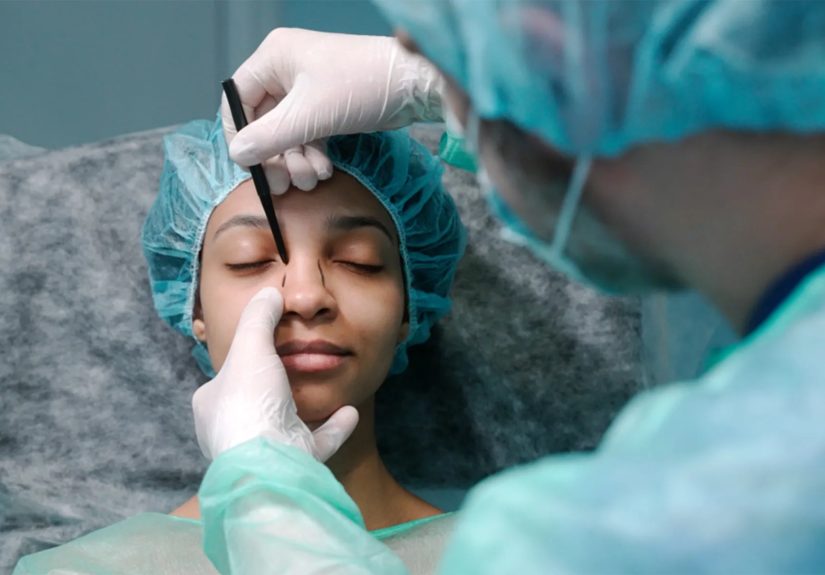
The surgeon makes either open or closed incisions depending on your case. In open rhinoplasty, there is a small external incision across the columella plus internal incisions; in closed, everything is done from inside the nose. - Reshaping Bone and Cartilage
The nasal skin is gently lifted, exposing the bone and cartilage. Your surgeon may remove or reshape cartilage, add grafts for structure or support, narrow the nasal bones, refine the tip, or adjust the septum for better airflow. - Closing and Splints
Once reshaping is complete, the skin is redraped, incisions are closed with tiny sutures, and a small external splint is usually placed to protect the new shape. Some patients also have internal splints or soft packing to support the septum. - Waking Up in Recovery
You’ll wake up in a recovery area where staff monitor your breathing, vital signs, and comfort level. Your nose will likely feel stuffy or blocked, and you may have a drip pad under your nostrils for mild oozing the first day.
Benefits of a Nose Job & Rhinoplasty
When done for the right reasons by the right surgeon, rhinoplasty can offer powerful benefits.
1. Improved Facial Harmony
Rhinoplasty doesn’t work by chasing some “perfect” nose shape. Instead, it fine-tunes your nose so it complements your eyes, lips, and jawline. Even subtle changes – smoothing a small hump or refining the tip – can make your face look more balanced and proportional.
2. Better Breathing
For patients with structural issues, functional rhinoplasty can significantly improve nasal airflow. Many report sleeping better, exercising more comfortably, and feeling less congested after proper structural corrections.
3. Subtle, Often Minimal Scarring
Closed rhinoplasty leaves no visible external scars. Even with open rhinoplasty, the tiny incision on the columella typically heals as a thin, barely noticeable line once fully healed.
4. Confidence and Quality of Life
Many patients say they feel more comfortable in photos, less self-conscious in social situations, and more like themselves after rhinoplasty. While no surgery can fix deeper self-esteem issues, aligning your outer appearance with how you feel inside can be meaningful.
Risks and Possible Complications
Like all surgeries, a nose job comes with potential risks. Understanding them helps you make an informed decision and recognize why surgeon expertise matters so much.
General Surgical Risks
- Bleeding
- Infection
- Blood clots (rare but serious)
- Reactions or complications from anesthesia
These risks exist with any major surgery and may be higher if you smoke or have certain medical conditions such as uncontrolled diabetes, heart disease, or clotting disorders.
Rhinoplasty-Specific Risks
Possible complications more specific to rhinoplasty include:
- Difficulty breathing through the nose
- Persistent numbness in or around the nose
- Visible or thickened scarring
- Septal perforation (a hole in the nasal septum)
- Asymmetry or an “overdone” appearance
- Prolonged swelling, discoloration, or pain
- Need for revision surgery if the result is unsatisfactory or breathing worsens
These complications are less likely with a skilled surgeon who respects both form and function, but they cannot be completely eliminated.
Recovery and Aftercare: What to Expect
Rhinoplasty recovery is a journey, not a sprint. You might look “fine” on video calls after a couple of weeks, but subtle swelling and healing continue for many months.
First Days to First Week
- Swelling and bruising around the nose and eyes are very common.
- You’ll likely wear an external splint for about a week.
- Your nose will feel blocked; breathing through your mouth may be necessary.
- Mild discomfort, pressure, or headache is typical and usually managed with pain medication.
Most surgeons recommend keeping your head elevated, using cold compresses as directed, and absolutely not blowing your nose during the early healing period.
Weeks 2–4
Bruising usually fades within two weeks, though some faint yellow or green discoloration can linger a bit longer. Swelling steadily improves, and many patients feel comfortable returning to work or school somewhere between 1 and 2 weeks, depending on their job and comfort level.
Most surgeons still advise avoiding strenuous exercise, heavy lifting, or high-impact activities for several weeks to protect the healing structures and reduce the risk of bleeding. Glasses may need to be taped or supported so they don’t rest directly on the bridge of your nose for a while.
Months to One Year
By 3–4 weeks, many patients feel “mostly recovered” in daily life, but the nose is still subtly changing. Swelling, especially at the tip, can take several months to fully resolve. Final results are typically visible around the one-year mark, sometimes even a bit longer for thicker-skinned patients.
Is Rhinoplasty Right for You?
Only you, together with a qualified surgeon, can answer this. Good candidates for rhinoplasty generally:
- Are in good overall health and non-smokers (or willing to quit before and after surgery)
- Have realistic expectations about what surgery can and cannot do
- Understand the commitment to months of healing, not instant perfection
- Are making the decision for themselves, not to satisfy someone else
When you consult with surgeons, make sure they are board-certified in plastic surgery or facial plastic and reconstructive surgery (or otolaryngology with facial plastics training), have extensive rhinoplasty experience, and can show you before-and-after photos of people with similar facial features to yours.
Real-Life Rhinoplasty Experiences: What Patients Commonly Report
Numbers and medical terms are helpful, but lived experiences tell you what a nose job actually feels like. While every person and every surgery is unique, many patients describe similar themes.
The Emotional Roller Coaster
Before surgery, excitement and anxiety tend to coexist. Some people spend years thinking about a nose job, so the week before surgery can feel surprisingly intense. It’s common to second-guess yourself the night before: “Do I really need this?” That doesn’t mean you’re making a mistake – it usually means you’re human and you understand that changing your face is a big deal.
In the first days after surgery, many patients feel a wave of “what have I done?” The face is swollen, the nose feels huge, and bruises can make you look more dramatic than you feel. This stage is temporary, but it can catch people off guard. Having realistic expectations from your surgeon beforehand (including seeing honest recovery photos, not just polished “after” shots) helps a lot.
Physical Sensations You Might Not Expect
Patients often say the discomfort is more about pressure and congestion than sharp pain. The nose feels packed, even if there’s no actual stuffing, because of swelling. Sleeping slightly upright for the first week or two can feel awkward but usually makes breathing and swelling more manageable. Many people report an odd numb, stiff feeling at the tip of the nose for months – this is usually normal and gradually fades as nerves recover.
You may also notice tiny “crackling” sensations or sounds when you lightly touch parts of the nose during healing. That’s typically soft tissue and residual swelling shifting, not your nose “breaking again.” Of course, anything extreme or alarming should be reported to your surgeon, but gentle weirdness is part of the journey.
Life Logistics: Work, Socializing, and Screens
Most patients plan at least one week off from work or classes, sometimes two if they bruise easily or work in a very public-facing role. Video calls are both a blessing and a curse: you can hide with filters and good lighting, but you may also stare at your own healing nose more than is emotionally healthy. A good strategy is to limit self-view and remind yourself that other people are not zooming in on your nostrils like you are.
Many people find it helpful to schedule rhinoplasty during a slower time of year or a break from school so they’re not juggling major deadlines with early recovery. Patients with young kids often arrange extra help for the first few days, since you’re not supposed to pick up anything heavy – including very energetic toddlers.
Expectations vs. Reality
One of the biggest experience-based lessons is this: the “after” you see in the mirror at two weeks is not the final result. The swelling goes down unevenly, sometimes making the tip look slightly upturned or the bridge wider than you expected. Over months, things soften and refine. People who understand this timeline going in are usually much happier because they don’t panic over each phase.
Another common realization: people around you may notice less than you think. Close friends and family might say you look “refreshed” or “different but still you,” but casual acquaintances may just think you got a good haircut or more sleep. That can actually be comforting – rhinoplasty is often most obvious to you and your surgeon.
Tips Experienced Patients Often Share
- Choose your surgeon carefully. Technique matters, but so does communication and how well they listen.
- Follow instructions obsessively. Avoiding exercise, sleeping elevated, skipping nose blowing, and protecting your nose from bumps make a real difference.
- Plan for boredom. Light entertainment, audiobooks, or low-key shows help pass the time when you’re resting with ice packs.
- Take photos for yourself. Progress shots every few weeks remind you that swelling is going down, even when day-to-day changes feel slow.
Overall, many patients ultimately say, “I wish I’d done it sooner,” while others are glad they waited until they were older and very sure. The best time for a nose job is when you have stable reasons, realistic expectations, and a surgeon you trust – not when social media trends or someone else’s comments push you into it.
The Bottom Line on Nose Jobs & Rhinoplasty
A nose job can be a powerful tool for both aesthetics and function. It can soften a feature you’ve been self-conscious about for years, improve your breathing, and enhance your overall facial harmony. But it’s also surgery that requires careful planning, a clear understanding of the risks, and patience with a long healing timeline.
If you’re seriously considering rhinoplasty, start with a consultation with a board-certified, rhinoplasty-focused surgeon. Ask questions, look at realistic before-and-after photos, and make sure you feel heard. When your decision comes from well-informed confidence – not impulse – you’re far more likely to be happy with your nose and your choice.