Table of Contents >> Show >> Hide
- What Is the Cesca Chair with Arms?
- Why the Design Still Feels Modern
- Comfort: Is the Cesca Chair with Arms Actually Comfortable?
- Where a Cesca Chair with Arms Works Best
- How to Style a Cesca Chair with Arms
- What to Look for Before You Buy
- Care and Maintenance Tips
- Pros and Cons of the Cesca Chair with Arms
- Why Designers and Homeowners Still Love It
- Real-Life Experience With a Cesca Chair with Arms
- Conclusion
Some chairs are furniture. Some chairs are status symbols. And some chairs manage to look like they belong in a design museum while still being practical enough to hold your coffee, your posture, and your dignity during a long dinner party. The Cesca Chair with Arms is firmly in that last category.
Originally designed by Marcel Breuer in 1928, the Cesca became one of the most recognizable examples of modern furniture. Its mix of tubular steel, wood, and woven cane gave it a look that felt radically new at the time and still feels surprisingly fresh today. The version with arms adds another layer of comfort and visual balance, making it a favorite for dining rooms, home offices, reading corners, and design-conscious interiors that want a little Bauhaus swagger without shouting about it.
In this guide, we will break down what makes the Cesca Chair with Arms so enduring, how it performs in real life, where it works best, what to know before buying one, and why this iconic cantilever chair continues to charm homeowners, decorators, and anyone who appreciates a chair with both brains and beauty.
What Is the Cesca Chair with Arms?
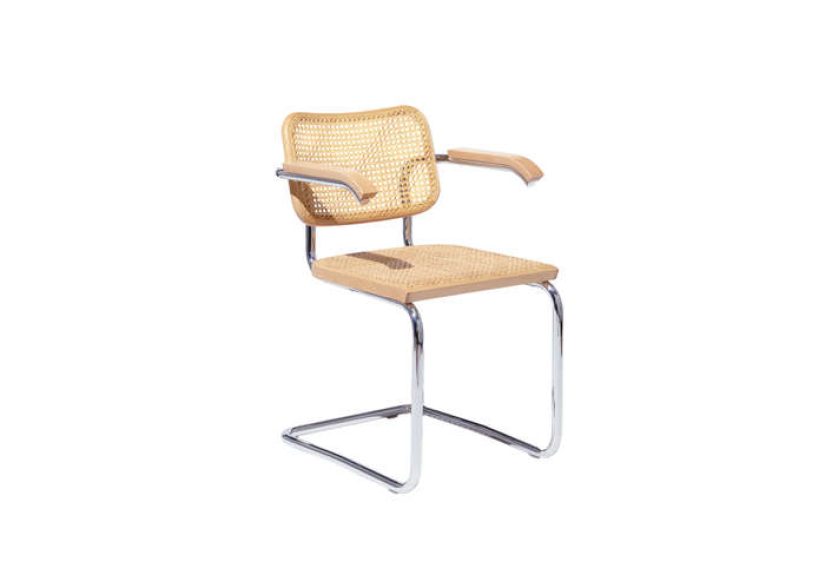
The Cesca Chair with Arms is the armchair version of Marcel Breuer’s famous Cesca design. While the side chair version is commonly associated with the B32 model, the armchair version is often identified as the B64. Both share the same design DNA: a cantilevered tubular steel frame, a wood seat and back frame, and woven cane or upholstered inserts depending on the variation.
What makes the arm version special is the added presence of wooden armrests that soften the geometry of the steel frame. Those arms make the chair feel slightly more grounded and a bit more generous, visually and physically. It is still light-looking, still unmistakably modern, but a little less “quick espresso at a gallery café” and a little more “please stay for dessert.”
The chair is often associated with the Bauhaus movement because it perfectly captures the school’s love of functional design, honest materials, and industrial innovation. Breuer’s use of bent tubular steel was especially groundbreaking. He reportedly drew inspiration from bicycle construction, which explains why the frame still has a sporty, engineered elegance nearly a century later.
Why the Design Still Feels Modern
The Cantilever Effect
The first thing most people notice is that the chair appears to float. Because it lacks traditional back legs, the Cesca Chair with Arms has a springy cantilever base that gives it a subtle flex. That visual lightness is part of its genius. It looks airy instead of bulky, which helps it work beautifully in smaller spaces where a heavy dining chair would feel like overkill.
Industrial Meets Natural
A lot of modern furniture leans hard in one direction. It is either ultra-industrial and cold or warm and handcrafted but old-fashioned. The Cesca does something smarter. It combines chrome-plated steel with beechwood and woven cane, creating a contrast that feels balanced rather than conflicted. The metal gives it crisp structure, while the cane and wood bring warmth, texture, and humanity.
The Arms Change the Mood
The armless Cesca is sleek and classic, but the Cesca Chair with Arms adds comfort and a slightly more architectural silhouette. The arms extend the horizontal line of the chair and create a stronger presence at the table or desk. In a room full of hard angles, they also help the piece feel more welcoming.
Comfort: Is the Cesca Chair with Arms Actually Comfortable?
Yes, but with an important footnote: it is comfortable in a poised, supportive, well-designed way, not in a “fall asleep during movie night” way. This is not a plush recliner. It is a chair that encourages upright seating, steady support, and long conversations over dinner, work, or coffee.
The cantilevered frame has a slight bounce, which makes the seat feel more forgiving than rigid four-leg dining chairs. The cane versions tend to feel breathable and visually light, while upholstered versions add softness and a bit more formal comfort. The armrests are a real advantage if you plan to use the chair as a desk chair, host chair, or occasional accent seat. They give your elbows somewhere civilized to land.
In practical terms, the chair is great for meals that turn into board games, work sessions that run longer than expected, and entryway seating that does not look like an afterthought. It is less ideal if your goal is deep lounging. Think “elegant support,” not “nap pod.”
Where a Cesca Chair with Arms Works Best
Dining Rooms
This is the most natural home for the chair. A Cesca Chair with Arms works wonderfully at the ends of a dining table, especially when paired with armless chairs on the sides. That mix creates a tailored, layered look without making the setup feel too matchy-matchy.
Home Offices
In a home office, the chair brings polish without visual heaviness. It is particularly effective in creative studios, design-forward workspaces, or rooms where you want your office chair to look intentional rather than purely ergonomic. If you spend the entire day at a desk, you may still want more task-chair adjustability, but for lighter work or hybrid spaces, it is a stylish solution.
Bedrooms and Dressing Areas
A single Cesca chair in a bedroom adds instant sophistication. It can hold a throw, sit near a vanity, or act as that magical design object that makes the room look more finished even when the laundry situation suggests otherwise.
Entryways and Living Spaces
Because the chair is sculptural from every angle, it also works well as an accent piece. In an entryway, it feels elevated. In a living room corner, it adds shape and texture. In open-plan homes, it helps bridge classic and modern elements without forcing a style showdown.
How to Style a Cesca Chair with Arms
One reason designers keep reaching for the Cesca is that it has range. It can look sharp in minimalist interiors, relaxed in organic modern rooms, and surprisingly at home in eclectic spaces that mix vintage and contemporary pieces.
With a Modern Table
Pair it with a stone, glass, or dark wood table for a clean, gallery-like look. The chrome frame adds brightness, while the cane keeps the composition from feeling too severe.
With Warm Neutrals
The natural cane version works beautifully with linen, oak, walnut, plaster walls, and soft earth tones. If your room leans warm and calm, the chair slots right in without looking sleepy.
With Bold Contrast
Ebonized beech versions or upholstered variations can add drama. They work well against lighter walls, marble surfaces, or richly colored rugs. The chair’s clean lines allow it to handle stronger surroundings without getting visually lost.
The trick is not to over-style it. The Cesca Chair with Arms is already a statement. Let it do some of the heavy lifting on its own.
What to Look for Before You Buy
Authenticity
Because the Cesca is so famous, it has been copied endlessly. Some look decent from a distance; others look like they gave up halfway through design school. If authenticity matters to you, look for licensed production from Knoll and details such as manufacturer markings, quality finishing, and faithful proportions.
Materials
The classic formula includes a chrome-plated steel frame, beechwood, and woven cane. Upholstered options exist and can be excellent if you want a softer seat or a more formal look. Cane versions are the visual classic, but upholstery may suit households that prefer a little more cushion.
Dimensions
One of the strengths of the Cesca Chair with Arms is that it is substantial enough to feel comfortable while still reading as visually light. The armchair version is typically around 31 inches high and roughly 23 inches wide and deep, though dimensions can vary slightly by manufacturer and edition. In smaller dining rooms, that balance matters.
Use Case
Ask yourself where the chair will live. If it is going at a dining table, check arm clearance carefully. If it is going in a workspace, think about how much daily sitting it will handle. If it is an accent chair, consider whether you want the classic cane look or a more upholstered finish that feels softer and quieter.
Care and Maintenance Tips
A Cesca Chair with Arms is not high-maintenance, but it does appreciate good manners. Cane, wood, and chrome each benefit from the right kind of care.
Cane
Woven cane looks beautiful, but it should not be treated like indestructible patio mesh. Keep it away from excessive dryness, harsh cleaners, and rough handling. Gentle dusting and careful cleaning go a long way. If cane dries out too much, it can become brittle over time, which is not the kind of aging anyone wants from a luxury chair.
Chrome and Steel
The metal frame is usually easy to maintain with a soft cloth and mild, non-abrasive cleaner. Avoid anything overly aggressive. The frame is elegant, not eager for a chemical wrestling match.
Wood
The beechwood frame and arms should be wiped clean and protected from excessive moisture. As with most fine furniture, moderation wins. A little routine care keeps the chair looking crisp for years.
Pros and Cons of the Cesca Chair with Arms
Pros
It is iconic without being boring. It feels light in a room. It blends modern, vintage, and transitional interiors with remarkable ease. The arm version is more comfortable and visually substantial than the side chair. It is also a proven design classic with real history behind it, not a trendy imitation of one.
Cons
Authentic versions are expensive. Cane requires thoughtful care. The chair is supportive rather than plush, so it may not satisfy people who want sink-in comfort. And because it is so famous, bad reproductions flood the market, which can make shopping a little more complicated.
Why Designers and Homeowners Still Love It
The Cesca Chair with Arms has lasted because it solves multiple design problems at once. It brings history without stiffness, style without fuss, and comfort without visual bulk. It is museum-worthy, yes, but also deeply usable. That combination is rare.
It also helps that the chair photographs beautifully, ages gracefully, and plays well with other icons. Put it near a pedestal table, a rustic wood desk, or even a minimalist black cabinet, and it somehow looks like it was meant to be there all along. That kind of versatility is not accidental. It is the result of proportions, materials, and restraint being handled by a designer who understood exactly when to stop.
In a world full of furniture that tries too hard, the Cesca Chair with Arms remains cool, calm, and suspiciously well-composed. It does not need to scream for attention. It just sits there looking right.
Real-Life Experience With a Cesca Chair with Arms
Living with a Cesca Chair with Arms is one of those experiences that quietly changes how you think about furniture. At first, most people are drawn in by the look. The chair has that unmistakable combination of cane, chrome, and bent wood that makes almost any room feel more considered. It looks polished without feeling precious. You notice it right away, but it does not dominate the room. It is more like the well-dressed guest who somehow makes everyone else look better too.
In everyday use, what stands out is how balanced the chair feels. The frame has a little give, so the seat does not feel stiff or flat. That slight bounce makes a surprising difference during longer meals or work sessions. The arms also add more comfort than people expect. They are not oversized or padded, but they give the body a natural resting point. If you use the chair at a desk for writing, video calls, or sorting out your life one browser tab at a time, that support becomes genuinely helpful.
The cane seat and back bring a different quality than upholstered chairs. They feel airy and breathable, which is especially nice in warmer rooms or during long dinners. Instead of trapping heat, the woven surface feels open and light. Visually, that matters too. A bulky upholstered armchair can make a dining room feel crowded, while a Cesca chair keeps things looking spacious. It has presence, but it does not block the room.
There is also something satisfying about the way the chair works in different moods and spaces. In the morning, it can feel crisp and practical beside a desk. By evening, the same chair looks elegant at a dining table. Move it into a bedroom corner with a throw nearby, and suddenly it reads as soft and inviting. Few chairs shift roles so easily without looking confused.
Of course, real life is not a showroom, and the chair is not perfect. If you want a seat that swallows you whole like a cushioned lounge chair, this is not that chair. The comfort is refined rather than plush. It encourages decent posture and a more upright position, which some people love and others may need time to appreciate. Cane also asks for a little respect. You do not want to treat it roughly, let it bake in harsh sun, or ignore it for years and expect applause.
Still, that small amount of mindfulness is part of the charm. The chair feels like an object worth caring for. It does not behave like disposable furniture, and it does not look like it either. Over time, that becomes one of its biggest strengths. A Cesca Chair with Arms can stay relevant through moves, redecorations, and changing tastes. It works with modern interiors, vintage pieces, organic textures, and even slightly chaotic homes trying their best.
Perhaps the most telling experience is this: after living with one for a while, it starts to feel less like a trendy purchase and more like a permanent part of the home. It is useful, handsome, and clever in ways that reveal themselves slowly. And once you get used to that floating profile and quiet confidence, a lot of ordinary chairs begin to look like they are trying way too hard.
Conclusion
The Cesca Chair with Arms remains one of the smartest furniture choices for anyone who wants iconic design, everyday function, and a warm-meets-industrial look that never seems to go out of style. With its cantilevered tubular steel frame, woven cane or upholstered options, and unmistakable Marcel Breuer pedigree, it offers comfort, flexibility, and timeless appeal in one beautifully disciplined package. Whether you use it in a dining room, office, bedroom, or as an accent piece, it delivers that rare mix of design credibility and real-world usefulness.