Table of Contents >> Show >> Hide
- Quick Table of Contents
- 1) Velvet Curtains That Opened Like a Grand Reveal
- 2) Uniformed Ushers With Flashlights (and Authority)
- 3) The Mighty Theater Organ (and Live Accompaniment)
- 4) Newsreels Before the Feature
- 5) Cartoons, Serial Chapters, and a Whole Mini-Program
- 6) Real Intermissions (Plus Overtures and Exit Music)
- 7) Smoking Sections…and Ashtrays in Armrests
- 8) Film Reels, Projection Booth Magic, and Changeover Cues
- 9) Paper Ticket Stubs You Actually Kept
- 10) Lobby Payphones for “Call Me After the Movie”
- 11) Single-Screen Neighborhood Movie Palaces as the Norm
- Conclusion: What We Lost (and What We Gained)
- 500 More Words: The Experiences We Miss (and Quietly Recreate)
Movie theaters used to feel like tiny cathedrals of entertainmenthalf community hangout, half live performance venue, and half “please don’t step on my new shoes.” (Yes, that’s three halves. That’s also how popcorn math works.)
Today’s cinemas are sleek, comfy, and optimized for: (1) reserving seats like you’re booking a flight and (2) eating enough sodium to preserve a Victorian mansion. But a lot of classic moviegoing “showmanship” has quietly faded awayreplaced by apps, automation, and fewer reasons to talk to a human being before the trailers start.
Quick Table of Contents
- Velvet curtains that opened like a grand reveal
- Uniformed ushers with flashlights (and authority)
- The mighty theater organ (and live accompaniment)
- Newsreels before the feature
- Cartoons, serial chapters, and a whole mini-program
- Real intermissions (plus overtures and exit music)
- Smoking sections…and ashtrays in armrests (yes, really)
- Film reels, projection booth magic, and changeover cues
- Paper ticket stubs you actually kept
- Lobby payphones for “Call me when it’s over”
- Single-screen neighborhood movie palaces as the norm
1) Velvet Curtains That Opened Like a Grand Reveal
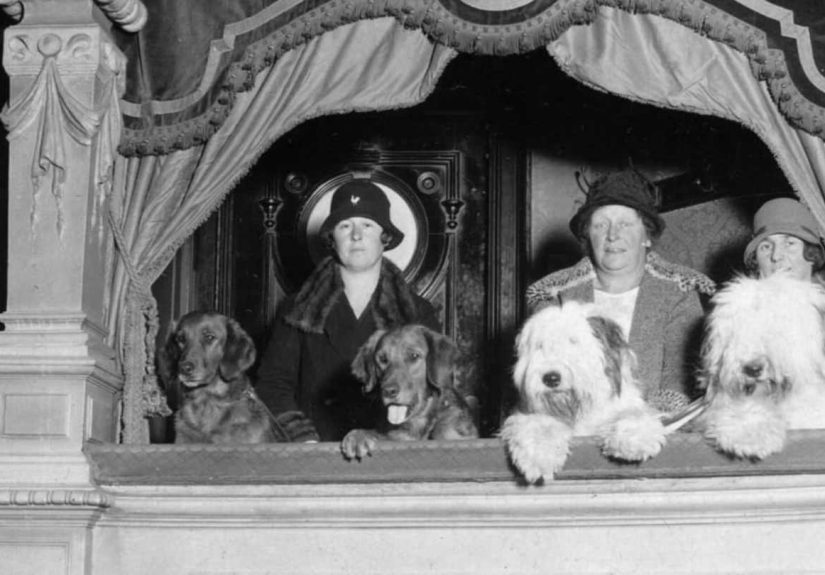
There was a time when the screen didn’t just startit was introduced. Big, heavy curtains covered the screen, and when the lights dimmed, they parted with a flourish that basically said, “Ladies and gentlemen, your reality is now on pause.” That little moment of ceremony made the movie feel like an event, even if you were there for a goofy comedy and a bucket of popcorn the size of a bathtub. Historic theaters and old movie palaces leaned hard into this kind of showmanship because the building itself was part of the attractionarchitecture, ambiance, and a sense you were stepping into something special.
Curtains haven’t gone fully extinctsome classic venues still use thembut in most multiplexes, the “grand reveal” has been replaced by a bright screen, pre-show ads, and the subtle panic of realizing you sat in Row A by accident.
2) Uniformed Ushers With Flashlights (and Authority)
In older theaters, ushers weren’t just ticket scanners. They were part guide, part crowd-control, part flashlight-wielding guardian of the cinematic peace. If you arrived late, they’d help you find your seat; if the film broke (a real thing that happened), they helped keep the audience from turning into a mob. And because this was the pre-texting era, ushers sometimes even tracked patrons down if an emergency message came in at the box office.
Today, staffing models are leaner, and self-service is the default. The modern version of an usher is often a sign that says, “Please silence your phone,” whichlet’s be honesthas about the same enforcement power as a polite suggestion from a houseplant.
3) The Mighty Theater Organ (and Live Accompaniment)
Before films had synchronized sound, theaters didn’t just need a screenthey needed music. Enter the theater organ, especially the famous Wurlitzer: massive instruments designed to fill the room with everything from dramatic swells to sound effects that could imitate a whole universe of mayhem. In the early 20th century, thousands of these organs were installed in movie theaters to accompany silent films and create a bigger-than-life experience.
A few historic venues still feature organ performances (sometimes for special events), but the average cineplex isn’t hiding a three-room instrument behind Screen 7. The closest you’ll get is a surprisingly emotional soda-fountain machine noise.
4) Newsreels Before the Feature
Newsreels were once a regular part of the moviegoing packageshort films of current events shown in theaters long before TV news became the default. People would learn what was happening in the world in the same place they went to watch comedies, musicals, and monster movies. In the pre-television era, weekly newsreels were commonly shown before feature films, and large collections (like Fox Movietone) preserve that history today.
Eventually, television news made the format less essential, and by the time the internet arrived, the idea of “Wait until Friday night to see what happened this week” became…not the vibe. Now, the only “news” you reliably get before a movie is that someone has invented a new way to combine candy and soda.
5) Cartoons, Serial Chapters, and a Whole Mini-Program
Older audiences didn’t always walk into a theater for a single, neatly packaged feature. Especially in the first half of the 20th century, it was common to see a broader program: cartoons, newsreels, andone of the biggest crowd magnetsfilm serials (also called chapter plays). Serials were episodic stories shown in weekly installments, often ending on a cliffhanger to guarantee you’d come back next Saturday.
Today, episodic storytelling lives onjust not in the theater in weekly “chapters.” Streaming took the “to be continued” model, supercharged it, and added the option to watch six episodes in pajamas while whispering, “One more,” at 1:47 a.m.
6) Real Intermissions (Plus Overtures and Exit Music)
Some big “roadshow” presentations treated movies like theater: reserved seating, souvenir programs, an overture before the film, an intermission, and sometimes exit music as you left. It wasn’t just about bathroom breaksit was a way to signal prestige and create a formal, event-like atmosphere. Roadshow-style showings (especially mid-century epics and musicals) commonly included intermissions and musical transitions like entr’actes.
Intermissions still pop up occasionally (often for extremely long films or special screenings), but they’re no longer standard. Part of the reason is practical: theaters run on tight schedules, and extra time means fewer showings per day. Also, modern audiences are trained for continuous playbackif anything pauses, we assume the Wi-Fi died.
7) Smoking Sections…and Ashtrays in Armrests
It’s hard to imagine now, but movie theaters once allowed smokingsometimes throughout the auditorium, sometimes in “designated sections.” As smokefree laws and policies expanded and cultural norms shifted, smoking inside public venues (including cinemas) became widely restricted. Clean indoor air efforts have protected millions from secondhand smoke in workplaces and public spaces, reflecting decades of policy change.
If you ever see an old theater seat with a built-in ashtray, it’s like finding a rotary phone in the wild: a reminder that the past was real, and also a reminder that the past made some questionable choices.
8) Film Reels, Projection Booth Magic, and Changeover Cues
Digital projection didn’t just change what audiences seeit changed what theaters are. In the film era, projectionists managed physical prints, threaded projectors, and handled reel-to-reel changeovers. Movies often arrived on multiple reels, and projectionists relied on cue marks near the end of a reel to time the switch smoothly.
The industry’s big digital transition accelerated in the 2010s. Trade reporting at the time described studios moving toward ending 35mm print distribution and the rapid spread of digital conversion across North America.
For moviegoers, the upside is consistent picture quality (no scratches, no missing frames, fewer “Wait, did the movie just…melt?” moments). The downside is you rarely feel that physical, mechanical “cinema is happening behind the wall” magic anymorebecause now it’s mostly computers doing computer things very quietly.
9) Paper Ticket Stubs You Actually Kept
For a long time, the ticket stub was part of the ritual: you bought a paper ticket, someone tore it (or you tore it yourself like a rebel), and the stub lived in your pocket like a tiny receipt for joy. People saved them in scrapbooks, taped them to mirrors, or rediscovered them years later and got emotionally ambushed by nostalgia in a junk drawer.
Now, mobile tickets and QR codes are common, and “ticketless entry” has become a selling pointespecially with reserved seating and app-based purchases. Convenience is great, but it’s hard to make a memory collage out of an email confirmation.
10) Lobby Payphones for “Call Me After the Movie”
There used to be a basic moviegoing safety net: if you needed to call home, you used the lobby payphone. It was the “I’m alive” text message of its era, except it required coins, a line, and the ability to remember phone numbers without your device doing it for you.
Payphones have declined dramatically in the United States over the past few decades, to the point that regulators have openly discussed how few are left and whether older payphone rules still make sense. As smartphones became the norm, theaters had less reason to maintain payphonesplus, lobbies are prime real estate for more profitable things, like another arcade machine or a display selling collector buckets shaped like a famous robot head.
11) Single-Screen Neighborhood Movie Palaces as the Norm
The classic American movie theaterone big screen, maybe a balcony, ornate details, a marquee you could spot from a block awayused to be a common civic landmark. Many of these venues were built for spectacle, and they made going to the movies feel like going somewhere important.
Over time, multiplexes and later megaplexes changed the business: more screens meant more scheduling flexibility, more showtimes, and more ways to keep seats filled. The digital conversion era also introduced steep equipment costs that hit smaller and historic theaters especially hard, and coverage at the time noted that some independent venues struggled with the investment required to keep showing new releases.
The good news is that many communities are still fighting to restore and preserve historic theaters. The “movie palace” isn’t gone it’s just more likely to be a beloved local treasure than the default way America goes to the movies.
Conclusion: What We Lost (and What We Gained)
If movie theaters feel different now, it’s not your imaginationit’s economics, technology, and changing habits reshaping the whole experience. We traded velvet-curtain showmanship for reclining seats and reserved tickets. We traded projection-booth wizardry for clean, consistent digital playback. And we traded paper stubs and payphones for phones that can buy tickets, find the theater, and still somehow run out of battery right before the credits.
The nostalgia is realbut so is the upside. Modern theaters can be more accessible, more comfortable, and more reliable than ever. Still, it’s worth remembering the older rituals, because they explain why “going to the movies” used to feel like an event, not just a place you sit down to watch something you could technically stream at home.
500 More Words: The Experiences We Miss (and Quietly Recreate)
Even if you never sat through a newsreel or listened to an overture in a roadshow presentation, the emotional logic of those old movie-theater traditions still makes sense: they slowed you down. They gave your brain a moment to cross the border between everyday life and story time. That’s what so many “things we no longer see in movie theaters” have in commoneach one was a small ritual that said, “You’re here now. Pay attention.”
Think about the old curtain opening. It wasn’t necessary for the film to play, but it framed the moment like a stage show. The room got quieter. People settled. Even your popcorn sounded like it was being opened more respectfully (a miracle that has not been replicated). When the curtain parted, the screen wasn’t just a screenit was the point of the room, finally revealed.
Or take the humble ticket stub. There’s a reason people saved them. A stub was proof you showed up for something: a first date, a friend group hangout, a solo afternoon when you needed a break, a midnight premiere where the line felt like a party before the party. Digital tickets are efficient, but they don’t live in your wallet for three days reminding you, “Hey, remember when you laughed so hard you spilled your drink?”
The old projection era had its own sensory signature. Some theaters carried a faint mechanical hum, and occasionally you’d catch a flicker or a tiny mark on the screen that reminded you there was a physical object moving through a machine at high speed. It made movies feel handmade in real time. Today’s digital projection is smoother, but it’s also more invisiblelike going from a crackling fireplace to central heating. Better? Absolutely. More romantic? Depends how attached you are to the smell of hot dust and the thrill of “Is the reel about to change?”
Then there are the social experiences that got reorganized. Reserved seating is greatuntil you realize you no longer have that goofy little adventure of arriving early to claim “the good spots,” negotiating with friends about the center row, and doing the subtle head tilt that says, “If you sit there, I will pretend I don’t know you.” Now your seat is chosen on a map, and your pre-movie drama has been downgraded from “Where do we sit?” to “Why is your phone brightness set to ‘lighthouse’?”
The funny thing is: people still try to rebuild the old rituals. We show up early to watch trailers like they’re part of the program. We buy special snacks as if concessions are a ticket upgrade. We take photos of marquees and keep digital screenshots of confirmations like modern-day stubs. We chase the feeling that the night is an event, not just a file playing in a room.
And maybe that’s the real takeaway. The artifacts changecurtains become pre-show graphics, ushers become signage, stubs become QR codes but the goal stays the same: a shared place where the lights dim, the outside world gets quieter, and for a couple of hours, everyone agrees to care about the same story at the same time. That part? Still worth leaving the house for.