Table of Contents >> Show >> Hide
- Why Hang a Rug on a Wall?
- Before You Start: 5 Smart Checks
- 6 Easy DIY Methods for Hanging a Rug on a Wall
- Method 1: Sew a Sleeve and Use a Curtain Rod
- Method 2: Use Velcro and a Wooden Batten
- Method 3: Add a Thin Wood Support Bar and Hang It Like Art
- Method 4: Use Wooden Clamp Hangers or Quilt Bars
- Method 5: Mount the Rug on a Backing Board or Frame
- Method 6: Use Tacks, Nails, or Push Pins for Lightweight Rugs Only
- Which Method Is Best?
- Common Mistakes to Avoid
- Conclusion
- Extra Experience: What I Learned From Actually Living With a Wall Rug
- SEO Tags
Some rugs are too pretty to spend their whole lives being stepped on. If you’ve found a vintage kilim, a bold flat-weave, or a patterned rug that makes your heart do a tiny happy dance, hanging it on the wall can turn it into serious statement art. It adds color, texture, softness, and that “Where did you get that?” factor that framed prints sometimes just can’t deliver.
But here’s the catch: rugs are heavier, thicker, and fussier than posters. You can’t just toss one up with wishful thinking and a lonely thumbtack. A good wall-rug setup needs the right support, the right hardware, and a little respect for the fibers. The good news? You do not need a museum budget or a contractor named Steve. You just need the right method for your rug.
In this guide, you’ll learn six easy DIY methods for hanging a rug on a wall, plus practical tips on choosing the safest option, avoiding damage, and making the finished result look polished instead of “I panicked at the hardware store.”
Why Hang a Rug on a Wall?
Wall rugs do more than fill empty space. They bring warmth to rooms that feel flat, soften echo-y walls, and add texture in a way that paint and framed art cannot. They also let you enjoy a handmade or meaningful textile without grinding it down under foot traffic, pets, chair legs, and the occasional spilled coffee that “definitely missed the rug” but somehow did not.
Hanging a rug can also solve a decorating problem. Large blank walls can be tricky, especially in living rooms, stairways, bedrooms, and entryways. A rug acts like oversized art, but it feels more layered and collected. Flat-woven rugs, kilims, dhurries, and lightweight vintage pieces usually work best because they hang more evenly and don’t fight gravity like a heavyweight shag monster.
Before You Start: 5 Smart Checks
1. Know your rug’s weight
The heavier the rug, the more support it needs. Lightweight textiles can work with clamps or a simple rod setup. Heavier rugs usually need a full-width support system, wood backing, or a mounted frame.
2. Decide whether the rug is decorative or valuable
If the rug is antique, handmade, fragile, or expensive, skip any method that punctures, glues, or aggressively clamps the fibers. In those cases, gentler support matters more than speed. A museum-style hanging method is worth the extra effort.
3. Pick the right wall
Avoid direct sunlight, heat vents, fireplaces, damp walls, and areas with wild humidity swings. Translation: the wall above a blazing fireplace may look dramatic on social media, but it is not doing your rug any favors.
4. Measure twice
Measure the rug, then the wall, then the furniture beneath it. Rugs look best when they have breathing room around them. In most rooms, you want the rug centered and visually balanced, not awkwardly hovering like it lost a bet.
5. Check the back first
Vacuum gently, inspect for weak seams, and look for old repairs or brittle areas. If the backing or fibers seem stressed, choose a method that spreads weight across the full width of the piece.
6 Easy DIY Methods for Hanging a Rug on a Wall
Method 1: Sew a Sleeve and Use a Curtain Rod
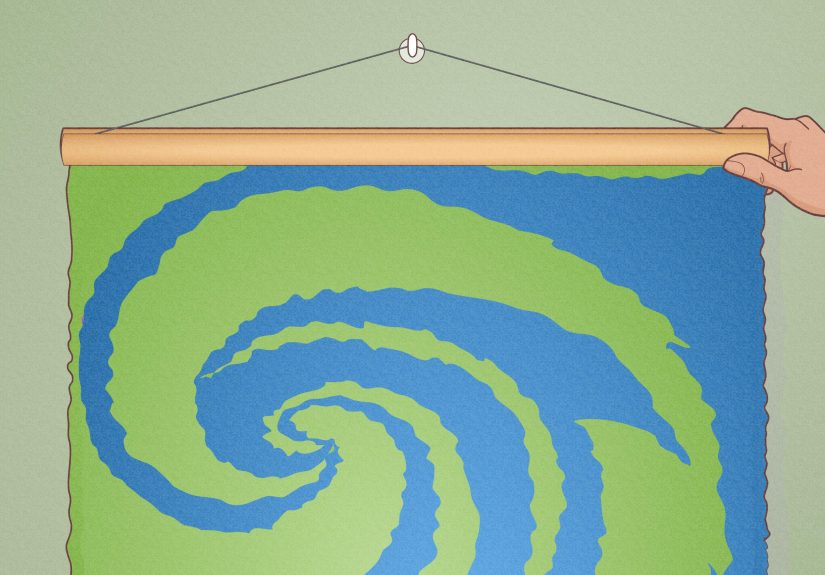
This is one of the cleanest and most classic ways to create a wall rug hanging. You sew a fabric sleeve, sometimes called a casing or rod pocket, onto the back near the top edge of the rug. Then you slide a sturdy rod through the sleeve and mount the rod on wall brackets.
Best for: flat-weave rugs, medium-weight rugs, decorative displays, and homeowners who want a finished, intentional look.
What you’ll need: heavy cotton or muslin for the sleeve, needle and thread, curtain rod or wooden dowel, wall brackets, level, and anchors or screws.
How to do it: Cut a strip of sturdy fabric the width of your rug. Sew it into a tube, then hand-stitch it to the back of the rug close to the top edge. Slide in the rod, mount brackets securely, and hang.
Why it works: The rod distributes weight across the width of the rug, and the hardware can be either decorative or hidden. It is a great option when you want the display to look more like textile art and less like improvised camping gear.
Watch out for: a rod that bows in the middle. If your rug has real weight, do not cheap out here. A flimsy rod turns your beautiful rug into a sad smile shape.
Method 2: Use Velcro and a Wooden Batten
If there is a gold star method for heavier or more delicate textiles, this is often it. The idea is simple: sew the soft loop side of hook-and-loop tape onto twill tape or muslin, stitch that to the rug, and attach the hook side to a sealed wooden batten mounted on the wall.
Best for: heavier rugs, valuable rugs, antique-style textiles, and anyone who wants better support with less stress on the fibers.
What you’ll need: wide hook-and-loop tape, cotton twill tape or muslin, hand-sewing supplies, sealed wooden batten, staples or screws, and wall anchors.
How to do it: Sew the loop strip onto cotton tape, then hand-stitch that strip to the back top edge of the rug. Attach the hook strip to a sealed wood batten. Mount the batten level on the wall, then press the two sides together.
Why it works: It supports the rug evenly across the full width, makes adjustments easier, and allows you to remove the rug for cleaning or rotation. It is also ideal if the rug is slightly uneven or handmade, because the hook-and-loop system gives you wiggle room.
Watch out for: raw wood touching the textile. Seal the wood first, and use a protective fabric barrier when appropriate.
Method 3: Add a Thin Wood Support Bar and Hang It Like Art
This method is perfect when your rug is substantial and you want a sleek, gallery-like look. Instead of relying on a rod pocket, you attach a thin wood support near the back top edge, then hang that support on heavy-duty picture hooks or wall hardware.
Best for: medium-to-heavy rugs, modern interiors, and people who want a crisp, artful presentation.
What you’ll need: thin wood slat or support bar, screws or stitching method depending on construction, heavy-duty hooks, anchors, and a level.
How to do it: Secure a support slat along the back top area of the rug, ideally in a way that does not damage important fibers. Mount strong hooks into studs or proper anchors, then hang the support bar.
Why it works: It gives structure to the top edge and can help the rug hang straighter, especially when the piece wants to ripple or sag. It also hides behind the rug nicely, so the finished display reads like oversized wall art.
Watch out for: poor anchoring. Rugs are heavier than they look, and gravity is undefeated.
Method 4: Use Wooden Clamp Hangers or Quilt Bars
If sewing is not your love language, clamp hangers are your friend. Wooden quilt hangers, textile bars, or rug clamps sandwich the top edge of the rug between pieces of wood or grip it with padded clamps. Then the hanger mounts directly to the wall.
Best for: renters, casual displays, lightweight to medium rugs, and people who want a low-sew or no-sew option.
What you’ll need: wooden clamp hangers or quilt bars, mounting screws, anchors, and felt or padding if the clamps are firm.
How to do it: Position the top edge of the rug inside the hanger, tighten or secure it according to the product design, then mount the hanger level on the wall.
Why it works: It is fast, neat, and easier to reverse than some stitched methods. It also looks good in relaxed spaces like bedrooms, studios, hallways, and eclectic living rooms.
Watch out for: crushing or denting the fibers. If the rug is thick, delicate, or valuable, test the clamp pressure first or choose a gentler option.
Method 5: Mount the Rug on a Backing Board or Frame
This is the “I want it to look expensive” method. You stretch or stitch the rug onto a padded backing board, canvas-covered panel, or shallow frame, then hang the whole assembly like artwork.
Best for: smaller rugs, partial rug panels, damaged rugs being repurposed, and design-forward spaces that need a polished finish.
What you’ll need: plywood or rigid board, canvas or muslin, staple gun, frame materials if desired, hanging hardware, and possibly batting for light padding.
How to do it: Wrap the board in clean fabric, position the rug, then stitch or carefully secure the rug to the covered backing. Add a frame if you want a more formal look, then mount it to the wall like a large art piece.
Why it works: It turns a textile into structured wall art and is especially useful when the rug is small, irregularly shaped, or part of a salvaged piece. It can also help flatten a wavy textile.
Watch out for: glue. Avoid directly gluing a valuable rug to anything. Future you, and possibly a future conservator, will not send thank-you notes.
Method 6: Use Tacks, Nails, or Push Pins for Lightweight Rugs Only
This is the simplest method, but also the one that needs the most caution. For small, sturdy, lightweight flat-weaves used in casual or temporary displays, a few discreet tacks, upholstery nails, or strong push pins can work.
Best for: temporary styling, budget-friendly DIY projects, and lightweight textiles that are not precious heirlooms.
What you’ll need: upholstery tacks, finishing nails, or sturdy push pins, plus a measuring tape and level.
How to do it: Mark your line carefully, then secure the rug at several points along the top edge. Add evenly spaced support so the weight is not pulling from one or two lonely spots.
Why it works: It is fast and cheap, and sometimes that is exactly the vibe.
Watch out for: damage. This method can stress fibers, distort the shape, or leave holes. Never use it on antique, handmade, fragile, or high-value rugs. Think of it as a short-term solution for lightweight decorative pieces, not a universal answer.
Which Method Is Best?
If your rug is heavy, delicate, antique, or meaningful, go with Velcro and a wooden batten. It gives the most even support and is widely considered one of the safest display methods.
If you want the easiest polished look, choose a sleeve and curtain rod. It is attractive, classic, and easy to remove later.
If you hate sewing, clamp hangers are the easiest DIY path.
If you are turning a rug into permanent statement art, mounting it on a backing board or frame offers the most control over shape and presentation.
And if you are tempted by nails because they are already in your junk drawer, ask one question first: “Would I cry if this rug got damaged?” If the answer is yes, back away from the tacks.
Common Mistakes to Avoid
Hanging the rug in direct sunlight
Sunlight fades dyes and weakens fibers over time. That bright window wall may look dramatic now, but your rug will quietly file a complaint.
Using weak hardware
Always match the hardware to the rug’s actual weight, not the weight you hope it has. Use studs when possible and proper anchors when not.
Letting raw wood touch the textile
Use sealed wood and a protective fabric barrier where needed. This is especially important with older or delicate textiles.
Ignoring the bottom edge
If the rug curls forward, consider adding a hidden lower support, a second dowel, or light stabilization at the bottom so it hangs flat.
Leaving it up forever without checking it
Inspect the rug every few months for sagging, fading, dust buildup, or stress points. Textiles appreciate attention, even if they are not good at saying thanks.
Conclusion
Learning how to hang a rug on a wall is really about matching the method to the textile. A light flat-weave might do beautifully with clamp bars or a rod pocket, while a heavier or more valuable piece deserves full-width support from a Velcro batten or a carefully mounted backing. The right approach protects the rug, improves the final look, and keeps your masterpiece from making an unexpected move toward the floor at 2 a.m.
If you want the safest all-around choice, start with the museum-style Velcro method. If you want the easiest stylish setup, use a sleeve and rod. If you want drama, structure, and a gallery feel, mount it like art. However you do it, your rug gets a second life, your wall gets personality, and your home suddenly looks a lot more intentional.
Extra Experience: What I Learned From Actually Living With a Wall Rug
The first thing I learned is that a rug on a wall changes a room faster than almost anything else. Paint takes time. A gallery wall takes planning. A rug? One good afternoon, one level, one mild argument with a tape measure, and suddenly the space feels warmer, richer, and much more finished. It has the visual impact of oversized art but with more texture and soul.
The second thing I learned is that scale matters more than people think. A rug that seems huge on the floor can look surprisingly perfect on a big blank wall. On the flip side, a rug that feels “about right” when you’re holding it can look oddly skimpy once it’s up. I started measuring the furniture below the rug, the open wall space around it, and even the sightline from the doorway. That extra ten minutes saved me from the classic DIY experience of hanging something, stepping back, squinting, and whispering, “Hmm. Why does that look emotionally off?”
I also learned that texture behaves differently on the wall than it does on the floor. Fringe becomes more noticeable. Slight warping becomes more obvious. The top edge has to work harder because gravity is constantly trying to turn your decor into a cautionary tale. That is why support matters so much. Once I used a full-width support method instead of spot-hanging, the difference was immediate. The rug hung flatter, looked more expensive, and stopped giving me low-grade anxiety every time I walked past it.
Another real-world lesson: dust is not dramatic, but it is persistent. A wall rug still collects dust, especially in hallways, bedrooms, and rooms with open windows. Gentle vacuuming every so often made a huge difference. So did avoiding a wall that got strong afternoon sun. The rug kept its color better, and I stopped worrying that I was slow-roasting the fibers for the sake of aesthetics.
Styling-wise, I found that wall rugs play especially well with simpler furniture. If the rug is busy, let it be the star. Keep the pieces underneath a little calmer so the room feels layered, not chaotic. A bench, low console, or clean-lined sofa beneath the rug usually works beautifully. I also loved how a wall rug softened rooms that felt a little too hard or echo-prone. It made bedrooms feel cozier, entryways feel more collected, and living rooms feel less like they were waiting for a personality transplant.
Most of all, I learned that hanging a rug is one of those projects that feels intimidating right up until the moment it is done. Then it just feels smart. You get to protect a textile, add character to your home, and create art out of something that might otherwise stay rolled up in a closet. That is a pretty great outcome for a weekend DIY.