Table of Contents >> Show >> Hide
- Why Deck Boards Go Wrong So Often
- 1. Start With Flat Framing and a Dead-Straight First Board
- 2. Let Moisture and Material Decide Your Gaps
- 3. Pay Attention to Board Crown, Best Face, and Grain
- 4. Use the Right Fasteners and Put Them in the Right Place
- 5. Straighten Crooked Boards Before You Lock Them Down
- 6. Treat Butt Joints, Seams, and Board Ends Like Finish Carpentry
- 7. Protect the Deck Structure While You Are Still Above It
- Common Mistakes That Ruin a Deck-Board Install
- Field Notes: Real-World Experiences With Setting Deck Boards
- Conclusion
Building a deck looks easy right up until your boards start wandering like shopping carts with bad wheels. One row is tight, the next is wavy, one seam looks clean, and another looks like it was negotiated during an argument. The good news? Great-looking decking is not magic. It is mostly layout, spacing, fastening, and patience. In other words, less “wing it,” more “work like a picky carpenter.”
If you want to set and nail deck boards perfectly, the goal is simple: every board should look straight, feel solid, drain well, and age without turning your backyard into a trip hazard with commitment issues. Whether you are installing pressure-treated wood, cedar, or a composite product, the details matter. Tiny decisions about gaps, fasteners, butt joints, and board orientation can make the difference between a deck that looks pro-built and one that looks like it lost a bar fight with humidity.
This guide breaks down seven practical tips that help you install deck boards cleanly and confidently. It also covers common mistakes, material-specific considerations, and real-world lessons that can save you from doing the same board twice, which is the least fun kind of cardio.
Why Deck Boards Go Wrong So Often
Before getting into the tips, it helps to know why deck boards fail visually. Most problems come from one of five issues: the frame is not flat, the first board is not square, the gaps are inconsistent, the fasteners are wrong or misplaced, or the seams were treated like an afterthought. Add wood movement, moisture, heat, and the occasional banana-shaped board, and small mistakes become very visible.
That is why the best installers do not just “lay boards down.” They control the layout from the first course to the final trim cut. Think of deck-board installation as finish work, not rough framing. Your structure may carry the load, but your decking carries the bragging rights.
1. Start With Flat Framing and a Dead-Straight First Board
Perfect deck boards begin before the first screw or nail goes in. If your joists are crowned unevenly, twisted, or out of plane, your decking will telegraph every flaw. A beautiful board installed over bad framing still becomes an ugly deck. So before surfacing begins, check joists with a long straightedge, level, or string line. Plane high spots, shim low ones where appropriate, and correct anything that will cause a rise or dip.
Next comes the first board, which is the boss of the whole layout. If it starts crooked, every board after it will quietly follow that bad example. Set the first board parallel to the house or the reference edge of the frame. Measure at several points, not just one end and a hopeful squint. Clamp it in place if needed. On many decks, it is smart to let board ends run long so you can trim them later in one crisp line.
A straight first board does three important things. It keeps your courses consistent, makes the final rip less painful, and gives the whole deck that “something about this looks expensive” effect. Spoiler: that something is usually layout.
Pro move
Snap a control line early. Even if the frame is square, a chalk line gives you a visual reference that is faster and more reliable than trusting your eyeballs after three hours in the sun.
2. Let Moisture and Material Decide Your Gaps
Deck-board spacing is one of the most misunderstood parts of the job. People often pick a gap because a spacer happened to be nearby, not because the board or conditions called for it. That is how decks end up with drainage problems, pinched boards, or giant gaps you could mail a postcard through.
For pressure-treated wood decking, spacing often depends on how wet the boards are at installation. Freshly treated lumber can shrink as it dries, so boards installed too far apart may later look overly gapped. On the other hand, dry decking needs deliberate spacing from day one to allow airflow and drainage. A practical target for many face-screwed pressure-treated wood decks is about 1/8 inch to 3/16 inch, but the actual board condition should drive the decision.
Composite and PVC decking are even less forgiving about guessing. They expand and contract differently than wood, so their required side gaps, end gaps, and butt-joint details are typically product-specific. If the manufacturer says use a certain clip system or a certain spacing range, do not freelance. Your deck is not the place to become an abstract artist.
Consistent spacing also improves appearance. Uneven gaps attract the eye faster than most people realize. Use real spacers, approved clips, or a repeatable method that keeps rows uniform. Do not rely on “close enough,” because close enough on the second board becomes noticeably not enough on the twentieth.
3. Pay Attention to Board Crown, Best Face, and Grain
Wood decking has personality, and sometimes that personality is dramatic. Some boards are straighter, cleaner, and more attractive on one face. Others have a visible grain arc that suggests how they may cup over time. When working with wood, take a minute to sort your pile before installation. It is faster to make a smart decision on the ground than to regret it after fastening.
Many builders install the best-looking face up because, well, you will be staring at it for years. But with wetter lumber, some carpenters also think about bark side orientation and grain arc to help control how a board behaves as it dries. If you notice heavy crown, shelling, or questionable grain, that board might be better used in a shorter section, near a cut, or not at all.
Do not install every board blindly in the same direction without checking it first. Lay out several rows dry, inspect color and grain, and shuffle boards for a more natural look. This is especially helpful with cedar and pressure-treated lumber, where variation is part of the charm. Random can look beautiful. Accidental chaos looks accidental.
Simple rule
If one face clearly looks better and the board is dry and stable, favor appearance. If the board is wet and likely to move, think about future behavior as much as present looks.
4. Use the Right Fasteners and Put Them in the Right Place
The title says “nail deck boards,” but here is the honest modern answer: many pros now prefer deck screws or approved hidden-fastener systems for most deck surfaces. Nails can still be used in the right applications, especially with the right material and corrosion-resistant type, but screws usually offer better holding power and make future repairs easier.
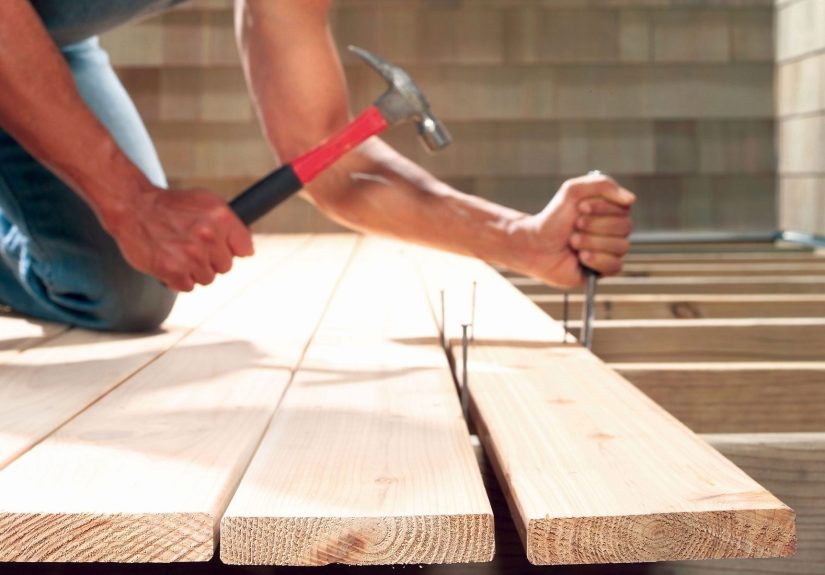
For face-fastened wood decking, place two fasteners at each joist. Keep them evenly aligned, usually around 3/4 inch to 1 inch from the board edge, so the board stays secure without inviting splits. If you crowd the edges, you risk cracking. If you place fasteners randomly, the deck will look sloppy even when the structure is sound.
Choose corrosion-resistant fasteners designed for your decking and environment. Pressure-treated lumber can be tough on ordinary hardware, and coastal or high-moisture settings may call for stainless steel. For composite or PVC decking, use the fasteners recommended by the board manufacturer. Hidden clips, color-matched screws, and plug systems all exist for a reason.
Also, do not overdrive fasteners. A screw head buried too deep crushes fibers, weakens holding, and looks bad. A nail sunk aggressively can do the same. Drive fasteners flush and consistent. Neat lines of hardware make a deck look intentional, even on a simple design.
Where beginners get burned
They use framing screws instead of decking screws, mix metals with treated lumber, or fasten composite boards like wood. That is how warranties get grumpy and boards get weird.
5. Straighten Crooked Boards Before You Lock Them Down
No deck build happens with twenty perfectly obedient boards. At least a few will arrive with a curve that suggests they have been training for gymnastics. Do not just force them badly and hope the fasteners will solve everything. That hope has ruined many Saturdays.
Instead, use clamps, board benders, pry tools, or leverage blocks to pull a crooked board into line before fastening it. Work one joist at a time if needed. Set one end, then gradually persuade the board into position as you move along the run. The goal is to correct the board while preserving your spacing, not create a straight line at the expense of ugly gaps.
With wood decking, this step matters a lot because natural variation is normal. With composite boards, straightening is often easier, but heat, storage, and long runs can still create movement. Always keep the board under control while fastening so it does not drift as you go.
If a board is too warped, too twisted, or too stubborn, do not be heroic. Cut it into shorter sections where layout allows, repurpose it, or reject it. A bad board is cheaper than a bad deck.
6. Treat Butt Joints, Seams, and Board Ends Like Finish Carpentry
Nothing separates a clean deck from a messy one faster than ugly seams. Butt joints need planning, not panic. If your deck is longer than your boards, decide early where seams will fall. Randomly landing them wherever a board happens to end creates visual noise and often weak support.
For many installations, butt joints should land over proper framing support, often with additional blocking or double-joist support depending on the material and fastening system. On wood decks, staggering seams can look more balanced. On some composite layouts, breaker boards or picture-frame designs create a cleaner, more controlled look than lots of exposed butt joints.
Board ends should also be cut square and clean. A crisp end cut makes the whole deck look sharper. If you let ends run long during installation, trim them later with a chalk line and a guide so the entire perimeter looks straight. This single step can make a DIY build look dramatically more professional.
Predrill near board ends when the material or conditions call for it, especially with harder, drier, or more brittle stock. Ends are where splits love to begin. And once a split starts, it has a way of announcing itself forever.
Another small detail with big payoff
Keep seam patterns intentional. Staggered seams can look great, but only when they look planned. “Random” should mean designed randomness, not “I ran out of board and made a choice.”
7. Protect the Deck Structure While You Are Still Above It
Deck boards are the showpiece, but the joists below them do the hard work. If you want your beautifully installed decking to stay beautiful, protect the framing before the boards cover it up. One of the smartest upgrades is joist tape or flashing tape on the tops of joists, beams, and ledger areas where appropriate.
Why? Because fastener penetrations and trapped moisture are great at shortening the life of wood framing. Joist tape helps shed water, reduces exposure at screw penetrations, and can help slow down rot and corrosion issues. It is one of those upgrades that feels boring at the store and brilliant five years later.
Also pay attention to airflow under the deck and drainage between boards. A deck that stays wet stays cranky. Proper gaps, clean framing, and thoughtful detailing help the whole assembly dry out faster after rain. That is good for the boards, the framing, and your long-term maintenance budget.
Common Mistakes That Ruin a Deck-Board Install
Even a well-built frame can end up with a mediocre finish if these mistakes show up:
- Starting the first board without verifying the layout at multiple points.
- Using random gap sizes from row to row.
- Ignoring the moisture condition of pressure-treated lumber.
- Using the wrong fastener for the decking material.
- Overdriving screws or nails.
- Failing to support butt joints correctly.
- Skipping joist protection because it is “under the deck anyway.”
- Cutting board ends one by one instead of trimming the whole field in a straight finish pass.
If you avoid those errors, you are already ahead of a surprising number of backyard builds.
Field Notes: Real-World Experiences With Setting Deck Boards
The most useful lessons about deck boards usually come from jobs that looked simple on paper and got humble in real life. A common example is the homeowner who buys pressure-treated boards in the morning, lays them with wide gaps in the afternoon, and proudly admires the deck for about two weeks. Then the lumber dries, the gaps grow, and suddenly the finished deck looks like it was designed for draining spaghetti. The lesson is not that the installer lacked effort. The lesson is that board moisture matters more than enthusiasm.
Another familiar experience happens with the first row. People rush the starter board because it feels like the easiest part. Later, after ten or twelve courses, they notice the outer edge is drifting and the final board is going to need an awkward rip cut that gets skinnier as it goes. That is the moment the first board sends a postcard from the past saying, “You should have checked me twice.” Veteran deck builders learn to spend extra time on the opening layout because it saves a huge amount of correction later.
Crooked boards create their own memorable education. On many wood-deck projects, there is always one board that seems personally offended by the concept of straightness. Beginners often try to beat it into place with fasteners alone. The result is usually a board that still looks curved, plus gaps that wander like they are sightseeing. Experienced installers use board straighteners, clamps, leverage blocks, and patience. The board may resist, but the deck does not have to show the argument.
Seams teach another hard lesson. On long decks, butt joints can look tidy in your head and messy in reality if they are not supported and patterned properly. A lot of people discover too late that “I’ll figure out the seam locations as I go” is not a strategy. It is a confession. Clean seam patterns, breaker boards, and square cuts do more than improve looks. They keep the install from feeling improvised.
Then there is the quiet wisdom of joist tape, which many people ignore until they tear off an older deck and see what moisture did underneath. The top of a joist can age badly where water sits and fasteners penetrate. Once you have seen that damage in person, joist protection stops feeling optional and starts feeling obvious.
Perhaps the most repeated real-world takeaway is this: deck boards reward consistency more than speed. The best-looking decks are not always built by the fanciest crews or with the most expensive materials. They are usually built by people who measured the first course carefully, kept the spacing steady, used the right fasteners, cut clean lines at the end, and respected the way wood and composite products actually behave outdoors. In other words, deck perfection is rarely one heroic move. It is a hundred small, disciplined ones.
Conclusion
If you want to set and nail deck boards perfectly, focus less on brute force and more on smart sequencing. Start with flat framing. Set the first board dead straight. Space every course with intention. Use the right fasteners for the material. Correct crooked boards before fastening them. Plan seams like finish work. And protect the framing before you hide it.
Do that, and your deck will not just look good on installation day. It will keep looking good after the sun bakes it, the rain soaks it, and your guests stomp across it carrying burgers, folding chairs, and opinions. That is the real test. A perfect deck board install is not one that photographs well for ten minutes. It is one that still looks sharp when real life starts happening on top of it.