Table of Contents >> Show >> Hide
- Before You Start: The 7-Minute Shrimp Success Checklist
- Recipe #1: Garlic-Lemon Butter Shrimp Skillet (Scampi Vibes in 15 Minutes)
- Recipe #2: Sheet-Pan Shrimp Fajitas (Minimal Dishes, Maximum Flavor)
- Recipe #3: Honey-Garlic Shrimp & Broccoli Stir-Fry (Takeout Energy, Weeknight Speed)
- Make Tonight Even Easier: Mix-and-Match Shrimp Dinner Strategies
- Shrimp Storage and Leftovers (So You Don’t Play “Is This Still Okay?”)
- Conclusion: Three Shrimp Dinners, One Very Happy You
- Extra: of Real-World Shrimp Dinner Experiences (The Stuff Recipes Don’t Tell You)
It’s dinner o’clock, you’re hungry, and your brain is operating on “low battery mode.” Enter: shrimpthe weeknight superhero that cooks faster than you can decide what show to stream. Shrimp goes from raw to “wow” in minutes, which means you can make a real-deal dinner tonight without turning your kitchen into a disaster movie.
Below are three easy shrimp recipes that hit different moods: buttery-garlicky comfort, sheet-pan Tex-Mex energy, and a sticky-sweet stir-fry that tastes like takeout (but won’t charge you delivery fees and emotional damages). Each recipe includes quick tips so your shrimp stays juicynot rubbery, not sad, not shaped like a tiny life preserver.
Before You Start: The 7-Minute Shrimp Success Checklist
1) Buy smart: “Frozen” is often the best option
If you’re standing at the seafood case wondering if “fresh” shrimp is better, here’s the plot twist: a lot of “fresh” shrimp was frozen first and then thawed for display. Frozen shrimp is typically frozen quickly after being caught, which helps preserve texture and flavor. Translation: frozen can be a very reliable choice for weeknight cooking.
2) Thaw fast (and safely)
- Best plan: Thaw overnight in the fridge in a covered container.
- Tonight plan: Put shrimp in a sealed bag, submerge in a bowl of cold water, and it’ll thaw in about 15–25 minutes. Swap the water once if it gets very cold.
- Do not: Thaw on the counter or in warm water (bacteria loves that idea).
3) Dry shrimp = better sear
Pat shrimp dry with paper towels before cooking. Water is the enemy of browning, and browning is the friend that makes dinner taste expensive.
4) Devein if you can (it’s quick once you’ve done it twice)
Many shrimp are sold peeled and deveined. If yours aren’t deveined, run a small knife along the back and pull out the dark line. It’s not dangerous, but it can taste gritty.
5) Don’t overcook: “C” is for cooked
Shrimp is done when it turns pink and opaque and curls into a loose “C.” If it tightens into an “O,” it’s overcooked and heading toward rubbery territory. Keep the heat high, the cook time short, and your standards even higher.
6) Flavor rule: shrimp loves bold, quick sauces
Shrimp is mild. That’s why it plays so nicely with garlic, citrus, chiles, soy sauce, and smoky spices. You don’t need a 12-hour marinadejust a sauce that shows up and does its job.
7) Food safety, but make it simple
Cook shrimp until the flesh is firm and opaque. If you use a thermometer, seafood safety guidance commonly points to 145°F for fish and shellfish; visual cues also work well for shrimp because it changes color and texture fast.
Recipe #1: Garlic-Lemon Butter Shrimp Skillet (Scampi Vibes in 15 Minutes)
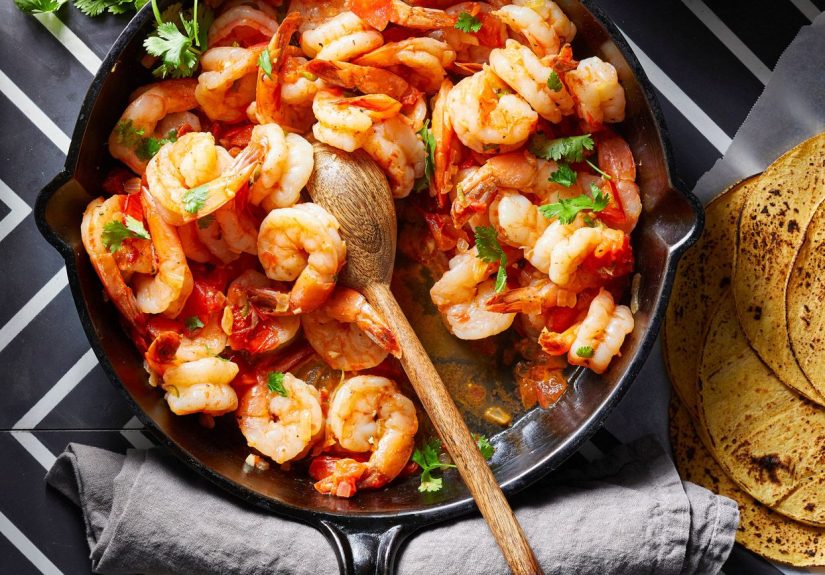
This is the “I want something fancy but I also want to sit down ASAP” recipe. You’ll build a buttery garlic sauce, brighten it with lemon, and finish with parsley. Serve it with pasta, rice, or crusty bread for maximum sauce appreciation.
Why it works
- Fast heat cooks shrimp quickly so it stays tender.
- Butter + garlic delivers instant restaurant flavor.
- Lemon cuts richness and keeps the dish lively.
Ingredients (serves 2–3)
- 1 lb medium or large shrimp, peeled (tail on optional), thawed if frozen
- 1 tsp kosher salt (or to taste) + black pepper
- 2 tbsp olive oil
- 3 tbsp butter
- 4–6 cloves garlic, minced
- Pinch of red pepper flakes (optional, but fun)
- 1/4 cup dry white wine or chicken broth (optional, for more sauce)
- Zest and juice of 1 lemon
- 2–3 tbsp chopped parsley
- Optional for serving: cooked pasta (linguine/angel hair), cooked rice, or crusty bread; grated Parmesan (if you like rules-breaking)
How to make it
- Prep shrimp: Pat shrimp dry. Season with salt and pepper.
- Sear: Heat olive oil in a large skillet over medium-high heat. Add shrimp in a single layer. Cook 1–2 minutes per side until just pink and opaque. Remove to a plate.
- Build sauce: Lower heat to medium. Add butter. Once melted, add garlic and red pepper flakes. Stir 30–45 seconds until fragrant (do not let garlic brown aggressively).
- Deglaze (optional but tasty): Add wine or broth and simmer 1–2 minutes. Scrape up browned bits.
- Finish: Add lemon zest and juice. Return shrimp (and any juices) to the pan and toss 30–60 seconds to coat.
- Serve: Sprinkle parsley and serve immediately with bread, pasta, or rice.
Quick tips and variations
- Want pasta? Toss shrimp and sauce with cooked pasta plus a splash of pasta water to help the sauce cling.
- Want extra veg? Stir in baby spinach at the end until just wilted, or serve over quick-sautéed zucchini ribbons.
- No wine? Use broth. Add a tiny splash of vinegar at the end if you want extra brightness.
Recipe #2: Sheet-Pan Shrimp Fajitas (Minimal Dishes, Maximum Flavor)
This one is for the nights you want dinner and you want the sink to remain emotionally stable. Toss shrimp and veggies with fajita seasoning, roast everything on one pan, then pile it into warm tortillas like you planned this meal hours ago.
Why it works
- High heat gives you light char and fast cooking.
- Veg + shrimp cook together, so flavors mingle.
- Build-your-own toppings make everyone happy (or at least quieter).
Ingredients (serves 3–4)
- 1 lb shrimp, peeled and deveined
- 2 bell peppers, sliced
- 1 large onion, sliced
- 2 tbsp olive oil
- 2 tsp chili powder
- 1 tsp ground cumin
- 1 tsp smoked paprika (or regular paprika)
- 1/2 tsp garlic powder
- 1/2 tsp dried oregano
- Salt and pepper
- 1 lime (juice + wedges for serving)
- Warm tortillas
- Optional toppings: salsa, sour cream or Greek yogurt, avocado, cilantro, shredded cheese, hot sauce
How to make it
- Heat oven: Set oven to 425°F. Line a sheet pan with foil for easier cleanup.
- Season veggies: Toss peppers and onion with half the olive oil, half the spices, and a pinch of salt. Spread out on the pan. Roast 8 minutes.
- Season shrimp: While veggies roast, toss shrimp with remaining oil and spices plus lime juice.
- Add shrimp: Pull pan out, scoot veggies around, and add shrimp in a single layer. Roast 6–8 minutes until shrimp are pink and opaque.
- Finish: Squeeze extra lime over everything. Serve with tortillas and toppings.
Quick tips and variations
- Don’t crowd the pan. If everything is piled up, it steams instead of roasting. Use two pans if needed.
- Extra smoky? Add sliced poblanos or a pinch of chipotle powder.
- Low-carb option: Serve fajita shrimp over cauliflower rice or in lettuce cups.
- Make it creamy: Mix sour cream/Greek yogurt with lime juice, salt, and a little garlic for a fast drizzle sauce.
Recipe #3: Honey-Garlic Shrimp & Broccoli Stir-Fry (Takeout Energy, Weeknight Speed)
Sticky-sweet, garlicky, and ready fastthis recipe is your “I want something comforting but I also want vegetables in the room” solution. The sauce comes together in a bowl, and the entire meal happens in one pan.
Why it works
- Quick sauce coats shrimp beautifully without a long simmer.
- Broccoli adds crunch and balance.
- Optional cornstarch turns the sauce glossy and clingy (in a good way).
Ingredients (serves 3–4)
- 1 lb shrimp, peeled and deveined
- 2 tbsp neutral oil (avocado, canola, vegetable) or olive oil
- 3 cups broccoli florets
- 1 bell pepper, sliced (optional but colorful)
- 3 cloves garlic, minced
- 1 tsp grated fresh ginger (optional but excellent)
- Sauce: 1/3 cup honey, 1/4 cup soy sauce (reduced sodium if you like), 1 tbsp rice vinegar or lemon juice, pinch of red pepper flakes
- Optional thickener: 1 tsp cornstarch + 2 tsp water
- For serving: rice, noodles, or quinoa; sesame seeds and sliced scallions (optional)
How to make it
- Mix sauce: In a bowl, whisk honey, soy sauce, vinegar (or lemon), and red pepper flakes. If using cornstarch, whisk it with water separately and keep nearby.
- Cook veggies: Heat 1 tbsp oil in a large skillet or wok over medium-high heat. Add broccoli (and bell pepper if using). Stir-fry 3–4 minutes. Add a splash of water and cover 1 minute to steam-tender. Remove to a plate.
- Cook shrimp: Add remaining oil. Add shrimp in a single layer. Cook 1–2 minutes per side until pink and opaque.
- Combine: Add garlic and ginger; stir 20–30 seconds. Return veggies to pan.
- Sauce it up: Pour in sauce and simmer 1–2 minutes. If thickening, add cornstarch slurry and stir until glossy.
- Serve: Spoon over rice/noodles. Garnish with sesame seeds and scallions if you’re feeling fancy.
Quick tips and variations
- Swap veggies: Snap peas, carrots, asparagus, or green beans all work.
- More heat: Add sriracha, chili garlic sauce, or extra red pepper flakes.
- Lower sugar: Use less honey and add a little extra vinegar/lemon to keep it bright.
- Meal prep move: Mix the sauce in advance and keep it in the fridge for up to 3 days.
Make Tonight Even Easier: Mix-and-Match Shrimp Dinner Strategies
Pick a cooking method
- Skillet: Best for sauces (garlic butter, lemon, wine, cream).
- Sheet pan: Best for hands-off cooking and built-in veggies.
- Stir-fry: Best for bold sauces and quick, crisp vegetables.
Pick a flavor direction
- Bright: lemon, lime, parsley, cilantro
- Smoky: cumin, smoked paprika, chipotle
- Sweet-salty: honey + soy sauce + garlic
Pick a “vehicle”
- Carbs: pasta, rice, tortillas, noodles
- Low-carb: cauliflower rice, zucchini noodles, lettuce cups
- Snack mode: crusty bread for sauce-dunking (highly recommended)
Shrimp Storage and Leftovers (So You Don’t Play “Is This Still Okay?”)
- Thawed raw shrimp: Keep refrigerated and cook soon. If it smells strongly fishy/ammonia-like, toss it.
- Cooked shrimp: Cool quickly and refrigerate in a sealed container.
- Reheating tip: Warm gently. Shrimp overcooks fast, so a quick reheat is better than a long microwave session.
Conclusion: Three Shrimp Dinners, One Very Happy You
If you remember only one thing: shrimp is fast, but it’s also dramatictreat it gently and it rewards you; ignore it for “just two more minutes” and it turns into chewy confetti. The garlic-lemon butter skillet is cozy and elegant, the sheet-pan fajitas are weeknight magic with almost no cleanup, and the honey-garlic stir-fry gives you that glossy, craveable sauce vibe without leaving home.
Pick one, cook it tonight, and enjoy the rare feeling of victory that comes from making dinner before your hunger turns into an opinion.
Extra: of Real-World Shrimp Dinner Experiences (The Stuff Recipes Don’t Tell You)
Shrimp dinners tend to happen on the kinds of nights where the day felt like three days taped together. You open the fridge, you stare into the cold abyss, and suddenly shrimp feels like a brilliant plan because it doesn’t ask for a long relationshipjust a quick sear and a little attention. And that’s the first “experience lesson” of shrimp: it rewards focus, not effort. You don’t need to be a culinary wizard; you just need to be present for about five minutes at the stove.
One common weeknight storyline: you’re making garlic butter shrimp, and the kitchen smells incredible, but you realize too late that you forgot a side. The good news is shrimp sauce is basically a side dish disguised as confidence. Bread becomes a tool, not just food. A bagged salad suddenly feels like a smart choice. Even microwaved rice is elevated when it meets a buttery lemon-garlic pan sauce. People often discover that the “extra” isn’t a complicated sideit’s simply something that soaks up flavor.
Another real-life moment: sheet-pan fajitas look effortless, but the pan comes out and the vegetables are soft instead of charred. That usually happens because everything was piled too close together. The experience takeaway is simple: space equals sizzle. Spread ingredients out, use two pans if needed, and you’ll get the roasted edges that make fajitas taste like they came from a restaurant. It’s also the night you learn that “toppings are not optional.” Even a basic combo of lime + yogurt/sour cream + salsa can turn fajitas into something you actually look forward to.
Stir-fry nights come with their own mini-drama: the sauce looks thin at first, and you wonder if you messed up. Then it simmers for a minute, clings to the shrimp, and suddenly it’s glossy and perfect. The experience lesson here is patience in tiny dosessixty seconds of simmering can transform a bowl-mixed sauce into something that tastes intentional. And if you’ve ever had shrimp go rubbery in stir-fry, it’s usually because the shrimp stayed in the pan while you were busy “just cooking the vegetables a little longer.” The winning move is to cook vegetables first, then shrimp, then reunite them briefly in sauce.
Finally, there’s the universal shrimp reality: it’s easy to underestimate how fast it cooks. Many home cooks learn to treat shrimp like toastyou don’t walk away, because the moment you do, dinner changes personality. Once you embrace that, shrimp becomes the most reliable “I can still make something good tonight” ingredient in your freezer. And that’s the best experience of all: you finish dinner, the kitchen isn’t wrecked, and you feel like you successfully outsmarted the weeknight chaos.