Table of Contents >> Show >> Hide
- Why Rabbit Nail Trimming Matters
- What You Need Before You Start
- How to Trim Rabbit Toenails: 10 Steps
- Step 1: Pick a Calm Time of Day
- Step 2: Set Up a Safe, Non-Slip Trimming Spot
- Step 3: Support the Body Before You Touch the Feet
- Step 4: Find the Quick Before You Clip
- Step 5: Start with One Paw, Not the Whole Rabbit Olympics
- Step 6: Clip Only the Hooked Tip
- Step 7: Watch Your Rabbit’s Body Language
- Step 8: If You Nick the Quick, Stay Calm
- Step 9: Stop Before the Rabbit Reaches the “Absolutely Not” Stage
- Step 10: Reward, Recheck, and Put the Next Trim on the Calendar
- How Often Should You Trim Rabbit Nails?
- Common Rabbit Nail Trimming Mistakes
- When to Let a Vet or Groomer Handle It
- Practical Tips That Make Rabbit Nail Trims Easier
- Real-World Experiences Rabbit Owners Often Have With Nail Trims
- Conclusion
- SEO Tags
Trimming a rabbit’s toenails is one of those jobs that sounds tiny, harmless, and vaguely adorable until you actually try it and realize your fluffy roommate has the survival instincts of a tiny ninja. Still, nail trims matter. Overgrown rabbit nails can snag on carpet, catch in bedding, change the way a rabbit stands, and turn a simple hop into an awkward little shuffle. They can also scratch you with the force of a creature who is, emotionally speaking, convinced you are a suspicious giant.
The good news is that rabbit nail care is absolutely manageable at home when you go slowly, use the right tools, and stop trying to win a speed medal. The better news is that this does not require superhero reflexes. It requires patience, decent lighting, and a willingness to trim a little at a time. In most homes, checking the nails every few weeks and trimming them roughly every month to month-and-a-half is enough, though some rabbits grow faster than others.
This guide walks you through how to trim rabbit toenails in 10 practical steps, plus what to do if you accidentally clip too close, when to call a vet or groomer, and what experienced rabbit owners usually learn after a few less-than-glamorous nail-trim sessions.
Why Rabbit Nail Trimming Matters
Rabbit nails never stop growing. In the wild, digging and constant movement on varied surfaces help wear them down. In a house, your bunny is more likely to sprint across rugs, loaf under a chair, and judge your life choices from under the coffee table. That means the nails often need regular trimming.
When rabbit nails get too long, several things can happen. They can hook into fabric, bend sideways, or make the rabbit place weight awkwardly on the feet. Long nails can also make handling harder because the hind feet become tiny grappling hooks. In short: a rabbit pedicure is not a vanity project. It is basic health care.
What You Need Before You Start
Before you even think about touching a paw, gather everything first. Rabbits are not known for patiently waiting while you wander off to find a flashlight “real quick.”
- Small animal or cat nail clippers
- A towel for gentle restraint
- A flashlight or penlight for dark nails
- Styptic powder, cornstarch, or plain flour in case of minor bleeding
- Cotton balls or clean gauze
- A non-slip surface, such as a mat or folded towel
- A helper, if your rabbit is wiggly or you are new to trimming
- A favorite treat for afterward
How to Trim Rabbit Toenails: 10 Steps
Step 1: Pick a Calm Time of Day
Do not start a nail trim right after your rabbit has done zoomies, leaped off the sofa, or decided the living room is now an Olympic arena. Choose a quiet time when your rabbit is already relaxed. Turn off loud music, keep other pets away, and create a calm setup. Your goal is not to surprise your rabbit. Your goal is to make this feel boring. Boring is beautiful.
Step 2: Set Up a Safe, Non-Slip Trimming Spot
Use a stable surface with traction. A table can work if it is secure and you keep a firm hand on the rabbit, but many owners find the floor safer. A folded towel, yoga mat, or bath mat helps prevent slipping. Rabbits have delicate spines and powerful hind legs, so stability matters more than convenience. If your rabbit panics on elevated surfaces, move to the floor and save everyone’s blood pressure.
Step 3: Support the Body Before You Touch the Feet
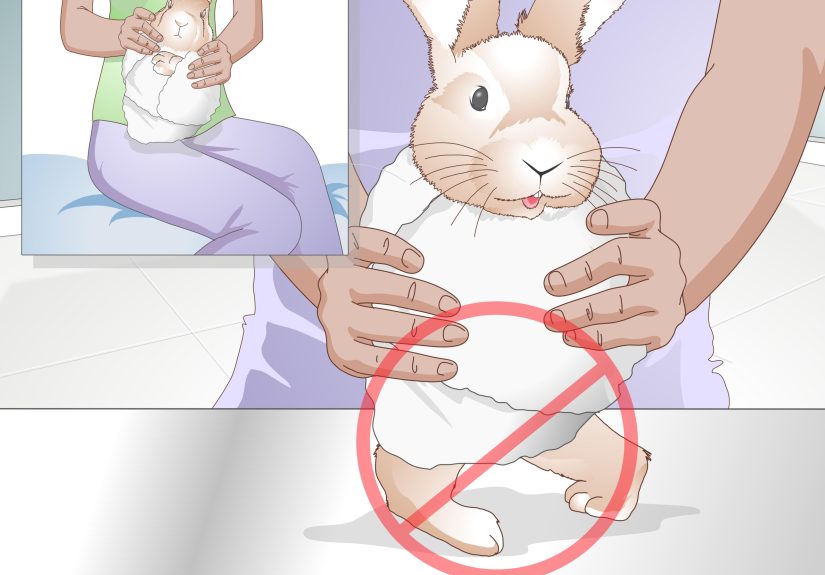
Never grab a rabbit by the ears, scruff, or legs. Support the chest and hindquarters so the rabbit feels secure. Some rabbits do best sitting normally against your body. Others are calmer when wrapped in a towel with only one foot exposed at a time. A “bunny burrito” can be helpful when done gently. The point is secure support, not over-restraint. If your rabbit seems terrified or starts twisting hard, stop and reset.
Step 4: Find the Quick Before You Clip
The quick is the blood vessel inside the nail. On light-colored nails, it usually looks pink and is easy to spot. On dark nails, it is much harder to see, which is where a flashlight becomes your best friend. Shine the light behind or under the nail and look for the darker inner area. You want to trim the tip of the nail, not the quick. When in doubt, take off less. Rabbits do not hand out awards for bravery in over-clipping.
Step 5: Start with One Paw, Not the Whole Rabbit Olympics
Expose one foot and ignore the rest for the moment. Trying to manage all four feet at once is how calm grooming turns into interpretive dance. Front feet are often easier to start with. Check each nail individually, including the small inner nail on the front feet that owners sometimes forget. That one loves to hide until it becomes a tiny curved surprise.
Step 6: Clip Only the Hooked Tip
Hold the toe gently but securely and clip just the curved tip of the nail. A small trim is enough. You do not need a dramatic chop. You are aiming for a neat shortening, not a full remodel. If the nail is dark or very long, trim in tiny increments instead of one big cut. It is much better to do two cautious trims than one heroic mistake.
Step 7: Watch Your Rabbit’s Body Language
Rabbits are excellent communicators when we stop pretending they are mysterious clouds with ears. If your bunny stiffens, grunts, kicks, pants, or struggles hard, pause. Give a moment to settle. Some rabbits tolerate one foot at a time and then need a break. That is fine. A successful rabbit nail trim does not have to mean all ten nails in one sitting. Sometimes success means doing six nails today and finishing the rest tomorrow without anyone needing therapy.
Step 8: If You Nick the Quick, Stay Calm
It happens, even to experienced owners. If a nail bleeds, do not panic and do not act like the sky has fallen. Press a cotton ball or gauze to the nail. Apply styptic powder if you have it. Cornstarch or plain flour can also help with minor bleeding. Hold gentle pressure for a bit and keep the rabbit still until it stops. The rabbit will be annoyed. You will feel guilty. Both of these reactions are normal. What matters is staying calm and making the next cut more conservative.
Step 9: Stop Before the Rabbit Reaches the “Absolutely Not” Stage
If your rabbit becomes highly stressed, stop the session. Seriously. Pushing through a full trim with a terrified rabbit often makes the next session worse. It is better to end early on a manageable note than to create a long-term battle over paw handling. Rabbits have very good memories for suspicious nonsense, and yes, nail clippers count as suspicious nonsense.
Step 10: Reward, Recheck, and Put the Next Trim on the Calendar
When you are done, give your rabbit a favorite rabbit-safe treat, gentle petting, or a little quiet time. Recheck the nails for any bleeding. Then set a reminder for the next nail check in four to six weeks. Some rabbits need trims sooner, some later, but regular checks prevent the nails from getting long and make each session easier.
How Often Should You Trim Rabbit Nails?
Most pet rabbits need a nail trim every 4 to 8 weeks, depending on age, activity level, housing, genetics, and how quickly the nails grow. Indoor rabbits often need more regular trimming because carpet and smooth flooring do not wear nails down the way rough natural surfaces might. Instead of obsessing over a perfect schedule, check the nails often. If they look long, sharp, hooked, or start changing the way the feet sit, it is time.
Common Rabbit Nail Trimming Mistakes
One of the biggest mistakes is using poor lighting. Another is trying to rush. A third is assuming the rabbit “hates nail trims” when the real issue is that the handler is moving too fast or holding the rabbit awkwardly. Other classic errors include clipping too much at once, forgetting the inner front nail, using dull tools, or waiting until the nails are dramatically overgrown.
Another important point: some older rabbit-care advice suggests placing a rabbit flat on its back for restraint. While some owners still use a supported position briefly, many veterinary sources caution that full dorsal restraint can be stressful for rabbits. A towel wrap, a helper, and minimal restraint are usually better than turning the whole experience into a bunny hostage negotiation.
When to Let a Vet or Groomer Handle It
There is zero shame in outsourcing this job. In fact, asking a rabbit-savvy veterinarian or experienced groomer for help is often the smartest move, especially if:
- Your rabbit thrashes or panics intensely
- The nails are badly overgrown or curling
- You cannot see the quick at all
- A nail is torn, bleeding heavily, or twisted
- Your rabbit has mobility issues or sore feet
- You are too nervous to clip safely
A great option is to ask your vet to demonstrate a trim during a routine visit. Watching a professional do it once can save you a lot of second-guessing later.
Practical Tips That Make Rabbit Nail Trims Easier
Handle your rabbit’s feet gently between trims so paw contact is not always associated with clippers. Keep the sessions short. Use the same calm location each time. Replace clippers when they become dull. For dark nails, good lighting is not optional; it is the difference between confidence and pure guesswork. And if your rabbit only tolerates tiny sessions, accept that. Rabbit care is less about perfection and more about consistency.
Real-World Experiences Rabbit Owners Often Have With Nail Trims
The first time many rabbit owners try to trim toenails, they imagine something simple: pick up bunny, snip snip, done in five minutes, resume being a competent adult. Then reality arrives wearing whiskers. The rabbit suddenly becomes both boneless and spring-loaded. One front paw disappears into fluff. The back feet seem to contain enough horsepower to launch a satellite. The owner, now sweating slightly, starts bargaining with a herbivore.
That early experience is incredibly common, and it teaches a useful lesson: rabbit nail trimming is not hard because the clipping itself is complicated. It is hard because rabbits are prey animals, and anything involving restraint can feel suspicious to them. Owners who get better at nail trims usually do not become faster first. They become calmer first.
One common experience is realizing that the setup matters almost more than the clipper. People often report that the trim got much easier once they stopped trying to do it on a slippery lap or a wobbly couch cushion. A stable floor, a towel, and a helper changed everything. Suddenly the rabbit was not scrambling, and the owner was not trying to grow a third hand.
Another frequent lesson is that dark nails humble everyone. Owners with rabbits who have black or brown nails often say the flashlight was the magic tool they did not know they needed. Before that, every cut felt like defusing a tiny furry bomb. Afterward, the trim still required care, but it became less about guesswork and more about patience. Trim a little, look again, breathe, repeat.
Many owners also discover that one perfect all-paws session is not the gold standard they thought it was. Some rabbits do beautifully with a full trim. Others do much better when the owner clips a few nails, takes a break, and finishes later. That shift in mindset helps a lot. Once owners stop treating the trim like an exam they must pass in one sitting, everyone relaxes.
Experienced rabbit people also talk about how much easier trims become when nails are kept short consistently. The first neglected trim is usually the hardest because the nails are long, the quick may have grown farther out, and the rabbit is not used to the routine. But once regular checks become part of life, the whole thing gets less dramatic. Not glamorous, exactly. Just less like a legal dispute.
There is also a funny emotional arc many owners describe. First comes dread. Then mild panic. Then the sudden realization that the rabbit is already back to eating hay like nothing happened while the human is still replaying every snip in their head. Rabbits are wonderfully efficient that way. They move on quickly once the strange clipping ceremony is over, especially if there is a treat involved.
Perhaps the most valuable real-world lesson is this: asking for help is normal. A lot of excellent rabbit owners learned by having a veterinarian, rescue volunteer, or experienced friend show them the technique in person. That is not failure. That is smart animal care. The goal is not to prove you can trim rabbit nails alone on your first try. The goal is to keep your rabbit comfortable, safe, and able to hop without turning every carpet thread into a personal enemy.
So if your first rabbit nail trim feels clumsy, welcome to the club. Most people start there. With practice, better timing, good lighting, and a calmer approach, what once felt like an action scene usually turns into a routine task. Not a favorite task, maybe. But routine enough that you and your rabbit can both survive it with dignity mostly intact.
Conclusion
If you want to know how to trim rabbit toenails safely, the secret is not fancy equipment or fearless hands. It is preparation, gentle handling, tiny trims, and the wisdom to stop before the situation turns into a fluffy riot. Check the nails regularly, use proper lighting, clip only the tips, and do not hesitate to call a rabbit-savvy vet when needed.
In other words, nail trims are a normal part of rabbit care. They are not glamorous. They are not especially fun. But they are one of the simplest ways to protect your rabbit’s comfort and health. And once you get the hang of it, you may even find the whole process less terrifying than a rabbit who has discovered how to chew your phone charger.