Table of Contents >> Show >> Hide
- Why Cleaning Your Tongue Matters
- Why You Gag When You Try
- Method 1: Use a Tongue Scraper the Smart Way
- Method 2: Clean Your Tongue with a Soft Toothbrush
- Method 3: Use an Alcohol-Free Mouth Rinse as the Low-Drama Backup
- Simple Tricks That Make Any Method Easier
- Mistakes That Usually Make Gagging Worse
- When a Coated or Weird-Looking Tongue Should Not Be a DIY Project
- What the Experience Is Actually Like: A Longer, Real-Life Look
- Final Takeaway
If brushing your tongue makes your eyes water, your stomach do a tiny backflip, and your soul briefly leave your body, welcome. You are not alone. Tongue cleaning sounds simple in theory, but in real life, the gag reflex often shows up like an overenthusiastic security guard: “Absolutely not. Nobody goes past this point.”
The good news is that you can clean your tongue without turning your bathroom into a low-budget disaster movie. And yes, it is worth doing. Your tongue has a textured surface with tiny bumps called papillae, which can hold onto bacteria, food debris, dead cells, and all the little leftovers your mouth would rather not advertise. That buildup can contribute to a coated tongue, bad breath, and a not-so-fresh feeling, even if your teeth are sparkling like responsible little overachievers.
But here is the important nuance: tongue cleaning is helpful, not magical. It works best as part of a bigger oral hygiene routine that includes brushing, cleaning between your teeth, staying hydrated, and seeing a dentist when something feels off. In other words, your tongue is part of the team, but it is not the entire cast.
This guide breaks down three practical ways to clean your tongue without gagging, plus the reasons gagging happens in the first place, common mistakes that make it worse, and what kind of tongue changes should send you to a dentist instead of deeper into the internet.
Why Cleaning Your Tongue Matters
Your tongue is not smooth like a countertop. It is more like a plush rug with excellent storage capacity for things you did not invite. Because of its uneven surface, it can trap odor-causing bacteria and debris, especially toward the back. That is one reason many people notice that their breath still feels stale even after brushing their teeth carefully.
A daily tongue-cleaning habit can help reduce coating, improve that “fuzzy mouth” feeling, and make breath feel fresher. Some studies suggest that mechanical cleaning, especially with a tongue scraper, may reduce tongue coating and oral malodor better than tongue brushing alone. At the same time, dental experts also note that scraping or brushing your tongue is not a permanent cure for chronic bad breath, because bacteria can come back quickly and other causes may be involved.
That balanced view is useful. Clean your tongue because it helps, not because it will instantly transform your mouth into a mint commercial filmed on a glacier.
Why You Gag When You Try
The gag reflex is a protective reflex. It exists to keep you from swallowing or choking on things your body thinks do not belong there. Very thoughtful of it. Slightly dramatic, but thoughtful.
For many people, gagging while cleaning the tongue happens because of one or more of these triggers:
- Going too far back too fast
- Using too much pressure
- Scrubbing aggressively instead of moving gently
- Using a large toothbrush head that crowds the mouth
- Strong toothpaste flavors that irritate the throat
- Trying to clean the tongue when the mouth is very dry
- Rushing, panicking, or holding your breath
That last one matters more than people think. When you tense up, your body becomes even more sensitive. Tongue cleaning works better when you move slowly, breathe through your nose, and act like this is a normal adult task instead of an extreme sport.
Method 1: Use a Tongue Scraper the Smart Way
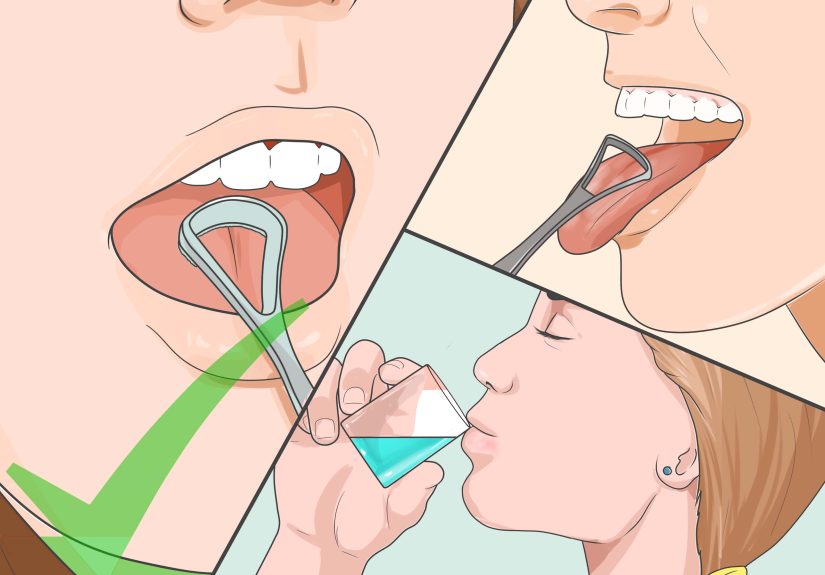
If your main goal is to remove visible coating and cut down on morning breath, a tongue scraper is usually the most efficient tool. It is simple, inexpensive, and designed to lift material off the surface of the tongue rather than just moving it around.
Why it works
A scraper gives you a broad, smooth edge that removes buildup with light pressure. Because it is not packed with bristles, many people find it feels cleaner and less chaotic than brushing the tongue with a standard toothbrush. Studies comparing methods have found that scraping can be especially helpful for reducing tongue coating and odor compounds.
How to do it without gagging
- Stick your tongue out comfortably. No need to audition for anything.
- Start in the middle of the tongue, not at the very back.
- Place the scraper gently on the tongue.
- Pull it forward toward the tip in one slow motion.
- Rinse the scraper and repeat once or twice.
- Over several days, move slightly farther back only if you stay comfortable.
The secret is gradual progress. Many people gag because they try to reach the far back on day one. That is like deciding your first jog should be a marathon. Starting mid-tongue lets your mouth get used to the sensation. Once that feels easy, you can work back a little more.
Anti-gag tips that help
- Breathe slowly through your nose during each pass.
- Exhale as you pull the scraper forward.
- Use light pressure; if it hurts, you are pressing too hard.
- Do not saw back and forth.
- Keep passes short and deliberate instead of doing one long heroic sweep.
This method is often best for people with a coated tongue, noticeable morning breath, or a strong “I want this done fast” preference.
Method 2: Clean Your Tongue with a Soft Toothbrush
If a tongue scraper feels too intense, a soft toothbrush is a great place to start. It is already in your hand, it feels familiar, and it gives you more control over where you clean.
Why it works
Dental guidance commonly recommends brushing the tongue gently as part of everyday oral hygiene. While a toothbrush may not remove coating as effectively as a scraper for some people, it can still help reduce debris and bacteria on the tongue’s surface. For many gag-prone people, “good enough and consistent” beats “perfect but never happening.”
How to do it without gagging
- Use a small-headed, soft-bristled toothbrush.
- If toothpaste flavor triggers gagging, use only a tiny amount or skip toothpaste for the tongue itself.
- Start at the front half of the tongue.
- Use small circular motions or short back-to-front strokes.
- Spit, rinse, and repeat briefly if needed.
You do not need to scrub your tongue like you are sanding a table. Gentle passes are enough. Overbrushing can irritate the surface and make the whole experience worse the next time.
How to make this easier
- Brush your tongue before your mouth fills with foamy toothpaste if that sensation bothers you.
- Try a milder toothpaste if strong mint makes you gag.
- Slow down. Fast, forceful brushing tends to trigger more gagging, not less.
- Angle the brush so you clean the tongue surface, not the throat behind it.
This method is ideal for beginners, people with sensitive mouths, and anyone who wants zero extra gadgets cluttering up the sink area.
Method 3: Use an Alcohol-Free Mouth Rinse as the Low-Drama Backup
Let us be honest: some days, putting a tool on your tongue feels deeply unreasonable. On those days, an alcohol-free mouth rinse can be the gentlest option. It is not the strongest method for removing thick tongue coating, but it can help freshen the mouth, reduce bacteria, and make your tongue feel cleaner with almost no gag risk.
Why it works
Mouth rinses can help reduce odor and bacteria in the mouth, especially when used along with brushing and flossing. They are best thought of as a supporting player, not the main character. If your tongue looks heavily coated, a rinse alone will probably not do the full job. But if your goal is a cleaner feeling without poking the back of your mouth, this is a solid compromise.
How to do it effectively
- Choose an alcohol-free rinse if your mouth tends to feel dry or stingy.
- Swish for the label-recommended time, usually around 30 seconds.
- Move the liquid around your mouth deliberately and press your tongue against the roof of your mouth, cheeks, and front teeth while swishing.
- Spit it out and follow with water only if the product directions allow it.
You can also use rinse as a stepping stone. For example, rinse first, then do one or two very light toothbrush passes on the front or middle of the tongue. That softens the experience and often reduces the urge to gag.
This is the best method for people who have a very sensitive gag reflex, are short on time, or are easing into a tongue-cleaning routine after years of avoiding it.
Simple Tricks That Make Any Method Easier
- Clean in stages. Front first, middle second, farther back later.
- Breathe through your nose. It keeps the throat calmer.
- Do it before breakfast. A full stomach and gagging are not close friends.
- Use a smaller tool. A bulky brush head can crowd the mouth.
- Hydrate first. A dry mouth often feels more sensitive.
- Keep it brief. You are cleaning your tongue, not hosting a documentary.
Mistakes That Usually Make Gagging Worse
The most common mistake is trying to copy people who seem able to scrape their entire tongue in one majestic pass like they were born for it. You do not need that energy. Most people do better with light pressure, short passes, and a slow build.
Other common mistakes include using strong mint products when flavor is a trigger, cleaning too aggressively, and assuming pain equals effectiveness. It does not. If your tongue feels raw, burned, or irritated, back off. Gentle and consistent wins this game.
When a Coated or Weird-Looking Tongue Should Not Be a DIY Project
Sometimes tongue buildup is just buildup. Sometimes it is your mouth asking for professional attention. Make an appointment with a dentist or healthcare provider if you have any of the following:
- Bad breath that does not improve with better oral hygiene
- White patches that do not wipe away
- Pain, burning, bleeding, or swelling
- Red or dark patches that persist
- A sudden change in tongue color or texture that lasts
- Dry mouth that keeps coming back
- Sores that do not heal
A white tongue can be harmless buildup, but it can also point to something like thrush or another condition. Persistent mouth symptoms deserve an actual evaluation, not just a stronger scraper and a pep talk.
What the Experience Is Actually Like: A Longer, Real-Life Look
For many people, the first experience with tongue cleaning is not glamorous. It usually begins with ambition, followed by one swipe too far back, followed by immediate regret. That is normal. The good news is that people who eventually succeed usually do not have superhero gag control. They just change the method, the pressure, and the expectations.
A very common experience is starting with a toothbrush because it feels less intimidating. The first few attempts are usually cautious. Someone brushes the front half of the tongue, survives, and decides that is enough personal growth for one morning. Then, after a few days, they notice their mouth feels less fuzzy when they wake up. Their breath is not magically perfect, but it is less “leftover sleep and mystery” and more “reasonably human.” That small win tends to keep the habit alive.
Another common experience happens with tongue scrapers. At first, people often expect the tool to be unpleasant, but many are surprised that it feels cleaner and quicker than brushing. The trick is that they do not start at the back. They begin in the middle, do one pass, rinse the scraper, and stop before the gag reflex gets offended. After a week, that middle section becomes easy. After two weeks, they can move a little farther back without drama. It is not that the reflex vanishes. It is that the person learns how not to provoke it.
There is also the psychological side. Gagging once can make you tense up the next time before the tool even touches your tongue. That anticipation is real. People often describe the biggest improvement as mental, not mechanical. Once they realize they are allowed to go slowly, use a smaller brush, skip the ultra-minty toothpaste, and do only a few seconds at a time, the routine becomes manageable instead of dreadful.
People with dry mouth often report a different experience. When the mouth feels sticky, tongue cleaning can feel rough and unpleasant. Drinking water first, using an alcohol-free rinse, and avoiding harsh products tends to make the process much easier. In those cases, the goal is not to create a squeaky-clean tongue in one session. It is to reduce coating gently without irritating already sensitive tissue.
And then there is the “I did not realize this would affect taste” group. Some people notice that food tastes brighter or cleaner after they start cleaning their tongue regularly. Others mostly notice fresher breath or less visible coating. Results vary, but the pattern is consistent: the best routine is the one you can actually tolerate and repeat.
That is the real experience in a nutshell. It is rarely dramatic. It is usually a series of small adjustments that make mornings easier. A little less coating. A little less gagging. A little more confidence when speaking close to other humans before coffee. Honestly, that is a pretty strong return on investment for something that takes less than a minute once you find your groove.
Final Takeaway
If you want to clean your tongue without gagging, do not think “harder.” Think gentler, smaller, slower, and farther forward. A tongue scraper is often the most effective for visible coating, a soft toothbrush is the easiest starting point, and an alcohol-free mouth rinse is the gentlest backup when your gag reflex is feeling especially opinionated.
The goal is not to attack your tongue. The goal is to keep your mouth cleaner in a way you can stick with every day. If your breath, coating, or tongue appearance still seems off despite a good routine, let a dentist take a look. Your tongue may be trying to tell you something more important than, “Please stop scraping like that.”
Note: This article is for informational purposes only and is not a substitute for advice from a dentist or physician. Persistent bad breath, white patches that do not wipe away, bleeding, pain, swelling, or lasting tongue color changes should be evaluated by a qualified professional.