Table of Contents >> Show >> Hide
- Why Homeowners Still Love Glass Blocks
- Choose the Right Type of Installation First
- Tools and Materials You May Need
- Step 1: Measure the Opening Carefully
- Step 2: Prepare the Opening
- Step 3: Dry-Fit Everything Before You Commit
- Step 4: Install Channels, Expansion Strips, or Anchors as Required
- Step 5: Mix Mortar or Prepare the Silicone
- Step 6: Set the First Course
- Step 7: Build Up the Installation Row by Row
- Step 8: Finish and Tool the Joints
- Step 9: Seal the Perimeter
- Step 10: Let It Cure, Then Inspect
- Common Mistakes to Avoid
- Best Places to Use Glass Blocks
- Practical Tips for a Better-Looking Finish
- Hands-On Experience: What Installing Glass Blocks Actually Feels Like
- Conclusion
Glass blocks have a funny way of making a room look both vintage and modern at the same time. One minute they are giving classic basement-window energy, and the next they are starring in a sleek bathroom remodel like they own the place. That is the charm. Glass blocks bring in light, protect privacy, handle moisture well, and add serious visual texture without asking for a velvet rope and spotlight.
If you are planning to install glass blocks, the good news is that the process is very doable when you prepare carefully, use the right system, and avoid the classic DIY mistakes that turn a clean project into a weekend-long argument with mortar. This guide walks you through the full process in plain English, with step-by-step instructions, practical examples, and real-world tips for windows, shower walls, and small partition projects.
Before we dive in, one important truth deserves its own drumroll: glass block panels are not load-bearing. In other words, they should not be asked to hold up your house, your roof, or your confidence after a bad measuring job. They need a properly prepared opening and the right anchoring or channel system for the application.
Why Homeowners Still Love Glass Blocks
Glass blocks are popular for good reason. They let daylight travel into bathrooms, basements, laundry rooms, mudrooms, and shower areas without giving neighbors a front-row ticket to your daily routine. They also hold up well in damp spaces, are easy to wipe clean, and can create a bright look in rooms that would otherwise feel boxed in.
Design-wise, glass blocks are surprisingly flexible. You can use them for a bathroom replacement window, a walk-in shower partition, a side-light feature near an entry, or a non-load-bearing divider that breaks up space without blocking light. Some blocks are more private, some are clearer, and some come in patterns, colors, frosted looks, or vented window assemblies.
Choose the Right Type of Installation First
Mortar Installation
This is the traditional method and still a strong choice for many walls and custom installations. Mortar systems typically use spacers, expansion strips, and, depending on the setup, panel anchors and reinforcement. The finished look is the familiar grid-style joint that many people picture when they think of glass block.
Mortarless or Silicone Installation
This method is often more DIY-friendly for certain projects. It usually relies on a manufacturer-specific system with spacers, channels, anchors, and glass block silicone instead of full mortar joints. It can be cleaner and faster, especially for straight walls or certain window and partition kits.
Preassembled Window Panel vs. Individual Blocks
If you are replacing a small bathroom or basement window, a preassembled glass block panel is often the simplest route. If you are building a shower wall, room divider, or custom feature, individual blocks may make more sense. The best choice depends on the opening, the size of the project, and whether the system is designed for masonry, wood framing, or a wet area.
Tools and Materials You May Need
- Glass blocks or a preassembled glass block panel
- Tape measure
- Level
- Framing square
- Shims
- Glass block mortar or manufacturer-approved glass block silicone
- Mortar spacers or silicone spacers
- Trowel
- Bucket and mixing tool
- Expansion strips, perimeter channels, anchors, or reinforcement if required by your system
- Cement board or other moisture-resistant backing for wet areas
- Caulk gun
- Waterproof silicone for perimeter sealing
- Sponge and clean water
- Safety glasses and gloves
Buy materials based on the exact installation system you are using, not on guesswork. Glass block projects go more smoothly when the spacers, anchors, sealant, and instructions all belong to the same family of products. Mixing random components is a bit like trying to build a bike with furniture hardware. Sometimes it works. Usually it becomes a story.
Step 1: Measure the Opening Carefully
Measure the width and height in several places. Use the smallest measurement if the opening is slightly out of square. Then check whether the opening is level, plumb, and square by measuring diagonally corner to corner. If the two diagonal measurements are noticeably different, the opening is not square and needs correction before you install anything.
Do not assume every glass block assembly uses the same allowance. Some systems require a different rough opening size depending on whether you are using mortar, channels, a prebuilt window panel, or a mortarless kit. The smartest move is to match your measurements to the manufacturer’s sizing chart for the exact block or panel you purchased.
Example: If you are installing a replacement bathroom window, measure the existing opening after the old trim or sash is removed, not just the visible part of the old window. Hidden framing surprises are a home-improvement tradition, but they are not one you need to keep alive.
Step 2: Prepare the Opening
Remove the old window, trim, or finish materials as needed. Scrape away loose debris, dust, old caulk, damaged mortar, and anything else that would keep the new installation from sitting flat and secure. Repair rot, crumbling masonry, water damage, or framing issues before moving on.
If you are working in a shower or other wet location, the substrate should be moisture-resistant. Cement board and proper waterproofing details matter here. A beautiful glass block wall installed over a weak or water-sensitive base is like putting expensive shoes on a collapsing floor.
If the project is going into a wood-framed opening, be careful with your method. Mortar does not bond well to wood the way it does to masonry. In wood openings, many installers prefer a preassembled panel plus a manufacturer-approved method such as channels, low-expansion foam, fiberglass insulation, and perimeter sealant, depending on the product instructions.
Step 3: Dry-Fit Everything Before You Commit
Dry-fitting means placing the blocks, panel, spacers, or channels in position without mortar or sealant first. This step tells you whether the layout works, whether the joints will stay even, and whether any small adjustment is needed before things get sticky.
For individual blocks, lay out the first course with spacers to confirm joint spacing. For a preassembled window panel, test how it sits in the opening with temporary shims. You want a centered, level fit without forcing it.
This is the moment when many problems reveal themselves early: the opening is slightly off, the sill has a dip, the block pattern needs adjustment, or the vent should really be on the left instead of the right. Better to discover that now than when your gloves are covered in mortar and your patience has left the job site.
Step 4: Install Channels, Expansion Strips, or Anchors as Required
This step depends on the system. Some mortarless installations use perimeter channels. Some mortar installations use expansion strips at the jambs and head so the panel can handle normal movement. Larger or custom walls may also require panel anchors and reinforcement embedded in horizontal joints and attached to the surrounding frame.
If you are building a shower wall or taller partition, do not skip the support accessories the instructions call for. They are not decorative extras. They help keep the wall aligned, stable, and properly integrated with the surrounding structure.
Also remember that glass block is a non-load-bearing material. The framing and support around it need to do the heavy structural lifting, literally and figuratively.
Step 5: Mix Mortar or Prepare the Silicone
If you are using a mortar system, mix glass block mortar according to the manufacturer’s directions. You want a thick, spreadable consistency, not soup and not concrete-flavored peanut brittle. Too wet, and the blocks can drift. Too dry, and the joints become harder to tool and bond properly.
If you are using a silicone system, cut the nozzle neatly, load the caulk gun, and keep all spacers and channels within reach. Silicone installation usually moves faster than mortar, but it still requires a level layout and careful alignment.
Only mix or dispense what you can work with comfortably. This is not the moment to prove you can beat the clock with a five-gallon bucket of setting mortar.
Step 6: Set the First Course
The first row is the boss of the whole installation. If it is not level, the rest of the wall or panel will spend the rest of the day trying to be crooked in increasingly creative ways.
Apply your base mortar bed or position your shims and channels as the system requires. Set the first block or the preassembled panel in place. Check for level side to side and front to back. Adjust immediately. Use spacers where required so the joints stay even.
Window example: For a replacement glass block window panel, you may set the panel on shims, center it in the opening, then secure and seal it according to the installation instructions. For a custom block wall, you will place each block one by one, checking level as you go.
Step 7: Build Up the Installation Row by Row
Continue placing blocks, adding mortar or silicone, and inserting spacers as required. Check plumb and level constantly. Not occasionally. Not when you “get a second.” Constantly. Glass blocks are unforgiving about alignment, and small errors compound quickly.
With mortar installations, embed anchors and reinforcing where the instructions specify. Some systems use anchors at the jambs and reinforcement in the same horizontal joints. Expansion strips may continue along the sides as you build. Press any squeezed-out mortar back into the joints rather than smearing it around the faces.
For mortarless systems, keep the channels, spacers, and silicone beads consistent so the blocks stay evenly spaced and secure. Do not improvise the spacing. Clean geometry is part of what makes glass block look so crisp and intentional.
Step 8: Finish and Tool the Joints
When the mortar firms up enough to hold shape, tool the joints to create a smooth, clean finish. A proper strike helps compact the joint, improves the appearance, and supports moisture resistance. Fill any small voids before final smoothing.
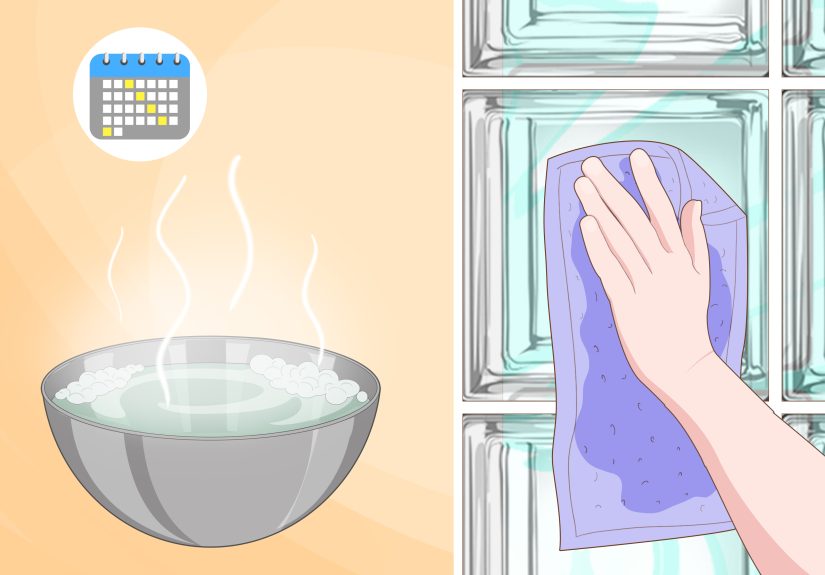
Wipe excess mortar from the glass faces with a damp sponge, rinsing often. Avoid abrasive pads or harsh scraping tools. Glass block looks tough because it is, but that does not mean it enjoys being attacked with gritty cleanup methods.
If you are using a mortarless system, follow the finishing instructions for the specific kit. Some systems call for silicone joints, while others use grout or a combination depending on the design.
Step 9: Seal the Perimeter
After the installation has set or cured as directed, seal the perimeter with a high-quality, manufacturer-approved sealant. This is especially important in exterior applications and wet spaces such as showers, bathrooms, and laundry areas.
The perimeter seal is what helps stop drafts, incidental moisture, and the slow misery of water sneaking into places it absolutely does not belong. Take your time, apply a continuous bead, and smooth it neatly.
Step 10: Let It Cure, Then Inspect
Follow the product cure times before putting the installation into full service. Do not rush the process because the wall “looks done.” A project can look finished long before it is actually ready.
Once cured, inspect for:
- Uneven joints
- Missed voids in mortar
- Loose-feeling blocks or panel movement
- Gaps in perimeter sealant
- Out-of-level lines that are easier to fix now than later
Common Mistakes to Avoid
- Skipping the dry fit: This invites layout problems you could have caught in five minutes.
- Ignoring opening condition: Rot, crumbling masonry, and out-of-square framing do not magically improve after installation.
- Using mortar directly against wood without the right system: That is asking for instability and leaks.
- Forgetting support accessories: Expansion strips, panel anchors, channels, and reinforcement exist for a reason.
- Not checking level often enough: Tiny errors become big visual problems.
- Cleaning too aggressively: Abrasive cleanup can scratch or dull the finish.
- Assuming every bathroom window can be non-vented: Some locations may require ventilation depending on local code or room conditions.
Best Places to Use Glass Blocks
- Bathroom windows: Great for privacy without sacrificing daylight.
- Basement windows: A classic choice for security and light.
- Shower partitions: They separate space while still feeling open.
- Laundry rooms: Useful in damp areas where privacy matters.
- Interior dividers: Perfect when you want light to move through a space.
If you are choosing between a standard block window and a vented unit, think honestly about airflow. A beautiful bathroom still needs to breathe.
Practical Tips for a Better-Looking Finish
Use the same block pattern throughout the installation unless you intentionally want a mixed design. Keep joint widths uniform. Work cleanly. Wipe as you go. Stand back every few rows and look at the panel from a distance, not just up close. Crooked lines are often easier to spot from six feet away than six inches away.
For shower projects, think about how the wall meets the base, curb, and adjacent wall before you lay the first block. A glass block wall should feel integrated into the bathroom, not as though it wandered in from another renovation and decided to stay.
Hands-On Experience: What Installing Glass Blocks Actually Feels Like
One of the most common experiences people have with glass block installation is underestimating how much the project depends on preparation rather than speed. At first glance, it looks simple: stack blocks, add mortar or silicone, wipe off the mess, and admire your work. In reality, the smoothest installations usually happen when the opening has been checked three times, the materials are organized in advance, and the installer accepts that the first course is going to take longer than expected.
Another real-world lesson is that glass blocks feel heavier and more awkward during the project than they do in the store or product photo. Even smaller jobs become easier with a helper, especially when setting a preassembled window panel into place. One person can hold and center the panel while the other checks level, adjusts shims, or applies support where needed. This is one of those jobs where an extra set of hands saves both time and a surprising amount of dramatic language.
Many first-time installers are also surprised by how exact the visual alignment needs to be. A wall can be structurally secure and still look slightly off if the joints wander or the first row rises even a little from one side to the other. The experienced approach is to stop often, check often, and refuse to move forward until the layout still looks right. That patience pays off. Glass block magnifies pattern, symmetry, and spacing, so neat work looks fantastic and sloppy work announces itself from across the room.
In wet-area projects, experience teaches a second important lesson: the glamorous part is the glass, but the success of the installation is often decided by the boring stuff underneath. A stable base, moisture-resistant backing, sound framing, and careful perimeter sealing matter just as much as the blocks themselves. Installers who rush past substrate prep often end up chasing leaks, cracks, or movement later. The people happiest with their finished glass block project are usually the ones who treated the invisible prep as seriously as the visible finish.
There is also a big difference between a project that is technically installed and one that looks professionally finished. The difference usually comes down to cleanup and restraint. Clean the faces gently but thoroughly. Tool the joints so they are smooth and consistent. Do not overwork the material. Do not keep poking at a joint that already looks good. Many installations improve the moment the installer stops “fixing” them and lets the materials do their job.
Finally, nearly everyone who installs glass blocks well comes away with the same opinion: the project is worth the effort because the finished result changes the feel of the room immediately. A dark bath feels brighter. A basement feels less closed in. A shower wall adds privacy without feeling bulky. The transformation is not just functional; it changes the mood of the space. That is why glass block keeps coming back. It solves practical problems, but it also gives a room personality, and that is a rare combination in building materials.
Conclusion
Installing glass blocks is not the kind of project you want to rush, but it is absolutely the kind of project that rewards careful work. Start by choosing the right system for the opening. Measure precisely. Prepare the opening like it matters, because it does. Keep the first course level, the joints consistent, and the perimeter sealed. If the project is large, custom, or tied to questionable framing, bring in a pro before the blocks become expensive décor sitting in your garage.
Done right, glass blocks can add privacy, light, and character in a way that ordinary windows and solid partitions simply cannot. And once the project is finished, you get to enjoy the rare DIY victory that is both practical and unapologetically stylish. Not bad for a material most people only remember from old rec rooms and mysterious stairwells.