Table of Contents >> Show >> Hide
- Quick Comparison: Best Wheelbarrows and Garden Carts of 2025
- How We Chose the Best Wheelbarrows of 2025
- 1. Best Overall: Jackson 6-Cubic-Foot Steel Wheelbarrow
- 2. Best Value: Best Choice Products Dual-Wheel Wheelbarrow
- 3. Best Four-Wheel Garden Cart: Gorilla Carts Heavy-Duty Poly Dump Cart
- 4. Best for Uneven Terrain: Kobalt 7-Cubic-Foot Two-Wheel Poly Wheelbarrow
- Wheelbarrow vs. Garden Cart: Which One Should You Buy?
- Buying Guide: What to Look for in the Best Yard and Garden Carts
- Practical Experience: What Using a Good Wheelbarrow Actually Feels Like
- Final Verdict: Which Wheelbarrow Should You Choose?
There are two kinds of people in spring: those who casually buy three bags of mulch, and those who somehow end up hauling enough soil to build a small kingdom. Either way, the right wheelbarrow can save your back, your weekend, and possibly your relationship with yard work.
The best wheelbarrows of 2025 are not all the same old metal tubs with one wobbly wheel and handles that feel like medieval punishment devices. Today’s top yard and garden carts include rugged steel workhorses, lightweight two-wheel hybrids, high-capacity dump carts, and stable poly models designed for uneven lawns, gravel paths, raised beds, and big landscaping jobs.
After comparing current expert testing, retailer specifications, manufacturer details, gardening ergonomics guidance, and real-world performance patterns, four models stand out for American homeowners: the Jackson 6-cubic-foot steel wheelbarrow, the Best Choice Products dual-wheel wheelbarrow, the Gorilla Carts heavy-duty poly dump cart, and the Kobalt 7-cubic-foot two-wheel poly wheelbarrow.
This guide breaks down what each one does best, who should buy it, and how to choose the right wheelbarrow or garden cart without accidentally adopting a garage-sized lawn beast you only use twice.
Quick Comparison: Best Wheelbarrows and Garden Carts of 2025
| Pick | Best For | Capacity | Wheel Setup | Material |
|---|---|---|---|---|
| Jackson 6-cu ft Steel Wheelbarrow | Best overall heavy-duty wheelbarrow | 6 cubic feet | Single wheel | Steel tray, hardwood handles |
| Best Choice Products Dual-Wheel Wheelbarrow | Best value for homeowners | 5 cubic feet | Two pneumatic wheels | Steel frame, polyurethane tray |
| Gorilla Carts Heavy-Duty Poly Dump Cart | Best four-wheel garden cart | About 6 cubic feet on larger models | Four pneumatic wheels | Steel frame, poly bed |
| Kobalt 7-cu ft Two-Wheel Poly Wheelbarrow | Best for uneven terrain and big loads | 7 cubic feet | Two 16-inch pneumatic wheels | High-density poly tray, steel handles |
How We Chose the Best Wheelbarrows of 2025
A wheelbarrow should do one basic job very well: move stuff without making you regret owning a yard. But “stuff” can mean different things. Mulch is light but bulky. Gravel is small but brutally heavy. Wet soil behaves like chocolate pudding with a gym membership. Firewood stacks awkwardly. Potted plants tip over when they sense weakness.
To narrow the list, we compared wheelbarrows and yard carts based on five practical factors:
Capacity and Load Handling
Most homeowners do well with a 4- to 7-cubic-foot wheelbarrow. A smaller cart is easier to store and steer, while a 6- or 7-cubic-foot model reduces trips when moving mulch, compost, topsoil, leaves, or garden debris. Capacity matters, but so does how stable the load feels once the tray is full.
Wheel Design
A single-wheel wheelbarrow is more nimble around shrubs, fences, tight beds, and narrow side yards. Two-wheel wheelbarrows are more stable and beginner-friendly, especially when the load gets lopsided. Four-wheel garden carts require less lifting and are excellent for hauling, though they can be harder to dump completely or turn sharply.
Tray Material
Steel trays are durable and better for gravel, concrete mix, stones, and rough landscaping work. Poly trays resist rust, weigh less, and are easier to rinse clean. The trade-off is that some plastic tubs can flex under very heavy loads, so frame support matters.
Handle Comfort
Classic hardwood handles are tough and familiar, but comfort grips and loop-style handles can make a big difference during long yard sessions. If your hands complain before your back does, handle design is not a luxury. It is diplomacy.
Real-World Maneuverability
Good wheelbarrows roll smoothly over grass, mulch, compacted dirt, roots, and uneven surfaces. Pneumatic tires usually provide better cushioning on rough terrain, while flat-free tires reduce maintenance. For many homeowners, the sweet spot is not the biggest wheelbarrow; it is the one they can control when it is full.
1. Best Overall: Jackson 6-Cubic-Foot Steel Wheelbarrow
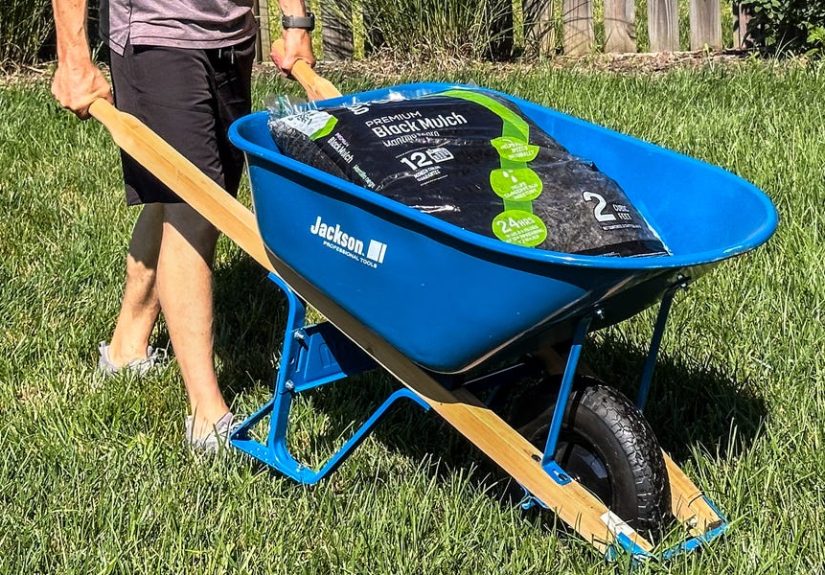
The Jackson 6-cubic-foot steel wheelbarrow is the classic workhorse of the group. It is the model you want when your weekend project involves gravel, soil, compost, mulch, or anything that makes a lighter cart whisper, “Please be gentle.”
Its 6-cubic-foot steel tray provides enough room for serious yard work without becoming absurdly oversized. The steel construction gives it the rugged feel many homeowners and DIY landscapers prefer for heavy materials. A reinforced undercarriage and sturdy handles help it feel planted when loaded, while the single front wheel keeps it agile around garden beds and narrow paths.
Why It Stands Out
The biggest advantage of the Jackson is control. A single-wheel design can feel tippy for beginners, but it also allows tight turns that two-wheel and four-wheel carts cannot match. If you need to snake through landscaping, move around shrubs, or dump mulch precisely around flower beds, this kind of wheelbarrow shines.
It is especially useful for heavier materials such as gravel, stones, and cement mix. Steel trays are not immune to scratches or rust, but they are better suited than lightweight plastic tubs for rough, abrasive loads.
What to Keep in Mind
This is not the lightest wheelbarrow. You need enough upper-body strength to lift and balance a loaded single-wheel model. If you prefer maximum stability over maneuverability, a two-wheel option may feel friendlier.
Also, steel should be stored properly. If rainwater sits in the tray for weeks, rust can become an uninvited roommate. Rinse it, dry it, and store it in a shed or garage when possible.
Best For
Choose the Jackson if you want a durable, traditional wheelbarrow for heavy-duty yard work, landscaping projects, mulch, gravel, and jobs that require tight steering.
2. Best Value: Best Choice Products Dual-Wheel Wheelbarrow
The Best Choice Products dual-wheel wheelbarrow is the friendly neighborhood option: approachable, stable, reasonably priced, and not trying to become a construction vehicle. For many homeowners, that is exactly the point.
With a 5-cubic-foot tray, a steel frame, polyurethane tub, padded handlebar, and two pneumatic wheels, this model blends wheelbarrow and garden cart features. It is lighter than many traditional steel wheelbarrows and easier to balance, making it a strong choice for routine garden chores.
Why It Stands Out
The dual-wheel design makes the cart more stable than a single-wheel wheelbarrow. That is helpful when carrying mulch bags, potting mix, small plants, leaves, or compost across a bumpy lawn. The two wheels reduce the side-to-side wobble that makes some users nervous when hauling a full load.
The handlebar is also a major plus. Instead of two separate handles, it uses a cart-style grip that gives you more hand positions and a more relaxed pushing posture. If you have ever wrestled a traditional wheelbarrow and felt like it was trying to escape into the hydrangeas, this design may feel refreshing.
What to Keep in Mind
Two wheels improve stability but reduce nimbleness. This cart will not pivot as sharply as a single-wheel steel model. It is best for general lawn and garden tasks rather than precision dumping in tight landscaping beds.
It is also designed for residential use, not daily contractor abuse. For gravel-heavy work or mixing concrete, a steel wheelbarrow is the safer bet.
Best For
Pick the Best Choice Products dual-wheel wheelbarrow if you want an affordable, easy-to-handle yard cart for mulch, soil bags, weeds, flowers, patio cleanup, and everyday garden chores.
3. Best Four-Wheel Garden Cart: Gorilla Carts Heavy-Duty Poly Dump Cart
The Gorilla Carts heavy-duty poly dump cart is what happens when a wagon starts lifting weights and gets serious about landscaping. It is not a traditional wheelbarrow, but for many homeowners, it may be more useful.
Gorilla Carts are known for their steel frames, rust-resistant poly beds, pneumatic tires, and quick-release dump mechanisms. The four-wheel setup spreads the load across the cart, so users do not have to lift the full weight like they would with a one-wheel wheelbarrow.
Why It Stands Out
The biggest benefit is stability. Four wheels make the cart easier to pull or push with heavy loads, especially across grass, gravel, and uneven ground. The dump feature allows the bed to tilt, helping unload mulch, soil, leaves, and other loose materials.
This style is excellent for people who want less lifting. It is also helpful for hauling bulky items: bags of garden soil, firewood, large planters, tools, branches, or even the random collection of things that appears during a garage cleanout.
What to Keep in Mind
A four-wheel dump cart is not as nimble as a single-wheel wheelbarrow. It needs more room to turn, and it may not fully empty every load without a little rake assistance. That is not a deal-breaker for mulch or leaves, but it matters more with gravel or wet soil.
Pneumatic tires also require occasional inflation. A bike pump can usually handle the job, but flat tires have a special talent for revealing themselves exactly when you are already sweaty.
Best For
Choose the Gorilla Carts dump cart if you want maximum stability, easier hauling, a rust-resistant tub, and a cart that handles big seasonal cleanups without demanding heroic lifting.
4. Best for Uneven Terrain: Kobalt 7-Cubic-Foot Two-Wheel Poly Wheelbarrow
The Kobalt 7-cubic-foot two-wheel poly wheelbarrow is built for homeowners who look at a big mulch pile and say, “One trip? No. Fewer trips? Absolutely.”
Its 7-cubic-foot high-density poly tray gives it the largest capacity among the four picks. The two-wheel design adds stability, while the 16-inch pneumatic tires help it roll over rough grass, uneven soil, and small obstacles more smoothly than smaller-wheel carts.
Why It Stands Out
The Kobalt is all about confident hauling. The wide stance and dual wheels make it feel more stable with larger loads, especially when the material shifts. That matters with mulch, compost, damp leaves, and topsoil, which rarely sit politely in one place.
The poly tray keeps the overall weight manageable and resists rust. Steel handles with grips improve control, and the large wheels help absorb bumps across imperfect yards. If your lawn has slopes, roots, ruts, or “mystery terrain,” this model deserves attention.
What to Keep in Mind
Large capacity can be a blessing or a trap. Just because the tray can hold a mountain of wet soil does not mean your shoulders will send a thank-you card. Load heavy materials in smaller amounts, especially on slopes.
Like other two-wheel models, the Kobalt is less nimble in tight spaces. It is better for hauling larger loads across open areas than making surgical mulch drops between delicate plants.
Best For
Pick the Kobalt if you need a spacious, stable wheelbarrow for uneven terrain, larger yards, mulch projects, compost hauling, and homeowners who prefer two-wheel confidence over single-wheel agility.
Wheelbarrow vs. Garden Cart: Which One Should You Buy?
The best choice depends on your yard, your body, and your projects. A traditional wheelbarrow is better for dumping precisely, pivoting around tight spaces, and handling construction-style materials. A garden cart is better for stability, bulky loads, and reducing lifting strain.
Choose a Wheelbarrow If:
- You need to dump mulch or soil into specific garden beds.
- You work around narrow paths, shrubs, fences, or tight corners.
- You haul gravel, stones, concrete mix, or heavy landscaping materials.
- You are comfortable lifting and balancing part of the load.
Choose a Garden Cart If:
- You want better stability with less lifting.
- You often move potted plants, tools, branches, firewood, or soil bags.
- You prefer pulling or pushing a wagon-style cart.
- You have a larger yard with open paths and fewer tight turns.
Buying Guide: What to Look for in the Best Yard and Garden Carts
1. Match Capacity to Your Actual Yard
A 7-cubic-foot wheelbarrow sounds impressive until you have to store it in a garage already occupied by bikes, holiday bins, and one mysterious folding chair. Small yards usually need 4 to 5 cubic feet. Medium and large yards often benefit from 6 to 7 cubic feet.
2. Think About Your Terrain
For flat lawns and paved paths, almost any good wheelbarrow will do. For slopes, roots, gravel, or uneven soil, look for large pneumatic tires and a stable frame. Two-wheel models are helpful if the ground is unpredictable.
3. Choose Steel for Tough Loads
Steel trays are best for abrasive or heavy materials. If your projects include gravel, stones, bricks, or concrete mix, steel is your friend. It may scratch, but it is less likely to flex under punishing loads.
4. Choose Poly for Lighter Weight and Rust Resistance
Poly trays are great for mulch, compost, leaves, potting soil, weeds, and plants. They are easier to rinse and will not rust. Just avoid treating a lightweight poly cart like a dump truck unless the frame is built for it.
5. Do Not Ignore Handles
Comfortable grips matter. A padded loop handle can feel easier for casual garden work, while traditional two-handle designs give excellent dumping control. If possible, test the handle height and grip before buying.
6. Store It Like You Want It to Last
Wheelbarrows are low-maintenance, not no-maintenance. Rinse the tray after messy loads, keep the axle moving smoothly, inflate pneumatic tires when needed, and store the cart out of harsh weather. Leaving a wheelbarrow outside year-round is basically asking rust and sun damage to form a committee.
Practical Experience: What Using a Good Wheelbarrow Actually Feels Like
A good wheelbarrow changes the rhythm of yard work. Without one, every project becomes a series of awkward carries: one bag of mulch at a time, one planter hugged against your shirt, one bucket of gravel swinging against your knee like a tiny wrecking ball. With the right cart, the job becomes organized. Load, roll, dump, repeat. It will not make spreading mulch glamorous, but it can make it feel less like punishment for owning flower beds.
For small weekend jobs, a lightweight dual-wheel wheelbarrow often feels like the most pleasant choice. Imagine refreshing two raised beds with compost. You load a few bags, roll across the lawn, and stop beside the bed without fighting for balance. The two wheels keep the tray steady while you shovel. The handlebar gives you a comfortable grip, and the whole process feels manageable. This is where the Best Choice Products model makes sense: not extreme, not fancy, just easy.
For heavier landscaping, the experience is different. Load gravel into a flimsy cart and you immediately learn new vocabulary, most of it unsuitable for polite garden blogs. A steel wheelbarrow like the Jackson feels more serious. It is heavier before you even load it, but that weight can help it feel planted. When you lift the handles, you sense the load clearly. When you steer, the single wheel lets you pivot around beds and dump exactly where you want. It asks more from your arms, but it rewards control.
A four-wheel garden cart feels best when the task is repetitive hauling. Moving firewood from the driveway to the backyard, cleaning storm branches, transporting bags of soil, or dragging tools to a fence repair all become easier when the load sits on four wheels. The Gorilla-style dump cart does not require you to balance the whole thing in midair. You pull, guide, and dump. It is less elegant in tight flower beds, but for big open-yard chores, it feels like hiring a quiet assistant who never complains unless the tires need air.
The Kobalt-style two-wheel poly wheelbarrow sits between these worlds. It gives more capacity than many homeowner carts and more stability than a traditional single-wheel model. In a yard with slopes or uneven patches, that stability is comforting. You can pile in mulch or leaves and roll without feeling every tiny shift in the tray. The trade-off appears near shrubs, corners, and narrow walkways, where the wider wheel stance needs more space.
One underrated lesson: the best wheelbarrow is not always the one with the highest listed weight capacity. Wet soil gets heavy fast. Gravel gets heavy immediately. Mulch looks huge but weighs less. A wise gardener loads based on material, not ego. Your back does not care that the spec sheet says the cart can carry hundreds of pounds. Your back cares that you still have to steer, stop, turn, and dump it.
Another practical detail is cleanup. Poly trays rinse easily after compost, grass clippings, or wet leaves. Steel trays may need more attention, especially if scratched. If you use a steel wheelbarrow for damp soil, empty it fully and store it dry. If you use a poly cart for mulch, a quick hose rinse usually returns it to civilized condition.
Finally, think about storage before buying. A big cart is wonderful in April and annoying in December if it blocks the snow shovel, bikes, or garage door. Measure the storage space first. Future you, standing in a crowded garage holding a rake and questioning every purchase decision, will appreciate it.
Final Verdict: Which Wheelbarrow Should You Choose?
The best overall wheelbarrow for 2025 is the Jackson 6-cubic-foot steel wheelbarrow because it offers the strongest balance of durability, control, and traditional hauling power. For most casual homeowners, the Best Choice Products dual-wheel wheelbarrow is the best value because it is stable, comfortable, and affordable. If you want less lifting and more hauling stability, the Gorilla Carts heavy-duty poly dump cart is the best four-wheel garden cart. For big loads and uneven terrain, the Kobalt 7-cubic-foot two-wheel poly wheelbarrow is the standout choice.
The smart move is to buy for the work you actually do. If your yard projects involve mulch, flowers, and seasonal cleanup, choose comfort and stability. If you regularly haul gravel, stone, or heavy soil, choose strength and control. The right wheelbarrow will not make weeds pull themselves, sadly, but it will make the rest of the job a whole lot easier.
Note: This article synthesizes current U.S. product testing, retailer specifications, manufacturer details, and gardening ergonomics guidance to provide original buying advice for publication.