Table of Contents >> Show >> Hide
- What Is Rethink Design Studio, Exactly?
- The Big Idea: “Interior Branded Environments”
- Signature Style: Modern Comfort With Historic Respect
- Case Study: A Historic Savannah Row House, Reimagined
- Case Study: Designing a Landmark Home Without Losing Its Soul
- Commercial Work: Where Interiors Become Marketing
- Services You’ll Commonly See Associated With the Studio
- Why Savannah Is a Perfect Backdrop for This Kind of Work
- How to “Rethink” Your Own Space Like a Pro
- Asher + Rye and the Studio Ecosystem
- What Sets Rethink Design Studio Apart
- Real-World Experiences: What Working With a Studio Like Rethink Can Feel Like (Approx. )
- Conclusion
Some design firms “decorate.” Others renovate. And then there are studios like Rethink Design Studio that treat a space like a story:
the architecture is the plot, the people are the characters, and every finish is a line of dialogue. If that sounds dramatic… good. Homes and businesses
deserve a little dramapreferably the kind with great lighting and zero plot holes.
Based in Savannah, Georgia, Rethink Design Studio is known for an interior architectural approach that blends
historic respect with modern livability. Their work has shown up in everything from richly layered historic homes to
commercial spaces where the “brand” isn’t just a logoit’s something you can feel the second you walk through the door.
What Is Rethink Design Studio, Exactly?
At its core, Rethink Design Studio is an interior design studio with a strong architectural backbone. That means they don’t only
focus on “pretty”they focus on how the space works, how it flows, and how it supports day-to-day life. In practice, this often
includes a mix of interior architecture, space planning, custom built-ins, lighting,
and furniture design, plus project coordination that keeps the chaos from moving in before you do.
The studio has also been associated with a distinctive idea: interiors should express personalitywhether that personality belongs to a family, a boutique,
or a restaurant with a line out the door. In other words, a space isn’t finished when it’s photogenic; it’s finished when it feels like you.
The Big Idea: “Interior Branded Environments”
One of the most useful ways to understand Rethink Design Studio is through their emphasis on branded interiorsspaces where design choices reinforce
identity. That could mean aligning colors, materials, and layout with a company’s brand values, or translating a homeowner’s style into a cohesive
environment that still feels human (not like a furniture showroom that whispers, “Please don’t sit on me.”).
Branding Isn’t Just GraphicsIt’s a Feeling
Traditional “branding” often lives in marketing assets: logos, menus, signage, websites. Rethink’s approach pushes branding into the physical world.
Think of it as a three-dimensional brand experience: the texture under your fingertips, the glow of the fixtures, the rhythm of the layout, and even how
the space invites you to move (or linger).
Why This Matters for Homes, Too
Homes also have “brands,” even if they don’t have a font family. A home’s identity can be shaped by the era it was built, the city around it, and the
lives unfolding inside it. Rethink’s work often highlights that identity rather than erasing itespecially in Savannah, where architectural history isn’t
just a detail; it’s the main character.
Signature Style: Modern Comfort With Historic Respect
Rethink Design Studio has been described as adding an “urban” edge to “lowcountry” livingan approach that can translate into crisp silhouettes, bold
contrast, and modern pieces layered into older architectural shells. It’s a style that says: “Yes, we love crown molding. No, we will not live like it’s
1885.”
A Scandinavian-Influenced Lens
In some of their published projects, the studio has pointed to Scandinavian design principles: clean lines, warm natural materials, and a focus on
function. The result is often minimalism with a pulsesimplified forms balanced by texture (wood, brass, leather, linen), so the space feels calm but
never cold.
Color With a Point of View
If you’re expecting “safe beige,” you may want to sit down. Rethink projects have been recognized for color used strategicallysometimes as a bridge
between rooms, sometimes as a signature moment that gives a historic home a modern heartbeat.
Case Study: A Historic Savannah Row House, Reimagined
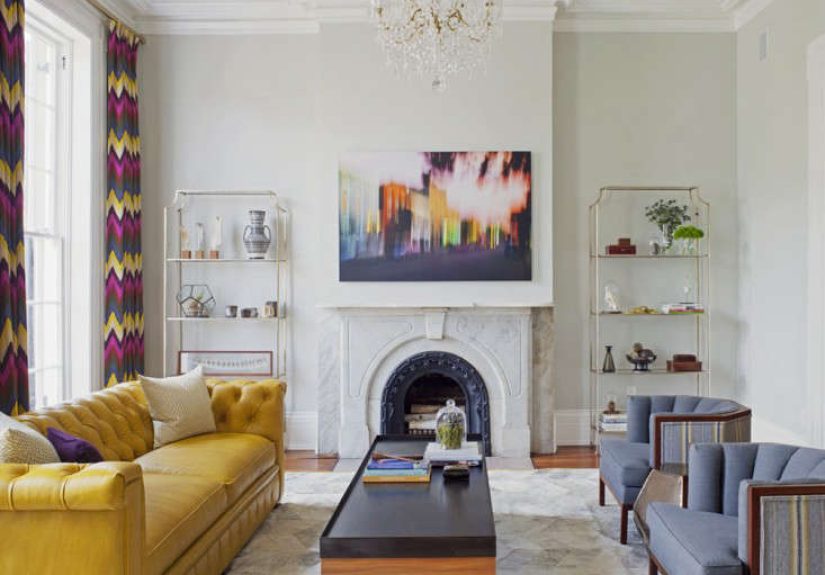
One widely shared example of Rethink Design Studio’s approach is a renovation of an 1850s Savannah row house where the goal wasn’t to
sterilize the past, but to bring it into conversation with the present. Original details like fireplaces, hardwood floors, and traditional trim became the
“canvas,” while new color and furnishings added personality.
The Feather Motif: A Lesson in Flow
In the renovation story, a feather-inspired mural in the foyer served as a design anchorhelping create continuity across multiple floors and rooms with
varying palettes. This is a great example of how a single concept (a motif, a material, a color family) can do heavy lifting: it connects spaces without
forcing them to match like identical twins in a holiday photo.
Mixed-Period Done Right
The project is also a reminder that “eclectic” doesn’t mean random. Mixed-period design works when there’s a logic underneathrepeat a finish, echo a
shape, carry a tone. Rethink’s approach shows how historic bones can support modern choices without feeling like the house is having an identity crisis.
Case Study: Designing a Landmark Home Without Losing Its Soul
Another published Savannah project focused on a prominent historic residence where the goal was a more livable interior while maintaining respect for the
home’s heritage. Here, the studio leaned into a restrained, modern aestheticusing warmth and materiality (like wood and brass) to keep the minimalism
grounded.
Custom Elements as “Quiet Luxury”
In high-end historic renovations, custom design often becomes the bridge between old and new. Instead of fighting the architecture, custom cabinetry,
shelving, or metalwork can be tailored to fit the home’s proportionsso modern function slips in like it belongs there. Done well, it doesn’t scream for
attention. It just works (and then your guests ask, “Where did you buy that?”).
Commercial Work: Where Interiors Become Marketing
Rethink Design Studio has been linked to commercial spaces in Savannah where the interior experience supports the business identity. Restaurants are a
perfect example because they depend on atmosphere: the space should reinforce the menu, the service style, and the clientelewithout turning dinner into a
theme park ride.
Restaurants and Hospitality
Some coverage connects Rethink with restaurant environments described as having urban flair and a dark, sophisticated paletteillustrating how material
choices (blackened metals, brass tones, moody finishes) can signal a vibe before the first bite arrives. In hospitality, the design is part of the “taste.”
Retail and Boutique Identity
For boutiques and specialty retail, a branded interior can guide how customers browse and what they remember. Layout, display moments, lighting, and
texture can all reinforce brand positioningwhether it’s “modern luxury,” “curated vintage,” or “you walked in for soap and somehow bought a chair.”
Services You’ll Commonly See Associated With the Studio
While every studio evolves over time, Rethink Design Studio is frequently described as offering a broad, interdisciplinary mixuseful for projects where
you want one coherent vision rather than five separate vendors politely arguing about paint undertones.
Residential Interior Design
- Space planning and layout improvements
- Kitchen and bathroom design (often the “high-stakes” rooms)
- Custom built-ins, cabinetry, and storage solutions
- Lighting plans that prioritize both function and mood
- Furnishings, textiles, and finishes that feel cohesive
Commercial Interior Design
- Branded interior environments for restaurants, retail, and hospitality
- Material and finish selections aligned with brand identity
- Custom furniture and feature moments that become “the photo”
- Design coordination that supports schedules and approvals
Construction & Project Coordination
Design is only half the story; execution is the part where budgets, timelines, and real-world constraints enter like uninvited guests. Studios known for
construction management or close contractor coordination can reduce the “telephone game” problemwhere your vision gets lost somewhere between a sketch and
a shipment of the wrong tile.
Why Savannah Is a Perfect Backdrop for This Kind of Work
Savannah is a design playground with rules. Historic districts, architectural heritage, and older building stock create constraintsyet those constraints
also produce the most interesting opportunities. When you work inside an older home, you’re collaborating with original details, imperfect walls, and
surprises behind plaster (some charming, some… less so).
A studio that understands preservation-minded renovation can make modern life fit into older shells: better storage, smarter layouts, updated lighting, and
finishes that respect the home’s era without cosplaying as a museum.
How to “Rethink” Your Own Space Like a Pro
You don’t need a full renovation to borrow the studio mindset. Here are a few principles that show up in Rethink-style projectsand translate well to
real homes and real budgets.
1) Start With the Bones, Not the Throw Pillows
Before selecting décor, evaluate what’s structural: traffic flow, lighting, storage, and proportions. If the layout is fighting you, no amount of cute
accessories will fix it. (Accessories are not therapy. They are accessories.)
2) Pick a Concept That Can Travel Room to Room
A single motifcolor family, material, shape languagecan unify a whole home. The concept doesn’t have to be obvious; it just needs to be consistent.
3) Blend Old and New With Intention
In historic homes, honor original details by giving them breathing room. Let a fireplace be a focal pointthen bring in modern elements that contrast,
not compete. Contrast creates energy; competition creates clutter.
4) Treat Lighting Like the Lead Actor
Great interiors are rarely “one light fixture and hope.” Layer lighting: ambient, task, and accent. Then add dimmers, because nothing says “I thought this
through” like being able to turn the mood from “workday” to “wine night” with one slide.
Asher + Rye and the Studio Ecosystem
In Savannah’s design scene, the line between studio and showroom can be beautifully blurred. Coverage of the local design district has connected Rethink
Design Studio with Asher + Rye, a retail/shop concept reflecting Scandinavian-inspired tastescurated home goods, textures, and pieces that
match the studio’s material-forward sensibility.
For clients, this kind of ecosystem can be helpful: it makes sourcing more cohesive and allows the design vision to be supported by real, tactile options.
And for the rest of us? It’s a reminder that “shopping” can be research. (Yes, that’s what we’ll call it. Research.)
What Sets Rethink Design Studio Apart
Plenty of talented designers can create a beautiful room. Rethink Design Studio stands out in published descriptions for a few repeatable themes:
interdisciplinary thinking, respect for architectural context, and the ability to translate identity into space.
Interdisciplinary Design
When a studio works across interior architecture, furniture, lighting, and branding, the results can feel unusually “whole.” Instead of patchwork, you get
an integrated environmentwhere the details support the big idea.
Confidence With Complexity
Historic renovations, hospitality projects, and full-home transformations are complicated. The more complicated a project gets, the more valuable it is to
have a studio that can coordinate details and keep the vision consistent from concept to install.
Real-World Experiences: What Working With a Studio Like Rethink Can Feel Like (Approx. )
If you’ve never worked with an interior design studioespecially one tied to renovation and constructionhere’s the honest truth: it can feel like equal
parts creative adventure and organized logistics. And that’s a good thing. The “experience” isn’t just picking fabrics; it’s navigating decisions that
affect daily life for years.
The Early Stage: Discovery (A.K.A. “Tell Us How You Actually Live”)
Many clients describe the first phase as surprisingly personalin a practical way. A good studio will ask questions you didn’t expect: Where do shoes
land when you walk in? Do you cook like a chef or like someone who considers cereal “meal prep”? Do you host frequently? Do you need quiet corners? This
is where the studio’s “rethinking” shows up: they’re not just designing a room; they’re designing routines. The goal is to make the space feel tailored
rather than generic.
The Middle: Decisions Multiply (But So Does Clarity)
Once the concept is setpalette, materials, layout logicchoices begin to stack up: tile, hardware, lighting, furniture silhouettes, textiles, paint
sheens, and all the tiny details that no one warns you about until you’re googling “brass vs. unlacquered brass” at midnight. This stage can feel
intense, but it’s also where a studio earns its keep. Instead of you making isolated decisions, the studio helps you make connected decisions so
the final result feels cohesive.
Renovation Reality: The Part Where the Walls Talk Back
In older homesespecially in a historic citysurprises are common. Floors slope, walls aren’t square, and something behind the plaster may be charming…
or may require a contractor with a very calm face. A studio experienced in renovation coordination can help keep momentum: adjusting plans, communicating
updates, and finding solutions that protect both the design and the budget. Clients often appreciate when a design team can translate contractor-speak into
human language without losing nuance.
The Install: When It Finally Looks Like the Renderings (And Everyone Breathes Again)
The reveal phase is where the magic becomes visible. If the studio has coordinated furnishings, built-ins, and finish selections, the install can feel
like watching a story resolve: the “why” behind earlier choices suddenly makes sense. A bold wall color that seemed risky becomes the perfect backdrop.
Custom metalwork that looked minimal on paper becomes the defining texture. And the best part: the space feels not only beautiful but usablea
room that supports real life, not just photos.
Afterward: The Unexpected Win
A well-designed space often changes behavior. People cook more because the kitchen works. They host more because circulation makes sense. They feel calmer
because the lighting isn’t fighting them. This is the subtle payoff that shows up again and again in client stories: design doesn’t just alter a roomit
reshapes how you experience your day.