Table of Contents >> Show >> Hide
- Before You Copy-Paste a Pretty Mudroom: The 3 Things That Matter Most
- 40 Mudroom Ideas (Small to Large) That Actually Work
- Small-Space Mudroom Ideas (Yes, Even If You “Don’t Have One”)
- 1) A “mini mudroom wall” with hooks + a slim bench
- 2) Pegboard for a customizable drop zone
- 3) Floating bench to keep a tight entryway feeling open
- 4) Tilt-out shoe storage cabinet for narrow halls
- 5) Back-of-door organizers for the stuff that multiplies
- 6) Corner bench + corner shelves
- 7) Closet conversion with cubbies and a hanging bar
- 8) A “key and mail landing strip” shelf
- 9) Fold-down wall seat for ultra-tight spaces
- 10) Mirror + hooks combo (small space, big payoff)
- 11) Stackable labeled baskets for each person
- 12) Under-stair mudroom nook
- Medium-Size Mudrooms (The Sweet Spot for Busy Homes)
- 13) Built-in bench with shoe cubbies underneath
- 14) Locker-style cubbiesone per person
- 15) Double hook rows (adult height + kid height)
- 16) Upper cabinets for seasonal overflow
- 17) Deep drawers for hats, gloves, and “misc.”
- 18) Open shelves with matching bins for a tidy “visual rhythm”
- 19) A built-in charging station for phones and devices
- 20) Chalkboard or whiteboard calendar wall
- 21) Key hooks + mail sorter = less daily chaos
- 22) Mudroom + laundry combo with a folding counter
- 23) Utility sink or handwashing station
- 24) Boot tray “wet zone” with a drip-proof surface
- 25) Layered rugs: outdoor mat + washable runner
- 26) Durable flooring that laughs at mud
- Style Upgrades That Don’t Break the Function
- 27) Statement wallpaper on the hook wall
- 28) Dark paint that hides dirt (and looks dramatic in a good way)
- 29) Beadboard or wainscoting for a classic “mudroom armor”
- 30) Tile wainscoting behind the bench
- 31) Built-in window seat with storage below
- 32) Glass-front uppers for “pretty storage”
- 33) Repurpose a vintage dresser as a shoe-and-keys station
- 34) A hall tree for instant structure (especially in rentals)
- 35) Industrial pipe hooks and shelves for a tough, utilitarian vibe
- 36) A door that hides the mess (barn door, pocket door, or just a solid door)
- Large Mudroom Ideas (When You’ve Got Room to Go Full Luxury)
- 37) A built-in desk or “command center” nook
- 38) Pet washing station or dog shower
- 39) Ventilated sports gear storage
- 40) A true pass-through mudroom with zones
- Design Details That Make These Ideas Work Better
- Common Mudroom Mistakes (So You Don’t Build a Beautiful Problem)
- of Real-Life “Mudroom Lessons” Homeowners Tend to Learn
If your house had a bouncer, it would be the mudroom. It’s the spot that politely (or not) tells the outside world: “Shoes off. Wet coats here. Mystery backpack contents… absolutely not in the living room.” Whether you have a full room with cabinetry and a sink or a tiny sliver of wall by the door, a smart mudroom setup can make your home feel calmer, cleaner, and weirdly more expensiveeven if it’s mostly hooks and a very determined boot tray.
This guide pulls together practical, real-home ideasfrom compact “mini mudrooms” to full-blown locker wallsso you can build an entryway that works for your space, your routine, and your tolerance for clutter.
Before You Copy-Paste a Pretty Mudroom: The 3 Things That Matter Most
1) Traffic flow (aka “don’t design a shoe pile bottleneck”)
Start with the path people actually take. A mudroom should be easy to enter, drop stuff, and move onwithout turning sideways like you’re squeezing past strangers on a subway. If space is tight, go vertical (hooks, shelves, wall bins). If space is generous, zone it (coats here, shoes there, bags over there).
2) The “dirty-to-clean” strategy
Good mudrooms handle mess in layers: a doormat outside, another inside, then a durable floor and a dedicated “wet zone” for boots, umbrellas, and dog paws. Think of it as a mini airlock for your home’s cleanliness.
3) Open vs. closed storage (your sanity depends on this)
Open storage is fast and easybut it looks messy fast. Closed storage hides chaos, but it needs a system so it doesn’t become a junk drawer with cabinet doors. Most homes do best with a mix: open hooks for daily grab-and-go, plus baskets/doors/drawers for the visual clutter.
40 Mudroom Ideas (Small to Large) That Actually Work
Small-Space Mudroom Ideas (Yes, Even If You “Don’t Have One”)
1) A “mini mudroom wall” with hooks + a slim bench
Pick one wall near your main entry and commit. Add 4–6 sturdy hooks, a narrow bench, and a shoe shelf underneath. It’s the simplest setup that still feels intentional.
2) Pegboard for a customizable drop zone
Pegboard isn’t just for garages. In an entryway, it lets you move hooks, shelves, and little bins as seasons changeumbrellas in spring, scarves in winter, sports gear all year (apparently).
3) Floating bench to keep a tight entryway feeling open
Mount a bench to the wall and leave the floor visible underneath. It visually “lightens” the space, and it makes cleaning easier (no dust bunny condos).
4) Tilt-out shoe storage cabinet for narrow halls
When depth is limited, a slim shoe cabinet can store pairs vertically without sticking out like a furniture bruise in your walkway.
5) Back-of-door organizers for the stuff that multiplies
Leashes, gloves, sunscreen, bug spray, hand sanitizersmall items breed in entryways. An over-the-door organizer gives them a home that isn’t “every flat surface.”
6) Corner bench + corner shelves
If your entry has an awkward corner, make it useful. A corner bench creates a shoe-on/shoe-off station, while corner shelves hold baskets for hats and mittens.
7) Closet conversion with cubbies and a hanging bar
Turn a shallow coat closet into a micro mudroom: add a lower shelf for shoes, install hooks on the side walls, and keep a hanging bar above for coats that shouldn’t touch the floor.
8) A “key and mail landing strip” shelf
Even a 6–10 inch deep wall shelf can prevent the “where are my keys?” scavenger hunt. Pair it with a small tray and labeled mail sorter.
9) Fold-down wall seat for ultra-tight spaces
When you need a place to sit but can’t spare the depth, a fold-down seat provides the function without permanently eating floor space.
10) Mirror + hooks combo (small space, big payoff)
A mirror makes a tight entry feel larger and gives you the last-second outfit check. Put hooks beneath it for bags and jackets so the mirror isn’t just reflecting clutter.
11) Stackable labeled baskets for each person
If you can’t build lockers, fake it with baskets. Give each person a bin for gloves, hats, and “I swear I need this daily” items. Labels are the difference between a system and a pile with ambition.
12) Under-stair mudroom nook
That under-stair void can become a bench + cubbies setup with surprising storage. It’s one of the best ways to get “built-in mudroom vibes” without adding square footage.
Medium-Size Mudrooms (The Sweet Spot for Busy Homes)
13) Built-in bench with shoe cubbies underneath
The classic for a reason: it’s comfortable, it’s organized, and it naturally limits shoe sprawl. Add baskets in some cubbies to hide smaller items.
14) Locker-style cubbiesone per person
Family mudrooms thrive when everyone gets their own zone. A vertical “locker” with hooks, a shelf, and a lower cubby keeps gear from merging into one giant communal shrug.
15) Double hook rows (adult height + kid height)
Install one row of hooks higher for adults and one lower for kids. It encourages independence and prevents coats from being tossed onto the bench like dramatic capes.
16) Upper cabinets for seasonal overflow
Seasonal items (snow pants, beach towels, extra hats) don’t need daily access. Upper cabinets keep them out of sight but still close enough to grab when needed.
17) Deep drawers for hats, gloves, and “misc.”
Drawers beat open baskets when you want a clean look. Use dividers inside so tiny items don’t become a tangled, linty mystery.
18) Open shelves with matching bins for a tidy “visual rhythm”
Open shelves look best when storage containers match. It’s not about being fancyit’s about reducing visual noise, which makes the whole mudroom feel calmer.
19) A built-in charging station for phones and devices
Create a “charge-and-drop” shelf with hidden outlets. It keeps cords from creeping across counters like they pay rent.
20) Chalkboard or whiteboard calendar wall
Turn your mudroom into a family command center with a schedule board, reminders, and a spot for permission slips. If it’s not visible, it won’t exist. (This is a law.)
21) Key hooks + mail sorter = less daily chaos
Combine key hooks, a small tray, and a vertical file sorter. You’ll reduce the “I had it two seconds ago” panic, especially on school mornings.
22) Mudroom + laundry combo with a folding counter
When your laundry area sits near the garage entry, lean into it: add a counter for folding, wall hooks for coats, and closed cabinets to hide detergent clutter.
23) Utility sink or handwashing station
A small sink helps with muddy hands, rinsing garden tools, soaking stained clothes, or washing the dog’s paws. Practical doesn’t have to be uglychoose simple fixtures and easy-clean surfaces.
24) Boot tray “wet zone” with a drip-proof surface
Give wet boots and umbrellas a dedicated home. A boot tray or shallow pan catches water, protects floors, and stops the “mysterious puddle” game.
25) Layered rugs: outdoor mat + washable runner
Layering mats adds real function. Put the toughest mat outside, a second one inside, then a washable runner to catch what sneaks through.
26) Durable flooring that laughs at mud
Porcelain tile, sealed brick, concrete, or quality vinyl plank are popular because they’re easy to clean and can handle wet shoes. Prioritize slip resistance and wipeability over “delicate but pretty.”
Style Upgrades That Don’t Break the Function
27) Statement wallpaper on the hook wall
Wallpaper adds personality fast. Keep it to one wall so the space doesn’t feel busy, and choose a pattern that hides scuffs and smudges.
28) Dark paint that hides dirt (and looks dramatic in a good way)
Deep blues, greens, and charcoals can make small mudrooms feel cozy and intentionalplus they’re forgiving when life happens.
29) Beadboard or wainscoting for a classic “mudroom armor”
Wall paneling protects lower walls from backpacks, boots, and dog zoomies. It also adds texture so the room feels finished, not like a hallway in limbo.
30) Tile wainscoting behind the bench
If your crew is hard on walls, go tile halfway up. It’s wipeable, durable, and gives the mudroom a polished, intentional look.
31) Built-in window seat with storage below
If your mudroom has a window, a window seat creates a cozy spot to sit while adding storage beneath. Bonus: it makes the space feel like a room, not a pass-through.
32) Glass-front uppers for “pretty storage”
Glass-front cabinets work if you keep contents tidythink neatly folded towels, matching baskets, or seasonal decor. It’s a great compromise between open and closed storage.
33) Repurpose a vintage dresser as a shoe-and-keys station
A secondhand dresser can become a mudroom hero: top drawers for small items, lower drawers for hats and scarves, and a tray on top for keys and sunglasses.
34) A hall tree for instant structure (especially in rentals)
Hall trees combine hooks, a bench, and shoe storage in one pieceperfect if you can’t install built-ins. Look for sturdy construction and enough hooks for real life.
35) Industrial pipe hooks and shelves for a tough, utilitarian vibe
Pipe-style hardware is durable and adds character. Pair it with wood shelves and metal baskets for a look that’s equal parts rugged and organized.
36) A door that hides the mess (barn door, pocket door, or just a solid door)
If your mudroom opens to the main living area, a door can be the best “design decision” you ever make. Shut it during parties and suddenly you’re a person who has it together.
Large Mudroom Ideas (When You’ve Got Room to Go Full Luxury)
37) A built-in desk or “command center” nook
Add a small desk area for schedules, charging, homework triage, and list-making. Include drawers for supplies so papers don’t migrate across the house.
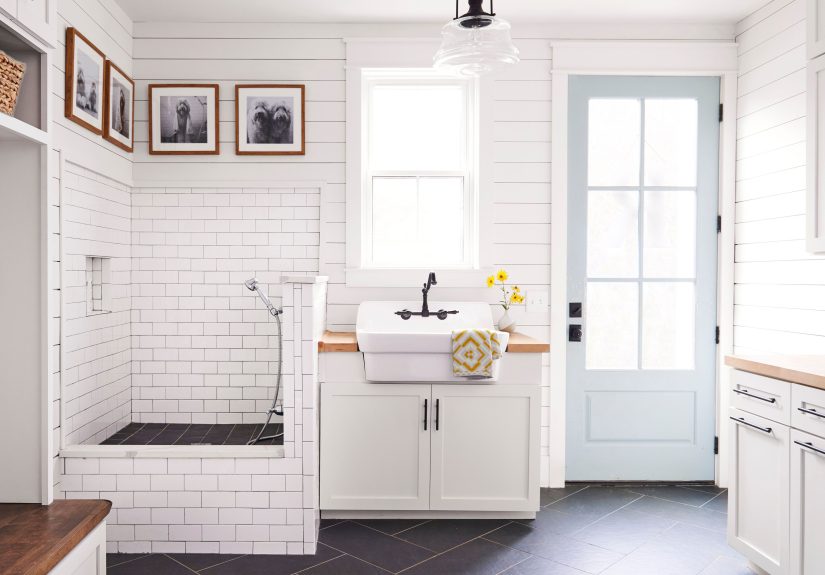
38) Pet washing station or dog shower
If pets are part of the household, a pet wash setup can be a game-changer. Even a handheld sprayer and a low curb area can help manage muddy paws and post-park chaos.
39) Ventilated sports gear storage
Sports equipment needs airflow. Use wire baskets, slatted shelves, or cubbies with vents so gear can dry (and smell less like a locker room, ideally).
40) A true pass-through mudroom with zones
If you have two doors (garage-to-house or yard-to-house), create a “dirty side” (boots, wet gear) and a “clean side” (bags, keys, organized storage). It’s the most efficient layout for busy households.
Design Details That Make These Ideas Work Better
Make hooks and benches comfortable, not just cute
A bench should feel easy to sit on while you tie shoes, and hooks should be reachable for the people who use them most. For kids, lower hooks matter. For adults, sturdy hooks (anchored properly) matter even more.
Plan for the “big three”: shoes, coats, bags
If your mudroom handles only those three categories well, you’ll feel a difference daily. Extra perkscharging station, calendar, pet gearcome after the basics are solved.
Use containers to keep small clutter from taking over
Baskets, bins, and trays prevent the slow creep of tiny items. Keep them labeled and consistent so the system stays usable when you’re in a hurry.
Common Mudroom Mistakes (So You Don’t Build a Beautiful Problem)
- Too much open storage: Without baskets or rules, open cubbies become a visual avalanche.
- No “wet zone”: Boots and umbrellas need a drip-friendly landing spot.
- Ignoring lighting: A dark mudroom feels cramped and chaotic. Add a bright overhead fixture and consider a small lamp or sconce.
- Not enough hooks: People will always choose the closest surface if hooks are full. (That surface is usually your bench.)
- No seasonal rotation: Keeping every coat, every time, is how mudrooms become coat museums.
of Real-Life “Mudroom Lessons” Homeowners Tend to Learn
Lesson 1: The best mudroom is the one that matches your routine. In real homes, the highest-performing mudrooms are designed around habits, not aesthetics. Families with kids often need low hooks, a “school paper landing spot,” and shoe storage that’s fast (not perfect). Couples who enter through the garage might prioritize a charging shelf and a place for work bags. Dog owners tend to want washable rugs and a dedicated towel basket because paws don’t care about your paint finish.
Lesson 2: Shoes are the main character. Most people think coats are the big issueuntil they see the daily shoe situation. Mudroom setups that succeed usually include a clear shoe rule: either “daily pairs only” live here, or each person gets a defined shoe limit (like a cubby or two). Boot trays and washable runners help, but the real secret is preventing footwear overflow in the first place.
Lesson 3: A bench isn’t optional once you’ve had one. Homeowners who add a bench often say it changes how the space feels to use. Sitting to remove boots is easier, safer, and fasterespecially for kids and older adults. The bench also becomes a natural “pause point” where routines happen: shoes off, backpack down, keys in tray. Without a bench, that pause point tends to become the floor.
Lesson 4: Closed storage saves your mood on messy days. Open cubbies are greatuntil you’re running late, everyone dumps everything, and suddenly your entry looks like a sporting goods store exploded. People often end up adding baskets, bins, or doors later because hiding visual clutter makes the whole home feel calmer. Even one closed cabinet for “random but necessary” items can stop the chaos spiral.
Lesson 5: The “extras” become your favorite partsafter the basics work. Once shoes/coats/bags are handled, homeowners love adding small upgrades: a charging drawer, a calendar board, a mail sorter, a scent diffuser, or a small piece of art. These aren’t required, but they make the mudroom feel like a welcoming entry instead of a holding pen for muddy boots.
Lesson 6: Maintenance is easier when the space is wipeable. Real-life mudrooms win with practical materials: easy-clean paint finishes, durable floors, and washable rugs. People in rainy or snowy climates often lean toward porcelain tile, sealed surfaces, and a clear “wet zone.” In warmer regions, the focus may shift to sand, pollen, and outdoor gear. Either way, the mudroom works best when cleaning it takes minutes, not an emotional pep talk.