Table of Contents >> Show >> Hide
- What Plantar Fasciitis Is (and Why Massage Can Help)
- Safety First: The “Don’t Be a Hero” Rules
- Set Yourself Up for Success
- 1) The “Thumb-Stripe” Arch Massage (Classic Manual Release)
- 2) Cross-Friction Heel Rub (For the Tender Spot Near the Heel)
- 3) Tennis Ball Roll (Goldilocks Pressure)
- 4) Lacrosse Ball “Target Practice” (For Stubborn Knots)
- 5) Frozen Water Bottle Roll (Massage + Ice, Like a Two-for-One Coupon)
- 6) The Towel Twist and Pull (Massage Meets Stretch)
- 7) Calf-and-Achilles Strip Massage (Because the Problem Isn’t Always in the Foot)
- 8) Toe Pull + Fascia Pinch (The Stretch-and-Massage Combo)
- A Simple 10-Minute Routine (Morning or Evening)
- Common Mistakes That Keep Heel Pain Hanging Around
- When to See a Clinician (Podiatrist, PT, or Ortho)
- Conclusion: Your Feet Want Consistency, Not Drama
- Real-World Experiences and Tips (Read This Before You Go Full “Massage Warrior”)
Plantar fasciitis has a special talent: it can make a perfectly normal morning feel like you’ve stepped on a LEGO… made entirely of betrayal.
That sharp heel pain on your first steps is common, annoying, and (luckily) often manageable with conservative care. One of the best DIY tools in your
“please let me walk like a human” kit is massagesimple, targeted techniques that can calm down irritated tissue, reduce tightness, and make movement
feel less like a prank.
This guide walks you through 8 plantar fasciitis massages you can do yourself using your hands and a few household props
(tennis ball, towel, frozen water bottle). You’ll also get a quick routine, common mistakes to avoid, and a longer “real-life experience” section
at the endbecause your feet deserve both science and strategy.
What Plantar Fasciitis Is (and Why Massage Can Help)
The plantar fascia is a thick band of tissue running along the bottom of your foot, connecting your heel to your toes and supporting
your arch. When it’s irritated from repeated strainthink long hours on your feet, abrupt mileage jumps, tight calves/Achilles, or unsupportive shoes
it can become painfully sensitive, especially near the heel.
Massage doesn’t “erase” plantar fasciitis overnight, but it can help in a few practical ways:
- Decreases tension in the plantar fascia and surrounding muscles.
- Improves local circulation (helpful for recovery and tissue tolerance).
- Turns down pain sensitivity by stimulating nerves that compete with pain signals.
- Pairs beautifully with stretching, especially for the calf and Achilles tendontwo frequent accomplices in heel pain.
Safety First: The “Don’t Be a Hero” Rules
DIY foot massage should feel like “productive pressure,” not like you’re trying to tenderize a steak. Follow these guidelines:
- Avoid sharp, electric, or burning pain. Back off pressure immediately if you feel it.
- Go gentler during flare-ups. When symptoms are hot and angry, stick to light massage and cold rolling.
- Use a barrier for ice. Wrap frozen tools (like a bottle) in a thin towel to protect your skin.
-
Check with a clinician first if you have diabetes, neuropathy, circulation issues, an open wound, unexplained swelling,
fever, numbness, or recent trauma. - Stop and get evaluated if pain is severe, worsening, or not improving after a few weeks of consistent care.
Set Yourself Up for Success
You don’t need fancy gear. You need consistency, good timing, and reasonable pressure.
Consider keeping your “tools” near where you sit (or near your bed if mornings are rough).
- Best times: before your first steps in the morning, after activity, and before bed.
- Duration: 2–5 minutes per technique (or shorter if it’s tender).
- Frequency: most days; small doses beat occasional marathon sessions.
- Helpful extras: supportive footwear, calf stretching, and activity tweaks while symptoms calm down.
1) The “Thumb-Stripe” Arch Massage (Classic Manual Release)
This is the go-to plantar fascia massage with your handssimple, targeted, and surprisingly effective when done gently.
How to do it
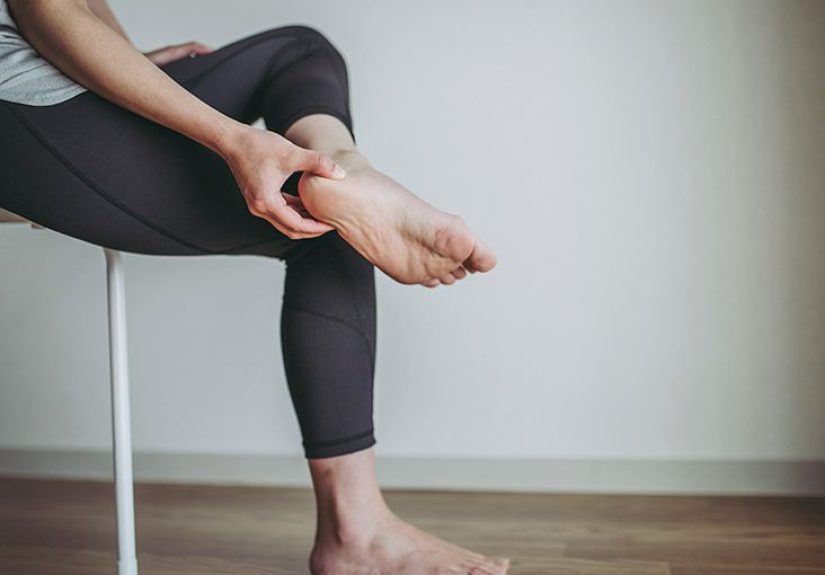
- Sit down and cross the sore foot over the opposite knee.
- With your thumb (or knuckle), press into the archnot on the heel bone itself.
- Slowly “stripe” from the heel area toward the ball of the foot, following the band of tissue.
- Use 6–10 slow passes, then switch to small circles on tender spots for 20–30 seconds.
Pro tip
Think “melt the tightness,” not “defeat the foot.” If your thumb starts filing a complaint with HR, use your knuckles or a little lotion.
2) Cross-Friction Heel Rub (For the Tender Spot Near the Heel)
Many people feel the worst pain near the inside front of the heel. Cross-friction massage can help calm down that hypersensitive area.
How to do it
- Find the most tender point near the heel (often slightly toward the inside).
- Using two fingers or your thumb, move the skin side-to-side across the tissue (not up-and-down the foot).
- Keep it gentle and controlled for 30–60 seconds, rest, then repeat once more.
Best for
Stubborn “first-step” pain, especially when combined with a quick stretch before standing.
3) Tennis Ball Roll (Goldilocks Pressure)
A tennis ball gives you a friendly middle-ground: firm enough to be useful, soft enough that you’re less likely to overdo it.
It’s a classic for heel pain relief and arch tightness.
How to do it
- Sit in a chair with your foot on the ball.
- Roll slowly from heel to mid-arch, then toward the ball of the foot.
- Pause on tight spots for 5–10 seconds (no grimacing required).
- Continue for 2–3 minutes.
Upgrade
If sitting feels too easy, try standing with partial body weightlight pressure only. The goal is steady pressure, not a foot wrestling match.
4) Lacrosse Ball “Target Practice” (For Stubborn Knots)
A lacrosse ball is firmer than a tennis ball, so it can feel amazing… or like a bad decision, depending on your timing and pressure.
Use it when symptoms are calmer, not during a fiery flare-up.
How to do it
- Start seated. Place the ball under the arch.
- Roll slowly, then “hunt” for tight points.
- When you find one, hold pressure for 10–20 seconds while breathing normally (yes, breathing counts as technique).
- Repeat for 1–2 minutes, then switch back to gentle rolling.
Common mistake
Going too hard too soon. If your pain spikes later in the day, your foot is telling you it did not enjoy your “motivational speaking.”
5) Frozen Water Bottle Roll (Massage + Ice, Like a Two-for-One Coupon)
Rolling a frozen bottle combines ice massage (to calm discomfort) with gentle pressure. This is especially helpful after activity
or when symptoms feel hot and irritated.
How to do it
- Freeze a standard water bottle.
- Wrap it in a thin towel (skin protection matters).
- Roll from heel to mid-arch for 10–15 minutes, keeping pressure light to moderate.
When it shines
After long standing, after a run/walk, or in the evening when your heel starts sending angry emails.
6) The Towel Twist and Pull (Massage Meets Stretch)
This one blends a gentle stretch for the calf/Achilles with a calming effect for the foot. It’s also a great option
before getting out of bed.
How to do it
- Sit with your leg extended (on the bed or floor).
- Loop a towel around the ball of your foot.
- Gently pull the towel toward you while keeping your knee straight until you feel a calf stretch.
- Hold 30–45 seconds, repeat 2–3 times.
- Bonus: while holding the stretch, use your free hand to lightly rub the arch (short strokes) for 20–30 seconds.
Why it helps
Tight calves can increase strain on the plantar fascia. Loosening the “upper chain” often makes the bottom of the foot behave better.
7) Calf-and-Achilles Strip Massage (Because the Problem Isn’t Always in the Foot)
Many plantar fasciitis cases have a supporting cast: tight calf muscles and a cranky Achilles tendon. When these tissues are stiff,
they can increase the pull on the heel and arch.
How to do it
- Sit with your knee bent and calf relaxed.
- Use your thumbs, knuckles, or the side of your fist to glide upward along the calf (from ankle toward knee).
- Move slowly, 6–10 strokes. Pause on tender spots for 10 seconds.
- Spend extra time on the lower calf and along the Achilles (avoid aggressive squeezing directly on the tendon).
Tool option
A foam roller or massage stick can work here toojust keep pressure controlled. Your calf should feel looser afterward, not bruised.
8) Toe Pull + Fascia Pinch (The Stretch-and-Massage Combo)
This technique targets the plantar fascia by gently tensioning it and massaging while it’s stretchedhelpful for morning stiffness.
How to do it
- Cross your foot over your knee.
- With one hand, pull your toes back toward your shin until you feel a stretch in the arch.
- With the other hand, use your thumb to massage along the tightened band in short strokes for 30–45 seconds.
- Rest 15 seconds and repeat 2–3 times.
Quick self-check
You should feel a firm band in the arch when the toes are pulled back. Massage along itnot directly on the heel bone.
A Simple 10-Minute Routine (Morning or Evening)
If you want a plan that’s easy to remember (and easy to actually do), try this:
- Frozen bottle roll: 3–5 minutes (or tennis ball if you prefer).
- Toe pull + fascia pinch: 2 minutes total.
- Calf towel stretch: 2–3 rounds of 30–45 seconds.
- Calf strip massage: 1–2 minutes.
Then put on supportive shoes before you start walking around on hard floors. Your plantar fascia loves arch support the way your phone loves a charger:
ignore it long enough and everything gets dramatic.
Common Mistakes That Keep Heel Pain Hanging Around
- Going barefoot on hard floors during a flare-up (especially first thing in the morning).
- Rolling too aggressively with hard balls when symptoms are acute.
- Only treating the foot and ignoring calf/Achilles tightness.
- Random consistency: doing a big session once a week instead of small sessions most days.
- Keeping the same worn-out shoes that started the problem in the first place.
When to See a Clinician (Podiatrist, PT, or Ortho)
DIY massage is great, but it’s not a substitute for medical evaluation when something doesn’t add up.
Consider getting professional help if:
- Pain lasts more than a few weeks despite consistent home care.
- You have severe swelling, numbness, tingling, or pain that wakes you at night.
- You can’t bear weight, or you suspect a different injury (like a stress fracture).
- You need a return-to-running/work plan, footwear guidance, or targeted strengtheningphysical therapy can be a game-changer.
Conclusion: Your Feet Want Consistency, Not Drama
The best plantar fasciitis massages aren’t the fanciestthey’re the ones you’ll actually do. Pick two techniques you like
(one rolling option + one hand/stretch combo), do them most days, and keep pressure in the “helpful” zone.
Combine massage with calf stretching and supportive footwear, and you’ll give your plantar fascia the calm environment it needs
to stop acting like the main character.
Real-World Experiences and Tips (Read This Before You Go Full “Massage Warrior”)
Here’s something people don’t always tell you: plantar fasciitis is often less like a single injury and more like an ongoing negotiation
between your tissue tolerance and your daily habits. The massages above work best when they’re part of a routine you can repeat without
turning it into a second job.
The “morning ambush” is real. A lot of people describe the first 10–20 steps as the worst. One of the most common wins is keeping
a tennis ball or towel at the bedside and doing 2–3 minutes before standing. It’s not magicit’s preparation. You’re basically telling the plantar
fascia, “Good morning, I’m going to ease you into this day,” instead of “Surprise! We’re sprinting to the coffee.”
Pressure mistakes are the #1 setback. The lacrosse ball is a powerful tool, but many folks learn the hard way that “more pressure”
isn’t “more progress.” A useful rule: after massage, your foot should feel looser and slightly calmer, not throbbing or tender for hours. If symptoms
flare later (especially that evening or the next morning), scale pressure back by 30–50% and shorten the session. Massage should reduce sensitivity,
not audition you for a medieval toughness contest.
Calf work is the sneaky MVP. People who sit a lot (tight calves from being in a shortened position) and people who stand a lot
(tired calves) can both end up with extra pull through the Achilles and heel. Many report that once they add a daily calf strip massage and a towel
stretch, foot rolling becomes more effectivebecause the system is less tense overall. If the foot is the squeaky wheel, the calf is often the axle.
Footwear can make or break your progress. Some people swear they did “everything” and still hurtthen you find out they’re walking
barefoot on tile every morning. Supportive shoes or slippers indoors can be a surprisingly big deal during recovery. Think of it like braces for your
arch while the tissue calms down. Once symptoms improve, you may tolerate more barefoot time, but early on it’s usually a bad trade.
Consistency beats intensity. Many people do best with short sessions: 3–5 minutes after activity and a quick routine before bed.
The goal is to keep the tissue from tightening up and getting cranky again. If you’re a runner, a common strategy is to keep easy days truly easy,
avoid hills temporarily, and use the frozen bottle roll after runs. If you’re on your feet for work, micro-breaks help: sit for two minutes, roll the
arch with a ball, then get back to it. Tiny inputs, repeated often, can add up.
Progress is usually “less morning pain,” not “zero pain tomorrow.” The best early sign is that your first steps improve, or that your
pain returns later in the day instead of immediately. Track small wins: fewer limpy steps, less tenderness at the heel, better tolerance for walking.
If you want a simple metric, rate your morning pain from 0–10 each day for a week. If the trend line is moving down, your plan is workingeven if it
isn’t linear.
Finally, remember: massage is a tool, not a punishment. If you treat it like a calm, daily tune-uppaired with stretching, strength, and smarter
footwearyou’ll give your plantar fascia fewer reasons to stage a protest.