Table of Contents >> Show >> Hide
- Meet the B-17: The “Office Building” That Learned to Fly
- How to “Walk” a B-17 in a Virtual Tour
- Stop 1: The Nose Where Precision Had to Happen
- Stop 2: The Cockpit Two Seats, Four Engines, and a Thousand Decisions
- Stop 3: The Bomb Bay The Narrow Hallway Over the Void
- Stop 4: The Radio Room The Fortress’s Communication Hub
- Stop 5: The Waist Loud, Cold, and Unapologetically Exposed
- Stop 6: The Ball Turret The Most Famous “Nope” in Aviation
- Stop 7: The Tail The Lonely Job With the Best Rear View
- What Daily Life Felt Like Inside the Fortress
- Where Virtual B-17 Tours Usually Come From (and How to Find the Good Ones)
- How to Get More Out of Your Virtual Tour
- The Virtual Tour Experience: of “You Are There”
- Conclusion: Why the B-17 Still Stops People in Their Tracks
If you’ve ever looked at a B-17 Flying Fortress and thought, “Wow, that’s a lot of airplane,” you are correctand
also underestimating it. The B-17 isn’t just big. It’s busy. It’s a flying workplace with ten people doing ten
different jobs while four radial engines shake the whole thing like a paint mixer… at 25,000 feet… in sub-zero air…
while someone tries to ruin your day with flak.
The good news: you don’t need a parachute to explore one anymore. A virtual tour lets you walk the Fortress from
nose to tail, click on crew stations, zoom in on instruments, and appreciate the sheer audacity of asking humans to
operate an industrial machine made of aluminum, oxygen hoses, and stubbornness. This is that tourguided, practical,
and a little awed (because you’d have to be made of granite not to be).
Meet the B-17: The “Office Building” That Learned to Fly
The B-17 was designed in the 1930s as a long-range heavy bomber, and it became one of the defining aircraft of the
American daylight bombing campaign in World War II. It earned a reputation for ruggednesspartly from engineering,
partly from luck, and partly because the airplane seemed to run on pure refusal to quit.
In its most famous late-war form (the B-17G), you’re looking at a four-engine bomber with a crew of 10 and a defensive
armament that made enemy fighters think twice about getting close. “Flying Fortress” wasn’t a cute nickname. It was
an operating concept: bring enough guns to discourage uninvited visitors, and enough structure to limp home even when
the day goes sideways.
Quick “specs you’ll actually notice” while touring
- Crew: 10 people, each with a job that becomes everyone’s job when things go wrong.
- Engines: Four Wright Cyclone radialsloud, thirsty, and historically iconic.
- Defensive firepower: Multiple .50-caliber machine gun positions across the airframe.
- Bomb bay: Center of gravity, literal and emotional. It’s where “mission” becomes “physics.”
- Environment: Unpressurized, cold, noisy, and full of sharp edges that do not care about your shins.
How to “Walk” a B-17 in a Virtual Tour
Most virtual B-17 experiences follow the same basic path: you enter forward, explore the nose and cockpit, then move
through the fuselage to the radio room, waist, and tail. Think of it like touring a historic shipexcept this one has
control cables, ammunition boxes, and a narrow passage through the bomb bay that makes you suddenly grateful for modern
building codes.
Pro tip: don’t rush. The B-17 rewards slow looking. Zoom in. Read placards. Pause at each station and ask, “Could I do
this job for six hours while wearing gloves the size of oven mitts?” Then laugh softly and respectfully at yourself.
Stop 1: The Nose Where Precision Had to Happen
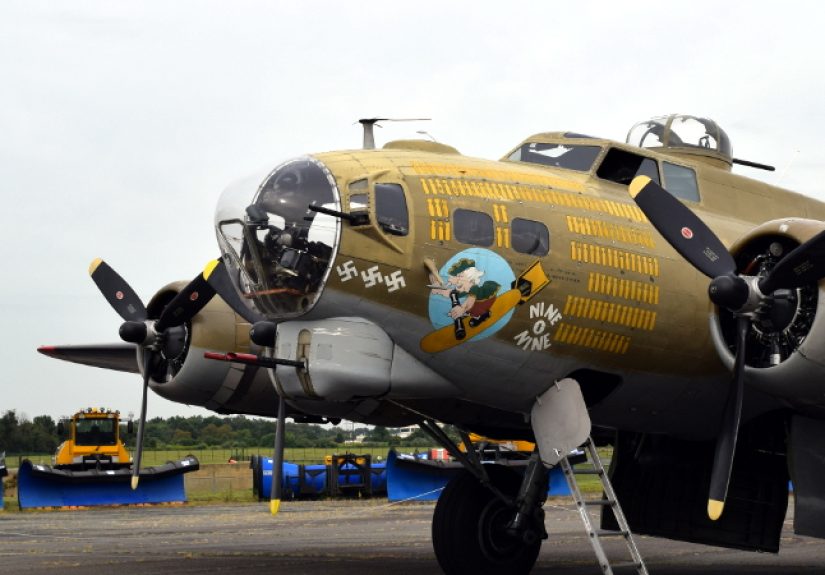
The B-17’s nose is a greenhouse of plexiglass and purpose. In many configurations, the bombardier worked in the forward
compartment, staring through a bombsight while the navigator worked nearby with charts, drift measurements, and dead-reckoning
math that did not forgive mistakes.
The Bombardier’s Office: The Bombsight and the “Final Run”
The bombsight (often a Norden model) wasn’t magic, but it was one of the most advanced aiming systems of its era: optics plus
mechanical computation to estimate a release point based on altitude, airspeed, wind, and other variables. In the ideal scenario,
the aircraft steadies on the bomb run, small corrections are made, and the bombs leave the racks in a clean sequence. In the real-world
scenario, wind shifts, turbulence bumps you off line, and everyone is negotiating with reality in real time.
The Navigator’s Corner: Maps, Timing, and “Please Don’t Get Lost”
If the bombardier is aiming at one point on Earth, the navigator is trying to make sure you’re over the correct continent when you do it.
Look for a small table area, chart storage, and the general vibe of a person who has learned to love pencils and hate cloud cover.
Stop 2: The Cockpit Two Seats, Four Engines, and a Thousand Decisions
Step back into the cockpit and you’ll notice something: it feels more “airplane” and less “weapon” than the nose. Then you look at the
engine controls, the instrument panel, and the workload implied by four engines and a formation scheduleand it feels like a weapon again.
Pilot and Co-Pilot: The Partnership That Kept the Fortress Level
In a virtual tour, take time to zoom into the controls and gauges. You’ll see a cockpit that’s busy but not futuristicbecause it’s designed for
reliability and clarity, not aesthetics. The pilots had to manage power settings, maintain formation position, respond to damage, and keep the airplane
stable enough for bombing and gunnery. No pressure. (Okay, lots of pressure. Metaphorically. The cabin wasn’t pressurized.)
Flight Engineer / Top Turret Gunner: The “I Can Fix It and Shoot It” Role
One of the most B-17 things about the B-17 is job stacking. The flight engineer often doubled as the top turret gunnermonitoring systems, managing
engine performance, and also operating a gun position with a commanding view of the sky. If you’re touring a B-17G, you may notice how crew stations
are tucked into every available cubic foot.
Stop 3: The Bomb Bay The Narrow Hallway Over the Void
The bomb bay is the B-17’s spine: long, central, and not designed for comfort. In many tours, this is the moment people stop saying, “So cool,” and start
saying, “Wait… that’s the walkway?”
Bomb Racks, Release Gear, and the Catwalk
Bombs were carried in racks along both sides of the bay. Between them: a narrow catwalk used to move forward and aft when needed. Virtual tours are great here
because you can pause and appreciate the geometry. In the physical aircraft, the catwalk is exactly as confidence-inspiring as it looks: not much wider than your
foot and positioned over open doors when the bay is in use. It’s one of the most vivid reminders that wartime aviation was equal parts engineering and bravery.
Look for details like wiring runs, structural members, and the door mechanisms. Everything is purpose-built, weight-conscious, and arranged so crews could maintain
systems while wearing heavy gear. If a tour labels bomb bay components, read themthis space explains how “payload” becomes “mission capability.”
Stop 4: The Radio Room The Fortress’s Communication Hub
Move aft and you’ll enter the radio room: tighter, warmer (relatively), and filled with equipment that looks like it belongs in a museum because it does.
The radio operator handled communications and often assisted with navigation, emergency procedure coordination, anddepending on configurationdefensive fire.
What to look for in a virtual tour
- Radio stacks and control boxes (multiple units, knobs, and switchesno “one-button” anything).
- Operator seat and desk area for logs, codes, and message handling.
- Access paths: notice how crew movement is possible, but never convenient.
This compartment is also where you feel the B-17’s “system of systems” nature. It’s not just an airplane; it’s a coordinated platformcrew, radios, guns, engines,
navigation, oxygen, and formation tactics all stacked into one airframe.
Stop 5: The Waist Loud, Cold, and Unapologetically Exposed
The waist section is where the B-17 starts to feel like a flying industrial corridor. In many models, waist gunners operated .50-caliber guns from large side windows.
You’ll often see ammunition boxes, feed chutes, and the practical reality of a combat aircraft: scuff marks, brackets, and hardware everywhere.
Staggered positions and the “human factors” lesson
Later variants introduced changes to improve fields of fire and reduce crew interference. If your virtual tour lets you compare variants (E, F, G), pay attention to how
gun positions evolve. It’s an ongoing conversation between threat, tactics, and the limited space inside a fuselage.
Also: imagine the sound. Four engines. Slipstream. Interphone chatter. Occasional gunfire. If you’ve ever tried to hold a conversation next to a lawn mower, now picture
doing it for hours while wearing an oxygen mask.
Stop 6: The Ball Turret The Most Famous “Nope” in Aviation
The Sperry ball turret hangs beneath the aircraft like a glassy, rotating punctuation mark. It provided coverage for the vulnerable underside and typically mounted twin
.50-caliber machine guns. It also delivered one of the most cramped crew stations of the war.
Why it matters in a tour
In a virtual tour, you can linger here without worrying about fitting your shoulders through the opening. Take advantage of that. Look at the sighting system, the rotation
space, and the way the gunner’s body had to fold into the sphere. It’s a master class in compact designand a reminder that “ergonomics” was still a developing concept.
Stop 7: The Tail The Lonely Job With the Best Rear View
At the back of the aircraft, the tail gunner’s station is both vital and isolating. From here, the gunner watched the rear approach and defended against attacks from behind.
In many tours, this position feels like its own tiny spacecraft: narrow, enclosed, and completely dedicated to a single purpose.
Look for the limited space, the ammunition handling constraints, and the sight lines. Even virtually, you can feel how “last line of defense” wasn’t a sloganit was a location.
What Daily Life Felt Like Inside the Fortress
A B-17 tour can look clean and calm on your screen. Real missions were neither. At altitude, temperatures could be brutally cold, crews relied on oxygen systems, and the constant
vibration wore people down. Add tight formation flying, threat of fighters and anti-aircraft fire, and the pressure to hit a target accuratelyand you get a workday that makes
modern “busy season” complaints sound adorable.
Three realities to keep in mind as you tour
- Teamwork wasn’t optional. Every station depended on the othersnavigation, engines, gunnery, and bombing were linked.
- The airplane was a toolkit. Fire extinguishers, first aid, emergency gear, and field repairs were part of the job.
- Space was the price of capability. The B-17 carried a lot, but it did not carry “roomy.”
Where Virtual B-17 Tours Usually Come From (and How to Find the Good Ones)
Many of the best virtual tours are produced by major aviation and military museums, restoration organizations, and commemorative aviation groups. If you want the most
detailed experience, look for tours that include labeled hotspots, narrated crew stories, and high-resolution interior panoramasespecially in the nose, cockpit, and bomb bay.
What to prioritize
- High-res interior panoramas: So you can zoom into instruments, mounts, and placards.
- Variant identification: A tour that tells you whether you’re seeing an E, F, or G model helps everything make sense.
- Restoration notes: These explain why certain parts look “new” and others look “original.”
- Crew context: Stories turn hardware into historywithout romanticizing the cost.
How to Get More Out of Your Virtual Tour
Follow a “mission path” instead of clicking randomly
Try this sequence: nose (bombardier/navigator) → cockpit → bomb bay → radio room → waist → ball turret → tail.
You’ll understand how information and responsibility flowed through the airplane.
Use the “what would I touch?” test
At each station, ask: what controls would I adjust? What would I watch? What’s the emergency procedure here? This is how you move from “neat” to “I actually get it.”
Compare two tours of different airframes
If you can, tour a museum-restored aircraft and a flying commemorative aircraft. Museum examples often show pristine interpretation, while flyable examples reveal
practical compromises and maintenance-driven changes.
The Virtual Tour Experience: of “You Are There”
Here’s the weirdly magical part about a virtual B-17 tour: even though you’re sitting safely in a chair, your brain starts behaving like it’s moving through a real place.
You click into the nose and suddenly you’re surrounded by curved plexiglass and framing ribs that look like the skeleton of a whaleif whales were built by machinists.
The bombardier’s area feels bright, almost delicate, until you notice how quickly “view” turns into “exposure.” There’s no cozy separation between the crew and the outside world.
The outside world is right there, inches away, and it’s not friendly.
Then you slide back toward the cockpit and the mood shifts. The cockpit has a particular kind of seriousness: rows of gauges that don’t care if you’re tired, levers that don’t care
if you’re cold, and a layout that assumes you will be competent. The more you zoom in, the more you realize how much was managed by handpower settings, mixture, props, cowl flaps,
formation position. It’s not that the airplane is complicated for the sake of it; it’s complicated because it’s doing a hard job with the technology of its era.
The bomb bay is where a virtual tour earns its keep. In person, the space can rush youpeople behind you, a docent moving along, your own instinct not to linger over open doors.
On a screen, you can stop and really see how the airplane carries its purpose. Bomb racks line the sides. Structure and wiring frame the bay like a bridge truss. And the catwalk
that narrow path between everything heavy and everything emptyfeels like the most honest design choice in the entire aircraft. The B-17 didn’t pretend the job was comfortable. It made
the job possible.
Moving into the radio room feels like stepping into the nervous system. Radios, switches, and boxes with labels that sound like they belong in a spy novel. You can almost imagine the
rhythm of a crew: short calls, clipped confirmations, the quiet “copy” of a message being logged while engines drone a few feet away. If your tour includes crew stories, this is where
they tend to land hardestbecause you’re no longer looking at a famous aircraft silhouette; you’re inside someone’s shift at work.
The waist section changes the sensory imagination. Big windows. Gun mounts. Space to movebut not space to relax. It’s easy to picture the physicality: bracing your stance, tracking a
moving speck in the distance, handling ammo, communicating through an interphone. Even virtually, you notice how many hard surfaces and sharp corners exist in a place where people were
expected to operate while wearing bulky gear. Your respect grows not because the airplane is glamorous, but because it’s relentlessly practical.
And then there’s the ball turret. On a screen, it’s fascinatingclear lines, rotation, a compact bubble of purpose. In your head, it becomes the emotional center of the tour: the place
where you stop thinking like a tourist and start thinking like a crew member. You imagine fitting into it. You imagine trusting it. You imagine climbing out of it after hours. That’s when
the virtual tour does its real job: it turns history from “a thing that happened” into “a place people lived,” even if only for a moment in your imagination.
Conclusion: Why the B-17 Still Stops People in Their Tracks
A B-17 virtual tour is a walkthrough of a machine and a mindset. The machine is ingeniousfour engines, heavy structure, layered defense, and a bomb bay built to deliver a mission at scale.
The mindset is harder to grasp until you “stand” at the stations: ten people coordinating under stress in a loud, cold, cramped environment where precision and survival were intertwined.
If you take one thing away from your virtual tour, let it be this: the B-17 wasn’t just flown. It was worked. Every lever and sight and gun mount is evidence of a job done the hard
way, by people who couldn’t pause the mission because conditions weren’t ideal. When you tour the Fortressespecially slowly, station by stationyou don’t just learn how it was built. You
learn what it asked of its crew.