Table of Contents >> Show >> Hide
A gable is basically your house’s way of making a strong first impressionlike shoulders in a suit jacket, but for architecture.
It’s that triangular (sometimes not-so-triangular) end of a roofline that can turn a plain box into a home with personality.
And the best part? Gables can be structural (changing the roof shape) or purely stylistic (changing the gable end’s finish, trim, and details).
Either way, gables are one of the fastest ways to boost curb appeal without needing a full “tear it down and start over” moment.
In this guide, you’ll get 12 standout gable stylessome classic, some architectural show-offsplus practical tips on when each works best.
Think of it as a menu: you don’t have to order everything, but you’ll leave knowing what looks good, what fits your climate, and what won’t make your contractor sigh dramatically.
How to choose the right gable style
Before you pick a gable style, decide what kind of “spruce up” you mean:
roofline drama (shape changes) or surface charisma (trim, siding patterns, windows, vents).
Structural changes can be amazing, but they often involve permits, engineering, and budget reality checks.
Surface upgrades are usually faster, cheaper, and still deliver a big visual payoff.
Three fast questions to ask
- What’s your home’s architectural vibe? Craftsman loves exposed rafters; Colonial loves symmetry; modern farmhouse loves clean trim and bold contrast.
- What does your climate demand? Windy areas may need extra attention to gable-end bracing; snowy areas benefit from roof pitches that shed snow efficiently.
- Do you want subtle or statement? A boxed gable is “quiet luxury.” A stepped gable is “look at me, I’m interesting.”
The 12 gable styles
Below, you’ll find a mix of roof configurations (the shape) and gable-end treatments (the look).
If you’re remodeling, you can treat these like building blocksmany homes combine two or three styles for a layered, custom feel.
1) Side gable
The classic: two sloping roof planes, ridge running front-to-back, with the gable ends on the left and right sides of the house.
Side gables read as clean, balanced, and timelessperfect for Capes, Colonials, and plenty of “we just want it to look nice” homes.
- Why it works: Simple silhouette, easy to dress up with trim, windows, or shingle patterns on the gable end.
- Spruce-up tip: Add a centered gable window (or a pair) and paint the rake trim a contrasting color for crisp definition.
2) Front gable
A front gable faces the streetlike your roofline’s welcome sign.
It’s common on bungalows and farmhouses, and it’s fantastic for emphasizing an entry, porch, or central bay.
If your house feels “flat,” a front gable can give it instant depth.
- Why it works: Strong focal point from the curb.
- Spruce-up tip: Pair it with a porch roof or simple portico so the gable looks intentionalnot like a triangle that wandered onto your façade.
3) Cross gable
Cross gables happen when two (or more) gable rooflines intersect, usually at a right angle.
You’ll see this on L-shaped homes, additions, and houses with multiple wings.
Done well, it looks rich and layeredlike your home has chapters, not just a single paragraph.
- Why it works: Adds architectural complexity and can separate interior zones (main house vs. garage wing, for example).
- Spruce-up tip: Keep materials consistent (same shingles, same trim profile), then add contrast with siding texture (board-and-batten in one gable end, lap siding in another).
4) Boxed gable
A boxed gable encloses the eaves at the gable end, creating a tidy “frame” around the roof edge.
This style feels polished and modernespecially when paired with simplified trim and clean fascia lines.
If open rafters feel too rustic, boxed gables are your tidy best friend.
- Why it works: Clean lines, fewer visual “bits,” great for contemporary or updated traditional exteriors.
- Spruce-up tip: Use wider rake boards (within proportion) and crisp paint to make the outline pop without extra ornament.
5) Open gable
Open gables expose the rafters or rafter tails at the gable end.
This is a hallmark of Craftsman and bungalow design, where structure and style shake hands instead of avoiding eye contact.
It instantly adds warmth and hand-built character.
- Why it works: Texture and shadow lines create depth even on a simple façade.
- Spruce-up tip: Paint exposed rafter tails a dark accent or stain them for a natural lookthen repeat that color on brackets or porch posts for cohesion.
6) Dutch gable (gable-on-hip)
A Dutch gable combines a hip roof base with a smaller gable perched on top.
You get the sleek, wrapped look of a hip roof plus a gable’s visual interest and potential attic ventilation/light.
It’s a great compromise when you want a distinctive roofline without going full “storybook cottage.”
- Why it works: Looks upscale and often improves usable attic space compared with a pure hip roof.
- Spruce-up tip: Add a small gable window or decorative vent in that upper gabletiny feature, big charm.
7) Jerkinhead (clipped gable / half-hip)
A jerkinhead roof starts as a gable, but the top point is “clipped” into a short hip.
The effect is subtle but elegantless pointy triangle, more refined profile.
It’s common in certain historic styles and can look especially good on cottages and traditional homes.
- Why it works: Softer silhouette than a full gable; can be friendlier in windy regions when properly built.
- Spruce-up tip: Emphasize the geometry with clean trim and a contrasting roof colorjerkinheads love crisp outlines.
8) Saltbox gable
The saltbox look is a gable roof that goes asymmetricalone side is longer and slopes farther down, often because of an original rear addition.
It’s a classic American colonial form that feels cozy and practical, with a “historic-but-still-fresh” vibe when updated thoughtfully.
- Why it works: Adds character through asymmetry without feeling chaotic.
- Spruce-up tip: Keep the front elevation simple and clean, then use subtle texture (cedar shingles, clapboard variation) to highlight the long rear slope’s silhouette.
9) Gambrel gable (barn-style ends)
A gambrel roof isn’t a “gable roof” in the simplest sense, but it has gable endsand those ends are a big part of its charm.
The profile features two slopes on each side (steeper below, gentler above), which often creates more usable space upstairs.
Think Dutch Colonial, barns, and the occasional modern farmhouse that wants extra attic drama.
- Why it works: Big personality and practical interior payoff.
- Spruce-up tip: Make the gable ends intentional with symmetrical window placementgambrels look best when the façade feels “designed,” not accidental.
10) Stepped gable (crow-stepped)
Instead of a smooth roof edge, a stepped gable climbs in a stair-step pattern.
It’s bold, historic, and instantly recognizableoften associated with European traditions and revival styles, but it also appears in North American neighborhoods that lean into character.
If your goal is “memorable,” this style delivers.
- Why it works: Strong silhouettegreat for brick, stone, and stucco façades.
- Spruce-up tip: Keep everything else simpler. Let the gable be the headline; don’t give it ten exclamation points.
11) Pedimented gable
A pediment is the classical, temple-like triangle you see in Greek Revival and other traditional styles.
A pedimented gable borrows that lookclean lines, strong symmetry, and a sense that your house might start quoting Latin at any moment.
It’s especially effective above an entry or a centered window group.
- Why it works: Formal, balanced, and timelessgreat for Colonial Revival and traditional homes.
- Spruce-up tip: Add simple molding profiles and keep proportions disciplined; pediments look best when they’re not over-decorated.
12) Ornamented gable with bargeboard (vergeboard)
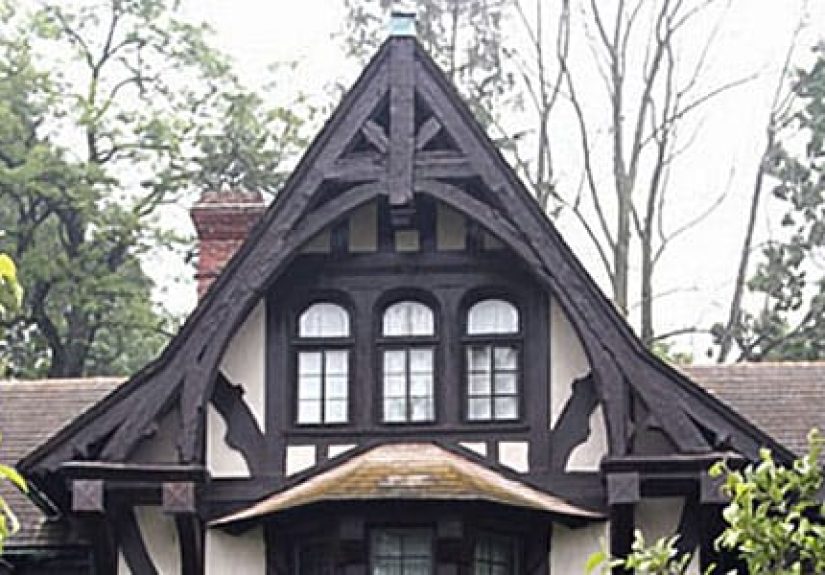
Bargeboard (also called vergeboard) is decorative trim along the gable’s edgeoften seen in Gothic Revival and Victorian “gingerbread” detailing.
It can be subtle (a shaped board) or elaborate (jigsaw-cut patterns).
Either way, it adds instant charm, like your house put on a fancy collar for picture day.
- Why it works: Adds craftsmanship and texture, even on small homes.
- Spruce-up tip: If you love the look but fear maintenance, consider modern, rot-resistant trim materials and keep the pattern simpler so it ages gracefully.
Smart upgrades that make any gable look better
Even if you’re not changing your roof structure, you can make a gable look “designed” with a few targeted improvements.
These are the crowd-pleasershigh impact, usually lower drama.
- Upgrade the rake trim: A slightly wider, cleaner trim profile can make the gable edge look intentional and premium.
- Add a gable vent that matches the style: Round vents read cottage; rectangular vents read classic; minimalist vents read modern.
- Use texture wisely: Shingle the gable end, add board-and-batten, or try a subtle pattern. Texture adds depth without requiring a new roof.
- Consider a cornice return: That little wrap of trim at the gable’s lower corners can instantly make the roofline feel more traditional and finished.
- Light it like it matters: A pair of well-placed exterior lights can highlight the gable and make the whole façade feel more architectural at night.
Final thoughts
Gables are one of the rare exterior features that can be both practical and playful.
Pick a style that matches your home’s architecture, respects your climate, and fits your budgetand then give it one “hero” detail
(a window, a texture, a trim upgrade, or a clean modern outline).
You don’t need to turn your house into a castle, a barn, and a museum all at once.
One great gable choice can do more for curb appeal than a dozen random upgrades that don’t talk to each other.
Real-world experiences: what people learn after a gable glow-up
Homeowners who upgrade gables (either structurally or cosmetically) often report the same surprising takeaway: the gable itself isn’t the whole storythe
connections are. When the gable style, trim thickness, siding texture, and window placement feel coordinated, the house looks intentionally designed.
When those pieces don’t match, even an expensive gable project can look like a “parts bin” makeover.
One of the most common experiences is discovering that proportions matter more than ornament. People who add elaborate trim sometimes realize their
existing fascia boards are too skinny, or the rake line gets visually lost against busy siding. The fix is often simpler than expected: slightly wider trim,
cleaner paint separation, and consistent corner detailing. In other words, the “wow” often comes from editingnot adding.
Another frequent lesson shows up when homeowners try textured gable ends (shingles, board-and-batten, paneling): texture needs a frame.
Without a crisp rake trim and clean transitions at corners, textured siding can look messy, not charming. Many people end up happiest when they treat the gable end
like an accent wallone feature area with clear boundaries, not a texture explosion that spills onto every surface.
People who pursue more structural changeslike switching to a cross gable or adding a Dutch gable elementoften say the best decision was
planning the roofline from the street view first. Roof geometry can look different on paper than it does from the curb, especially on homes with garages,
additions, or deep porches. The projects that feel most successful are the ones where the new gable aligns with something meaningful below it:
an entry, a bay window, a porch column rhythm, or a centered interior space.
In windy regions, homeowners frequently learn that gables deserve a little extra respect behind the scenes. Even if the goal is purely aesthetic,
gable-end areas may benefit from thoughtful reinforcement during reroofing or remodeling. People who combine “pretty” upgrades with “smart” upgrades
(like checking bracing, fastening schedules, and connections during a roof project) tend to feel better about the investmentand sleep better during storms.
Finally, there’s the underrated joy of lighting. Many homeowners say the biggest day-to-night transformation came from exterior lighting that
highlights the gable end, especially with textured materials like shingles or board-and-batten. It’s the architectural equivalent of good photography:
the house already looked nice, but now it looks intentional. And intentional is the real definition of curb appeal.