Table of Contents >> Show >> Hide
- Before You Start: 60 Seconds of Reality (and Hair Safety)
- Way #1: The Clarifying-Wash Fade (Gentlest, Slowest, Most Hair-Friendly)
- Way #2: The Vitamin C + Shampoo Method (Stronger Fade, Still DIY-Friendly)
- Way #3: The “Reset Button” (Direct-Dye Removers, Bleach Baths, or a Salon Color Correction)
- Aftercare: How to Avoid the “Crispy Ends Support Group”
- Quick FAQs
- Experiences: What Removing Splat Often Feels Like (The Real-World Version)
Splat hair dye is the glitter of the hair-color world: bold, fun, and somehow still showing up in places you didn’t invite it.
If your neon moment has turned into a “why is my shower crying purple?” era, you’re not alone. The good news: you can fade Splat
significantly. The honest news: you may need patience, a little strategy, and a solid conditioner that’s ready to do overtime.
This guide breaks down three reliable ways to remove Splat hair colorfrom gentlest to most intenseso you can choose the
method that matches your hair’s condition, your timeline, and your stress level.
Before You Start: 60 Seconds of Reality (and Hair Safety)
1) Know what you’re dealing with
Most Splat shades behave like direct dye / semi-permanent pigment: the color sits on and in the outer layers of the hair
and can “stain,” especially on porous hair (bleached hair, highlights, heat damage, and very dry ends). That’s why some removers meant
for permanent dye don’t always work well on vivid colors.
2) Do a quick hair-health check
- If your hair feels gummy, snaps easily, or looks frayed: skip harsh methods and start with the gentlest option first.
- If your scalp is irritated: avoid abrasive mixes and anything bleach-related until it calms down.
- Always strand-test: try your chosen method on a small hidden section before doing your whole head.
3) Set expectations (without ruining your mood)
You can often fade Splat a lot, but complete removal in one session isn’t guaranteedespecially for blues, greens, and purples.
Sometimes the goal is “fade it enough to recolor,” not “restore my exact pre-Splat identity like nothing happened.”
Way #1: The Clarifying-Wash Fade (Gentlest, Slowest, Most Hair-Friendly)
If you want the safest starting point, begin here. Clarifying washes won’t usually erase Splat overnight, but they can steadily lift pigment
without sending your ends into a straw cosplay.
Why it works
Clarifying shampoos use stronger cleansing agents to remove buildup, oils, and some dye molecules clinging to the hair’s outer layers.
Warm water plus repetition can help coax color out over multiple washes.
What you’ll need
- Clarifying shampoo (or “detox” shampoo)
- Optional booster: anti-dandruff shampoo (often more color-stripping than you’d expect)
- Deep conditioner or hair mask
- Wide-tooth comb
- Old towel and dark shirt (because your rinse water may look like a melted highlighter)
Step-by-step
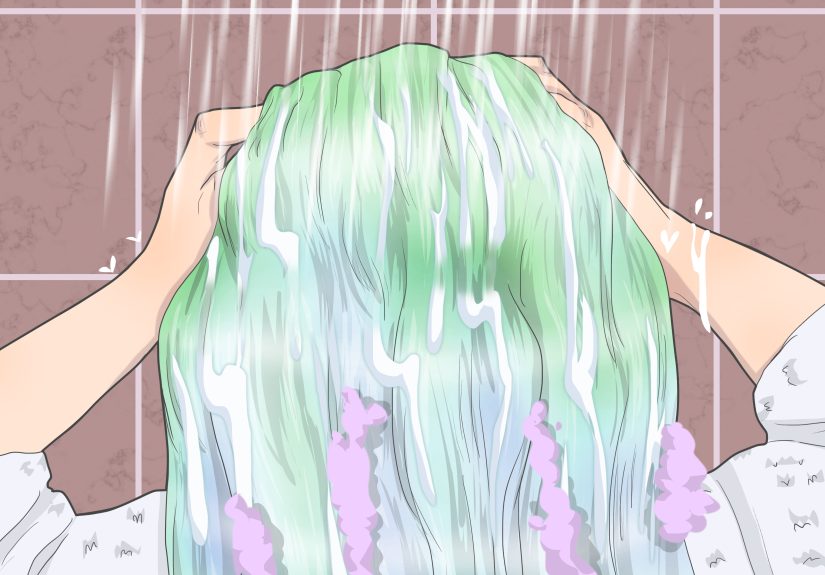
- Wet hair thoroughly with warm (not scorching) water.
- Lather clarifying shampoo and massage it through for 60–90 seconds.
- Let it sit 2–3 minutes like a mini color-fade treatment.
- Rinse well until the water runs clearer.
- If your hair can handle it, repeat once more in the same shower. (Twice is plenty for most people.)
- Condition like you mean it. Leave conditioner or a mask on 5–10 minutes, then rinse.
How often?
Do this every other wash for a week, then reassess. Over-clarifying too frequently can make hair dry and brittle, so listen to your hair.
Best for
- Fresh dye jobs you regret immediately
- Hair that’s already dry, curly, or chemically processed
- Anyone who wants a lower-risk approach before leveling up
Example scenario
You used Splat Purple Desire last weekend and now it’s reading more “grape popsicle” than “editorial cool.” Clarifying washes can fade it to a
softer purple over several shampoos, often enough to recolor with a deeper shade (like a plum or dark brown) without major drama.
Way #2: The Vitamin C + Shampoo Method (Stronger Fade, Still DIY-Friendly)
This is the famous “vitamin C hair dye remover” trick. It can be surprisingly effective on semi-permanent color, especially if you’re trying to
knock down intensity fast. It’s also the method most likely to make your bathroom smell like a science fair citrus experiment.
Why it works (in plain English)
Vitamin C (ascorbic acid) mixed into shampoo can help loosen and fade dye molecules. Evidence is largely practical and anecdotal, but many people
do see noticeable fadingespecially when the dye is still relatively fresh.
What you’ll need
- Vitamin C tablets (plain, not gummy) or vitamin C powder
- Clarifying shampoo or anti-dandruff shampoo
- Shower cap or plastic wrap (optional)
- Deep conditioner or mask
- Gloves (optional, but helpful if your hands stain easily)
Step-by-step
- Crush 10–20 vitamin C tablets into a fine powder (or use 1–2 tablespoons of vitamin C powder).
- Mix with enough shampoo to form a thick pastethink “pancake batter that’s trying to become frosting.”
- Apply to damp hair, focusing on the most saturated areas. Work it through evenly.
- Cover and wait 20–45 minutes. If your hair is fragile, start with 20 minutes.
- Rinse thoroughly, then shampoo once more normally.
- Deep condition for 10–20 minutes. Detangle gently with a wide-tooth comb.
How often?
Once, then wait a couple of days and reassess. If needed, repeat one more time. Doing it repeatedly back-to-back can leave hair dry and rough.
Pro tips for better results
- Timing matters: It tends to work best within the first week or two after dyeing.
- Even saturation: Patchy application = patchy fading. Use enough paste to fully coat.
- Aftercare is non-negotiable: Your hair will likely feel drier afterward. Mask it. Baby it. Speak kindly to it.
Best for
- When clarifying shampoo is too slow
- When you want to fade vivid color before recoloring
- When your hair is healthy enough for a stronger (but still DIY) method
Way #3: The “Reset Button” (Direct-Dye Removers, Bleach Baths, or a Salon Color Correction)
If you need serious movementlike “I have a job interview on Monday and my hair is currently electric teal”this is your power category.
It’s also the category where you can do the most damage if you rush, guess, or get brave in the way that ends with bangs you didn’t choose.
Option A: Use a remover made for vivid / direct dyes
Some removers are formulated specifically for stubborn semi-permanent or direct dyes (the vivid shades that like to linger). These can be more
appropriate than classic permanent-dye removers, which often focus on oxidative dye chemistry.
- Good for: bright pinks, blues, greens, purples that won’t budge
- Watch for: dryness and uneven liftalways deep condition afterward
Option B: A bleach bath (aka bleach wash) for controlled lifting
A bleach bath is a diluted lightening mix (bleach + developer + shampoo) applied to wet hair. It can lift leftover pigment more gently than full
bleach, but it’s still bleachso treat it with respect.
Only consider a bleach bath if:
- Your hair is in decent shape (not overly stretchy, brittle, or breaking)
- You can monitor timing carefully
- You’re okay with the possibility of uneven fading and needing toner/recoloring
General bleach-bath safety rules:
- Strand-test first. Always.
- Start with the most saturated mid-lengths/ends (not your roots unless they’re dyed too).
- Check every 5 minutes. Don’t “set it and forget it.”
- Deep condition after. Consider a bond-building treatment if you use bleach at all.
Option C: Go pro (the salon color correction)
If your hair is already compromised, if the color is extremely stubborn, or if you need a predictable outcome, a professional colorist is often
the safest route. A good colorist can choose the right approach (remover, controlled lift, tone, and recolor) and help you avoid the cycle of
“strip it → damage it → dye it darker → regret it harder.”
Best for
- Stained, long-wearing vivid pigments that won’t fade with washes
- Major color changes (e.g., neon red to light blonde)
- Anyone with fragile hair who wants the least risky path to a wearable result
Aftercare: How to Avoid the “Crispy Ends Support Group”
Removing colorby any methodcan leave hair drier. The goal is to rebuild softness and strength while you’re fading pigment.
Do this for the next 1–2 weeks
- Deep condition 1–2 times per week (look for “repair,” “bond,” or “moisture mask”).
- Use a gentle shampoo on non-removal wash days.
- Limit heat styling (and use heat protectant if you can’t resist).
- Detangle carefully with conditioner and a wide-tooth comb.
- Trim if needed: dead ends don’t “heal,” they just break slowly and ruin your vibe.
When can you recolor?
If you used only clarifying shampoo, you can often recolor fairly soon. If you used vitamin C or any remover/bleach method, wait at least a couple
days, reassess texture, and do a strand test with your new shade. Hair can be more porous after removal, which may cause it to grab color darker
than expected.
Quick FAQs
Does dish soap remove Splat hair dye?
Dish soap can strip oils and fade color, but it can also leave hair very dry. If you try it, keep it to a one-time emergency move and follow with
a serious deep conditioner.
Will baking soda lift the color?
Baking soda is alkaline and can be abrasive, so it may fade dyebut it can also increase dryness and frizz if overused. If your hair is already
parched, it’s usually better to start with clarifying shampoo or vitamin C instead.
Why is Splat so hard to remove?
Vivid direct pigments can stain porous hair, especially if the hair was lightened beforehand. Some shades (often blues/greens) are famous for
hanging on like they pay rent.
Experiences: What Removing Splat Often Feels Like (The Real-World Version)
People usually start this journey in one of two moods: optimistic (“It’s semi-permanenthow bad can it be?”) or panicked
(“My hair is traffic-cone orange and I have family photos tomorrow”). The truth tends to land in the middle: Splat can absolutely fade, but it
often fades in chapters, not in a single plot twist.
The most common “first experience” is the clarifying shampoo loop. You do a warm rinse, lather up, and watch the water run a
suspicious shade of mermaid. It feels productivelike you’re literally washing the regret down the drain. Then you step out, towel off, and the
color is… still there. Just slightly less loud. That’s normal. Many people report the clarifying method works best when they treat it like a
short-term routine: a few strategic washes over a week, paired with deep conditioning so the hair stays flexible instead of crunchy.
The vitamin C method is where stories get dramatic (and weirdly specific). People often describe it as the first time they
visibly see a bigger changeespecially with reds and pinks. But it comes with quirks: the paste can feel gritty if the tablets aren’t
crushed well, and the smell can range from “citrus shampoo” to “I spilled Tang on my head in 2003.” The biggest shared lesson is that saturation
matters. Folks who slap it on quickly sometimes get uneven fading, while the ones who apply carefully and use enough mixture tend to see more
even results. Almost everyone agrees on one thing: skipping conditioner afterward is a mistake you only make once.
Then there’s the “I need it gone” categorydirect-dye removers, bleach baths, or going to a professional. Experiences here split
into two camps. Camp One: “Wow, that lifted way more than I expected.” Camp Two: “Why is the blue still here, just… minty now?” Blues and greens
can be stubborn and sometimes shift into softer tones rather than disappearing. People with already-lightened hair often notice that these intense
methods can make hair feel rougher right away, which is why aftercare becomes the real hero of the story: masks, bond treatments, gentle detangling,
and giving heat styling a little vacation.
One especially common “wish I’d known” moment: after heavy fading or lifting, hair can get extra porous and grab new dye darker than planned.
That’s why experienced DIY-ers often do a strand test before recoloringand why professionals often recommend toning and a controlled recolor
instead of trying to jump straight from neon to perfect beige blonde in one leap.
If you take nothing else from the collective experience: go step-by-step. Start gentle, move up only if needed, and treat your
hair like it’s on your team (because it is). Splat might be stubborn, but it’s not unbeatablejust annoyingly committed.