Table of Contents >> Show >> Hide
- What You’ll Learn
- Before You Start: “Vintage” Doesn’t Mean “Old Everywhere”
- 1) Start with One “Hero” Vintage Piece
- 2) Mix Eras on Purpose (Avoid the Museum Look)
- 3) Use a “Color Thread” to Make Mismatches Look Curated
- 4) Layer Patina, Texture, and Imperfect Finishes
- 5) Upgrade the “Small Stuff” First (Low Risk, High Reward)
- 6) Make Lighting Your Vintage Secret Weapon
- 7) Add Vintage Textiles (The Instant Cozy Hack)
- 8) Curate a Collection, Then Edit It
- 9) Use Vintage Pieces That Work Hard (Function = Timeless)
- 10) Shop Smarter with a Simple Quality Checklist
- Common Mistakes That Make Vintage Decor Feel “Off”
- Room-by-Room Mini Playbook
- Extra: of Real-World “Vintage Decor” Experiences (What People Learn the Fun Way)
- Conclusion
- SEO Tags
Vintage decor is the easiest way to make a home feel like it has a personality (and a backstory) instead of looking like a showroom that
politely asks you not to sit down. The trick isn’t turning your living room into a time capsuleit’s making old pieces feel intentional,
fresh, and totally “you.”
In this guide, you’ll get 10 practical, designer-approved ways to layer vintage into any interior stylemodern, farmhouse, minimalist,
eclectic, and everything in betweenwithout the space feeling cluttered, costume-y, or like you accidentally moved into an antique mall.
Before You Start: “Vintage” Doesn’t Mean “Old Everywhere”
Think of vintage as seasoning, not soup. You’re aiming for contrast: clean lines next to carved wood, crisp upholstery next to a worn leather
edge, sleek art next to a tarnished brass frame. When old and new live together, both look better.
Helpful (not-too-fussy) definitions: “antique” is typically used for pieces 100+ years old, while “vintage” often refers to items that are
roughly 20–99 years old. “Retro” is usually new stuff made to look old. You don’t need to memorize this, but it helps when shopping online
or asking sellers questions.
1) Start with One “Hero” Vintage Piece
If you only add one vintage item, make it a “hero” piecesomething with presence that anchors the room. A mid-century credenza, an antique
armoire, a chunky farmhouse table, a tufted leather chair, or a brass-and-marble coffee table can do more for character than ten tiny trinkets.
How to pull it off
- Place it where the eye naturally lands: under the TV, behind the sofa, in the entry, or on the largest wall.
- Keep its supporting cast simple: pair it with modern art, clean-lined seating, or neutral walls.
- Let it be slightly “louder” than everything else: that’s the point. The room will feel collected, not chaotic.
Example: Put a vintage sideboard in a modern dining room, then add a simple oval mirror and two contemporary sconces. Instant “grown-up house.”
2) Mix Eras on Purpose (Avoid the Museum Look)
The fastest way to make a space feel staged is buying everything from the same decade. A room full of antiques can feel like a period set; a room
full of brand-new pieces can feel like a catalog. The sweet spot is mixing time periods so the space feels lived-in and layered.
Easy mixing formulas
- One vintage era + one modern era: e.g., mid-century pieces with contemporary lighting and art.
- Two eras + one “bridge” material: e.g., 1920s mirror + 1970s lamp + modern sofa, all tied together with warm wood tones.
- 80/20 balance: either 80% modern / 20% vintage (clean and fresh) or 80% vintage / 20% modern (cozy and collected).
Your goal is contrast, not cosplay. If your room looks like it’s waiting for a historical reenactment group to arrive, swap in one modern piece
(a big abstract print or a minimal floor lamp) and watch everything relax.
3) Use a “Color Thread” to Make Mismatches Look Curated
Vintage finds don’t always matchand that’s good. But they need a common thread so the room feels intentional. The easiest thread? Color.
Pick a palette (even a loose one) and let it guide your choices.
Three foolproof approaches
- Neutral base + vintage accents: white, cream, greige, or soft gray with warm wood, brass, and aged pottery.
- One repeating accent color: olive, navy, terracotta, or mustard echoed in art, textiles, and one statement vintage piece.
- Monochrome, different textures: a room of soft blues looks modern even with older furniturebecause the color does the organizing.
Example: Thrifted frames in different styles look “gallery worthy” if you paint them the same soft black or warm white.
4) Layer Patina, Texture, and Imperfect Finishes
Vintage charm lives in the “almost.” A little wear, a softened edge, a dulled shinepatina makes a room feel warm and human. The key is pairing
it with crisp textures so it doesn’t read “tired.”
Texture pairings that always work
- Worn leather + smooth linen
- Antique brass + glossy ceramic
- Distressed wood + clean marble or quartz
- Old oil painting + modern matte frame
One caution: don’t “over-restore” everything. If you sand every scratch out of an old piece, you erase what made it special in the first place.
Clean it, stabilize it, protect itthen let it be itself.
5) Upgrade the “Small Stuff” First (Low Risk, High Reward)
If you’re nervous about buying a big antique dresser, start with small vintage decor that can move around easily. These pieces are also the best
bang for your buck, because a few small swaps can make a room look instantly more collected.
Starter vintage swaps
- Frames: thrifted wood, gilded, or metal frames elevate any gallery wall.
- Mirrors: even a slightly tarnished mirror adds depth and light.
- Vases & pottery: stoneware, hand-thrown ceramics, or vintage glass make modern shelves feel softer.
- Trays & bowls: perfect for corralling keys, candles, and the mysterious tiny objects that appear on every surface.
Example: Put a vintage tray on your coffee table and style it with a modern candle + a small stack of books + a thrifted match striker. Done.
6) Make Lighting Your Vintage Secret Weapon
Lighting is basically jewelry for your house, and vintage lighting has instant charismathink milk glass pendants, pleated shades, brass pharmacy
lamps, or a mid-century “Sputnik” moment. Even one standout lamp makes the whole room feel styled.
How to keep it modern
- Pair vintage lighting with simple furniture so it reads intentional, not cluttered.
- Update the shade: a new linen shade on an old lamp base is the easiest refresh.
- Mind the bulb temperature: warm light flatters vintage finishes (and, frankly, everyone’s face).
Safety note: have older wiring checked or rewired by a pro when needed. “Charming” should never mean “sparky.”
7) Add Vintage Textiles (The Instant Cozy Hack)
Vintage textiles bring pattern and softness in a way brand-new items often can’t fake. They also add color without committing to paint. Look for
quilts, embroidered pillows, kilim rugs, woven blankets, and even vintage table linens that can become napkins or cushion covers.
Where textiles shine most
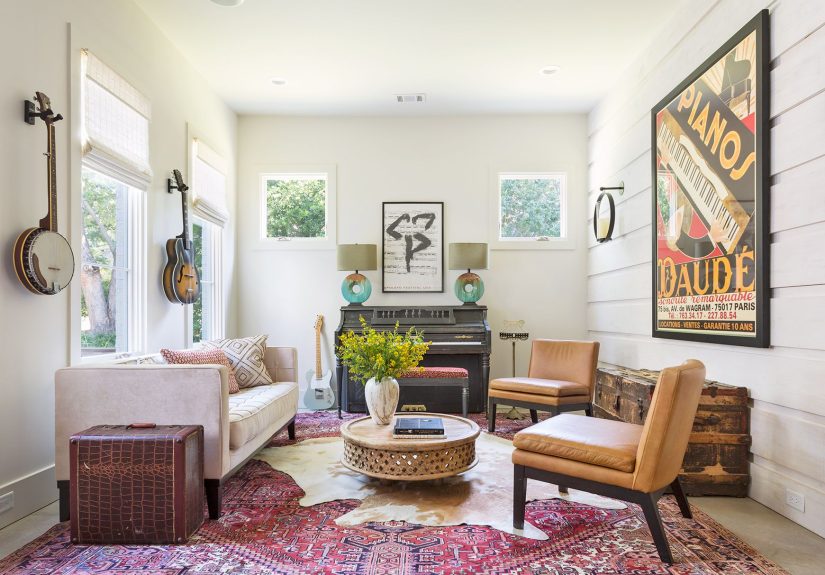
- Living room: a vintage rug under a modern sofa makes everything feel grounded.
- Bedroom: a quilt at the foot of the bed adds charm without overdoing the theme.
- Dining: vintage linens make everyday meals look like you tried (even if dinner is… cereal).
Pro tip: if the pattern feels “too much,” keep the rest of the room calmsolid upholstery, simple curtains, and clean-lined furniture.
8) Curate a Collection, Then Edit It
Collections can look like intentional decor or like you’re running a tiny museum gift shop out of your living room. The difference is editing.
Choose a category you genuinely lovevintage pottery, old books, brass candlesticks, art postcards, or glasswarethen display it with restraint.
Rules that keep it chic
- Group in odd numbers: 3–5 pieces reads designed, not scattered.
- Vary height: tall + medium + small creates a pleasing rhythm.
- Give it breathing room: negative space makes vintage items look valuable instead of crowded.
Example: Display a small lineup of vintage pitchers on open shelvingthen stop. Leave the rest of the shelf for modern ceramics or everyday dishes.
9) Use Vintage Pieces That Work Hard (Function = Timeless)
The most “livable” vintage decor is the stuff you actually use. Functional vintage pieces add character without creating clutter because they earn
their spot in the room.
Workhorse vintage ideas
- Trunks as coffee tables with hidden storage
- Bar carts for entertaining (or as a rolling plant stand)
- Old cabinets for pantry storage, office supplies, or media equipment
- Library ladders (real or decorative) to add height and drama in bookish spaces
If a piece is pretty but impractical, it tends to become “surface clutter.” If it solves a problem, it becomes “design.”
10) Shop Smarter with a Simple Quality Checklist
Vintage shopping is part treasure hunt, part detective work, part “why is this chair so heavy?” Bring a quick checklist so you get the charm
without the regrets.
The quick-check list
- Construction: solid wood, dovetail joints, sturdy frames, tight corners.
- Maker’s marks: stamps, labels, signatures, or tags can signal quality and provenance.
- Condition: check for wobble, major cracks, water damage, odors, and pests.
- Fixability: minor scratches = fine; broken structure = usually a pass unless you’re restoring.
- Scale: measure your space (and doorways). Vintage pieces can be charmingly enormous.
A final sanity saver: take photos of your room before you shop, plus measurements. It’s harder to impulse-buy a five-foot-wide dresser when your
phone is gently reminding you that your wall is… four feet wide.
Common Mistakes That Make Vintage Decor Feel “Off”
- Everything is the same era: it can read themed instead of layered.
- Too many tiny items: clutter kills the magic. Go bigger, fewer.
- Ignoring scale: a delicate antique chair can look lost next to a giant sectional.
- Over-distressing: faux wear everywhere can feel forced. Let real patina do the talking.
- No editing: a curated room has “rests” for the eye.
Room-by-Room Mini Playbook
Living Room
Start with one anchor (a vintage rug, credenza, or coffee table), then add two supporting accents (a thrifted lamp and a mirror).
Keep the sofa and major seating simpler so the vintage details shine.
Bedroom
Swap in vintage nightstands or a small antique dresser, then soften the room with a quilt or embroidered pillow. Add a vintage framed sketch
above the bed for instant charm without crowding the space.
Kitchen & Dining
Vintage in kitchens works best as “warmth,” not overload: bar stools, pendants, a vintage runner, or a set of old cutting boards leaned against
a backsplash. In dining rooms, a vintage table (or a modern table with vintage chairs) is a classic, forgiving mix.
Bathroom
Go small: a vintage mirror, a brass sconce, or a little cabinet for storage. Bathrooms are great for vintage because small doses feel deliberate,
not dusty.
Extra: of Real-World “Vintage Decor” Experiences (What People Learn the Fun Way)
Most people don’t become “vintage decorators” in one dramatic shopping spree. It usually starts with a single find: a weirdly perfect lamp, a
mirror with just enough tarnish to look expensive, or a wooden chair that feels sturdier than anything new you’ve sat on lately. Then comes the
second stageconfidencewhere you realize vintage isn’t about matching. It’s about choosing pieces with a point of view.
A common early experience is the “too much too fast” phase. You bring home three brass candlesticks, five frames, two vases, and a chair you
swear will fit somewhere. Suddenly every surface has something on it, and the room looks more like a staging closet than a home. That’s when
people learn the best vintage lesson: editing is a decorating skill. You don’t need to display everything you own. Rotate pieces seasonally,
store extras, and let the room breathe. Vintage items look more valuable when they have space around themlike they’re being appreciated, not
just stored in public.
Another real-world learning moment: scale and proportion are not optional. Vintage furniture can run smaller (think delicate side chairs) or
bigger (hello, solid wood dressers that could survive a meteor). People who measure doorways and wall lengths before shopping tend to have a much
better time. People who don’t… tend to have a surprise ottoman living in their hallway for two months. Measuring isn’t boring; it’s how you
avoid turning your floor plan into a furniture obstacle course.
Many homeowners also discover that “imperfect” doesn’t automatically mean “bad.” A few scratches on a dining table can make it feel welcoming
instead of precious. Patina can make a space feel warm and personal. But there’s a line: structural problems, strong musty odors, active wood
damage, or wobbly joints that can’t be tightened are not charming. The most satisfying vintage wins usually involve pieces that are fundamentally
solid, then refreshed with light effortnew hardware, a cleaned finish, a repaired drawer glide, or updated upholstery.
Finally, people often realize vintage decor works best when it’s connected to how they live. The pieces that get kept long-term aren’t always the
fanciest; they’re the most useful. A trunk that hides blankets. A bar cart that holds coffee supplies. A sturdy sideboard that swallows board
games, tech clutter, and the random cables we all pretend we’ll organize “later.” When vintage decor earns its keep, it stops being “a look” and
becomes part of your home’s storywhich is the whole point.