Table of Contents >> Show >> Hide
Sapo: Want to turn that retired red cylinder gathering dust into the coziest focal point in your living room? In this fun DIY guide, we’ll show you how to transform an old fire extinguisher into a decorative fireplace that oozes charmwith zero real flames involved. We’ll walk you through safety tips, materials, step‑by‑step instructions, and styling ideas so you can up‑cycle smartly and stylishly. Ready to repurpose, laugh a little, and craft your way to home décor stardom?
Why Turn a Fire Extinguisher into a Decorative Fireplace?
Upcycling is all the rageand for good reason. Transforming a well‑used or retired fire extinguisher into a decorative fireplace piece is a brilliant way to merge industrial chic with cozy home décor. Blogs and DIY communities have showcased the concept: one creator explained they “decided to build a decorative item… that would add a warm atmosphere to almost any home or room would find.”
Here’s why the idea works:
- Unexpected focal point. A fire extinguisher turned “fireplace” creates instant conversationyes, you’re turning one type of fire safety into another type of fire atmosphere.
- Compact space‑friendly. Unlike a real wood‑burning fireplace, this DIY version is smaller, safer and easier to place in apartments or rooms without chimneys.
- Eco‑friendly/up‑cycle win. Reusing an older extinguisher that might otherwise be discarded gives new life and reduces waste.
Safety First: What You Need to Know
Before you ever pick up a saw blade or lamp kit, you need to ensure you’re doing this safely: this isn’t just décorit involves a pressurised metal cylinder that once held fire‑suppressant chemicals. So:
- Make sure the extinguisher is completely empty and depressurised. One DIYer literally wrote: “the first step is to dismantle the extinguisher but … it is very important before that to check that there is no pressure!”
- Wear protective gloves and eyewear when cutting, drilling or handling metal edges.
- Ensure the lamp or LED “flame” you install is safe for enclosed metal spaces (no real fire, no risk of combustion). Indeed, the project uses a “special lamp that simulates a flame perfectly” instead of real fire.
- Position your decorative fireplace in a well‑ventilated, safe areakeep it away from flammable materials, ensure it’s stable and can’t tip over.
Materials & Tools You’ll Need
Here’s a checklist of what you’ll want before diving in:
- A retired fire extinguisher (metal cylinder format works best)
- Metal cutting or angle grinder (for opening the cylinder) and drill
- Mesh or metal screen (to act as “grate” inside the cylinder)
- A flame‑effect lamp or LED module (safe, low heat) for inside the cylinder
- Spray paint (heat‑safe) or finish for the exterior of the cylinder
- Optional: decorative logs, white wool or fibres inside to create realistic ember effect
- Protective gear (gloves, goggles), sandpaper or wire brush for prepping metal, and mounting hardware if wall‑mounting
Step‑by‑Step: How to Build Your Decorative Fireplace
Step 1: Prepping the Cylinder
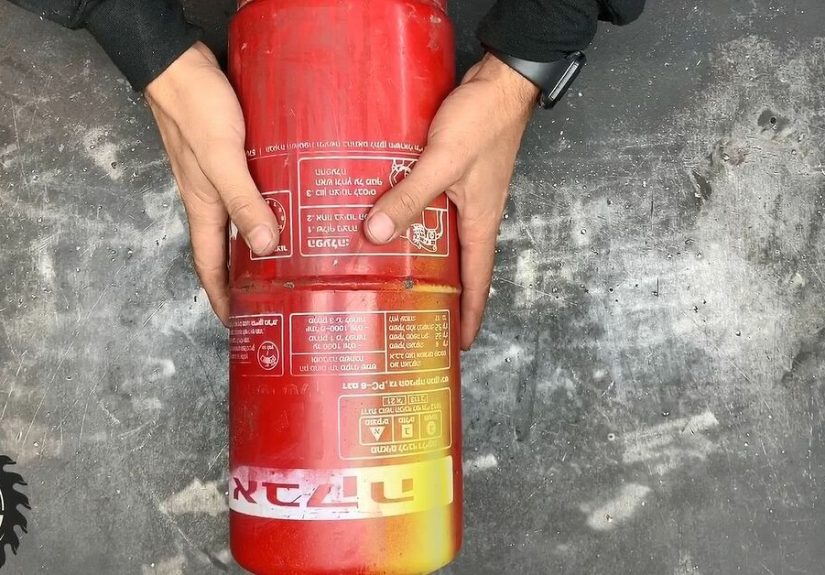
Start by confirming no pressure remains. Remove the head/valve carefully, following professional advice if needed. Then mark the opening you’ll cut into the cylinder to act as the “fireplace opening”. As one DIYer notes: “I cut it as in the picture …”
Step 2: Surface Finish
Once the cut is done and all edges filed smooth, apply your finish. Many up‑cyclers choose to spray‑paint the exterior in matte black or another stylish color, letting it dry thoroughly. The tutorial says: “paint the extinguisher 2 layers of black paint, then let it dry for at least 24 hours.”
Step 3: Install the Inner Mesh Grate
Inside the cylinder you’ll need a “grate” or mesh structure to hold the decorative “logs” or wool and allow light to shine through convincingly. One builder described fitting iron mesh slightly larger than the opening and rounding it to fit.
Step 4: Add the Flame Effect Lamp or LED Module
Install a safe lamp insidethis is what gives the warm glow. Place your white wool or textile “embers” above the mesh then set the lamp so it flickers through the mesh and cylinder opening. This creates the illusion of flame. One source confirms: “I make a special lamp that gives the perfect flame effect, as if it’s real.”
Step 5: Final Placement and Styling
Now you decide where in your home this up‑cycled fireplace will live. On the floor like a chimney piece, or mounted on a wall bracket. Style it with a mantel shelf, mount above it a mirror or frame, or place next to a cozy chair with a throw blanket. Since it’s essentially safe (no real fire), you get more styling freedombut still respect electrical cord routing and stable placement.
Style + Design Tips
Here are some fun ways to make it look less “repurposed machine” and more “cozy hearth”:
- Contrast colors: If your room décor is light and airy, paint the extinguisher white or blush instead of black. The cylindrical form becomes sculptural.
- Layer textures: Surround with reclaimed wood boards or simple mantel shelf. Even though the cylinder is small, you can build a mini‑mantel above or around it.
- Seasonal touches: Swap out the “logs” inside for glass beads or crystals during spring, for pumpkins in falljust be sure materials remain safe with the lamp inside.
- Mix height‑wise: If you choose two matching extinguishers (for symmetry), place them at different heights, flank an accent wall, etc.repurposes serious design energy in a tiny footprint.
Why It Works (And Why It’s Fun)
Turning a fire extinguisher into a decorative fireplace is quirky, yesbut that’s precisely its charm. It blends industrial history (the extinguisher) with homey comfort (the “fireplace” glow). It gives you the warmth Aesthetic without needing a chimney or vent, and re‑uses something that otherwise might be dumped.
As one vintage‑upcycle blog puts it: “A fake fireplace hearth can add coziness to a living space…You don’t have to own a real fireplace.” And when you’ve built something with your own two hands, the story becomes part of the pieceso guests will ask: “Wait, did you really turn a fire extinguisher into that?”
Conclusion
Whether you’re after a standout conversation piece, a budget‑friendly focal point, or simply want to flex your DIY muscles, this project delivers. You’ll end up with a decorative fireplace that’s equal parts clever up‑cycle, cozy ambiance and quirky design. Just remember the safety first (definitely no real fire), follow the prep steps, pick your kit/LED lamp carefully, style it thoughtfullyand you’ll have a home décor winner.
Experience Section –
Personal Experiences & Real‑Life Reflections
When I first heard the idea of turning a fire extinguisher into a decorative fireplace, I’ll admit: I raised an eyebrow. A fire extinguisher? As décor? But after diving in, testing materials, making a few mistakes (which I’ll share so you don’t repeat them), I now adore the resultnot just the final piece, but the process itself.
**The thrill of the transformation.** Pulling that old extinguisher out of the garage, where it sat as a forgotten relic after a building code inspection, I felt like an archaeologist unearthing a future art piece. I cleaned it, removed the valve head (still weird to unscrew what once held anti‑fire agent), and cut into ityes, the very thing meant to suppress flames became the vessel for a decorative one. That inversion felt delightfully ironic.
**Unexpected design discovery.** In planning the mesh insert, I tried a few materials: chicken wire (too flimsy), decorative metal grating (too busy), then settled on a sheet of perforated metal I found at the salvage yard. That made the light flicker in a fun wayalmost like real embers glowing. I layered white wool and a few small driftwood bits inside for texture. On low light, it casts shadows that dancejust enough to fool the eye.
**Style fit‑up.** I decided to place my new “fireplace” in the corner of my living room next to a reading chair. I added a reclaimed wood shelf above it and hung a vintage firefighter helmet (playfully referencing the extinguisher origin). The glow lamp warms the corner just right at dusk. For guests, it’s always the “what is that?” piecethey lean in, ask, I say: “Believe it or not, it used to fight firesin its past life.”
**Cautions learned.** First: be sure the extinguisher is depressurisedmy first attempt had a valve still slightly charged, and I couldn’t cut safely without hiss and flash of mist. Not fun. Second: don’t use real flame. I tested a small wax candle inside (bad idea)metal cylinder, enclosed space, hot springs up quick. I replaced that with a commercial LED flicker lamp rated for enclosed fixtures; safe and far more reliable. Third: stability matters. The cylinder is tall and narrow; I affixed a small metal bracket to the floor (under carpet) to keep it from tipping when bumped.
**What I learned about décor.** Do‑it‑yourself isn’t just about saving money (though this cost very little). It’s about telling a story. When you have an object that used to serve one function (suppressing fire) and you turn it into something entirely different (evoking fire), you’ve invited story, play, and surprise into your home. It becomes more than décorit’s a conversation piece. Plus, everyone loves up‑cycling. One friend said: “It’s like you gave it a second life.” Exactly.
**Tips based on experience.** If you try this yourself: pick an extinguisher sized appropriately (a big one may dominate the room; a tiny one may look fiddly). Consider the color: leaving the red original finish might fit a “garage loft” or “industrial chic” stylebut painting it matte black or charcoal makes it more elegant. Use a flame‑kit lamp with remote so you can adjust intensity. For seasonal flair, switch out the interior “logs” with pine cones + LED fairy lights in winter, or glass beads and tealights in summer (still battery‑only, no real flame!).
**Final thoughts.** When the piece was done, I sat down in my chair, turned the lamp on, and just let the light glow. The room felt warmereven though no heat was generated. Because sometimes it’s less about literal warmth and more about atmosphere. That’s the magic of this project. So if you’ve got an old extinguisher, an idea for a focal point, and a sense of fungo ahead, turn it into your decorative fireplace. You’ll not only reuse, but re‑imagine. And your living room will thank you.