Table of Contents >> Show >> Hide
- Why “Pregnant Goldfish” Is a Common Search Term
- How to Tell if a Goldfish Is Pregnant: 8 Steps
- Step 1: Know What a Healthy Female Goldfish Normally Looks Like
- Step 2: Look for a Rounded or Distended Abdomen
- Step 3: View the Fish from Above for a Lopsided Belly
- Step 4: Check the Vent Area Carefully
- Step 5: Examine the Males for Breeding Tubercles
- Step 6: Watch for Chasing and Nudging Behavior
- Step 7: Inspect Plants, Decorations, and Glass for Sticky Eggs
- Step 8: Rule Out Illness Before You Celebrate
- What to Do if Your Goldfish Is Carrying Eggs
- Common Mistakes People Make
- Final Thoughts
- Experience and Practical Observations from Real Goldfish Keepers
- SEO Tags
If you have been staring at your goldfish and thinking, “Wow, somebody looks extra round today,” welcome to one of the most common questions in fishkeeping. People often ask whether a goldfish is pregnant, but here is the first important truth: goldfish do not get pregnant in the mammal sense. They are egg-layers. A female goldfish can become gravid, which means she is carrying eggs and may be getting ready to spawn.
That may sound like a technicality, but it matters. A fish that is full of eggs can look chubby, lopsided, and busy being chased around the tank. A fish that is sick can also look swollen, act weird, and stop eating. One situation is nature doing its thing. The other may need fast action. So if you want to know whether your goldfish is about to become a mom-ish figure to a cloud of sticky eggs, these eight steps will help you figure it out without turning your aquarium into a reality show called Guess That Belly.
Why “Pregnant Goldfish” Is a Common Search Term
People use the word “pregnant” because it is the easiest way to describe a female goldfish that suddenly looks rounder than usual. That is totally understandable. In practical fishkeeping, though, the better phrase is carrying eggs or gravid goldfish. Goldfish are egg scatterers. When conditions are right, the female releases eggs and the male fertilizes them externally. There is no internal pregnancy, no baby bump countdown, and definitely no fish-sized baby shower.
Still, the signs that a goldfish is ready to spawn are real and pretty easy to spot once you know what to look for. Let’s walk through them step by step.
How to Tell if a Goldfish Is Pregnant: 8 Steps
Step 1: Know What a Healthy Female Goldfish Normally Looks Like
Before you assume your goldfish is carrying eggs, get familiar with her baseline shape. Female goldfish are often naturally rounder than males, especially fancy varieties such as orandas, fantails, ryukins, and black moors. In other words, “round” by itself is not proof of anything. Some goldfish are just built like adorable little water balloons.
Watch your fish over several days or weeks. Has the belly become noticeably fuller than usual? Has the fish gone from pleasantly plump to “did she swallow a marble?” If the answer is yes, that change matters more than the fish’s general shape on one random Tuesday afternoon.
This first step is all about comparison. A goldfish that has always looked wide is not necessarily carrying eggs. A goldfish that suddenly looks fuller during breeding season may be.
Step 2: Look for a Rounded or Distended Abdomen
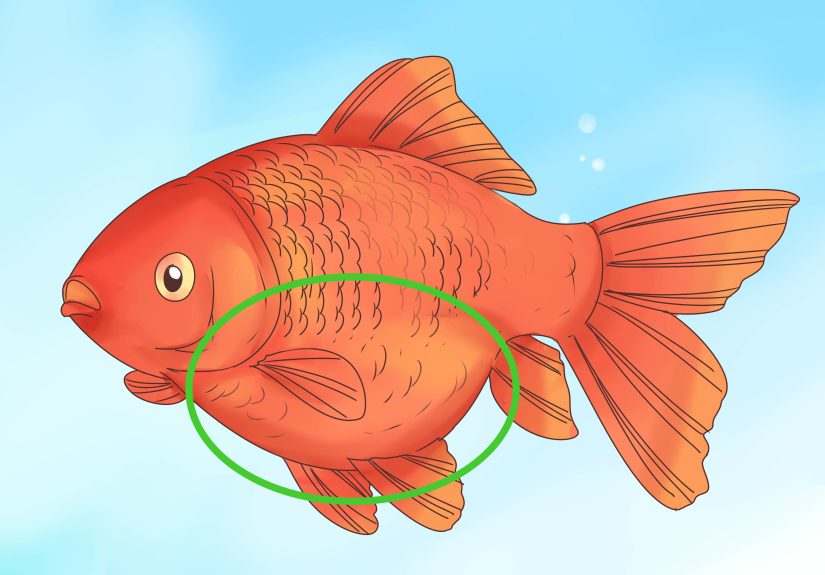
The most obvious sign of a gravid goldfish is a fuller abdomen. When a female is carrying eggs, her belly often becomes enlarged and softer-looking. In some cases, the swelling is subtle. In others, it is so noticeable that even the least observant person in the house says, “Uh, your fish looks different.”
A breeding female usually looks swollen through the midsection rather than puffy all over. The body still appears balanced, the scales lie flat, and the fish usually keeps swimming normally. That is different from many illnesses that cause bloating. With disease-related swelling, you may see raised scales, lethargy, clamped fins, or a fish that seems uncomfortable.
If the abdomen is enlarged but the fish is otherwise active, eating, and interacting normally, eggs are more likely to be the reason. If the fish is swollen and also struggling, illness should move to the top of your suspect list.
Step 3: View the Fish from Above for a Lopsided Belly
This is one of the best tricks in the book. Look at your goldfish from above rather than only from the side. A female carrying eggs may appear wider across the belly, and sometimes one side looks slightly fuller than the other. That lopsided shape happens because the egg mass is not always distributed perfectly evenly.
From the front glass, a fish may simply look chunky. From the top, you may notice a clear pear shape or a gentle bulge that was invisible before. Pond keepers often spot this faster than aquarium owners because top-down viewing is part of daily life outdoors.
Do not panic if the fish is slightly asymmetrical for a short period before spawning. That can be normal. Do panic a little, or at least pay close attention, if the bulge looks hard, extreme, or paired with distress.
Step 4: Check the Vent Area Carefully
The vent is the opening on the underside of the fish near the anal fin. In females that are ready to spawn, the vent may look slightly enlarged, rounder, or more protruding than usual. In males, the vent is often smaller and more tucked in.
This is not the easiest sign for beginners because goldfish are famously unhelpful about holding still while you inspect them. Still, if you can safely observe the underside when the fish turns, a fuller and more prominent vent can support the idea that your fish is carrying eggs.
Think of this sign as supporting evidence, not the entire case. It works best when paired with a swollen abdomen and active breeding behavior in the tank.
Step 5: Examine the Males for Breeding Tubercles
If you have more than one goldfish, shift your attention to the males. During breeding season, male goldfish often develop tiny white bumps called breeding tubercles or breeding stars. These usually appear on the gill covers and the leading rays of the pectoral fins.
They can look a bit like grains of salt, which unfortunately means beginners sometimes mistake them for a disease. The difference is location and texture. Breeding tubercles show up in a very specific pattern and are linked to sexual maturity. White spots from disease tend to appear more randomly over the body and fins.
If your “mystery swollen” female is sharing a tank with a male sporting breeding tubercles, the plot thickens. The tank may be heading toward a spawning event.
Step 6: Watch for Chasing and Nudging Behavior
Goldfish breeding is not subtle. Males often chase females around the tank or pond, nudging the female’s sides and rear in an effort to trigger egg release. To a new fish owner, this can look like bullying, harassment, or aquatic chaos. Sometimes it is breeding behavior. Sometimes it is both.
If the chasing happens repeatedly, especially in the morning or after a change in temperature, light, or water conditions, spawning may be near. The female may dart away, pause near plants, or look slightly annoyed, which is fair. The male usually acts like he has had too much espresso and one urgent life mission.
This is one of the strongest clues that your female is not just bloated but actually ready to lay eggs. Behavior tells the story that body shape alone cannot.
Step 7: Inspect Plants, Decorations, and Glass for Sticky Eggs
If you think your goldfish is about to spawn, start checking the tank. Goldfish eggs are small, round, and sticky. They often cling to plants, spawning mops, decorations, filter parts, or even the aquarium glass. Fresh eggs may look clear to pale yellow or amber.
If you find eggs, mystery solved. Your fish was not pregnant in the mammal sense, but she was definitely carrying eggs. This is also your cue to move quickly if you want fry. Goldfish are not sentimental parents. They are enthusiastic egg eaters.
In many home tanks, spawning happens fast and owners only realize it afterward when they notice clear little dots stuck everywhere. It is one of the few moments in aquarium life when “Why is everything covered in jelly beads?” is actually exciting.
Step 8: Rule Out Illness Before You Celebrate
This step is the most important one. Not every swollen goldfish is carrying eggs. A large belly can also be caused by constipation, fluid retention, dropsy, tumors, cysts, organ problems, or poor water quality. If your fish looks bloated and also has raised scales, difficulty swimming, loss of appetite, clamped fins, bottom sitting, gasping, sores, or a sudden personality change, assume health issue first and breeding second.
Here is a good rule: a gravid goldfish generally looks fuller but otherwise normal. A sick goldfish often looks fuller and miserable. That extra word makes all the difference.
When in doubt, test your water parameters and consult an aquatic veterinarian. It is far better to ask early than to wait until your fish is floating around like a confused orange submarine.
What to Do if Your Goldfish Is Carrying Eggs
If you are fairly sure your goldfish is gravid, you do not need to do anything dramatic. Keep the water clean, the stress low, and the diet appropriate. If you want to encourage a safe spawn, provide soft plants or a spawning mop where eggs can stick. If you do not want babies, you can simply monitor the fish and let nature take its course.
If spawning begins, be aware that adults may chase hard enough to exhaust the female. In crowded tanks, breeding stress can become too much. Good filtration, stable temperature, and enough space matter here more than clever tricks or internet folklore.
And if eggs appear? Decide quickly whether you want to raise fry. If yes, separate the eggs or remove the adults. If no, do not be shocked if the eggs disappear faster than snacks at a movie night.
Common Mistakes People Make
Confusing Breeding Tubercles with Ich
Not every white bump is a medical emergency. If the bumps are mainly on the gill covers and pectoral fins of a mature male, breeding tubercles are likely.
Assuming Every Round Fish Is Female
Fancy goldfish come in shapes that seem designed by a committee of cartoonists. Body shape alone is not enough.
Missing the View from Above
Top-down observation can reveal a lopsided or widened abdomen much better than side viewing.
Ignoring Signs of Illness
If the scales stick out like a pinecone, the fish is not simply “fish pregnant.” That is a red flag.
Final Thoughts
If you are trying to tell whether a goldfish is pregnant, the best answer is this: she is probably gravid, not pregnant. Look for a fuller belly, a slightly lopsided shape from above, a protruding vent, males with breeding tubercles, chasing behavior, and eventually sticky eggs on surfaces in the tank. Then balance all of that against the fish’s overall health.
In fishkeeping, observation beats guesswork every time. A goldfish about to spawn usually gives you clues with her body, her tank mates, and her behavior. Learn those clues, and you will spend less time guessing and more time knowing when your aquarium is about to become a nursery, or when it is time to call in a professional because that “baby bump” is actually a problem.
So yes, your goldfish may look pregnant. But technically, she is carrying eggs, and biology would really like the credit for that distinction.
Experience and Practical Observations from Real Goldfish Keepers
One of the most useful things longtime goldfish keepers learn is that spawning signs usually show up as a pattern, not a single dramatic clue. A female may look a little fuller for several days, then the males start chasing, then everyone suddenly acts like the tank has become an underwater track meet. By the time eggs appear on the plants, the owner often says, “Oh, so that is what was going on.” In other words, hindsight is crystal clear and timing is not.
Another common experience is that first-time owners often notice the male before the female. They see tiny white spots on the male’s gill covers and panic, assuming it is ich. After a closer look, they realize the bumps are neatly concentrated on the operculum and pectoral fins, the fish is otherwise healthy, and the “disease outbreak” is really just breeding condition. A few days later, the round female starts getting chased, and the mystery wraps itself up with sticky eggs attached to anything that will hold still.
Pond keepers often report that spring weather flips the switch. As the days get longer and the water warms, the fish become more active and courtship behavior ramps up fast. Aquarium keepers see similar patterns after environmental changes, especially when water quality improves or the tank gets more consistent light. That is why people sometimes feel like spawning came out of nowhere, when in reality the fish were responding to better conditions all along.
Fancy goldfish add another layer of confusion. Because breeds like ranchus, orandas, and ryukins are naturally round, it can be harder to tell whether a female is carrying eggs or simply existing in her usual deluxe potato shape. Experienced keepers rely less on body size alone and more on combined clues: top-view shape, vent appearance, male tubercles, and chasing behavior. The more pieces that line up, the more confident the diagnosis becomes.
Many hobbyists also learn the hard way that breeding behavior can get rough. A healthy female may tolerate chasing for a while, but constant pursuit in a cramped tank can lead to exhaustion and stress. Some owners separate fish temporarily if one female is being relentlessly harassed. Others add spawning mops or dense plants so the female has places to pass through and the eggs have somewhere safe to land. Those small adjustments can make a big difference.
Then there is the classic “Where did all the eggs go?” moment. Goldfish are prolific, but they are not exactly committed parents. Plenty of keepers discover eggs one hour and none the next. If you want fry, preparation matters. If you do not want fry, nature usually handles population control with startling efficiency.
Perhaps the most valuable practical lesson is this: experienced goldfish keepers stay calm and observe before they act. They do not treat every swollen belly as disease, and they do not assume every swollen belly is eggs either. They check water quality, watch behavior, compare body shape over time, and look for the combination of signs. That steady, boring, unglamorous observation is usually what leads to the right answer.
And honestly, that may be the most goldfish-keeper experience of all. You start by asking if your fish is pregnant, and you end up learning anatomy, seasonal behavior, water quality, and the difference between romance and chaos in a tank full of orange snack-seekers. Aquarium life is educational like that.