Table of Contents >> Show >> Hide
- Why This South Park Parody Hit a Nerve
- Fox News and the Great “We Can Totally Take a Joke” Argument
- The Real Irony: South Park Was Mocking More Than Trump
- Trump, Media Power, and the White House Backlash
- The Charlie Kirk Example Complicated the Story
- Paramount, Corporate Nerves, and Why the Timing Was So Perfect
- The Joke Worked Because People Couldn’t Stop Talking About It
- What This Says About MAGA, Fox News, and Comedy in 2025
- A Longer Reflection: What Watching This Media Circus Actually Feels Like
- Conclusion
There are few things more American than a cartoon causing a political meltdown before lunchtime. And in the summer of 2025, South Park managed to do exactly that with the kind of cheerful, flamethrower satire it has spent decades perfecting. The show’s Season 27 premiere took aim at Donald Trump, the media machinery around him, and Paramount itself. The result was loud, rude, absurd, and impossible to ignore. Then came the even funnier part: the reaction.
Fox News, while criticizing the show’s Trump parody and questioning whether the jokes were actually funny, also pushed a striking counterclaim: MAGA, it said, knows how to laugh at itself. That argument might have sounded sturdier if it had not arrived in the middle of a broader conservative media freak-out over the episode. In other words, the message was basically, “We are totally not mad, and here is a full essay explaining why we are definitely not mad.”
This whole media moment matters because it says a lot about political satire, partisan identity, and the very modern sport of pretending not to care while caring with Olympic intensity. It also shows why South Park, a show that many people periodically declare dead, irrelevant, or trapped in its own adolescence, keeps finding ways to drag itself back into the center of the conversation.
Why This South Park Parody Hit a Nerve
The Trump parody landed at a perfect storm moment. South Park was not simply mocking a politician in a vacuum. It was doing so while its corporate parent, Paramount, was under intense scrutiny, while the company was tied up in politically charged headlines, and while public distrust of media institutions was already bubbling like an overcaffeinated coffee pot. That meant the episode was never going to be treated as “just a joke.”
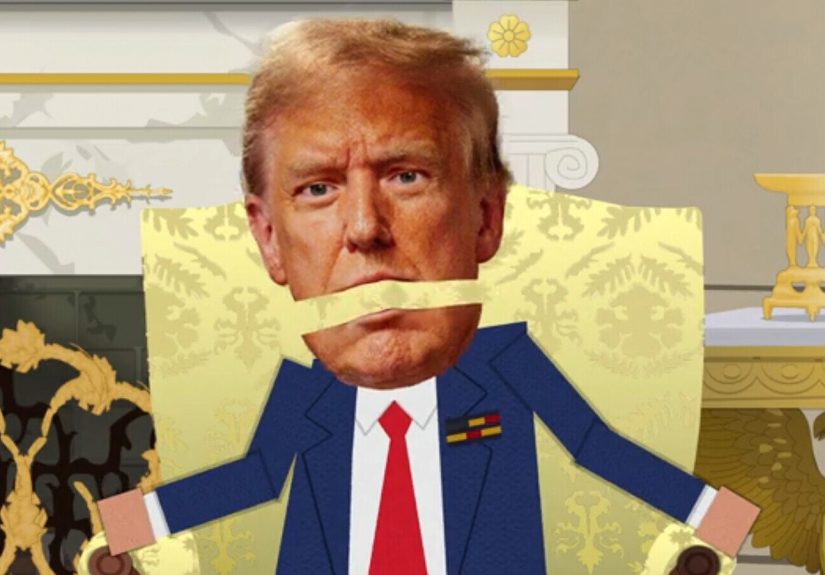
The show went broad and brutal. It portrayed Trump in a deliberately humiliating, exaggerated way, leaned into its trademark shock tactics, and folded in wider commentary about media power, lawsuits, and corporate fear. That combination is classic South Park: pick a giant public controversy, throw it into a blender with blasphemy, celebrity mockery, and schoolyard stupidity, then serve it hot.
But satire only works when it touches something real. The episode was not just juvenile for the sake of juvenile. It was making a larger point about political intimidation, media self-preservation, and the willingness of large institutions to bend when power starts shouting. That is why the parody traveled far beyond TV recaps and meme accounts. It became a referendum on who gets mocked, who gets protected, and who claims to enjoy being the butt of the joke.
Fox News and the Great “We Can Totally Take a Joke” Argument
The Fox News response was a study in modern media contradiction. On one hand, the network’s commentary suggested that conservatives, and specifically MAGA supporters, can laugh at themselves. On the other hand, the tone of the criticism made it clear that the parody was not being treated like a harmless bit of fun. The complaint was not always that satire is unacceptable. More often, it was that the satire was bad, biased, stale, or simply not funny enough to justify the provocation.
That is an important distinction, because it is one of the most common defensive maneuvers in politics and pop culture. Nobody wants to look humorless. So the move is rarely, “This joke offended me.” It is usually, “This joke failed artistically.” The speaker gets to preserve an image of cool detachment while still rejecting the punchline. It is the rhetorical equivalent of saying you did not lose the game, you just found the rules annoying.
Fox’s framing also depended heavily on the idea that some figures on the right have indeed embraced parody. Charlie Kirk became the key example. He publicly described his own South Park treatment as a “badge of honor,” which Fox highlighted as evidence that conservatives can shrug off satire and keep moving. Fair enough. That response did make Kirk look more comfortable in the spotlight than some politicians who react to comedy like it is a cyberattack.
Still, one person laughing does not automatically prove an entire movement has a relaxed relationship with mockery. Political tribes are not group chats with one shared personality. Some supporters enjoy irreverence. Others instantly declare cultural warfare. The contradiction is the story: conservatives wanted credit for laughing at the joke while simultaneously making the joke part of the grievance economy.
The Real Irony: South Park Was Mocking More Than Trump
One reason the episode traveled so fast is that it was not narrowly anti-Trump. It was anti-cowardice. It mocked political ego, but it also mocked corporate timidity, public relations spin, and the weird theatrical dance between media companies and powerful public figures. That wider target makes the reaction from both fans and critics more interesting.
For years, South Park has built its reputation on being an “equal opportunity offender.” That phrase gets overused, but the show’s basic instinct is real: it likes to throw elbows in every direction. Liberals, conservatives, celebrities, activists, networks, religious groups, and its own audience have all taken hits. The show’s defenders argue that this is exactly why it still matters. Its critics argue that its both-sides style can flatten serious issues into smug performance. Both arguments have a pulse.
In this case, however, the show was not presenting itself as neutral wallpaper. It was deliberately provoking the people and institutions that currently hold the most visible cultural and political power. That matters. Satire does not become less valid because it is impolite. Often it becomes more effective because it refuses to act polite when politeness is being used as camouflage.
Trump, Media Power, and the White House Backlash
The White House reaction gave the episode an extra turbo boost. Officials dismissed the show as irrelevant, framed it as a desperate attention grab, and defended Trump’s political momentum. That response was predictable, but it also handed South Park exactly what satire loves most: proof that the target heard the joke and did not enjoy it.
There is always an odd chemistry between political parody and political outrage. The more loudly a public figure insists a show does not matter, the more the audience suspects it mattered quite a bit. It is the old “this means nothing to me” speech delivered while setting off fireworks. And in the age of instant clips and social media pile-ons, official condemnation can function like free marketing.
That is what made the Fox News position especially fascinating. Fox was not alone in criticizing the episode, but its version of the argument tried to have it both ways. The network could side with conservative viewers who found the parody hostile or lazy, while still presenting the right as emotionally sturdier than the left. It was less a full-throated defense of satire than a public-relations balancing act: yes, the joke was dumb; yes, our side can take it; no, please do not interpret this article as proof that the joke landed.
The Charlie Kirk Example Complicated the Story
Charlie Kirk’s response gave conservative media a useful talking point. By treating his parody as flattering in its own weird way, Kirk positioned himself as someone who understood the cultural rules of the game. In modern politics, being parodied by a giant comedy brand can look like a status marker. If South Park turns you into a cartoon villain, you have probably made it.
That response did two things at once. First, it undercut the idea that every right-wing figure automatically collapses under satire. Second, it allowed Fox commentators to argue that the movement can laugh when it chooses to. But Kirk’s comfort did not erase the broader tension. In fact, it highlighted it. The movement wanted to celebrate his cool-headedness while still preserving outrage as an option for everyone else.
And that is where the phrase “MAGA knows how to laugh at itself” starts wobbling. Some people do. Some people absolutely do not. Some people laugh first and rage-post later. And some people call a joke proof of elite bias while also claiming the joke was too weak to matter. Political identity rarely behaves with the neat consistency pundits promise on television.
Paramount, Corporate Nerves, and Why the Timing Was So Perfect
The episode also landed right as Paramount was making huge business moves around South Park. Reports tied the franchise to a massive new streaming agreement worth about $1.5 billion over five years. That gave the season premiere an extra layer of tension, because the show was effectively biting the hand that had just written a very large check.
That tension made the satire richer. When a rebellious show is fully embedded in a giant corporate structure, every act of defiance becomes more interesting. Is the company truly standing back and letting the creators do their thing? Is it quietly sweating through its suit jacket? Is controversy now simply part of the product? Probably yes, yes, and yes again.
South Park has always thrived on chaos, but corporate chaos is especially useful because it gives the show real-world material with actual stakes. It is one thing to make fun of Washington. It is another to make fun of your own media parent while contract numbers are still fresh and everyone in executive offices is pretending this is fine.
The Joke Worked Because People Couldn’t Stop Talking About It
If the measure of satire is whether it gets attention, this episode did not just succeed. It cannonballed into the deep end. The premiere drew a huge audience, sparked round-the-clock coverage, and became one of those rare TV moments that jump from entertainment news into politics, culture, and media criticism all at once.
That matters because relevance is not declared by press secretaries or cable hosts. Relevance is demonstrated by obsession. If everyone from network pundits to culture writers to political staffers is arguing over a cartoon, the cartoon is relevant. End of story. It may be crude, juvenile, and morally incapable of indoor voice. But relevant? Absolutely.
The deeper reason the parody connected is that it understood something essential about the current era: politics is now inseparable from performance. Leaders perform strength. Media outlets perform neutrality. Supporters perform irony. Critics perform disbelief. South Park simply exaggerated the performance until it became impossible not to notice. That is what strong satire does. It does not invent absurdity; it exposes how much absurdity was already in the room.
What This Says About MAGA, Fox News, and Comedy in 2025
The smartest reading of this media flare-up is not that one side won. It is that everyone revealed something. South Park revealed it still knows how to turn a political moment into messy, unforgettable television. Fox News revealed the right still wants to be seen as culturally tough, even while pushing back against satire it dislikes. The White House revealed, once again, that dismissing comedy can make the comedy hit harder. And audiences revealed that they are still drawn to politically dangerous jokes, especially when those jokes target powerful people and nervous institutions at the same time.
Comedy has always been a stress test for public confidence. People who are truly comfortable with criticism usually do not need a three-step explanation for why they are not bothered. That does not mean every joke is brilliant. Plenty are cheap, lazy, or obvious. But the scramble to prove emotional invulnerability often tells us more than the joke itself.
So when Fox argues that MAGA knows how to laugh at itself while also swatting at South Park, it creates the kind of contradiction that comedy writers dream about. The network was trying to defend the movement’s swagger. Instead, it accidentally illustrated the exact fragility the show was mocking. And somewhere, probably while drawing something wildly inappropriate for cable television, Trey Parker and Matt Stone must have appreciated the assist.
A Longer Reflection: What Watching This Media Circus Actually Feels Like
Watching this whole saga unfold feels a bit like being stuck at a family cookout where one uncle says he loves roasting and then gets offended the minute anyone hands him the tongs. That is the emotional texture of the South Park, Fox News, and MAGA triangle. Everybody says they understand the joke. Everybody says they are above the joke. And yet the joke keeps getting louder, bigger, and somehow more revealing with every response.
For a lot of viewers, the experience of following this controversy was not just about whether the episode was hilarious or excessive. It was about recognizing a familiar pattern in American media life. A piece of satire lands. The target claims not to care. Supporters insist the other side is really the sensitive one. Media outlets rush in to explain what the joke “really means,” as though the audience has never seen a cartoon before. Then the whole thing becomes less about comedy and more about power, posture, and public image. By the time everybody has weighed in, the original joke has grown a second life as a test of tribal loyalty.
That is what made this particular moment so strangely entertaining. It was not just the episode itself. It was the performance surrounding it. Fox’s response felt like a man walking into a room, announcing he is perfectly calm, and then kicking over a lamp for emphasis. The White House dismissal had the classic energy of a celebrity insisting they never read the reviews while clearly having memorized all the bad ones. And viewers, meanwhile, got to watch a political satire controversy turn into its own accidental sequel in real time.
There is also something undeniably familiar about the way people now consume these moments. Many of us no longer watch the full episode first and then form an opinion. We experience the backlash, the clips, the hot takes, the screenshots, and the tribal sorting before we even sit down with the actual material. The reaction has become part of the product. In some cases, it is the product. That means when a show like South Park throws a grenade, the explosion is no longer limited to the half-hour broadcast. It travels through cable segments, opinion columns, social media arguments, podcast monologues, and workplace group chats where someone inevitably says, “Did you see what Fox said about that?”
And maybe that is the most honest takeaway. This was not just a TV story. It was a story about how Americans now experience politics through entertainment and entertainment through politics. The lines are so blurry they might as well be drawn in dry-erase marker during a thunderstorm. A cartoon mocks a president, a news network critiques the cartoon while insisting its side is good at self-deprecation, and the audience ends up learning more about media insecurity than about the joke itself. If that sounds ridiculous, well, welcome to the current era. Ridiculous is practically the house style.
In that sense, the experience of following this controversy was almost weirdly reassuring. Not because it proved anybody was noble or chill, but because it reminded us that satire still has the power to make very large, very polished institutions act incredibly awkward. And honestly, there is something beautiful about that. Messy, loud, uncomfortable, occasionally juvenile beauty, sure. But beauty all the same.