Table of Contents >> Show >> Hide
When you picture a king, you probably imagine a grand coronation, a dramatic oath, maybe a sword or two.
Alfonso XIII of Spain skipped all that. He became king the moment he was born in 1886, inheriting a crown
from a father who had already died and a country still reeling from political turmoil and looming national
humiliation. No pressure, baby.
Fast-forward through four tumultuous decades, and you get one of the most debated monarchs in modern Spanish
history. Was Alfonso XIII a tragic figure who tried to modernize a fragile country, or an out-of-touch royal
who bet on the wrong horsesespecially dictators and generalsuntil he lost the throne altogether? In this
article, we’ll walk through his life, his choices, and his legacy, then “rank” him across a few key
categories to see where he lands in the unofficial scoreboard of European kings.
Meet Alfonso XIII: The King Born Wearing a Crown
Alfonso XIII was born on May 17, 1886, months after the death of his father, Alfonso XII. That meant he
technically became king at birth, with his mother, Queen Maria Christina of Austria, serving as regent until
he turned 16 and assumed full royal duties in 1902. Spain at that time was not exactly a monarch’s dream
assignment: political instability, economic problems, and resentments from a shrinking empire were all in
the air.
The big psychic wound hanging over Spain was the disaster of 1898, when the Spanish-American War ended with
the country losing Cuba, Puerto Rico, and the Philippines. That defeat, symbolizing the end of Spain’s
status as a major empire, created a national obsession with “regeneration.” Alfonso XIII’s coming of age was
wrapped in hopes that this young king could somehow help restore Spanish pride and stability.
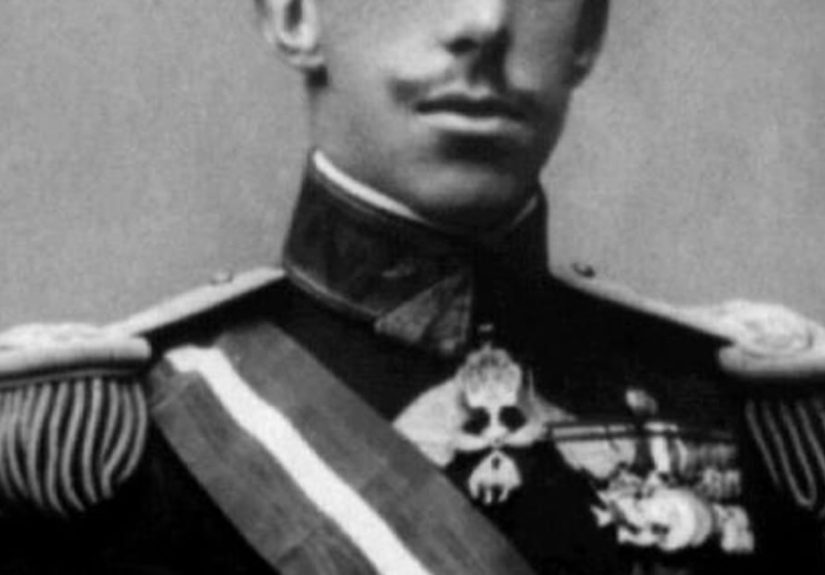
He cultivated the image of a “soldier-king,” spending time with the military, donning uniforms, and
positioning himself as a hands-on leader rather than a purely ceremonial constitutional monarch. It sounded
inspiring on paperuntil his choices pulled the monarchy into deep political trouble.
What Did Alfonso XIII Actually Do?
A King in the Shadow of 1898 and the Restoration Crisis
Alfonso XIII did not cause the loss of Spain’s colonies, but he inherited the political system that followed
it, known as the Restoration. This system revolved around two main partiesConservatives and Liberalswho
alternated power in a managed, semi-rigged way. For a while, this brought a kind of stability. But underneath,
social tensions, regional nationalism, labor unrest, and a growing demand for democracy were building.
By the 1910s, the system started cracking. The “crisis of 1917” brought together military unrest, political
dissent, and labor strikes. Alfonso XIII, instead of staying above the fray like a neutral constitutional
monarch, often intervened directly in politics, backing some governments, pushing out others, and relying
heavily on military elites. That involvement made him a political actornot just a symboland it meant he
got blamed when things went wrong.
World War I: Neutral, but Surprisingly Active
Spain stayed officially neutral during World War I, but Alfonso XIII didn’t just sit in the palace watching
from afar. He set up a special “war office” at the royal palace to respond to letters from families across
Europe searching for missing soldiers and prisoners of war. This office used Spanish diplomatic channels to
track down information, deliver news, and sometimes arrange humanitarian help.
The effort generated hundreds of thousands of documents and letters and earned Alfonso XIII an international
reputation as a humanitarian. He was even nominated for the Nobel Peace Prize in 1917 for his role in this
work. The success rate wasn’t huge, but for families in agony over missing loved ones, even a small chance
of answers mattered.
This is one of the big reasons some historians rate his moral and humanitarian record far more positively
than his political judgment. As a person, he could be compassionate and energetic; as a ruler, he could be
impulsive and short-sighted.
The Rif War and the Road to Dictatorship
One of the darkest chapters of Alfonso XIII’s reign came with the Rif War in Morocco, a conflict where Spain
was trying to maintain colonial control in North Africa. The disaster at Annual in 1921, where Spanish
forces were badly defeated and thousands of soldiers died, caused public outrage and demands for
accountability.
Critics accused the king of meddling in military decisions and pushing aggressive operations in Morocco.
When investigations threatened to reveal more about the command failures and political responsibility, a
convenient “solution” appeared: a military strongman promising order.
In 1923, General Miguel Primo de Rivera staged a coup and established a dictatorship. Alfonso XIII backed the
move, dissolved parliament, suspended parts of the constitution, and effectively swapped a flawed democracy
for a military regime. For many historians, this is the turning point where Alfonso XIII stopped being a
flawed constitutional monarch and became co-responsible for authoritarian rule.
At first, the regime seemed to “work”: the dictatorship invested in infrastructure, maintained order, and
won support from some parts of society. But over time, economic strains, political opposition, and military
discontent mounted. By 1930, Primo de Rivera had lost support, and Alfonso XIII let him goonly to discover
that the monarchy’s credibility had gone with him.
Municipal Elections, Republic, and Exile
In April 1931, municipal elections were held across Spain. On paper, they were local elections, but everyone
understood them as an informal referendum on whether the monarchy should survive. Republican parties
performed strongly in major cities, while monarchists did better in rural areas, but the urban results sent
a clear political message: the crown had lost legitimacy among the politically active urban population.
Rather than plunge the country into civil war by trying to hold on through military force, Alfonso XIII left
Spain and went into exile. The Second Spanish Republic was proclaimed, marking the end of the Bourbon
monarchyfor the moment. He never formally abdicated until later in exile, and he died in Rome in 1941.
Decades later, the Bourbon dynasty returned with his grandson, Juan Carlos I, after the Franco dictatorship.
Ranking Alfonso XIII: How Does He Score?
You can’t really slap a Rotten Tomatoes score on a king’s life, but we can break his record into a few
categories and see how historians and informed opinion tend to judge him. Consider this a very nerdy, very
historical version of a power ranking.
1. Political Leadership and Constitutional Behavior: 3/10
Alfonso XIII’s biggest political flaw was his inability to stick to the role of constitutional monarch. He
repeatedly interfered with governments, favored military solutions, and backed a dictatorship that suspended
civil liberties and parliamentary life. Instead of acting as a neutral referee, he became part of the game.
That might have felt proactive at the time, but it meant that when the political system failed, people
blamed the king personally. By the time he tried to pivot back toward “normal” constitutional politics after
Primo de Rivera, it was too late. The monarchy itself was now associated with corruption, authoritarianism,
and failed wars.
2. Humanitarian Record During World War I: 8/10
On the other hand, his humanitarian work during World War I remains one of the most widely praised parts of
his legacy. The royal war office helped families across borders and political lines, dealing with prisoners
of war, missing soldiers, and civilians in distress. It showed Alfonso XIII at his best: energetic,
compassionate, and willing to use his status for good.
Was his motivation purely altruistic? Probably a mixthere was surely also a desire to boost Spain’s
international prestige and his own image. But the outcome still mattered, and thousands of people gained
information or assistance they wouldn’t otherwise have had.
3. Modernization and National Image: 6/10
Alfonso XIII supported some modernization effortsimprovements in infrastructure, participation in
international diplomacy, and attempts to keep Spain engaged with broader European trends. During the early
20th century, Spain gradually urbanized and industrialized, and the monarchy often tried to present itself
as part of this forward movement.
The problem is that modernization in one area was undercut by authoritarianism in another. You can’t
convincingly market a country as “modern” while muzzling the press, sidelining parliament, and leaning on
military rule. So while there were some positive developments, his political decisions and resistance to
deeper democratic reforms limited the long-term impact.
4. Impact on the Spanish Monarchy’s Survival: 4/10
Here’s the harsh reality: monarchs are often judged less on their personal charm and more on whether the
institution survives them. On that metric, Alfonso XIII does not fare well. By backing Primo de Rivera and
then failing to repair the damage, he helped create the conditions that led to the collapse of the monarchy
in 1931.
To be fair, he was operating in a Europe where many monarchies were fallingWorld War I and the rise of
mass politics made traditional crowns far more vulnerable. But Alfonso XIII’s own choices sped up that
process in Spain. If your job is “keep the monarchy viable,” losing the throne and going into exile is not a
great performance review.
5. Overall Legacy: A Mixed 5/10
Put it all together, and Alfonso XIII lands somewhere in the middle of the historical rankings: not a
cartoon villain, not a heroic reformer, but a complicated figure who mixed good intentions with poor
political instincts. He cared about Spain, worked hard in some areas, and showed real compassion during
World War I. But his willingness to short-circuit democracy and rely on military rule did lasting damage.
If this were a fantasy league of European monarchs from 1900–1930, Alfonso XIII would be the talented but
inconsistent player whose stats look better on certain nights than his overall win–loss record suggests.
Common Opinions and Controversies
Royalist Views: The Well-Meaning but Unlucky King
From a monarchist or conservative perspective, Alfonso XIII sometimes gets framed as a king who did his best
in an impossible situation. Spain was deeply divided, political parties were often corrupt or ineffective,
regional nationalism was rising, and the international context was brutal. In this telling, his support for
Primo de Rivera was a desperate attempt to restore order, not a calculated turn toward dictatorship.
Supporters also highlight his personal couragehe survived assassination attempts, moved among soldiers,
traveled widely, and didn’t hide in his palace when things got rough. They emphasize his humanitarian work,
his efforts to maintain Spain’s international presence, and his refusal to drag the country into a brutal
war like World War I.
Republican and Left-Wing Views: The Architect of His Own Fall
On the other side, republican and left-leaning interpretations are far less forgiving. They see Alfonso XIII
as a monarch who systematically undermined constitutional rule, protected the interests of elites, and
refused to embrace real democratic reform. His backing of the dictatorship is treated not as a tragic
mistake but as proof that the monarchy could not coexist with a genuinely representative political system.
From this angle, the proclamation of the Second Republic in 1931 looks not like a random break, but the
logical outcome of years in which the crown chose repression over reform. The fact that he left without
bloodshed earns him a sliver of creditbut not enough to offset what came before.
International Historians: A Case Study in the Limits of Monarchy
Outside Spain, scholars tend to treat Alfonso XIII as a case study in what happens when a hereditary monarch
tries to behave like an active political leader in the age of mass politics. He illustrates the risks of
being too involved: once you pick sides, you stop being a symbol of the whole nation.
In comparison with monarchs who survived the 20th century by embracing strict constitutional neutrality,
Alfonso XIII looks like someone who never quite accepted that the old, interventionist style of kingship was
over. That doesn’t make him uniquely evilit makes him historically out of step.
What Alfonso XIII’s Story Tells Us About Leadership Today
You don’t have to be a king (and, odds are, you’re not) to learn from Alfonso XIII’s roller-coaster career.
A few modern leadership lessons pop out clearly:
-
Stay in your lane: Roles exist for a reason. When leaders who are supposed to be neutral
start picking favorites, they lose credibility fast. -
Shortcuts have long consequences: Supporting an authoritarian “fix” for political
gridlock may feel efficient in the moment, but it can wreck institutions for decades. -
Good intentions don’t erase bad systems: Alfonso XIII’s humanitarian work was admirable,
but it couldn’t counterbalance the structural damage of backing dictatorship. -
Legitimacy is everything: Once people stop believing in the fairness and usefulness of an
institutionwhether a monarchy, a company, or a governmentrebuilding trust is extremely hard.
In other words, Alfonso XIII of Spain is a reminder that leadership isn’t just about dramatic decisions or
personal bravery. It’s about the health of the institutions you’re supposed to protectand how your choices
affect them over time.
Experiences and Reflections on “Ranking” Alfonso XIII
Thinking about Alfonso XIII in terms of “rankings and opinions” may sound a little tongue-in-cheeklike
we’re turning a complex historical figure into a listicle. But in practice, this is exactly how many people
today encounter him: through documentaries, museum exhibits, walking tours, and debates that quietly score
his successes and failures.
Imagine visiting Madrid and standing outside the Royal Palace, knowing that inside its archives sit tens of
thousands of letters sent to Alfonso XIII during World War I. Some came from devastated parents begging for
news of their sons; others from spouses hanging on to a thin thread of hope. You might not see those
documents on display, but just knowing they exist changes how you feel about him: this wasn’t just a distant
figure on a coin, but a man whose office handled very personal tragedies from across Europe.
Then you walk a bit farther, and you’re reminded that the same king put his signature on decrees that
dissolved parliament, suspended core parts of the constitution, and gave cover to a military dictator. The
contrast is jarring. If he were a character in a prestige TV drama, he’d be the one who does something
unexpectedly kind in one episode and makes a disastrously authoritarian choice in the next.
People who study Spanish history or casually explore it often end up with this split-screen view. In
university lectures, Alfonso XIII appears in slides next to generals, politicians, and revolutionaries. Some
professors emphasize his humanitarian work during the Great War; others zoom in on the Rif War and the
dictatorship. Class discussions quickly turn into informal ranking sessions: “Was he worse than other
monarchs of his time?” “Did he really have a choice?” “Would things have gone differently if he had refused
to support Primo de Rivera?”
Even casual readers bump into these debates. A biography paints him as restless, energetic, and personally
brave. A more critical history frames him as stubborn, entitled, and unwilling to adapt to democratic norms.
If you read both in the same week, you may find your “ranking” shifting back and forth. One day he looks
like a flawed idealist trapped by his era; the next, he looks like the architect of his own downfall.
There’s also a modern emotional layer when you compare Alfonso XIII with later Spanish monarchs. His
grandson Juan Carlos I initially enjoyed a reputation as the king who helped guide Spain to democracy after
Franco, and his great-grandson Felipe VI now carries the burden of maintaining the monarchy’s legitimacy in
a very skeptical age. Looking backward, Alfonso XIII feels like an early stress test: a cautionary tale of
what happens when a monarch leans too hard into personal politics and too little into institutional
restraint.
For history buffs and casual travelers alike, engaging with Alfonso XIII’s story becomes an exercise in
nuance. You can stand in front of a historic photo of him in military uniform and feel both sympathy and
frustration. On one hand, here’s a man born into a situation he didn’t choose, trying to steer a fragile
country through brutal times. On the other, his decisions undeniably helped topple the very institution he
was supposed to preserve.
That’s why “Alfonso XIII of Spain Rankings And Opinions” isn’t just a catchy headline. It captures how we
now process the past: by weighing actions, outcomes, and intentions, knowing that no simple score can sum
everything upbut also knowing that asking the question tells us as much about our own values as it does
about the king himself.
Conclusion
Alfonso XIII of Spain is one of those historical figures who resist easy labels. He was a king by birth, a
political player by choice, a humanitarian by impulse, and an exile by consequence. His reign saw neutrality
in World War I, disaster in Morocco, the rise and fall of a dictatorship, and finally the collapse of the
Spanish monarchy and the birth of the Second Republic.
If we’re forced to “rank” him, he lands in the muddy middle: impressively active, sometimes admirable, often
reckless, and ultimately unable to adjust to the realities of democratic politics. His story is a warning
that institutions, no matter how old, are never guaranteedespecially when their guardians mistake power for
legitimacy.
And that might be the most relevant takeaway for today: whether you’re running a country, a company, or just
your own life, it’s not enough to mean well. Your long-term legacy depends on how your choices strengthen or
weaken the systems you’re responsible for.
SEO JSON