Table of Contents >> Show >> Hide
- Why This Title Still Matters
- Who Darnella Frazier Is, and Why History Remembers Her
- The First Record, Then the True Record
- Bearing Witness Is Not Free
- What an Oath to Darnella Frazier Should Mean
- What Institutions Owe Her, and Others Like Her
- Why the Camera Mattered, and Still Matters
- The Deeper Moral Lesson
- Experience: What This Story Asks of Ordinary People
- Conclusion
- SEO Tags
History does not always arrive in a courtroom, a newsroom, or a textbook with a tidy chapter heading. Sometimes it arrives on a sidewalk. Sometimes it arrives in the shaky hand of a teenager holding up a cellphone because every adult institution in the frame appears to have misplaced its conscience. That is why the title of this essay is not just a tribute. It is a promise. An oath to Darnella Frazier is really an oath to truth, to memory, and to the uncomfortable duty of seeing clearly when the world would prefer a blur.
Darnella Frazier did not wake up that day planning to become a symbol, a witness, or a kind of accidental journalist. She was a teenager out in her neighborhood. Then history crashed into her afternoon, and she did something both simple and astonishing: she recorded what she saw. That act did not bring George Floyd back. It did not erase the pain of what happened. But it did something institutions often fail to do on their own. It preserved reality before reality could be negotiated, polished, softened, or denied.
And that is where the oath begins. Not with praise that turns into a hashtag by bedtime, but with a harder promise: that we will not ask for courage from young people, especially Black young people, and then move on as if courage were free. It is not free. It is costly. It leaves a mark. It asks something from the witness, and then it should ask something from the rest of us too.
Why This Title Still Matters
An oath is a serious word. It belongs to doctors, judges, public officials, and anyone who claims to serve the public good. Oaths are supposed to mean that when the pressure rises, your principles do not evaporate like cheap cologne in August. You do not abandon truth because truth is inconvenient. You do not hide behind procedure when morality is knocking on the door with a battering ram.
So why direct an oath to Darnella Frazier? Because her act of witnessing exposed how many official oaths had already failed. The oath to protect. The oath to serve. The oath to tell the truth. The oath to do no harm. The oath to value Black life not in speeches, but in systems. Her video did not merely document a terrible event. It revealed the distance between what America says and what America sometimes does.
If that sounds heavy, it is because it is. There is no light way to talk about a moment that changed a nation. But there is a human way to talk about it. Honest, direct, and clear-eyed. No dramatic fog machine required.
Who Darnella Frazier Is, and Why History Remembers Her
Darnella Frazier was 17 when she recorded the killing of George Floyd in Minneapolis in May 2020. Her video spread rapidly, contradicted the first official framing of what had happened, and became a central piece of public evidence in a case that would lead to the conviction of former officer Derek Chauvin. Later, Frazier testified in court, reliving what she had seen under the pressure of national attention. She would go on to receive a special citation from the Pulitzer Prize board and the PEN/Benenson Courage Award.
Those honors matter, but they should not flatten her into a trophy case. Frazier is not important because awards were eventually placed beside her name. She is important because she bore witness when bearing witness was frightening, risky, and deeply personal. The awards came later, as they often do, once the rest of the world had time to catch up to the moral clarity of the moment.
To call her brave is true, but incomplete. Bravery can sound cinematic, like a soundtrack should swell and the credits should roll. What she showed was steadiness. Presence of mind. Refusal to look away. The kind of courage that does not announce itself with speeches. It just keeps the camera running.
The First Record, Then the True Record
One of the most important lessons in this story is not only that video can reveal the truth, but that truth is often contested in real time. Before the public fully absorbed what happened to George Floyd, early official language described the event in vague, clinical, almost deodorized terms. It sounded like the sort of summary designed to file away urgency. Then the video appeared, and the gap between the language and the reality became impossible to ignore.
That gap matters. It tells us why witnesses matter. It tells us why evidence matters. It tells us why a cellphone in the hands of a bystander can become one of the most powerful democratic tools in the country. When institutions fail to describe suffering honestly, the burden of truth often falls on ordinary people. That is not ideal. It is not fair. But it is real.
Frazier’s video did not create the event. It created accountability. That distinction is everything. The camera did not invent injustice; it interrupted denial. It forced millions of people to confront a reality that could no longer be packaged into a sterile sentence and slid across the public desk.
Bearing Witness Is Not Free
Here is the part that praise often skips over. Witnessing trauma is not a clean moral victory. It can alter a life. Frazier later spoke about the lasting emotional weight of what she saw and about feeling that part of her childhood had been taken from her. That statement should stop us cold. We often celebrate the witness because the witness helps everyone else understand. But understanding for the rest of us may come at a very high price for the person who was actually there.
That is why this cannot be a story about applause alone. It has to be a story about care. What do we owe the person who tells the truth when telling the truth becomes a public service? More than a few glowing headlines. More than a social media thank-you. We owe protection, respect, mental health support, and a cultural refusal to treat their pain like content.
We also owe perspective. A teenager should never have had to become the moral backbone of a national reckoning. The fact that she did is extraordinary. The fact that she had to is devastating.
What an Oath to Darnella Frazier Should Mean
1. We will not look away from evidence because it makes us uncomfortable.
Discomfort is not harm. Sometimes discomfort is the price of honesty. If we only accept evidence when it arrives in a form that feels neat, official, and emotionally convenient, then we are not seeking truth. We are shopping for reassurance.
2. We will not praise witnesses while ignoring the conditions that made witnessing necessary.
It is easy to celebrate courage in hindsight. It is harder to reform institutions so that fewer people must risk themselves just to prove what happened. The oath demands the harder thing.
3. We will take citizen documentation seriously.
Professional journalism remains essential, but public accountability no longer belongs only to people with press badges. Frazier’s video underscored a truth that journalism scholars and media critics keep returning to: citizens are often critical participants in the search for truth. Not replacements for reporters, but indispensable witnesses in moments when power is acting faster than paperwork.
4. We will remember that witnesses are people, not symbols.
Once someone becomes publicly associated with a historic event, the culture tends to freeze them in place. But the witness still has a life. A family. A body that absorbs stress. A mind that replays moments nobody would choose to replay. An oath worthy of the name must leave room for their humanity.
What Institutions Owe Her, and Others Like Her
Newsrooms owe witnesses ethical treatment. That means avoiding exploitation, resisting sensationalism, and recognizing that “viral” is not a synonym for “easy to live with.”
Schools owe young people civic education that is not allergic to reality. Students should learn what it means to document, verify, and respond responsibly to public harm. They should also learn that truth-telling can be courageous without requiring martyrdom.
Medical and legal institutions owe the public honesty. If professional language is used to soften plainly visible wrongdoing, then expertise becomes camouflage. That is not professionalism. That is betrayal in a necktie.
Police departments and public officials owe communities more than statements crafted to buy time. They owe transparency, accountability, and a recognition that public trust is not a subscription service people keep paying for after repeated failure.
The rest of us owe follow-through. Awareness is not the finish line. If all we do is watch, react, and scroll on, then we turn historic pain into a temporary spectacle. The oath asks for more durable habits: voting, organizing, reporting accurately, supporting reform, and refusing the sedative of selective memory.
Why the Camera Mattered, and Still Matters
Writers, scholars, and journalists have argued for years that the cellphone has changed public life. It is a communication device, yes, but it is also a memory machine, an accountability tool, and sometimes an emergency archive. In the case of Darnella Frazier, the phone became all three at once. It captured a public event, preserved it against euphemism, and carried it across the world in minutes.
That does not mean cameras always bring justice. They do not. Plenty of recorded suffering has still been ignored, explained away, or folded into the national habit of moving on too quickly. But cameras can make denial harder. They can close the distance between event and evidence. They can challenge official narratives before those narratives harden into common sense.
And perhaps most importantly, they can remind us that history is not only produced by institutions. Sometimes it is produced by the people standing nearest to power when power behaves badly.
The Deeper Moral Lesson
The deepest lesson of this story is not merely that one video changed public conversation. It is that truth often depends on ordinary people deciding that someone else’s suffering is their concern. That is the hinge. Not technology by itself. Not virality by itself. Care.
Darnella Frazier saw another human being in danger and understood, in a split second, that what she was seeing should not disappear into silence. That instinct deserves more than admiration. It deserves imitation in the broad moral sense. Not that everyone must pull out a phone every day, but that everyone must resist the temptation to become numb, detached, or politely blind.
An oath to Darnella Frazier, then, is an oath against numbness. An oath against public amnesia. An oath against the lazy fantasy that justice just sort of happens on its own, like weather. Justice is made by people who witness, remember, speak, testify, document, vote, challenge, and care long after the cameras leave.
Experience: What This Story Asks of Ordinary People
There is another layer to this topic that deserves more room: experience. Not only Darnella Frazier’s experience, but the experience of everyone forced into the orbit of such a moment. For many Black Americans, the experience was not surprise so much as recognition. Recognition of vulnerability. Recognition of how quickly ordinary errands can become sites of danger. Recognition of how often people are asked to produce proof before their pain is believed. That is an exhausting experience, one built not from a single event but from repetition.
For young people, especially, Frazier’s story carries a particular charge. Teenagers are often told they are too distracted, too online, too absorbed in their phones. And yet here was a teenager using a phone not as a toy, but as testimony. The experience of watching that unfold was a cultural correction. It reminded adults that youth does not cancel moral seriousness. Sometimes the youngest person in the scene is the one acting with the most clarity. That realization is inspiring, but it also indicts a society that too often leaves moral labor to the people with the least power.
There is also the experience of watching from far away. Millions of people did not stand on that Minneapolis street, but they watched the video and felt the force of proximity anyway. That created a strange civic intimacy. Viewers were not present, yet they were implicated. They were pulled out of abstraction and into evidence. Many people can still remember where they were when they first saw the footage, just as older generations remember other national ruptures. That is how public memory works: history enters private rooms and rearranges them.
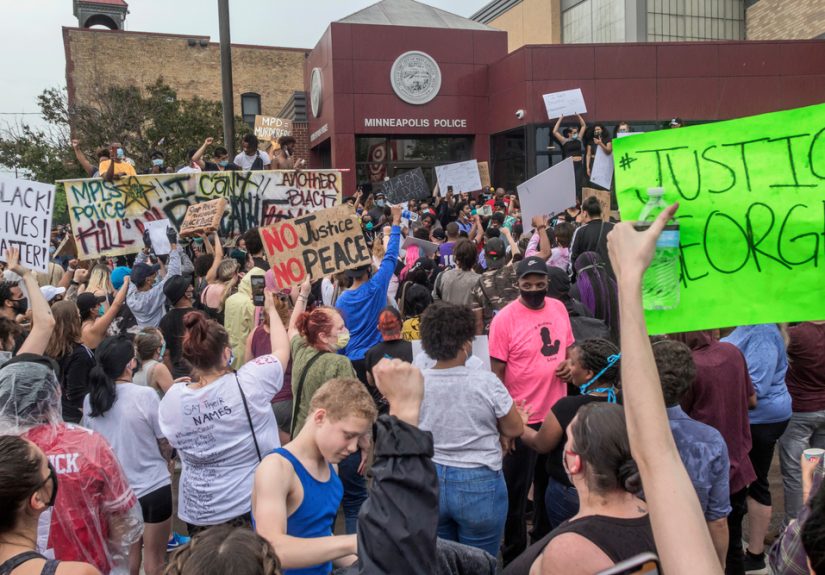
Then there is the experience of aftermath. The marches. The arguments. The pledges from corporations. The statements from universities. The policy debates. The fatigue. The hope. The backlash. The uncomfortable truth is that national reckoning does not feel like a straight line. It feels like grief mixed with paperwork, conviction mixed with cynicism, progress mixed with delay. One day people speak of transformation; the next day the old habits of denial come back wearing fresh branding. That is part of the experience too, and pretending otherwise helps no one.
But even amid that frustration, Frazier’s act continues to teach something durable. It teaches that ordinary people are not powerless observers of public life. They can document. They can preserve memory. They can interrupt lies. They can make it harder for institutions to hide behind foggy language and polished press releases. That lesson matters because democracy is not sustained only by officials doing their jobs well. It is also sustained by citizens refusing to surrender reality.
So when we speak of an oath to Darnella Frazier, we should mean an oath rooted in lived experience. We will believe what is plainly before us. We will respect the cost borne by those who witness. We will support the people who tell the truth. We will not demand bravery from others while practicing comfort ourselves. And we will remember that in a country always tempted by forgetting, memory can be one of the most radical forms of care.
Conclusion
Darnella Frazier did not ask to become a historic figure. She became one because she refused to let a moment of public violence pass into the safety of official vagueness. Her camera became a record. Her steadiness became a form of service. Her testimony became part of the architecture of accountability. If that does not call for an oath, what does?
Our oath should be simple enough to remember and difficult enough to matter: tell the truth, honor the witness, care for the wounded, challenge the lie, and do not let memory expire when the headlines do. That is an oath to Darnella Frazier. It is also, if we are serious, an oath to each other.