Table of Contents >> Show >> Hide
- What Is a Milking Stool, Exactly?
- 19th-Century England: Where Utility Met Craft
- The Anatomy of an Antique English 19th-Century Milking Stool
- How to Date and Authenticate One Without Playing “Antique Roulette”
- Painted Folk Art and Regional Personality
- What Determines Value?
- Buying Tips: How to Shop Smart (and Avoid the “New Old Stool”)
- Care and Preservation: Keep the Patina, Don’t Start a Chemistry Experiment
- How to Use a 19th-Century Milking Stool in a Modern Home
- A Short, Honest Wrap-Up
- Collector Experiences and Stories: The Milking Stool Life Lessons (About )
- SEO Tags
There are antiques that announce themselves with dramatowering wardrobes, shiny silver tea services, portraits of people who look like they judge your life choices.
And then there’s the 19th-century English milking stool: small, humble, and somehow the most confident little piece of wood in the room.
It’s the kind of object that doesn’t need a spotlight because it already has something better: a job history. These stools weren’t made to “complete a vignette.”
They were made to survive daily use in chilly dairies, muddy yards, and drafty farm kitchensthen quietly age into the kind of rustic design icon that modern interiors can’t stop adopting.
What Is a Milking Stool, Exactly?
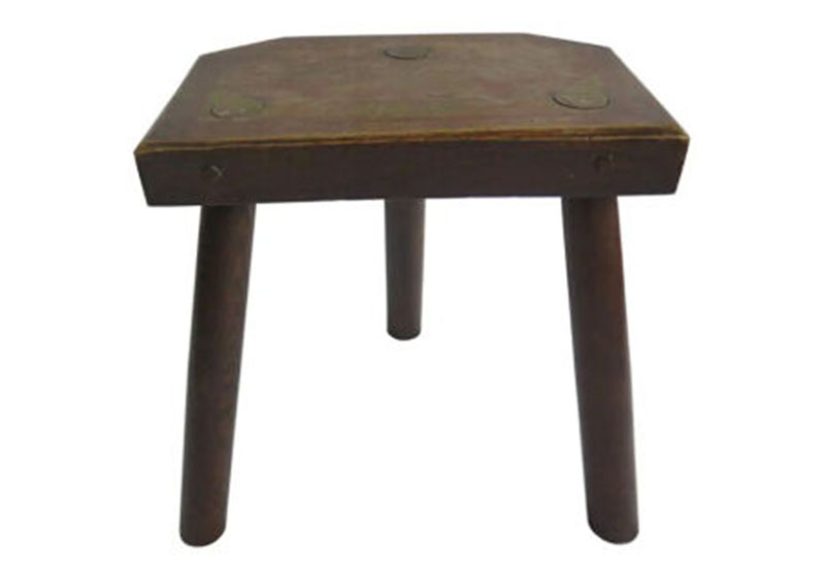
A milking stool is a low seat traditionally used while hand-milking cows (and other dairy animals). Its height keeps the milker close to the udder, and its footprint is compact enough
to move quickly in tight spaces. Function first, aesthetics laterthough time has a funny way of upgrading “practical” into “beautiful.”
Why Three Legs Shows Up So Often
Many classic milking stools have three legs, and it’s not because the fourth leg ran off to join the circus. Three legs can feel steadier on uneven ground than four, because
three points always define a plane. In barns and dairieswhere floors weren’t exactly laser-leveledthis mattered. Add the fact that the user often leaned forward while working,
and the tripod layout starts looking less like a style choice and more like a smart survival tactic.
19th-Century England: Where Utility Met Craft
The 1800s in England were a period of major change: industrial growth, expanding railways, and shifting rural economies. But dairy work stayed stubbornly hands-on for a long time.
Even as tools improved, a lot of daily farm life remained rooted in routine: early mornings, repetitive tasks, and equipment that needed to be simple, repairable, and durable.
That’s why many surviving antique English milking stools feel so honest. They weren’t trying to impress anyone. They were built to be used, fixed, and used againoften by the same family,
in the same area, for decades. The result is a piece that can be “primitive” without being crude: clever proportions, sturdy joinery, and wood that has learned patience.
The Anatomy of an Antique English 19th-Century Milking Stool
The Seat: Elm Is a Frequent Star
Many English examples feature a thick slab seatoften elmbecause elm resists splitting and handles hard use well. Seats may be round, oval, or rectangular with softened corners.
Some are slightly dished (a gentle hollow) from shaping or decades of sitting. Others have chamfered edges that feel intentionally finished, even if the stool was made for work.
The Legs: Turned, Tapered, or PlainBut Usually Splayed
Legs can range from simple shaved tapers to nicely turned profiles. In many 19th-century stools, you’ll see legs that splay outward for stability.
Turned legs may show subtle rings, baluster shapes, or restrained “country” ornamentmore about strength than show.
Joinery: Pegged, Wedged, and Built to Take a Beating
Traditional construction often involves legs fitted into drilled or reamed holes in the underside of the seat, sometimes secured with wedges or pegs.
Over time, wood movement can make joints tighten or loosen, which is why genuine old stools often show signs of maintenance: a shim here, a wedge there, a repair that looks like it was done
with whatever was on handbecause it probably was.
How to Date and Authenticate One Without Playing “Antique Roulette”
Dating a rural stool is rarely as neat as reading a maker’s label. Many were made locally and informally, so authentication becomes a “clues” game:
you look for multiple signs that agree with each other.
Clue #1: Tool Marks and Surface Texture
Older pieces often show irregularities from hand tools: slight asymmetry, subtle facets from a drawknife, or uneven rounding under the seat.
That doesn’t mean “rough” equals “old”but perfectly uniform machine-like repetition can be a red flag if everything looks too consistent for a utilitarian country stool.
Clue #2: The Patina Has a Story (And It’s Not “Distressed Finish #4”)
Real age shows up in layered wear: darker areas where hands grabbed the seat edge, rubbed spots on legs where boots or buckets brushed,
and tiny dents that look random because they are. A genuine patina tends to be uneven and logicalmore concentrated where a working person would actually touch it.
Clue #3: Dowels, Pegs, and Hardware (If Any)
Many milking stools have minimal hardware, but repairs sometimes introduce screws or nails. If you see perfectly uniform modern screws, that may indicate later repair or reproduction.
Wood pegs and dowels can also be revealing: older ones may look less “factory perfect” than modern machine-made inserts.
Clue #4: Evidence of Honest Repairs
A flawless “19th-century dairy stool” is about as common as a cow that cleans its own stall. Repairs are normal.
A replaced leg, a stabilized crack, or a tightened joint doesn’t automatically reduce desirabilitysometimes it increases confidence that the stool lived a real life.
The key is transparency: you want repairs that make structural sense and don’t try to impersonate original surfaces.
Painted Folk Art and Regional Personality
Most milking stools were plain, but a special subset features paintsometimes later, sometimes originalranging from simple color washes to folk-art scenes.
Painted examples can be especially collectible because they’re less common and visually distinctive. When paint looks old, it often shows crackling, edge wear,
and fading that follows raised areas (instead of looking uniformly “antiqued”).
If the stool has a pastoral scene, initials, or a date, it may have been upgraded from pure barn utility to “household pride” at some point.
That kind of crossoverwork object becoming decorated domestic furnitureis part of what makes these stools charming.
What Determines Value?
Pricing varies widely, and a milking stool’s value is less about a single “book price” and more about a bundle of factors:
- Authenticity and age: confirmed 19th-century examples typically command more than later rustic reproductions.
- Condition and stability: tight joinery and safe structure matter (even if the surface is worn).
- Material and character: appealing grain, thick elm seats, and pleasing proportions can lift value.
- Paint and decoration: original-looking folk paint or rare motifs can push prices higher.
- Provenance: any credible “where it came from” story helpsespecially if documented.
- Size and usability: stools that work well as side tables, plant stands, or bathroom perches tend to be in demand.
In the broader market, you’ll see everything from affordable rustic stools to higher-priced pieces sold through design-focused dealers.
The same basic form can live in very different price neighborhoods depending on finish, paint, and the confidence of attribution.
Buying Tips: How to Shop Smart (and Avoid the “New Old Stool”)
Questions Worth Asking
- Are there repairs? If yes, what was done and when?
- Is the stool stable on a flat surface, or does it wobble?
- Are there photos of the underside (where construction clues live)?
- What are the exact measurements (height, seat size, leg spread)?
- Is there any provenance or regional attribution?
Photos That Matter
If you’re shopping online, ask for close-ups of the leg-to-seat joints, the underside of the seat, and any repaired areas.
Sellers who provide these willingly tend to be more credible. If a listing has ten glamour shots and zero construction shots, that’s a hint:
they’re selling a vibe, not an object.
Care and Preservation: Keep the Patina, Don’t Start a Chemistry Experiment
Antique wooden stools survive best with gentle, boring carethe kind that doesn’t make for exciting internet videos but does make for long-lived antiques.
Dusting: Less Is More
Dust only when needed using a soft, dry cloth. Aggressive or frequent rubbing can act like sandpaper over time, slowly wearing away original surfaces.
Think of dusting as “removing dust,” not “buffing it into next week.”
Avoid Oils and “Miracle” Sprays
Oils can soak into wood, darken unevenly, attract grime, and complicate future conservation. If your stool has an old finish, you want to keep it stable,
not turn it into a science project.
Waxing: Sometimes Useful, Always Cautious
In museum-style guidance, paste wax can be appropriate for some clear-finished wooden surfaces as a protective barrier, but it can also change sheen and appearance.
If you’re unsure what finish you have (or if paint is fragile), treat wax like hot sauce: not everyone needs it, and too much ruins the meal.
Environment: The Quiet Threat
Big swings in humidity and temperature can loosen joints and encourage cracking. Keep the stool away from direct sunlight, radiators, and damp basements.
If you want a rustic stool to stay charming, don’t store it like a forgotten gym bag.
How to Use a 19th-Century Milking Stool in a Modern Home
The reason designers love these stools is simple: they’re compact, sculptural, and useful. They work in homes that lean farmhouse, cottage, modern rustic,
and even minimalistbecause a well-aged piece of wood is basically a neutral.
Easy Styling Ideas
- Bedside perch: perfect for a book, glasses, or a mug (on a coasterbe kind).
- Bathroom charm: holds towels, baskets, or acts as a small seat while you tie laces.
- Plant stand: adds height and texture (just protect the wood from water rings).
- Entryway helper: a quick place to drop a bag or sit brieflyif the stool is structurally sound.
- Conversation piece: because “This was used in an English dairy in the 1800s” beats “I got it on sale.”
A Short, Honest Wrap-Up
An antique English 19th-century milking stool is more than rustic décor. It’s a working artifact: shaped by utility, improved by craft, and finished by time.
The best examples feel balancedsimple but not bland, worn but not wrecked, sturdy but not clunky.
If you’re collecting, focus on construction, patina, and stability. If you’re decorating, focus on proportion, character, and how the piece fits your daily life.
Either way, you’ll be adopting a small slice of rural historyone that still earns its keep.
Collector Experiences and Stories: The Milking Stool Life Lessons (About )
People who collect and live with antique milking stools tend to tell the same kinds of storiesbecause the stools themselves encourage them.
They’re small enough to impulse-buy, old enough to spark curiosity, and practical enough that you keep moving them around until they “click” somewhere in your home.
One common experience is the estate-sale surprise: someone goes for “one little side table” and comes home with a three-legged stool that looks like it’s been
through a century of mornings. The funny part? It’s often the most photographed item in the haul. The stool has that effect: it looks honest.
A chipped edge doesn’t feel like damageit feels like proof the object wasn’t invented yesterday to match a trending paint color.
Another shared moment is the first time you check the underside. New collectors sometimes admire the seat top and forget that the real clues hide underneath.
Then they flip it over and suddenly notice leg angles, wedge marks, old repairs, and tool textures that feel more “human” than “manufactured.”
It’s like meeting the stool’s biography: the underside shows what the top politely keeps to itself.
There’s also the classic “wobble panic”. Someone places the stool on hardwood flooring, it rocks, and for five seconds they imagine they’ve been tricked.
Then a more experienced collector says, “Try it on a slightly uneven surface.” A tripod stool can feel stable on imperfect groundexactly what it was built for.
Sometimes the wobble is real (loose joints happen), but sometimes the floor is the drama queen, not the stool.
Collectors also learn the hard way about water rings and plant pots. A milking stool makes a perfect plant standuntil someone waters generously and the pot
leaves a stubborn halo. The lesson usually becomes a household rule: trays, saucers, coasters, and a little respect for old wood.
The goal is to let the stool show its age naturally, not force it to absorb your lifestyle.
One of the most consistent experiences is falling in love with “imperfect repairs”. A leg that’s been stabilized, a crack that’s been neatly reinforced,
a wedge that clearly wasn’t cut by a modern machinethese repairs can feel like conversation across time. They remind you that antiques were once ordinary tools,
maintained by ordinary people, who needed them to work the next morning. That’s part of the charm: you’re not just buying a look; you’re inheriting a history of use.
And finally, there’s the moment when someone realizes the stool has become a daily helper. It holds a stack of books, a basket of towels, a laptop for a quick task,
or a cup of tea during a slow afternoon. That’s when the piece truly makes sense. A milking stool wasn’t designed to sit silently behind glass.
It was designed to be used. The best “collector experience” is letting it keep doing what it does best: showing up, staying sturdy, and making a small corner of your home feel warmer.