Table of Contents >> Show >> Hide
- What Exactly Is a Pivot Door?
- Why Architects Keep Specifying Them
- Materials in the Pivot Door Roundup
- Performance: Because a Pretty Door Still Has to Be a Door
- Design Roundup: Where Pivot Doors Shine
- Real-World Examples That Explain the Appeal
- When a Pivot Door Is a Great Idea
- When You May Want to Reconsider
- The Architect’s Verdict
- Experience Notes: What an Architect Visit Reveals About Pivot Doors
- Conclusion
Some doors politely do their job. A pivot door, on the other hand, arrives like it knows it was invited to the party for its looks. It is oversized, sculptural, slightly dramatic, and often just a little smug about it. And honestly? Fair enough. When done well, a pivot door can make an entry sequence feel less like “here is the front door” and more like “welcome to the architecture.”
That is exactly why architects keep coming back to them. In contemporary homes, pivot doors are not just about getting in and out. They help frame views, heighten the sense of arrival, and create that coveted indoor-outdoor flow that modern residential design loves almost as much as white oak and very expensive stone. From steel-and-glass showpieces to warm wood slabs with quiet detailing, pivot doors have become one of the most recognizable signs that a house has design ambition.
This roundup takes a closer look at what makes pivot doors special, where they work best, what materials and performance details matter, and why some of the most memorable homes use them to turn an everyday threshold into a full architectural moment.
What Exactly Is a Pivot Door?
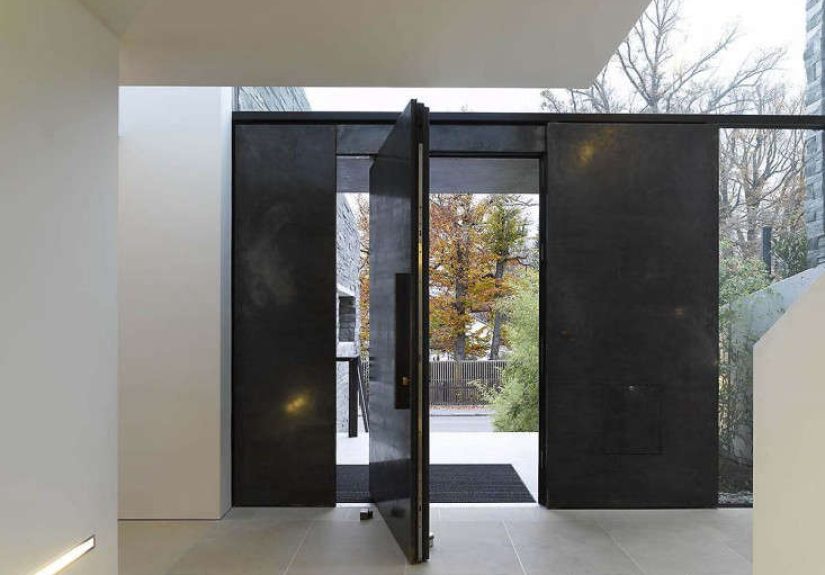
A traditional hinged door swings from the side. A pivot door swings from hardware located at the top and bottom, rotating on a vertical axis that is usually set a little in from the edge. That single shift changes everything. The door does not just open; it glides, rotates, and reveals space in a more theatrical way. It feels smoother, heavier, and more deliberate.
Architects love this because the mechanics allow for bigger, taller, and visually cleaner panels than a standard hinged setup can usually handle. Manufacturers now offer large-format systems that make pivot doors especially attractive for expansive entrances and modern facades. In practical terms, that means a pivot door can act like a giant design gesture without looking clunky. It is the rare building element that manages to be both structural hardware and instant curb appeal.
It also helps that pivot doors photograph beautifully. The reveal is clean. The proportions are dramatic. The hardware is often concealed. And when paired with sidelights, transoms, or a narrow material palette, the whole composition can feel almost gallery-like. Basically, if minimalism needed a front door, this would be it.
Why Architects Keep Specifying Them
1. They create a stronger sense of arrival
Pivot doors feel ceremonial in the best way. Because the panel is often oversized, even a simple rectangular opening gains presence. In many homes, the pivot door becomes the moment that shifts you from outside to inside, public to private, street to sanctuary. A good architect knows that transitions matter, and pivot doors turn that transition into an experience.
2. They work beautifully with modern massing
Contemporary architecture tends to favor large planes, clean lines, and fewer visual interruptions. Standard doors can look undersized or fussy against those compositions. Pivot doors fit better because they can hold their own against tall walls, oversized glazing, and broad entry courts. They read as part of the architecture rather than an afterthought attached to it.
3. They blur the line between inside and out
This is where pivot doors really start showing off. In several standout homes, large pivot entries are used to connect foyers, courtyards, gardens, and main living spaces in a way that feels seamless. The effect is especially strong when the door includes glass, aligns with sightlines, or opens onto landscaped outdoor rooms. The result is not merely access. It is choreography.
4. They can handle scale
One of the biggest reasons pivot doors have moved from design niche to modern favorite is scale. Today’s systems can be huge, which makes them ideal for tall entryways, wide openings, and houses that want to make one strong move instead of several smaller ones. When a standard front door whispers, a pivot door clears its throat and gets the room’s attention.
Materials in the Pivot Door Roundup
Wood: warm, tactile, and timeless
Wood pivot doors remain the emotional favorite for many architects. They bring warmth to stark modern facades and age with a richness that metal often cannot match. White oak, walnut, mahogany, cedar, and other species can give a pivot door everything from a quiet minimalist presence to a bold, heavily grained statement.
The trade-off is maintenance. In wet or harsh climates, wood requires care. Finishes need attention, exposure matters, and detailing becomes critical. A wood pivot door under a generous overhang is a lot happier than one taking direct weather year-round.
Steel: crisp, dramatic, and very architectural
Steel pivot doors are beloved for their narrow sightlines, strong geometry, and almost cinematic elegance. Add glass, and the door becomes part lantern, part sculpture. They work particularly well in homes that lean industrial, modernist, or highly tailored. Arched steel pivot doors are also having a moment, offering a blend of old-world shape and new-school operation.
The catch is that steel is not casual. It usually lives in the premium category, often requires custom fabrication, and needs excellent weather detailing to perform beautifully over time.
Aluminum: sleek and performance-minded
Thermally broken aluminum pivot systems are a major part of the current market because they marry thin contemporary profiles with better energy performance. For homeowners who want the clean modern look without surrendering every practical concern at the door, aluminum can be a very smart choice. It tends to suit warm climates particularly well, but advanced systems are designed for broader climate use.
Glass-forward combinations
Some of the most compelling pivot doors use glass as a major feature rather than a small accent. Frosted glass, clear low-E glazing, steel-and-glass grids, and wood frames with large lites all shift the mood. More glass means more light and sightlines, but also more privacy planning. The elegant answer is usually thoughtful placement, screening, landscaping, or textured glazing rather than trying to solve everything with a giant curtain that no one actually wants at the front door.
Performance: Because a Pretty Door Still Has to Be a Door
Here is the part where architecture meets reality. A front door is not a sculpture alone. It has to open smoothly, close securely, resist weather, and avoid turning the foyer into a wind tunnel with trust issues.
The best modern pivot systems address this with improved engineering: thermal breaks in metal frames, perimeter weatherstripping, low-E glazing options, durable finishes, and carefully designed bottom seals. That matters because oversized doors naturally raise performance questions. Bigger panel, bigger opening, bigger chance for sloppy execution if the design team is not paying attention.
Installation is just as important as the product itself. A pivot door is not the place for a shrug and a caulk gun. Rough opening accuracy, structural support, water management, sill conditions, and finish alignment all matter. Many systems are most at home in new construction or major remodels, where the opening can be designed around the door rather than the other way around.
There is also the everyday use question. Some large openings look glorious in photos but are less convenient when you are carrying groceries, chasing a child, or trying to let the dog out without launching a full cinematic entrance sequence. In some cases, a daily-use companion door or another nearby access point makes life easier. Good architecture is not just about the dramatic arrival; it is also about Tuesday at 6:12 p.m. with a pizza in one hand.
Design Roundup: Where Pivot Doors Shine
Courtyard homes
Pivot doors thrive in courtyard architecture because they can frame a view immediately upon entry. Instead of opening into a narrow hall, the door swings and reveals landscape, sky, or a central outdoor room. This makes even compact homes feel more expansive and composed.
Modern farmhouses and softened contemporary homes
Not every pivot door belongs on a severe black box. Wood versions, especially with natural grain and subtle detailing, can look fantastic in homes that mix modern lines with warmth. They bring scale without turning the facade into a machine.
Glass-and-steel houses
If the house already uses steel windows, large panes, or lean modern profiles, a pivot door often feels like the obvious choice. It keeps the vocabulary consistent and prevents the entry from looking oddly conventional in an otherwise highly edited composition.
Renovations with a dramatic new addition
One of the most interesting uses of pivot doors appears in projects where an older house meets a modern extension. The pivot door becomes the translator between the two personalities. It says, “Yes, this was once a cottage. No, it is not shy anymore.”
Real-World Examples That Explain the Appeal
In one Napa Valley home, the pivoting entry is described as creating the feeling that “the inside is out,” which is basically catnip for architects working with landscape, light, and long views. In Atherton, California, a house is entered through a seven-foot-square glass pivot door that sets up an immediate spatial sequence into courtyards and living areas. In another extension project, 10.5-foot-tall pivot glass doors blur the boundary between interior rooms and the garden. These are not random decorative flourishes. They are structural moves in the story a house tells as you move through it.
There is also the less technical but equally important emotional factor: ease. One Los Angeles project features an entry pivot door noted for taking “zero muscle” to open. That matters. A huge door only feels luxurious if it behaves with grace. No one wants a front entrance that looks like modern art and opens like a stubborn freezer lid.
When a Pivot Door Is a Great Idea
- When the entry is tall, wide, or visually central to the whole design
- When the home has a contemporary, transitional, or design-forward character
- When you want a cleaner look than double doors can provide
- When indoor-outdoor flow is part of the architectural concept
- When the project budget includes quality hardware, detailing, and installation
When You May Want to Reconsider
- When the budget does not support custom fabrication and careful installation
- When the home’s style is more traditional and the scale would feel out of place
- When the entry is fully exposed and weather conditions are severe without protective design measures
- When the door will be the only daily access point and convenience is the top priority
The Architect’s Verdict
Pivot doors are not necessary in the strict, practical sense. Neither are beautifully proportioned staircases, limestone fireplaces, or windows positioned to catch the exact afternoon light. But architecture has never been only about bare necessity. It is also about experience, proportion, movement, surprise, and delight. Pivot doors succeed because they satisfy all of that while still functioning as real building components.
The best examples do not scream for attention. They simply make the entry feel calmer, larger, and more intentional. They create a pause before the home fully reveals itself. They add weight without heaviness, drama without clutter, and movement without fuss. That is a hard combination to beat.
Experience Notes: What an Architect Visit Reveals About Pivot Doors
Visit enough well-designed homes and you start noticing that the best pivot doors do something subtle before they do something dramatic. From the street, they often read as a quiet plane: wood, steel, glass, or some disciplined combination of the three. Then you move closer and the details begin to register. The pull is taller than expected. The reveal is tighter. The panel seems thicker, calmer, more confident than a standard door. Nothing is yelling, but everything is saying, “Someone really thought this through.”
Then comes the opening itself, which is where pivot doors earn their reputation. A good one does not flap open like a screen door in a cartoon. It turns with a measured, almost floating motion. There is a little weight, but there is also surprising ease. You feel the engineering in the smoothness. That first movement can change how a whole house is perceived. Suddenly the entry feels curated rather than merely functional.
Architects often talk about sequence, and pivot doors make that idea easy to understand. They reveal space gradually. Instead of swinging away from the frame in a familiar side-hinged arc, the panel rotates and creates a shifting composition of wall, void, light, and view. On one project, that means a framed glimpse of a courtyard tree. On another, it means the living room appears slowly beyond a shaded vestibule. In a compact house, that slow reveal can make the interior feel larger. In a large house, it can make it feel more controlled and intimate.
There is also a social quality to pivot doors that people do not always mention. They can make visitors pause. Not awkwardly, but attentively. You do not just barge through a pivot door. You arrive through it. That tiny bit of ceremony can make a home feel more memorable because the threshold feels intentional. Even people who know nothing about door hardware tend to notice that something feels different.
Of course, architect visits also reveal the less glamorous truth: the great ones are never great by accident. They rely on proportion, site planning, overhangs, flooring alignment, drainage, handle placement, and hardware calibration. A pivot door that is too big for the facade looks like it is trying too hard. One without weather protection may age badly. One that is beautiful but inconvenient for daily use can become a very expensive lesson in loving photos more than life.
But when the balance is right, the effect is unforgettable. A pivot door can make a modest entry feel elegant and a large entry feel almost cinematic. It can turn a wall into a threshold and a threshold into an event. That is why architects keep specifying them, editors keep photographing them, and homeowners keep falling for them. They are not just doors. They are one of the clearest reminders that in architecture, the way you enter matters almost as much as where you end up.
Conclusion
Pivot doors remain one of the most compelling features in residential architecture because they unite mechanics and beauty in a way few building elements can. They allow for dramatic scale, cleaner compositions, and a stronger sense of movement through space. Whether rendered in warm wood, crisp steel, or high-performance aluminum, they can transform an ordinary entrance into an architectural signature.
Still, the smartest pivot door is not simply the biggest or flashiest one. It is the one that fits the house, the climate, and the rhythm of daily life. When the proportions are right and the performance details are handled well, a pivot door feels effortless. And in architecture, effortless is usually the hardest look of all to achieve.