Table of Contents >> Show >> Hide
- Cholesterol 101: Why This Matters So Much
- What Is Ayurveda, Exactly?
- Popular Ayurvedic Remedies for Cholesterol
- Safety Concerns: Heavy Metals and Quality Control
- Drug Interactions and Who Should Be Extra Careful
- How Ayurvedic Principles Can Support Heart-Healthy Living
- So… Should You Try Ayurvedic Medicine for Cholesterol?
- Real-World Experiences: How People Navigate Ayurveda and Cholesterol
High cholesterol has a sneaky way of showing up on your blood test, looking completely innocent, and yet
raising your long-term risk for heart attack and stroke. In the middle of all the “eat more fiber” and
“please take your statin” conversations, you may also see glowing claims about Ayurvedic medicine for
cholesterolpromising “natural,” “ancient,” and “side-effect-free” results. But is that actually true?
Let’s unpack what Ayurveda is, which Ayurvedic remedies are marketed for high cholesterol, what the science
really shows, and how to think about safety. The short version: some Ayurvedic ideas can absolutely support
heart healthbut the herbal pills and powders deserve a lot more caution than their labels suggest.
Cholesterol 101: Why This Matters So Much
Cholesterol is a waxy, fat-like substance your body needs to build cells and make hormones. The problem isn’t
cholesterol itself; it’s when you have too much of the “bad” kind (LDL) circulating in your blood. Excess LDL
can build up in artery walls, forming plaques that increase your risk of heart attack and stroke.
Major heart organizations emphasize the same basics for managing cholesterol: eat fewer saturated and trans
fats, move your body regularly, maintain a healthy weight, and use cholesterol-lowering medications like
statins when needed.
These approaches have decades of solid research behind them.
Ayurvedic medicine and herbal products are sometimes marketed as a “natural shortcut” around lifestyle changes
or prescription drugs. That’s where the conversation can slide from helpful to risky.
What Is Ayurveda, Exactly?
Ayurveda is a traditional system of medicine that began in India more than 3,000 years ago. It focuses on
balancing the body, mind, and spirit through diet, herbal preparations, physical practices (like yoga and
massage), and daily routines.
In theory, that sounds great for heart healthless stress, more whole foods, and a more mindful lifestyle.
But modern Ayurveda, especially as it appears in supplement bottles sold online, is a mix of:
- Traditional herbal formulas
- Modern extracts and pills labeled as “Ayurvedic”
- Products with varying quality control and sometimes very little safety data
So when we talk about “Ayurvedic medicine for cholesterol,” we’re really talking about specific herbs and
formulas that are promoted to lower LDL or total cholesterol.
Popular Ayurvedic Remedies for Cholesterol
Guggul (Commiphora mukul)
Guggul is a resin from the Commiphora mukul tree and is one of the best-known Ayurvedic remedies for high
cholesterol. It’s often sold as “guggulipid” capsules. Early trials from India suggested that standardized
guggul extracts could reduce total cholesterol, LDL, and triglycerides.
However, when researchers tested guggulipid in Western populations in a rigorous, placebo-controlled trial
published in JAMA, the results were sobering: LDL cholesterol actually went up slightly in the
guggul group compared with placebo, with no meaningful improvements in total cholesterol or triglycerides.
Some participants developed side effects like rashes and gastrointestinal upset.
Bottom line on guggul: evidence is mixed at best, and in the highest-quality Western study, it didn’t help and
may have made LDL worse. It’s definitely not a proven replacement for statins or other standard therapies.
Red Yeast Rice (Often Marketed Alongside Ayurvedic Remedies)
Red yeast rice is technically from traditional Chinese rather than Ayurvedic medicine, but it often shows up
on the same “natural cholesterol support” lists and in similar product lines, so it’s worth addressing here.
Red yeast rice naturally contains monacolin Ka compound that is chemically identical to lovastatin, a
prescription statin. Studies show that certain red yeast rice preparations can lower LDL cholesterol by
about 15%–34% in people with mildly to moderately elevated levels, similar to low-dose statins.
Sounds promising, right? Here’s the catch:
-
The amount of monacolin K varies wildly between products, from none at all to prescription-strength
doses in a single capsule. -
Because monacolin K is effectively a statin, red yeast rice can cause the same side effects:
muscle pain, liver injury, and interactions with other medications. -
The U.S. FDA has warned consumers about some red yeast rice products being marketed as cholesterol drugs
without proper approval and has taken enforcement actions against several companies.
In other words, red yeast rice is basically “statin in disguise,” but with unpredictable dosing and less
safety monitoringnot a risk-free natural alternative.
Other Ayurvedic Herbs Commonly Mentioned
You’ll see other herbs and formulas marketed for cholesterol, such as:
- Arjuna (Terminalia arjuna) – traditionally used for heart health
- Triphala – a blend of three fruits used for digestion and detoxification
- Fenugreek – sometimes used to help with blood sugar and lipids
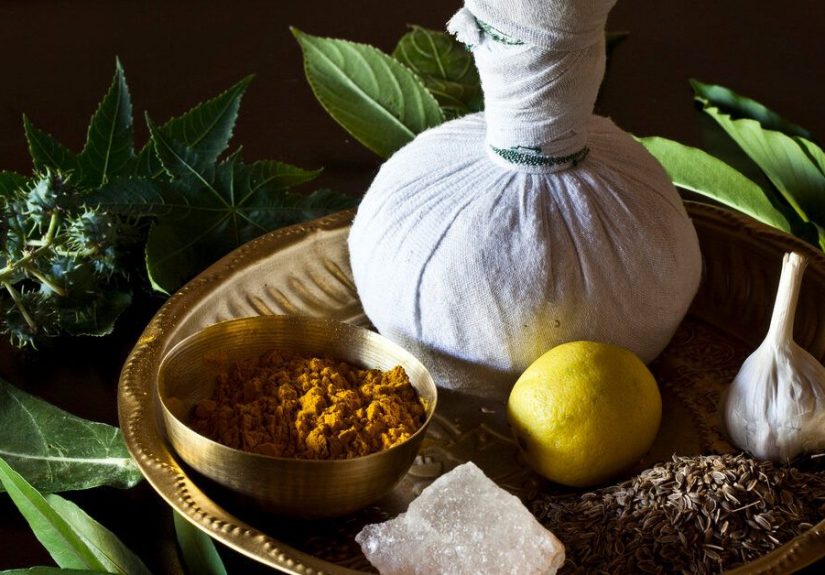
- Garlic and turmeric – widely used in cooking and studied for anti-inflammatory effects
Small studies and animal research suggest these may have modest effects on cholesterol or inflammation, but
the evidence is limited, often short-term, and not strong enough to stand alone as treatment for high
cholesterol or cardiovascular disease. Robust, long-term clinical trials are still lacking.
Safety Concerns: Heavy Metals and Quality Control
When people hear “Ayurvedic,” they often assume “safe” and “gentle.” Unfortunately, that’s not always the
caseespecially with imported or online products.
The U.S. National Center for Complementary and Integrative Health (NCCIH) notes that some Ayurvedic
preparations contain lead, mercury, or arsenic at levels that can be toxic.
One analysis found that roughly one in five Ayurvedic medicines tested contained at least one heavy
metal.
More recently, regulators in other countries, such as Australia’s Therapeutic Goods Administration, have
issued safety alerts after cases of lead poisoning linked to imported or unregistered Ayurvedic products
contaminated with heavy metals.
Why does this happen?
- Some traditional formulas intentionally include metals or minerals (called rasa shastra).
- Manufacturing standards can vary widely between companies.
- Products sold online may bypass strict quality checks.
For someone already at risk for heart disease, adding heavy metal exposure, potential liver toxicity, or
kidney strain is the last thing you want.
Drug Interactions and Who Should Be Extra Careful
Even if a product doesn’t contain heavy metals, it can still cause problems by interacting with medication
or underlying health conditions.
People who should be especially cautious about “natural” cholesterol remedies include:
-
Those already taking statins or other cholesterol medications (you can accidentally “double up” on
statin-like effects with red yeast rice or similar products). - People with liver or kidney disease
- Adults on multiple prescription medications
- Pregnant or breastfeeding people
- Older adults, who may be more sensitive to side effects
A key point: because supplement labels are often vague and quality is inconsistent, your cardiologist or
primary care clinician can’t reliably know what dose of active ingredient you’re gettingor what else might
be in the bottle. That makes it hard to balance benefits and risks.
How Ayurvedic Principles Can Support Heart-Healthy Living
Here’s the good news: you don’t have to swallow mystery pills to benefit from Ayurveda-inspired habits.
Many Ayurvedic lifestyle principles align beautifully with what mainstream cardiology recommends.
1. Emphasizing Plant-Forward, Whole-Food Eating
A modern Ayurvedic-style plate is heavy on vegetables, fruits, whole grains, legumes, nuts, and seedswith
limited processed foods and deep-fried snacks. That lines up almost perfectly with heart-healthy dietary
patterns recommended by the American Heart Association and other major organizations.
Spices commonly used in Ayurvedic cookinglike turmeric, coriander, cumin, ginger, and garliccan add flavor
without adding salt, and many have been studied for anti-inflammatory or metabolic effects.
2. Moving Your Body Regularly
Yoga, walking, and gentle movement practices are core parts of many Ayurvedic routines. Modern research
supports regular physical activity as a powerful way to raise HDL (“good”) cholesterol, lower LDL and
triglycerides, and improve overall cardiovascular health.
The typical target: at least 150 minutes of moderate-intensity aerobic activity or 75 minutes of vigorous
activity each week, plus strength training.
3. Managing Stress and Sleep
Ayurveda pays a lot of attention to daily rhythmwaking, eating, working, and sleeping at consistent times.
While this isn’t “cholesterol treatment” in the narrow sense, managing chronic stress and getting enough
sleep can support healthier blood pressure, weight, and metabolic markers, which all affect heart risk over
time.
So… Should You Try Ayurvedic Medicine for Cholesterol?
If “try Ayurvedic medicine for cholesterol” means:
- Eating more plant-based, minimally processed foods
- Cooking with heart-friendly spices
- Practicing yoga, meditation, and stress reduction
- Following a more mindful daily routine
then yes, those Ayurvedic-inspired habits can be wonderful additions to a standard heart-healthy plan and are
widely supported by mainstream evidence on lifestyle and cardiovascular health.
But if “try Ayurvedic medicine” means:
- Stopping or avoiding statins or other prescribed medications
- Relying on unregulated herbal pills or powders instead of evidence-based care
- Ordering random “cholesterol detox” capsules online because a label looks natural
then the answer is a cautious no.
The current research on specific Ayurvedic herbs for cholesterol, like guggul, is mixed and far less robust
than the evidence for standard treatments. Some products, particularly red yeast rice and certain traditional
preparations, can carry real riskseither because they act like statin medications or because of contamination
with heavy metals.
If you’re interested in adding Ayurvedic elements to your cholesterol management plan, the safest approach is:
-
Keep your medical team in the loop. Let your clinician know about any supplements you’re
consideringespecially if you already take cholesterol medication or have liver, kidney, or heart disease. -
Prioritize lifestyle changes first. Diet, exercise, and smoking cessation have powerful,
well-documented benefits and pair well with both conventional and complementary approaches. -
Be picky about products. If you and your clinician agree to try a supplement, choose one
from a reputable manufacturer, ideally certified by an independent testing organization (like USP or NSF),
and avoid products that make sweeping “cure” claims.
And remember: this article is for general information, not a personalized treatment plan. Decisions about
cholesterol management and any use of herbal medicines should be made with a qualified healthcare
professional who knows your medical history.
Real-World Experiences: How People Navigate Ayurveda and Cholesterol
To see how this plays out in everyday life, imagine a few very human, very relatable scenarios (names and
details are illustrative, not real patients).
Case 1: The “Statin-Shy” Professional
Alex is 49, works long hours, and just got a call from the clinic: LDL cholesterol is 185 mg/dL, total
cholesterol is elevated, and there’s a family history of early heart disease. The clinician recommends a
statin plus lifestyle changes. Alex does what many of us doheads straight to the internet and finds glowing
reviews of “Ayurvedic cholesterol support” featuring guggul and red yeast rice.
At first, those “natural” capsules sound much more appealing than a prescription drug. But after digging a bit
deeperand learning that red yeast rice can basically act like an unregulated statin and that guggul hasn’t
performed well in high-quality trialsAlex decides to have an honest conversation with the clinician instead
of self-experimenting.
The compromise: start a low-dose statin, work with a dietitian on a more plant-forward eating plan, join a
beginner yoga class twice a week, and hold off on herbal supplements until the lab results and side-effect
profile are clear. Six months later, LDL has dropped substantially and Alex feels better overall, without
having rolled the dice on unknown pills.
Case 2: The Wellness Enthusiast Who Loves Rituals
Priya is 57, already on a statin for high cholesterol, and loves Ayurvedic ritualswarm spiced teas, oil
massage, and daily meditation. She’s tempted to add several herbal capsules “just in case they help.”
After talking with her cardiologist, she learns that layering multiple supplements on top of her statin could
increase the risk of liver stress or drug interactions, especially with red yeast rice products. Instead of
loading up on pills, she leans into practices that are unlikely to cause harm and may offer broad benefits:
- Cooking more often at home with turmeric, cumin, coriander, and garlic
- Doing 20–30 minutes of yoga on most days
- Keeping a regular sleep–wake schedule
- Using meditation and breathwork to manage stress
Her cholesterol stays well-controlled with the statin, and she enjoys the sense of ritual and self-care that
her Ayurvedic-inspired lifestyle provides.
Case 3: The “Natural-Only” Detour
Jordan, 60, decides to skip medication completely after a high-cholesterol diagnosis and instead relies on an
online “cholesterol detox” kit labeled as Ayurvedic. There’s no conversation with a clinician, no lab
monitoring, and no lifestyle changes beyond the supplements.
A year later, a routine checkup reveals that cholesterol levels are still highand now there are mild signs
of liver irritation on blood tests. The supplements are discontinued, further evaluation is done, and a
statin is finally started. It’s a stressful experience that could potentially have been avoided with earlier,
evidence-based treatment and better communication.
Jordan’s experience highlights a key point: “natural” is not the same as “safe,” and it’s definitely
not the same as “effective.” Herbs can be helpful in some situations, but they’re not a magic shield
against cardiovascular risk.
What These Stories Have in Common
In all of these scenarios, the most successful strategy is the same:
- Use lifestyle changesmany of which align with Ayurvedic principlesas a foundation.
- Rely on well-studied medications when the level of risk calls for them.
- Approach herbal products with curiosity and skepticism, not blind trust.
- Keep your healthcare team informed about everything you’re taking.
If you’re drawn to Ayurveda, you don’t have to choose between “modern medicine” and “ancient wisdom.” You can
thoughtfully combine the best parts of both: solid, evidence-based treatment for cholesterol and heart risk,
plus traditional practices that support your overall well-beingwithout putting your health on the line for
a capsule with a pretty label.