Table of Contents >> Show >> Hide
- Why This Combo Works (Quick Food Nerd Moment)
- Recipe Overview
- Ingredients
- Step-by-Step Instructions
- Pro Tips for a Frittata That’s Tender (Not Rubbery)
- Serving Ideas
- Make-Ahead, Storage, and Reheating
- Common Questions (Because Eggs Love Drama)
- Nutrition Notes (Approximate)
- of Real-Life “Frittata Experience” Notes
If breakfast had a comfort-food love language, it would be: bacon (flirty), potatoes (dependable),
kale (trying its best), and eggs (holding the whole relationship together).
This bacon, potato, and kale frittata is the kind of one-pan meal that makes you feel like you “have it together” even if your toaster crumbs say otherwise.
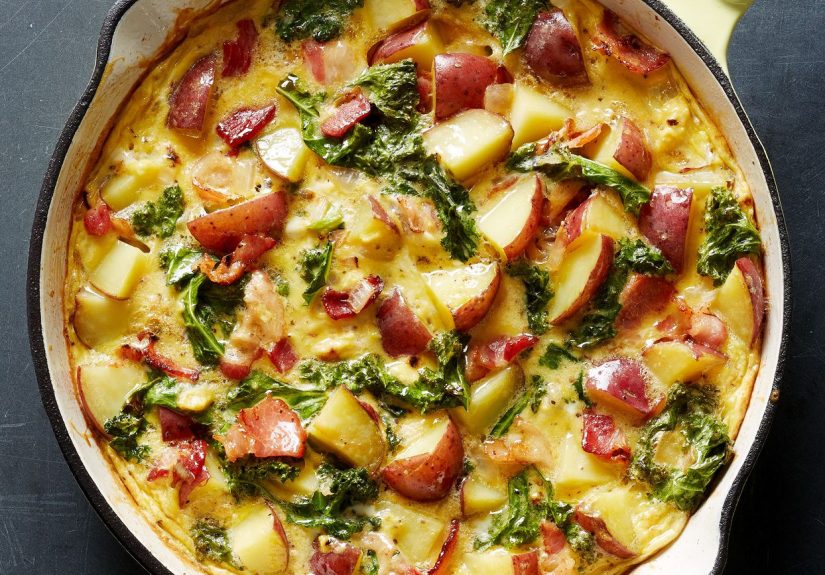
You’ll get crispy-edged potatoes, smoky bacon, tender kale, and a custardy egg base you can slice into neat wedgesaka brunch that looks fancy
but cooks like a weekday. It’s naturally gluten-free, endlessly adaptable, and somehow tastes even better when you eat a cold slice straight from the fridge like a gremlin.
Why This Combo Works (Quick Food Nerd Moment)
A great frittata is about balance: fat + starch + greens + gentle heat.
Bacon contributes both fat (hello, flavor) and salt; potatoes add texture and make it filling; kale brings a slightly earthy bite that keeps the whole thing from tasting like “eggs with more eggs.”
The trick is managing moisture: potatoes and greens can release water, and water is the enemy of fluffy eggs. So we cook the fillings first, then let the eggs set slowly and finish in the oven (or under the broiler).
Recipe Overview
- Time: ~35–45 minutes
- Serves: 6–8
- Skill level: Beginner-friendly, with one “don’t burn it” moment at the end
- Best pan: 10-inch oven-safe skillet (cast iron or oven-safe nonstick)
Ingredients
Use what you’ve got, but these proportions hit the sweet spot for a hearty, sliceable frittata.
- 6 slices bacon, chopped (thick-cut if you want bigger crispy bites)
- 10–12 oz potatoes, diced small (Yukon Gold or red potatoes are great)
- 1/2 medium yellow onion, chopped
- 2 cloves garlic, sliced or minced
- 2 packed cups chopped kale (stems removed; baby kale works too)
- 8 large eggs
- 1/4 cup milk, half-and-half, or cream (optional but recommended for tenderness)
- 1/2 tsp kosher salt (less if your bacon is very salty)
- 1/4 tsp black pepper
- 1/2 cup shredded cheese (cheddar, Gruyère, feta, or Parmesanpick a vibe)
- Optional: pinch of red pepper flakes, chopped chives, or a spoon of Dijon
Smart Swaps
- No bacon? Use sausage, ham, or sautéed mushrooms + smoked paprika.
- No dairy? Skip milk/cream and use a dairy-free cheese, or go cheese-free and add herbs.
- Only frozen kale/spinach? Thaw and squeeze it dry like it owes you money.
Step-by-Step Instructions
1) Prep the Potatoes (Two Easy Options)
Option A: Parboil (fast and reliable)
- Bring a pot of salted water to a boil. Add diced potatoes.
- Boil 8–10 minutes, just until barely tender (they should not be falling apart).
- Drain well and let them steam-dry for a minute so they don’t waterlog your eggs.
Option B: Skillet-cook (more browning, one less pot)
- Warm a tablespoon of oil (or some bacon fat once it renders) in your skillet.
- Add diced potatoes with a pinch of salt, and cook 12–18 minutes, stirring occasionally, until browned and tender.
2) Crisp the Bacon
- Heat your oven to 375°F (or set a broiler for laterdetails below).
- In a 10-inch oven-safe skillet over medium heat, cook chopped bacon until crisp.
- Transfer bacon to a paper towel-lined plate. Leave 1–2 tablespoons of bacon fat in the skillet (drain extra if there’s a lot).
3) Cook the Onion, Garlic, and Kale
- Add onion to the skillet and sauté 3–5 minutes until soft.
- Add garlic and cook 30 seconds (just until fragrantgarlic burns faster than your patience).
- Add chopped kale and cook 2–4 minutes until wilted and tender.
4) Add Potatoes + Bacon Back In
- Stir in the cooked potatoes and half the bacon.
- Spread everything into an even layer so the eggs set nicely later.
5) Whisk the Eggs
- In a bowl, whisk eggs with milk/half-and-half (if using), salt, pepper, and any optional extras.
- Stir in about half the cheese (save the rest for the top).
6) Combine and Set the Base
- Pour egg mixture into the skillet over the fillings.
- Gently nudge fillings to distribute evenly (don’t aggressively stir; you’re making frittata, not scrambled eggs’ chaotic cousin).
- Cook on the stovetop over medium-low heat for 4–6 minutes, until edges are set and the center is still a little jiggly.
7) Finish in the Oven (or Broiler)
Oven finish (recommended for control):
- Sprinkle remaining cheese and bacon over the top.
- Transfer skillet to the oven at 375°F for 8–12 minutes, until the center is just set.
Broiler finish (fast but watch it like a hawk):
- Move the oven rack to the upper third.
- Broil 1–3 minutes until puffed and lightly browned on top.
- Do not walk away. The broiler is basically a dragon with a timer.
8) Check Doneness + Rest
- For food safety, egg dishes should reach 160°F in the center. If you don’t have a thermometer, the center should be set (no liquid eggs).
- Rest 5–10 minutes before slicing so it firms up and cuts cleanly.
Pro Tips for a Frittata That’s Tender (Not Rubbery)
- Gentle heat wins. Low-and-slow stovetop setting helps eggs retain moisture.
- Cook fillings first. Raw potatoes and watery greens will sabotage the texture.
- A little dairy helps. Milk/cream can make the eggs more custardy and forgiving.
- Use an oven-safe skillet. Cast iron is classic, but an oven-safe nonstick works toojust avoid high broiler heat if your handle can’t take it.
- Don’t overbake. Carryover heat continues cooking after you pull it out.
Serving Ideas
- Brunch plate: frittata + fruit + toast + coffee that tastes like optimism
- Light lunch: wedge of frittata + big arugula salad with lemony dressing
- Dinner: frittata + roasted veggies + something spicy (hot sauce, salsa, chili crisp)
Make-Ahead, Storage, and Reheating
This is the rare egg dish that gets more convenient with time. Let it cool, slice, and store in an airtight container.
- Fridge: 4–5 days
- Freezer: wrap slices tightly and freeze up to ~2 months for best quality
- Reheat: warm gently in the microwave or a low oven until hot. For leftovers, reheat thoroughly until steaming hot.
Common Questions (Because Eggs Love Drama)
Why is my frittata watery?
Usually it’s excess moisture from greens or under-drained potatoes. Cook kale until it’s tender and no longer wet, and let parboiled potatoes steam-dry before adding.
Can I make it without the oven?
Yes. Cook over low heat, cover with a lid, and let it gently set through. You can also finish it stovetop-only with careful heat control.
(Flipping is an option too, but that’s advanced-level “trust your spatula” energy.)
What cheese is best?
Cheddar brings comfort, Gruyère brings fancy, feta brings tang. Parmesan adds a salty edge. Use what you like, but keep it around 1/2 to 1 cup total so it doesn’t turn greasy.
What potatoes work best?
Yukon Gold or red potatoes hold shape and feel creamy; russets get a little fluffier. Any will work if you cook them properly and keep the dice small for even cooking.
Nutrition Notes (Approximate)
Exact nutrition depends on bacon, cheese, and dairy choices. As a rough estimate, one of 8 slices often lands around
220–320 calories, with solid protein from eggs and bacon, plus fiber and micronutrients from kale.
For a lighter version, reduce bacon, use part egg whites, and pick a lower-fat cheese.
of Real-Life “Frittata Experience” Notes
Here’s what usually happens the first time you make a bacon, potato, and kale frittata: you start feeling wildly confident around minute seven.
The bacon smells amazing, the potatoes look golden, the kale turns that glossy deep green that makes you think,
“Wow, I’m the kind of person who buys kale.” Then you pour in the eggs and suddenly you’re standing there like a lifeguard,
staring at the center jiggle and whispering, “Set. Please set.”
The good news is the jiggle is normal. The better news is that the frittata is surprisingly forgiving as long as you don’t crank the heat.
A lot of home cooks learn this the hard way: high heat makes eggs tighten fast, which squeezes out moisture and gives you that rubbery, squeaky texture.
The “aha” moment is realizing the stovetop stage isn’t about cooking it throughit’s about building a gentle foundation so the oven can finish the job evenly.
Once you start thinking of it like that, frittata stops being mysterious and becomes a “use up what’s in the fridge” superpower.
If you’re making this for guests, the easiest flex is timing: you can cook the bacon and potatoes earlier in the day, then assemble and bake right before serving.
Your kitchen will smell like brunch ambition, and you’ll look calm while everyone else wonders how you pulled it off.
This is also why frittata is a holiday herowhen you have people hovering, asking when food will be ready, it’s nice to be able to say,
“Ten minutes,” and mean it.
Leftovers are where the frittata really shows off. Cold slices hold together beautifully and taste oddly satisfyinglike quiche’s more relaxed cousin who doesn’t own a pie crust.
If you’re packing lunch, a wedge plus a handful of cherry tomatoes feels balanced with almost no effort.
If you’re the kind of person who wants a “breakfast plan,” this is it: bake once, eat for days.
You can even tuck a slice into an English muffin with a little hot sauce and pretend you paid $14 for it somewhere with exposed brick and a playlist called “Indie Morning.”
And yes, the broiler step can be intimidating. The first time, you’ll probably crouch in front of the oven window like you’re watching a suspense movie.
That’s valid. The trick is to have everything readycheese sprinkled, timer set, and your attention fully presentbecause browning happens fast.
If that feels stressful, the oven-only finish is your best friend. It gives you a broader margin of error and a gentler set, which is exactly what you want for tender eggs.
Once you’ve made it a couple times, you’ll start customizing without thinking: swap cheddar for feta, add herbs, toss in leftover roasted vegetables,
or lean into spice. That’s when you know you’ve officially joined the frittata club. Membership fee: one skillet. Benefits: easy meals forever.