Table of Contents >> Show >> Hide
- Why This Brown Bear Skull Is Such a Big Archaeological Deal
- What Scientists Learned From the Skull
- The Roman Arena Was More Than Gladiator Duels
- Why Viminacium Matters
- What the Discovery Reveals About Animal Cruelty in Ancient Rome
- How This Find Changes the Conversation About Roman Spectacles
- Experiences That Bring This Discovery to Life
- Conclusion
Note: Body-only HTML, English content, ready for copying and publishing.
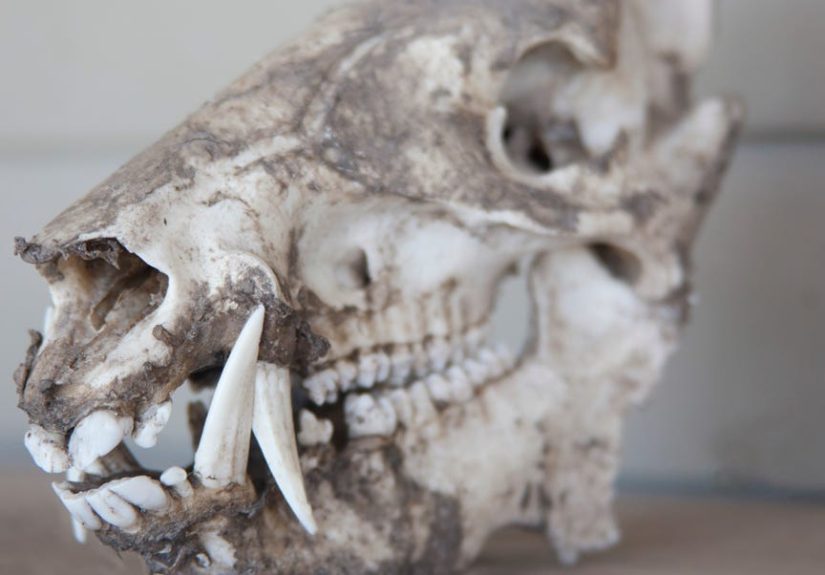
Archaeology loves a dramatic reveal, and this one arrived wearing a fur coat from roughly 1,700 years ago. Researchers studying a battered brown bear skull found near the Roman amphitheater at Viminacium, in present-day Serbia, say the remains offer the first direct physical evidence that captive brown bears were used in Roman arena spectacles. In other words, history has handed us a grim backstage pass to one of the ancient world’s bloodiest forms of entertainment.
The discovery matters because Roman writers, mosaics, and monuments have long suggested that bears, lions, leopards, and other animals were forced into the arena. But written records can exaggerate, and art can get theatrical. Bones, on the other hand, are less interested in drama and more interested in receipts. This skull appears to preserve exactly that: a violent injury, signs of infection, and dental damage consistent with long captivity. Taken together, the evidence tells a brutal story that is difficult to shrug off as legend.
For readers fascinated by Roman gladiators, amphitheaters, and the dark machinery of ancient spectacle, this bear skull is more than a curious fossil. It is a rare, physical witness. It shows how Roman entertainment was not just about human combat but also about the organized exploitation of animals, carefully staged violence, and a crowd culture built on awe, fear, and applause. Ancient Rome really did know how to put on a show. Unfortunately, the review from the bear would have been absolutely terrible.
Why This Brown Bear Skull Is Such a Big Archaeological Deal
The skull was unearthed during excavations near the entrance of the amphitheater at Viminacium, an important Roman city and military center on the empire’s frontier. The amphitheater itself could hold thousands of spectators, making it a major venue for public performances. Those performances did not always look like the classic one-on-one sword fights popularized by movies. Roman arena programs often included animal hunts, staged executions, displays of exotic beasts, and fights involving specialized performers trained to confront dangerous animals.
That point is worth underlining because modern audiences tend to lump everything under the label “gladiator.” Technically, gladiators usually fought other gladiators. The men who fought wild animals were often venatores or bestiarii, specialists in beast combat. Still, the amphitheater was part of the same entertainment ecosystem, and to ancient spectators, all of it belonged to the grand, noisy business of public spectacle. So while the headline says “gladiator amphitheater,” the deeper truth is that the arena hosted an entire menu of violence.
What makes this find exceptional is that the skull does not simply prove a bear existed near a Roman site. Bears lived across parts of Europe, so a stray bear bone alone would not be shocking. What makes this specimen different is the combination of context and biological evidence. The skull was found in direct association with the amphitheater area, in a place where researchers also recovered remains of other animals. Scientific analysis then showed injuries and wear patterns that fit captivity and combat. That combination transforms the discovery from “interesting animal bone” into “strong evidence of Roman arena use.”
What Scientists Learned From the Skull
The bear was identified as a brown bear, likely a male from the local Balkan population, and researchers estimated that it was about six years old when it died. That age matters because it suggests a young but fully formidable animal, old enough to be physically imposing in the arena, yet still within the years when Roman handlers might have considered it useful for repeated spectacles.
The most chilling detail is the trauma on the frontal bone. Researchers found evidence of a major blow to the skull that had started to heal, which means the animal survived the initial injury. But infection set in, and that infection likely played a major role in the bear’s death. The wound has been interpreted as consistent with a strike from a weapon such as a spear, the kind of blow that could have been delivered during an arena confrontation. This was not a clean ending. It was a slow one, which somehow feels even crueler.
The bear’s teeth and jaws added another layer to the story. Unusual tooth wear and jaw damage suggest stereotypic behavior associated with captivity, especially repeated chewing on cage bars. Anyone who has ever seen stressed zoo animals pace in tight circles already knows the basic heartbreak of confinement. This skull records the ancient version of that same misery. The damage implies that the bear was probably not captured, marched into the arena, and killed right away. Instead, it may have spent a long period in confinement before being used in spectacle.
That prolonged captivity helps explain why this discovery hits so hard. The skull preserves not just a moment of violence, but a whole system of violence: capture, transport or confinement, stress, injury, infection, and death. Archaeology often gives us fragments. This fragment gives us an entire chain of events.
The Roman Arena Was More Than Gladiator Duels
When people picture a Roman amphitheater, they often imagine two heavily armed fighters circling each other under the sun while an emperor gives a dramatic thumbs gesture that Hollywood has happily misunderstood for decades. The reality was broader, stranger, and in many ways nastier. Amphitheaters hosted venationes, or animal hunts and combats, as well as executions of condemned people and carefully choreographed displays meant to impress the public with Roman power and abundance.
Animals were central to that spectacle economy. Historical evidence shows that Roman organizers displayed and killed an astonishing range of creatures, including lions, leopards, elephants, crocodiles, bulls, boars, and bears. Some animals fought humans. Some fought other animals. Some were shown off simply because rarity itself was a kind of imperial flex. If Rome could drag a beast from some distant region into the arena, it was making a statement: the empire was vast, wealthy, and able to turn even nature into entertainment.
The bear skull from Viminacium fits neatly into that larger pattern, but it also sharpens it. Roman texts have long described such spectacles, and artistic evidence has hinted at them too. Yet physical evidence is often patchy. That is why recent finds have been so important. Evidence from Roman Britain, for example, has strengthened the case that big cats were used against humans in arenas there as well. The Viminacium bear now adds a fresh, bone-deep piece of proof to the puzzle. The message is clear: these were not isolated myths or literary flourishes. The animal violence of Roman amphitheaters was real, organized, and geographically widespread.
Why Viminacium Matters
Viminacium is not as instantly famous as the Colosseum, but it absolutely deserves a spot in the historical spotlight. Located on the Roman frontier, it served as an important military and urban center. That makes the amphitheater especially revealing. The games were not just a Rome-only phenomenon reserved for the empire’s capital city. They were exported, adapted, and staged across the Roman world. In other words, Roman entertainment traveled well, even when “well” meant “with horrifying efficiency.”
The amphitheater at Viminacium could seat around 7,000 spectators, which is no tiny neighborhood theater. This was a substantial venue capable of staging events for large crowds. The presence of animal remains near the entrance area also supports the idea that the site had nearby facilities or working zones tied to the handling, processing, or disposal of animals used in spectacle. That practical detail is important because it reminds us that amphitheaters were not just theatrical spaces. They were also logistical machines. Behind every thrilling appearance in the arena stood a grim support system of cages, handlers, laborers, equipment, and cleanup.
There is something almost modern about that machinery. A show may look effortless from the stands, but backstage there is always infrastructure. At Viminacium, that infrastructure may have included holding spaces, transport arrangements, feeding routines, and disposal practices for animals after performances. The brown bear skull helps illuminate that hidden side of Roman spectacle, the part that audiences were not supposed to dwell on while cheering.
What the Discovery Reveals About Animal Cruelty in Ancient Rome
It is tempting to file ancient brutality under “people were different back then” and move on. But discoveries like this resist that tidy escape hatch. The Romans were not simply ignorant of suffering. They engineered suffering into a public experience. The arena transformed pain into entertainment, fear into spectacle, and death into civic ritual. That included the suffering of animals.
The skull suggests that this bear endured long-term captivity, chronic stress, a traumatic blow, and an untreated infection. That sequence is not accidental. It reflects a system in which animal welfare ranked somewhere below audience excitement and probably just above broken furniture. The bear was valuable only so long as it could perform, fight, frighten, or symbolize Roman control over the natural world.
At the same time, the discovery gives archaeologists a rare chance to discuss animal history not as a side note but as a central topic. Too often, ancient animals appear in history as props for human stories. This skull pushes back against that habit. It forces us to confront the bear as an individual animal with a life history recorded in bone: where it likely came from, how it lived, how it suffered, and how it died. That kind of evidence makes the ancient world feel uncomfortably close.
How This Find Changes the Conversation About Roman Spectacles
The biggest takeaway from the brown bear skull is not simply that Romans used bears in amphitheaters. Historians already suspected that. The real importance lies in confirmation and detail. Archaeology works best when it turns broad assumptions into testable, physical evidence. Here, the skull does exactly that. It strengthens ancient written accounts, supports interpretations of arena art, and expands the growing body of evidence that Roman public entertainment depended heavily on animal exploitation.
It also encourages scholars to look more closely at amphitheater deposits, animal bone assemblages, and injury patterns that may previously have been overlooked or underinterpreted. One dramatic skull can open a surprisingly large research door. If more animal remains from Roman entertainment sites are studied with the same combination of microscopy, imaging, zooarchaeology, and DNA analysis, we may learn far more about what animals were used, where they came from, how long they were kept, and what roles they played in the arena.
That is the strange gift of archaeology. It cannot undo suffering, but it can strip away comforting myths. The ancient amphitheater was not merely a venue for heroics and pageantry. It was also a machine for staged domination, and the brown bear skull from Viminacium is one of the clearest reminders yet.
Experiences That Bring This Discovery to Life
To understand why this story lingers in the mind, it helps to imagine the experience around it. Not a fantasy version with slow-motion sword spins and suspiciously beautiful dust motes, but the likely reality. Picture arriving at the amphitheater at Viminacium with thousands of other spectators. The stands are crowded. Vendors are moving. People are talking, betting, shouting, laughing. The day is not framed as moral crisis. It is framed as entertainment, community, status, and public ritual.
Then the arena program begins. There may be hunts, staged confrontations, or displays of exotic animals brought in to astonish the crowd. Somewhere beneath or beside that performance space are cages, restraints, handlers, and frightened creatures that have no idea they are part of an imperial theater economy. The audience sees an event. The animals experience terror, confusion, pain, and noise. The contrast is probably the most haunting part of all.
Now imagine the bear itself. Before the arena, there is confinement. Perhaps years of it. The worn teeth suggest repeated gnawing at bars, the kind of behavior animals develop when stress has nowhere to go. There is no forest, no den, no normal rhythm of life. Instead there is enclosure, unnatural feeding, human control, and the constant possibility of being dragged out for performance. Even without dramatizing the scene, the skull tells us enough to feel the claustrophobia.
There is also the modern experience of standing at such a site today. Visitors to Roman amphitheaters often feel awe first. The scale is impressive. The engineering is clever. The stones are beautiful in that stern, ancient way that makes every tourist suddenly speak two notches more quietly. But once you know what happened there, the mood changes. The structure stops being just a monument to Roman architecture and becomes evidence of Roman appetite. The seating plan, the entrances, the staging areas, the barriers, all of it begins to look less like abstract design and more like a machine built to organize violence efficiently.
That emotional shift is part of what makes the brown bear skull so powerful for modern readers. It collapses the distance between ruin and event. A broken amphitheater can feel remote. A damaged skull feels immediate. You are no longer looking at “history” in the grand, marble-statue sense. You are looking at one animal that likely suffered because a crowd wanted a memorable afternoon.
There is an educational experience here, too. Finds like this invite teachers, museum visitors, students, and casual history fans to rethink what archaeology can do. It is not only about emperors, dates, and battle maps. Sometimes the most revealing object is a bone fragment with a lesion. That fragment can expose trade networks, entertainment culture, human-animal relationships, medical neglect, and the ethics of spectacle all at once. Not bad for something that fits in a display case.
And finally, there is the uncomfortable experience of recognition. The Roman arena may feel ancient, but the appetite for spectacle is not. Modern societies still package violence, still turn suffering into content, still treat animals as props in far too many settings. The Viminacium bear skull does not just tell us who the Romans were. It nudges us to ask what kinds of cruelty our own culture normalizes when excitement, profit, or status get involved. That is why this discovery feels bigger than one skull. It is a mirror, and not a flattering one.
Conclusion
The brown bear skull found at the Roman amphitheater of Viminacium is one of those rare discoveries that changes a familiar historical picture in a meaningful way. It confirms that captive brown bears were used in Roman spectacles, reveals evidence of prolonged stress and violent injury, and shines a hard light on the cruelty built into the amphitheater system. More than a dramatic headline, it is a piece of physical proof that the Roman appetite for spectacle extended deep into the suffering of animals.
For archaeologists, the skull is a valuable dataset. For readers, it is a vivid reminder that ancient entertainment was often powered by fear, control, and bloodshed. And for anyone who still imagines Roman arenas as mostly polished myth and heroic pageantry, this discovery offers a necessary correction. Sometimes the most honest history lesson comes from a broken bone.