Table of Contents >> Show >> Hide
- Why Hidden Ghost Pictures Are So Hard To Resist
- How Your Brain Searches For The Ghost
- Why Some People Find The Ghost Faster Than Others
- The Science Behind Seeing Faces In Shadows
- How To Find The Ghost: A Practical Step-By-Step Guide
- Why These Puzzles Are Great For Engagement
- The Spooky Psychology Of “Almost Seeing” Something
- What Hidden Ghost Pictures Teach Us About Perception
- Common Places The Ghost Might Be Hiding
- My Experience With Hidden Ghost Pictures
- Conclusion: Did You Find The Ghost Yet?
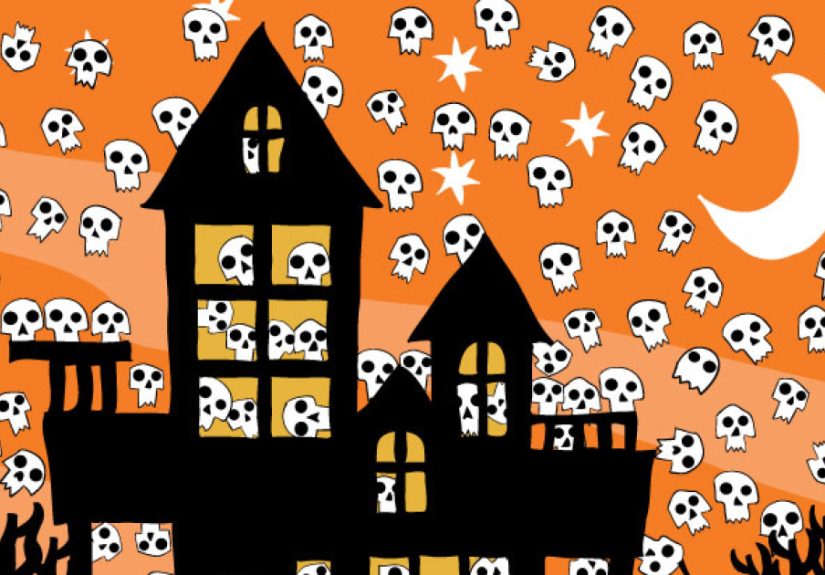
Some pictures politely introduce themselves. A sunset says, “Hello, I am beautiful.” A birthday cake says, “Please photograph me before Uncle Dave sneezes near the candles.” But a hidden ghost picture? That one leans back in the shadows, folds its transparent little arms, and whispers, “Good luck, detective.”
The question “Can you find the ghost hidden in this picture?” sounds simple, almost like a party game. Yet these visual puzzles are much more than internet bait for people who enjoy yelling “I found it!” at their phones. Hidden-object images, optical illusions, and spooky seek-and-find challenges reveal something fascinating about the way we see. Your eyes collect information, but your brain is the dramatic editor that decides what the story means. Sometimes it edits like a genius. Sometimes it edits like a haunted house tour guide with too much caffeine.
In this article, we will explore why hidden ghost pictures are so addictive, how your brain searches for clues, why some people spot the ghost instantly while others stare until their coffee gets cold, and how to improve your observation skills without needing night-vision goggles or a paranormal license.
Why Hidden Ghost Pictures Are So Hard To Resist
A hidden ghost puzzle works because it combines three powerful ingredients: mystery, competition, and visual uncertainty. The mystery makes you curious. The competition makes you want to beat everyone else. The uncertainty makes your brain keep scanning the picture even after your eyes beg for a snack break.
Human beings are naturally drawn to patterns. We look for faces in clouds, figures in shadows, animals in wallpaper, and meaning in random shapes. This tendency is called pareidolia, which means seeing a familiar image in an ambiguous or random pattern. It is the reason a coat hanging on a door can look like a person at 2 a.m., especially after you watched a horror movie and made the questionable decision to turn off all the lights.
Hidden ghost images use pareidolia on purpose. The “ghost” may be formed by pale curtains, a reflection in a window, a patch of fog, a shadow beside a staircase, or a shape tucked inside tree branches. It is not always a cartoon ghost with two black eyes and a sheet. The best hidden ghosts are sneakier. They hide in the ordinary.
How Your Brain Searches For The Ghost
When you look at a picture, your vision does not work like a camera simply recording everything in perfect detail. Your eyes take in light and visual information, then your brain interprets that information based on contrast, edges, patterns, memory, attention, and expectations.
That last word, expectations, is important. If someone tells you there is a ghost in the picture, your brain immediately prepares a ghost-hunting checklist. You start looking for pale shapes, faces, dark eye holes, flowing outlines, human-like silhouettes, and anything that seems slightly out of place. In other words, the title changes the way you see the image before you even begin.
1. Your Attention Narrows
At first, you may scan the whole picture quickly. Then your attention narrows to areas that seem suspicious: a dark corner, a mirror, a doorway, a window, a closet, or a strangely shaped blur in the background. This is called visual search. Your brain tries to decide which parts of the image deserve closer inspection and which parts are ordinary background noise.
2. Your Brain Fills In Gaps
Optical illusions often happen because the brain fills in missing or confusing information. If an object is partly hidden, your brain may complete the shape based on what it expects. That is useful in everyday life. If you see half of a cat behind a couch, you do not assume the universe has created a floating cat fragment. You understand the rest of the cat is probably behind the furniture, plotting something.
In a ghost puzzle, this same skill can fool you. A half-visible curtain fold might become a ghostly robe. Two dark knots in a wooden wall might become eyes. A reflection might become a face. Your brain is not broken; it is just trying very hard to make sense of limited information.
3. Contrast Becomes A Clue
Hidden ghosts are often placed where contrast is low. A white figure against a white wall is harder to spot than a white figure standing in front of a black curtain. Puzzle creators know this. They use similar colors, soft edges, dim lighting, and busy backgrounds to hide the target.
If you want to find the ghost faster, do not only look for “ghost-shaped” objects. Look for contrast changes: a shape that is slightly brighter, darker, smoother, sharper, or more symmetrical than the surrounding area. The ghost may not scream “boo.” It may politely blend into the wallpaper like an introvert at a networking event.
Why Some People Find The Ghost Faster Than Others
Have you ever shown a hidden picture to two friends and watched one find the answer in five seconds while the other rotates the phone, squints, and begins questioning reality? That difference can happen for several reasons.
Experience With Visual Puzzles
People who often solve hidden-object games, spot-the-difference puzzles, brain teasers, or optical illusions may develop better search strategies. They know to check corners, reflections, negative space, repeated patterns, and areas that look too ordinary. They also know that the answer is rarely in the most obvious place. The ghost is probably not standing in the center wearing a name tag that says “Hello, my name is Spooky.”
Patience And Scanning Style
Some people scan randomly. Others scan methodically from left to right, top to bottom, or foreground to background. A methodical search can reduce the chance of missing the hidden figure. Random scanning feels faster, but it can make you revisit the same obvious areas while ignoring the one shadowy corner where the ghost is having the time of its afterlife.
Lighting And Screen Size
Practical details matter. A hidden ghost image may look completely different on a bright laptop screen than on a dim phone screen covered in fingerprints. If the picture is small, compressed, or viewed in poor lighting, subtle details can disappear. Before blaming your eyesight, clean your screen. The “ghost” may be hidden behind a nacho smudge from Tuesday.
Mood And Expectation
Your mood can influence how you interpret ambiguous images. If you are relaxed, you may notice the puzzle as a fun challenge. If you are already nervous, shadows and shapes may look more sinister. This is why ordinary rooms become suspicious at night. A chair is just a chair at noon. At midnight, it becomes a Victorian widow with unfinished business.
The Science Behind Seeing Faces In Shadows
Many hidden ghost pictures rely on the same visual shortcut that makes people see faces in clouds, tree bark, electrical outlets, burnt toast, and even the front of cars. Faces are incredibly important to human communication, so the brain is tuned to detect them quickly. That sensitivity is useful because recognizing faces helps us read emotions, identify people, and notice possible threats.
But speed comes with false alarms. It is better for the brain to mistakenly see a face in a shadow than to miss a real person standing nearby. From a survival perspective, a few false alarms are not a terrible price to pay. From an internet puzzle perspective, those false alarms are comedy gold.
This is why the hidden ghost may appear as a face before you realize it is a full figure. Your brain may first lock onto two eye-like spots or a head-shaped outline. Once you notice that, the rest of the “ghost” suddenly appears. The image did not change. Your interpretation did.
How To Find The Ghost: A Practical Step-By-Step Guide
If you are staring at a hidden ghost picture right now and feeling personally insulted by a transparent fictional creature, try this approach.
Step 1: Stop Looking In The Center
Many people start in the center because it feels natural. Puzzle makers know that. Check the edges, corners, background objects, and transition areas such as doorways, windows, mirrors, staircases, trees, curtains, and shelves.
Step 2: Search For Human-Like Shapes
Look for a head, shoulders, hands, or a vertical body outline. The ghost may be small or only partly visible. Instead of expecting a complete figure, search for fragments: a pale face, a sleeve-like curve, a shadow shaped like a torso, or two eye-like marks.
Step 3: Change Your Viewing Distance
Move the picture farther away or zoom out. Sometimes hidden images become easier to see when you stop focusing on tiny details. Your brain can detect the overall shape better from a distance. This is the same reason a messy pile of laundry can look like a monster from across the room but becomes socks, jeans, and regret when you get closer.
Step 4: Squint Slightly
Squinting reduces fine detail and emphasizes larger shapes, shadows, and contrast. It can help reveal a hidden figure blended into a busy background. Do not squint so hard that you look like you are trying to read ancient ghost taxes. Just soften your focus.
Step 5: Flip Your Assumptions
If you are looking for a white ghost, search for a dark one. If you expect a face, look for a body. If you expect it in the background, inspect the foreground. The trick often depends on your first assumption being wrong.
Why These Puzzles Are Great For Engagement
Hidden ghost pictures are perfect for web audiences because they invite action. Readers do not passively consume the content; they participate. They pause, search, zoom, argue, share, and return to the image. That behavior is valuable for user engagement because it increases time on page and encourages comments.
They are also wonderfully social. One person says, “I found it!” Another says, “Where?” A third says, “That is not a ghost; that is a lamp.” Suddenly, a simple picture becomes a tiny community event. People enjoy comparing perception because it reminds us that seeing is not as universal as we think. We may all look at the same image, but we do not always notice the same details first.
The Spooky Psychology Of “Almost Seeing” Something
The creepiest part of a hidden ghost image is not always the moment you find the ghost. It is the moment just before. You sense that something is there, but you cannot identify it yet. Your brain detects a mismatch: a shape that does not quite belong, a shadow that feels too organized, a pale blur that looks almost intentional.
That “almost seeing” feeling is powerful. Horror movies use it constantly. A figure at the end of a hallway, a reflection in glass, a face briefly visible behind someone, a shape in the trees: these moments work because our brains hate uncertainty. We would rather identify the thing, even if it scares us, than leave it unresolved.
Hidden ghost puzzles turn that instinct into a game. The fear is safe, the mystery is controlled, and the reward is immediate. Once you find the ghost, the tension breaks. You may even laugh because the thing that felt so eerie suddenly becomes obvious. The ghost was there the whole time, quietly judging your observation skills.
What Hidden Ghost Pictures Teach Us About Perception
The biggest lesson is simple: vision is active. You do not merely receive the world through your eyes. You interpret it. Your brain uses memory, expectation, attention, context, and pattern recognition to build your experience of reality.
That is why two people can see the same hidden picture differently. One sees a ghost. Another sees a curtain. A third sees nothing until someone points it out, and then they cannot unsee it. Once your brain has a pattern, it tends to keep it. The ghost becomes obvious forever, like a typo in a headline after publication. Painful, permanent, and somehow right in front of you the entire time.
Common Places The Ghost Might Be Hiding
If the picture is a classic spooky scene, check these areas first:
- Windows: Reflections and pale faces are often hidden in glass.
- Doorways: Dark openings create perfect outlines for figures.
- Staircases: Railings, shadows, and vertical lines can disguise a body shape.
- Curtains: Folds can form robes, faces, and ghostly silhouettes.
- Trees: Branches can create faces, hands, or thin figures.
- Mirrors: A classic hiding place because reflections already feel suspicious.
- Background crowds: A ghost may be hidden among ordinary people or objects.
Also check negative spacethe empty area around objects. Sometimes the ghost is not drawn as a separate object but created by the space between other objects. That is a sneaky move, and frankly, very ghost-like.
My Experience With Hidden Ghost Pictures
The first time I tried one of these “find the ghost” pictures, I approached it with the confidence of a detective in the first five minutes of a crime show. I leaned toward the screen, scanned the obvious places, and thought, “This will be easy.” Ten minutes later, I was questioning not only the picture but also my career choices, my eyesight, and whether the ghost had simply left for lunch.
What surprised me was how emotional the process became. At first, it was funny. Then it was mildly annoying. Then it became personal. I was no longer looking for a ghost; I was defending my honor against a JPEG. Every dark corner looked suspicious. Every window reflection seemed guilty. A chair became a cloaked figure. A plant became a hand. A lampshade briefly became the face of a Victorian child, which was unfair to both me and the lampshade.
Eventually, someone gave me a hint: “Look near the doorway.” That changed everything. My attention narrowed, and suddenly I saw a pale outline I had ignored several times. The ghost was not hidden by invisibility. It was hidden by assumption. I had been searching for a dramatic figure, something obvious and cinematic. Instead, it was a faint shape formed by shadow and light, tucked into a place my brain had labeled as background.
That experience taught me one of the best tricks for hidden images: do not trust your first scan. Your brain quickly decides what parts of a picture matter and what parts can be ignored. Most of the time, that shortcut is useful. In a visual puzzle, it becomes the trap. The answer often sits in the area you dismissed too early.
I have also noticed that hidden ghost pictures are more fun with other people. Alone, you may get frustrated. With friends, the puzzle becomes a tiny comedy show. Someone will confidently point to the wrong object. Someone else will invent a ghost that is clearly a bookshelf. Another person will find the real ghost instantly and then act humble in a way that is not humble at all. The best part is the reveal. Once everyone sees it, the room erupts into “Ohhh!” followed immediately by “How did I miss that?”
These puzzles are not just about finding a spooky figure. They are about noticing how differently people see. They remind us that attention is selective, assumptions are powerful, and the ordinary world is full of strange little shapes waiting to become stories. Maybe that is why the question “Can you find the ghost hidden in this picture?” keeps working. It is not only a challenge to your eyes. It is a challenge to your imagination.
Conclusion: Did You Find The Ghost Yet?
Hidden ghost pictures are popular because they are simple, spooky, and surprisingly smart. They turn visual perception into a game and prove that seeing is not always believing. Your eyes gather the clues, but your brain decides what they mean. Sometimes that decision reveals a hidden ghost. Sometimes it turns a curtain into a phantom and a shadow into a dramatic backstory.
The next time you face a “Can you find the ghost hidden in this picture?” challenge, slow down. Check the corners. Look at reflections. Change your distance. Search for subtle contrast. Most importantly, question your assumptions. The ghost may be hiding exactly where your brain decided there was nothing interesting to see.
And when you finally spot it, enjoy that tiny burst of victory. You have not only solved a puzzleyou have caught your own perception in the act. That is a pretty good trick, even if the ghost refuses to applaud.